Kathryn Davis - Versailles
Здесь есть возможность читать онлайн «Kathryn Davis - Versailles» весь текст электронной книги совершенно бесплатно (целиком полную версию без сокращений). В некоторых случаях можно слушать аудио, скачать через торрент в формате fb2 и присутствует краткое содержание. Год выпуска: 2003, Издательство: Back Bay Books, Жанр: Историческая проза, на английском языке. Описание произведения, (предисловие) а так же отзывы посетителей доступны на портале библиотеки ЛибКат.
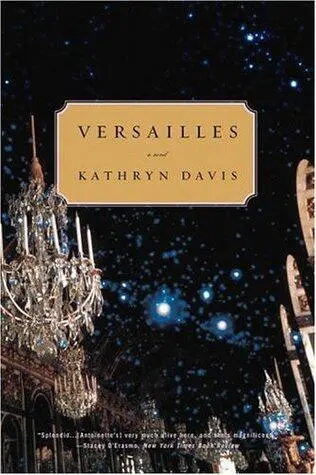
- Название:Versailles
- Автор:
- Издательство:Back Bay Books
- Жанр:
- Год:2003
- ISBN:нет данных
- Рейтинг книги:4 / 5. Голосов: 1
-
Избранное:Добавить в избранное
- Отзывы:
-
Ваша оценка:
Versailles: краткое содержание, описание и аннотация
Предлагаем к чтению аннотацию, описание, краткое содержание или предисловие (зависит от того, что написал сам автор книги «Versailles»). Если вы не нашли необходимую информацию о книге — напишите в комментариях, мы постараемся отыскать её.
Versailles — читать онлайн бесплатно полную книгу (весь текст) целиком
Ниже представлен текст книги, разбитый по страницам. Система сохранения места последней прочитанной страницы, позволяет с удобством читать онлайн бесплатно книгу «Versailles», без необходимости каждый раз заново искать на чём Вы остановились. Поставьте закладку, и сможете в любой момент перейти на страницу, на которой закончили чтение.
Интервал:
Закладка:
Labyrinth
There were thirty-nine fountains tucked away within the Labyrinth, and the Labyrinth itself tucked into a shady corner of the palace grounds, west of the Orangerie, south of the Latona Gardens, and north of the aqueduct carrying water to the town of Versailles.
Each fountain was based on one of Aesop's fables, though interestingly never on those about lions. The Monkey King, the Parliament of Rats, the Rooster and the Diamond, the Hare and the Tortoise — there were almost two hundred animals in all, all of them exquisitely cast in lead and gilt-painted, their gold mouths wide open, spewing forth bright jets of water.
The Sun King had the Labyrinth built for his heir, the so-called Grand Dauphin, alone among his six legitimate children to survive the court doctor's passion for bloodletting. A sweet-natured person, and also quite handsome until he grew fat, the Grand Dauphin. In the end the court doctors got him as well, leaving him empty as a glove, after which the Grey Sisters prepared him for burial. Or maybe it was the chateau floor polishers, or the workmen who made the coffin. Accounts vary.
Though when you think about it, isn't this the lesson of a labyrinth? You walk in filled with eager anticipation of the marvels that await you, racing along the boxwoodlined paths as if actually guided by some intrinsic sense of destination, only to find yourself in a dark little cul-de-sac, face to face with a gilt-painted lead rat on the back of a gilt-painted lead frog.
Of course the Sun King's intentions for the Labyrinth seem to have been somewhat less metaphysical. Aesop's pragmatic, you might even say cold, view of human relations deeply appealed to him, and he hoped to impress them by whatever means possible on the Grand Dauphin's dreamy sensibility.
The Labyrinth could be entered by means of a special key, in the keeping of Bishop Bossuet, the sadistic tutor. Come, come, Bossuet would implore in a fed-up tone. For the love of God, lift your feet. As often happens, the boy's gentle spirit stimulated the tutor's desire to inflict pain; soon enough Bossuet had beaten any love of learning out of his charge, who grew into what we'd call a nonentity if it weren't for the fact that he was heir apparent to the French throne. The Grand Dauphin loved playing card games, hunting for wolves, ugly women, and collecting art, though not necessarily in that order. Frequently he could be seen drumming his fingers on the lid of his snuffbox. "Like a ball to be rolled hither and thither at the will of others," according to Saint-Simon, "drowning in fat and gloom."
Bossuet would unlock the gate at the main entrance, flanked on the left by a statue of the fabulist himself, on the right by a statue of Love. Bowing, ironic —After you, Monseigneur. The Labyrinth astir with bees, the almost ducklike voices of the actual (as opposed to lead) frogs living in the thirty-nine fountains, the shifting shadows of millions upon millions of leaves.
Straight ahead, then right, then right again, then left. The Duke and the Birds. The Eagle and the Fox. The Dragon, the Anvil, and the File.
A Dragon wanted to eat an anvil, wrote Aesop. And there the Dragon was, disgruntled and golden, coiled in his shadowy lair with water shooting from his mouth and nostrils. A File said to him. "You'll break off your teeth before you even begin to bite into that, whereas I can chew my way through anything. "
Meanwhile Bossuet stood waiting in his long black robes at the intersection of two paths, arms crossed, tapping his elegantly shod toe. Sun glinting off the crucifix on his chest, off the mammoth dome of his forehead. That pious half smile!
And the moral of the tale? Louis, please! How many-times do I have to tell you to leave your nose alone and pay attention!
It's a miracle, really, that any of the royal children went on to become King. But maybe there's no version of childhood that could adequately prepare you for that particular future.
Louis XIV (the Sun King) begat Louis (the Grand Dauphin), who died after begetting Louis (the Due de Bourgogne), who died after begetting Louis (the Due d'Anjou), who luckily survived long enough to become Louis XV (Beloved) upon the death of Louis XIV in 1715.
Left, and left again, around a hairpin turn. Left once more. Backtracking.
The Monkey and Her Babies. The Fox and the Crane.
A she-monkey gave birth to twins, one of which she lavished with affection, the other, neglected. But by a curious twist of fate she hugged the one she loved so tightly to her breast that she suffocated it.
Tapping that toe, smiling that smile. It's said that once Bossuet actually broke the Grand Dauphin's arm, though certainly not from any overwhelming rush of love. Revenge comes cheap, however. The pleasure, for instance, of picturing a gilt-painted Bossuet with water coming out his nose.
The moral, Louis? The moral?
And how fitting, really, that the South Quincunx should have been built on the site of the Labyrinth. For while it's true that Louis XVI ordered the fountains dismantled and the sculpture packed away, the boxwood hedges mowed down and the latticework gazebos chopped into kindling (Oh Versailles! Oh grief! Oh ravishing glades! The hatchet is at the ready and your hour is come!), it's also true that traces of the Sun King's original Labyrinth remain. A ghost Labyrinth (like Louis XIII's hunting lodge, or the Porcelain Trianon, or the Ambassador's Staircase, or all the trees that were felled in 1774, or that got blown down by the wind, including Antoinette's beloved tulip tree), its maddening nests within nests of paths reborn as secret passageways and corridors, little rooms and littler rooms, closets and stairways, like the little secret stair in the wall connecting the Dauphin's secret gaming room with his father's bedroom. Only to be used in an emergency, advised his father, delicate.
And then Louis XV begat Louis (Dauphin of France), who died after begetting Louis (the Due de Berry), who went on to become Louis XVI, husband of Antoinette.
The path on each side twisting sharply to disappear behind a wall of vine-covered lattice.
To the right? Or to the left?
A rat struck up a friendship with a frog who played a mean trick on him. He tied the rat's foot to his own, and when they came to a pond, he dived in and swam happily around while the poor rat drowned. But then the rat's dead body floated to the surface, where it was spotted by a kite, who snatched it up in its claws and ate it. The frog tried to untie his foot but he couldn't, so the kite ate him, too.
The Rat and the Frog
An evening in late summer, Palais Cardinal, the Paris residence of Louis de Rohan, Cardinal of the Holy Church and Grand Almoner of France, as well as Landgrave of Alsace, Provisor of the Sorbonne, Superior General of the Royal Hospital of the Quinze-vingts, Commander of the Order of the Holy Ghost, arid first cousin to the Princesse de Guéménée. Rohan is a tall man with a big flushed face and rosebud lips; his heavy legs, of which he is unreasonably vain, are crossed at the knee and clad in bright red stockings. When the curtain lifts he can be seen in rapt conversation with the seer Cagliostro, a dark-complected man in a blue silk coat and plumed tricorn hat who claims to have helped build the pyramids. The two men are seated in enormous wing chairs in Rohan's candlelit Salon of Monkeys, its dancing monkey wallpaper dimly visible in the background.
ROHAN: Tell me again.
CAGLIOSTRO: If you insist. He lifts his head to the ceiling. It is only a matter of time. Only a matter of time before the truth emerges, radiant, like the stars and planets at the behest of Isis, Goddess of Light. Only a matter of time before the Adored One ceases to dissemble and shows her true colors. Before she ceases to cut you dead in the galleries of Versailles, speaking of you, on those rare occasions when she does, with base contempt, with disgust even, with—
Читать дальшеИнтервал:
Закладка:
Похожие книги на «Versailles»
Представляем Вашему вниманию похожие книги на «Versailles» списком для выбора. Мы отобрали схожую по названию и смыслу литературу в надежде предоставить читателям больше вариантов отыскать новые, интересные, ещё непрочитанные произведения.










Обсуждение, отзывы о книге «Versailles» и просто собственные мнения читателей. Оставьте ваши комментарии, напишите, что Вы думаете о произведении, его смысле или главных героях. Укажите что конкретно понравилось, а что нет, и почему Вы так считаете.