Эптон Синклер - Oil!
Здесь есть возможность читать онлайн «Эптон Синклер - Oil!» весь текст электронной книги совершенно бесплатно (целиком полную версию без сокращений). В некоторых случаях можно слушать аудио, скачать через торрент в формате fb2 и присутствует краткое содержание. Год выпуска: 1927, ISBN: 1927, Издательство: Amereon Ltd, Жанр: Проза, на английском языке. Описание произведения, (предисловие) а так же отзывы посетителей доступны на портале библиотеки ЛибКат.
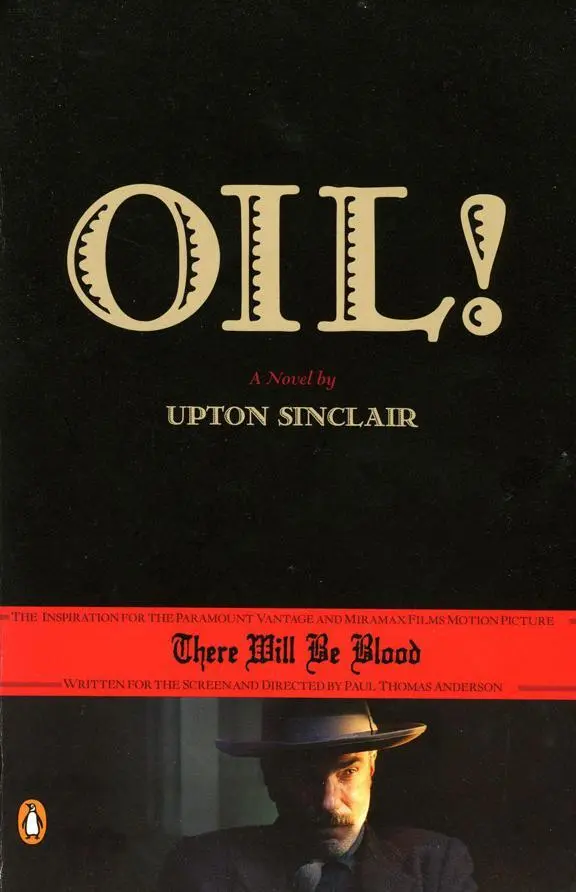
- Название:Oil!
- Автор:
- Издательство:Amereon Ltd
- Жанр:
- Год:1927
- ISBN:9780848823917
- Рейтинг книги:3 / 5. Голосов: 1
-
Избранное:Добавить в избранное
- Отзывы:
-
Ваша оценка:
Oil!: краткое содержание, описание и аннотация
Предлагаем к чтению аннотацию, описание, краткое содержание или предисловие (зависит от того, что написал сам автор книги «Oil!»). Если вы не нашли необходимую информацию о книге — напишите в комментариях, мы постараемся отыскать её.
In Oil! Upton Sinclair fashioned a novel out of the oil scandals of the Harding administration, providing in the process a detailed picture of the development of the oil industry in Southern California. Bribery of public officials, class warfare, and international rivalry over oil production are the context for Sinclair's story of a genial independent oil developer and his son, whose sympathy with the oilfield workers and socialist organizers fuels a running debate with his father. Senators, small investors, oil magnates, a Hollywood film star, and a crusading evangelist people the pages of this lively novel.
Oil! — читать онлайн бесплатно полную книгу (весь текст) целиком
Ниже представлен текст книги, разбитый по страницам. Система сохранения места последней прочитанной страницы, позволяет с удобством читать онлайн бесплатно книгу «Oil!», без необходимости каждый раз заново искать на чём Вы остановились. Поставьте закладку, и сможете в любой момент перейти на страницу, на которой закончили чтение.
Интервал:
Закладка:
“Kidnapped!” The two of them echoed the word together.
“Yes, just that. I thought I went into the army to put down the Kaiser, but I was kidnapped by some Wall Street bankers, and put to work as a strike-breaker, a scab.”
Ruth and Bunny could only sit and gaze at Paul, and wait for him to say what he meant by these strange words.
“You remember our oil strike, Bunny? Those guards the Federation sent up here—husky fellows, with plenty of guns, and good warm clothes, rain-coats and water-proof hats and everything. Well, that’s what I’ve been doing for a year and a half—putting down a strike for Wall Street bankers. The guards here at Paradise got ten dollars a day, and if they didn’t like it, they could quit; but I got thirty a month and beans, and if I tried to quit they’d have shot me. That was the cinch the bankers had.”
Again there was a pause. Paul had closed his eyes, and he told a part of his story that way, looking at things he saw inside his mind.
“First thing, the allies took the city of Vladivostok. The strikers had that city, with a perfectly good government, everything orderly and fine. They didn’t make much resistance—they were too surprised at our behavior. We shot a few long-shoremen, who tried to defend one building, and the strikers had a big funeral with a procession; they brought the red coffins to the American consulate with banners that asked us why we had shot their people. It happened to be the Fourth of July, and we were celebrating our revolution; why had we overthrown theirs? Of course we couldn’t answer; none of us knew why we had done it; but little by little we began to find out.”
Paul paused, and waited so long that Bunny thought he wasn’t going on. “Why, Paul?”
“Well, just outside that city, along the railroad track, there were fields—I guess there must have been ten or twenty acres, piled twenty feet high with stuff—guns and shells, railroad locomotives, rails and machinery, motor trucks—every kind of thing you could think of to help win a war. Some of it was in cases, and some without even a tarpaulin over it, just lying there in the rain, and sinking slowly—some of the heavy stuff two feet down in the mud. There was a hundred million dollars of it, that had been put off the steamers, intended to be taken across to Russia; but then the revolution had come, and there it lay. One of our jobs was to guard it. At first, of course, we thought it belonged to the government; but then little by little we got the story. Originally the British government had bought it for the Tsar’s government, and taken bonds for it. Later, when we came into the war, the firm of Morgan and Company took over the bonds from the British government, and these supplies were Morgan’s collateral, and we had overthrown the Vladivostok government to protect it for him.”
Again there was a pause. “Paul,” said Bunny, anxiously, “do you really know that?”
Paul laughed, but without any happiness. “Know it?” he said. “Listen, son. They sent out an expedition, two hundred and eighty men to run the railroad—every kind of expert, traffic men, telegraphers, linemen, engineers. They all wore army uniforms, and the lowest man had the rank of second lieutenant; of course we thought they were part of the army, like the rest of us. But they got fancy pay, and by God, it wasn’t army pay, it was checks on a Wall Street bank! I’ve seen dozens of those checks. It was a private expedition, sent to run the railroad for the bankers.”
“But why, Paul?”
“I’ve told you—to break the strike. The biggest strike in all history—the Russian workers against the landlords and the bankers; and we were to put the workers down, and the landlords and bankers up! Here and there were bunches of refugees, former officers of the Tsar’s army, grand dukes and their mistresses, land-owners and their families; they would get together and call themselves a government, and it was our job to rush them supplies, and they would print paper money, and hire some adventurers, and grab a bunch of peasants and ‘conscript’ them, and that would be an army, and we’d move them on the railroad, and they’d overthrow another Soviet government, and slaughter a few more hundreds or thousands of workingmen. That’s been my job for the past year and half; do you wonder I’m sick?”
“Paul, did you have to kill people?” It was Ruth’s voice of horror.
“No, I don’t think I killed anybody. I was a carpenter, and my only fights were with the Japs, that were supposed to be our allies. You see, the Japs were there to grab the country, so they didn’t want either the ‘white’ Russians or the ‘red’ ones to succeed. The first thing they did was to counterfeit the money of the ‘white’ government; they brought in billions of fake roubles, and bought everything in sight—banks and hotels and stores and real-estate—they made themselves the capitalists, and broke the ‘white’ government with their fake money. They resented our being there, and the fact that we really tried to help the ‘whites’; they butted in on our job, and there were times when we lined up our troops and threatened to fire in five minutes if they didn’t move out. They were always picking on our men; I was fired at three times in the dark—got one bullet through my hat and another through my shirt.”
Ruth sat there with her hands clasped together and her face white. She could see those bullets going through Paul’s clothing right now! And be sure that she was not unlearning any of her dislike for war!
“A lot of our fellows came to hate the Japs,” said Paul; “but I didn’t. I got a philosophy out of this—the only thing I did get. The ruling classes in Japan were grabbing half a continent; but all the poor soldiers were grabbing was pay even poorer than mine. They didn’t know what they were there for—they, also, had been kidnapped. There were some that had been to America, and I got to talk with them, and we never had any trouble in agreeing. That was true of Czecho-Slovaks, and Germans—every nation I met. I tell you, Bunny, if the private soldiers could have talked it over, there wouldn’t have been any war. But that is what is known as treason, and if you try it you’re shot.”
Paul and Bunny talked, that Friday night, and a lot of Saturday and Sunday, and Paul explained the Russian revolution. There was an easy way for Bunny to understand it, Paul said; if there was anything that puzzled him, all he had to do was to remember their oil strike. “Ask yourself how it would have been at Paradise, and then you know everything about Russia and Siberia—yes, and Washington and New York and Angel City. The Petroleum Employers’ Federation, that fought our strike, they’re exactly the sort of men that sent our army into Siberia—often they’re the same individuals. I read in the paper yesterday how a syndicate of oil men in Angel City has got some concessions in Saghalien. I remember one name, Vernon Roscoe. He’s one of the big fellows, isn’t he?”
Paul said this seriously, and Bunny and Ruth exchanged a smile. Paul had been away so long, he had lost track of the oil-game entirely!
Said Paul, “The operators are the same, and so are the strikers. Do you remember that little Russian Jew, Mandel, a roughneck that was in our strike? Used to play the balalaika, and sing us songs about Russia—we wouldn’t let him make speeches, because he was a ‘red.’ Well, by jingo, I ran into him in Manila, on the way out. He’d been travelling steerage on a steamer, on the way to Russia, and they found he was a Bolshevik, and threw him ashore and took away everything he had, even his balalaika. I loaned him five dollars, and six months later he turned up at Irkutsk, in a ‘Y’ hut. Lying on a shelf there was a balalaika, and he said, ‘Why, that’s mine! How did it get here?’ They told him a soldier had brought it, but didn’t know how to use it. ‘You can have it if you can play it,’ they said, so he played it all right, sang us the Volga Boatman, and then the Internationale—only of course nobody knew what it was. A few days later there were orders to arrest him, but I helped him get away. Months after that we came on him out in the country, not far from Omsk; he had been a Soviet commissar, and the Kolchak people had captured him, and buried him alive, up to his nose, just so that he could breathe. When we found him the ants had eaten most of his eyes, but there was still some life in him, his forehead would wrinkle.”
Читать дальшеИнтервал:
Закладка:
Похожие книги на «Oil!»
Представляем Вашему вниманию похожие книги на «Oil!» списком для выбора. Мы отобрали схожую по названию и смыслу литературу в надежде предоставить читателям больше вариантов отыскать новые, интересные, ещё непрочитанные произведения.

Обсуждение, отзывы о книге «Oil!» и просто собственные мнения читателей. Оставьте ваши комментарии, напишите, что Вы думаете о произведении, его смысле или главных героях. Укажите что конкретно понравилось, а что нет, и почему Вы так считаете.