Эптон Синклер - Oil!
Здесь есть возможность читать онлайн «Эптон Синклер - Oil!» весь текст электронной книги совершенно бесплатно (целиком полную версию без сокращений). В некоторых случаях можно слушать аудио, скачать через торрент в формате fb2 и присутствует краткое содержание. Год выпуска: 1927, ISBN: 1927, Издательство: Amereon Ltd, Жанр: Проза, на английском языке. Описание произведения, (предисловие) а так же отзывы посетителей доступны на портале библиотеки ЛибКат.
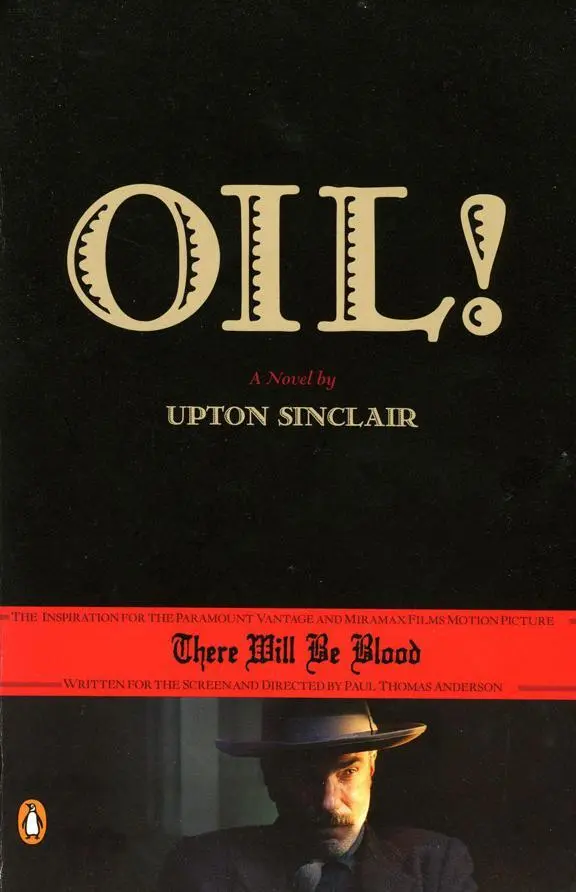
- Название:Oil!
- Автор:
- Издательство:Amereon Ltd
- Жанр:
- Год:1927
- ISBN:9780848823917
- Рейтинг книги:3 / 5. Голосов: 1
-
Избранное:Добавить в избранное
- Отзывы:
-
Ваша оценка:
Oil!: краткое содержание, описание и аннотация
Предлагаем к чтению аннотацию, описание, краткое содержание или предисловие (зависит от того, что написал сам автор книги «Oil!»). Если вы не нашли необходимую информацию о книге — напишите в комментариях, мы постараемся отыскать её.
In Oil! Upton Sinclair fashioned a novel out of the oil scandals of the Harding administration, providing in the process a detailed picture of the development of the oil industry in Southern California. Bribery of public officials, class warfare, and international rivalry over oil production are the context for Sinclair's story of a genial independent oil developer and his son, whose sympathy with the oilfield workers and socialist organizers fuels a running debate with his father. Senators, small investors, oil magnates, a Hollywood film star, and a crusading evangelist people the pages of this lively novel.
Oil! — читать онлайн бесплатно полную книгу (весь текст) целиком
Ниже представлен текст книги, разбитый по страницам. Система сохранения места последней прочитанной страницы, позволяет с удобством читать онлайн бесплатно книгу «Oil!», без необходимости каждый раз заново искать на чём Вы остановились. Поставьте закладку, и сможете в любой момент перейти на страницу, на которой закончили чтение.
Интервал:
Закладка:
Here Bunny got to know Eldon Burdick, who had been his sister’s favored suitor for a couple of years. Just what was their relationship Bunny was not sure. Dad had ventured a jest about an approaching wedding, but Bertie froze him; she would attend to her own engagements, with no parental meddling. Now Bunny discovered that the pair were quarreling; he could not help overhearing them, and seeing tears in his sister’s eyes. She was angry because Eldon would only spend a week-end at the camp, and he was angry because she punished him by dancing too often with some other man. But neither of the pair offered any confidences to Bunny, and he did not seek them.
Eldon Burdick was the youngest son of a family of old California land-owners. Their holdings lay on the outskirts of Angel City, and every ten years or so they would sell off a chunk for “subdivisions,” and this development would so increase the value of the remainder that the family grew richer all the time, despite the fact that forty people, young and old, spent money for everything they could think of. Eldon was a handsome, dashing sportsman with a tiny black moustache, after the fashion of a British army officer; he held himself erect and stiff, and Bunny discovered that he had a military mind. Bertie must have mentioned her brother’s dangerous ideas, for Eldon invited the younger man for a horse-back ride, and proceeded to sound him out. Eldon himself was an amateur patriot, in the proper sense of the abused word amateur; he was letting his string of polo-ponies stay idle all summer, while he did his part to save society.
It did not take long for him to uncover the deeps of Bunny’s peril. The boy had got by heart every one of the Bolshevik formulas: that the people of Russia had a right to run their own country in their own way; that our troops had no business shooting and killing them without a declaration of war by Congress; that people in this country had a right to express the above convictions without being beaten or tarred and feathered or sent to prison or deported. Eldon pointed out that all this was merely camouflage, the convenient formulas whereby criminal conspirators sought to cover themselves with a mantle of legality, “free speech” and “civil rights” and all the rest. The Soviet savages had repudiated all these principles, and it was our business to fight them with their own weapons.
Bunny listened politely while his companion explained the ramifications of the Bolshevik plot. Not merely had these traitors sought to give the victory to Germany, they were now organizing a propaganda machine to overthrow civilized government all over the world; they were stirring up Negroes, Hindoos, Chinese and Mohammedans to rise and exterminate the white race. They had secret organizations with hundreds of thousands of followers in this country, they published or subsidized some eight hundred papers, all preaching class hatred. How could any man of decent instincts make a truce with this monstrosity?
It was indeed terrifying, and difficult to answer; nevertheless, Bunny stuck it out, we had no right in Russia or Siberia, and if we would let the Bolsheviks alone, they couldn’t hurt us. When we suppressed people’s ideas, we made it seem that we couldn’t answer them; when we smashed up meetings and threw hundreds of people into jail for trying to attend meetings, we simply advertised the ideas we were trying to suppress, we made lots of other people sympathize with the victims. Look at those Russian Jewish boys and girls that had been arrested in New York, all of them under twenty; they had done nothing but distribute a leaflet appealing to the American people not to make war on Russia, yet they had been tortured in jail unto one of them died, and the rest had got sentences of twenty years! When Eldon Burdick discovered that Bunny was defending vermin such as these, he first became hot, and then he became cold; and soon Bunny noticed that others of the guests were cold, and his sister came to him with flashing eyes, declaring that he had ruined her social career.
So Bunny went to visit Henrietta Ashleigh, at the beach-home of her family; located on a beautiful blue lagoon, with little white sail-boats dotted over it, and yellow and gray cliffs covered with Spanish bungalows of many-tinted plaster. Here, gliding about in a canoe, Bunny tried to justify his ideas, but met no better success. Henrietta had an invincible prejudice about Bolsheviks, and Bunny suspected the reason—she had heard about the nationalization of women. He would have liked to hint to her that he doubted the truth of these stories; but if it had been possible to mention such a subject to Henrietta, she would not have been his ideal of feminine purity.
So Bunny had to motor up to Angel City and take Mr. Irving out to lunch, in order to have some one to tell his troubles to. But Mr. Irving made matters worse by giving him an article from a Socialist paper, written by an English journalist who had just come out of Russia, telling of the desperate efforts the Communists were making to defend their cause. The party had conscripted fifty per cent of its members to go to the front and die—that was what it amounted to, for even a slight wound was often fatal—there were no antiseptics anywhere in a country of more than a hundred million people. On twenty-six fronts the Russian workers were waging battle against a host of enemies. In Finland alone the counter-revolutionary general Mannerheim had slaughtered a hundred thousand people suspected of sympathy with Bolshevism; he had done it with American guns and American ammunition, and his troops many of them wearing American uniforms. In cases where the troops had been beaten by the Bolsheviks and forced to retreat, the American Red Cross had burned millions of dollars worth of medical supplies, for fear that they might be used to save wounded Bolshevik soldiers and Bolshevik women in child-birth. Somehow, when you knew that things like this were happening in the world, you did not enjoy drifting about in a canoe on a beautiful blue lagoon!
Bunny went back to Paradise, and studied and thought and waited. There came another post-card from Paul—just like the former one, cold and matter-of-fact; Paul was well and busy, and was being taken good care of; he had had another letter from Ruth; he hoped that the family was well, and also the Rosses. Bunny now knew the world-situation sufficiently to understand why Paul wrote such a card, and even to imagine the bitterness that Paul must feel to be compelled to write it.
Bunny thought that he also would try his hand at card-writing. He got a plain postal, and told Paul that they were all well and busy, and producing a lot of oil to help defeat America’s enemies. “I am doing a lot of thinking,” Bunny added; but then it occurred to him that this might suggest a forbidden procedure to troops, so he got another card and told how happy everybody was and how well things were going, and then added, “I am coming to agree with Tom Axton in everything.” Bunny figured that the censor would hardly know, way out there in Siberia, how Tom Axton had organized the oil-workers in the Paradise field!
All this time Bunny was torn between two sets of emotions, both strong within him, and absolutely contradictory. He had been in the army as a prospective officer and had burned with patriotic loyalty; but now, only seven months later, here he was with a desire to “root” for the enemies of his country, and to cheer when the flag had to retreat! Yes, he was actually tempted to be glad when he read that the American troops at Archangel were checked, and their British commanders foiled in their objectives! He remembered the thrills that had stirred his soul in the training camp, when he had leaped from his tent at reveille, and seen “Old Glory” floating in the breeze of dawn; if in those days he could have seen himself as he was now, he would have called himself a black-hearted traitor!
Читать дальшеИнтервал:
Закладка:
Похожие книги на «Oil!»
Представляем Вашему вниманию похожие книги на «Oil!» списком для выбора. Мы отобрали схожую по названию и смыслу литературу в надежде предоставить читателям больше вариантов отыскать новые, интересные, ещё непрочитанные произведения.



Обсуждение, отзывы о книге «Oil!» и просто собственные мнения читателей. Оставьте ваши комментарии, напишите, что Вы думаете о произведении, его смысле или главных героях. Укажите что конкретно понравилось, а что нет, и почему Вы так считаете.