Эптон Синклер - Oil!
Здесь есть возможность читать онлайн «Эптон Синклер - Oil!» весь текст электронной книги совершенно бесплатно (целиком полную версию без сокращений). В некоторых случаях можно слушать аудио, скачать через торрент в формате fb2 и присутствует краткое содержание. Год выпуска: 1927, ISBN: 1927, Издательство: Amereon Ltd, Жанр: Проза, на английском языке. Описание произведения, (предисловие) а так же отзывы посетителей доступны на портале библиотеки ЛибКат.
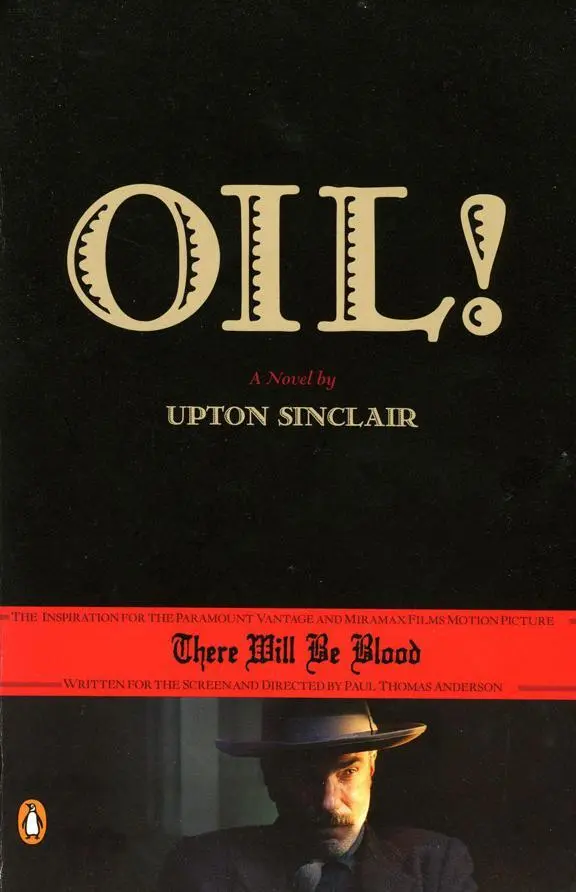
- Название:Oil!
- Автор:
- Издательство:Amereon Ltd
- Жанр:
- Год:1927
- ISBN:9780848823917
- Рейтинг книги:3 / 5. Голосов: 1
-
Избранное:Добавить в избранное
- Отзывы:
-
Ваша оценка:
Oil!: краткое содержание, описание и аннотация
Предлагаем к чтению аннотацию, описание, краткое содержание или предисловие (зависит от того, что написал сам автор книги «Oil!»). Если вы не нашли необходимую информацию о книге — напишите в комментариях, мы постараемся отыскать её.
In Oil! Upton Sinclair fashioned a novel out of the oil scandals of the Harding administration, providing in the process a detailed picture of the development of the oil industry in Southern California. Bribery of public officials, class warfare, and international rivalry over oil production are the context for Sinclair's story of a genial independent oil developer and his son, whose sympathy with the oilfield workers and socialist organizers fuels a running debate with his father. Senators, small investors, oil magnates, a Hollywood film star, and a crusading evangelist people the pages of this lively novel.
Oil! — читать онлайн бесплатно полную книгу (весь текст) целиком
Ниже представлен текст книги, разбитый по страницам. Система сохранения места последней прочитанной страницы, позволяет с удобством читать онлайн бесплатно книгу «Oil!», без необходимости каждый раз заново искать на чём Вы остановились. Поставьте закладку, и сможете в любой момент перейти на страницу, на которой закончили чтение.
Интервал:
Закладка:
Bunny took this letter to Dad, and it worried him very much, of course, but what could Dad do about it. He had three wells to bring in that week, and one of them broke loose and smeared up a couple of hundred acres of rocks. Also he and Mr. Roscoe had to deal with the amazing gyrations of the oil market. It seemed as if all the nations in the world had suddenly set themselves to buying up gasoline; perhaps they were making up for the shortage of the war, or perhaps they were getting ready for another war—anyhow, the price was up sky-high, and Southern California was being drained. It was truly amazing, the gas-stations were refusing to sell to any but their regular customers, and then only five gallons at a time; other stations were clean empty, and cars were stalled for days. Dad and Mr. Roscoe were making a tremendous killing; they were getting real money too, Dad said with a laugh, none of these foreign bonds for them!
Bunny shipped a dozen cartons of cigarettes to Jeff Korbitty; and day and night he worried over the problem of Paul. Somehow the putting down of Bolshevism took on quite a different aspect when it meant keeping Paul in Siberia! Also, Bolshevik propaganda seemed a different thing when it came from the pen of an ex-cowpuncher from Salinas valley! Bunny simply had to do something, and finally in desperation he sat himself down and composed a letter to his Congressman, Mr. Leathers, telling what he had heard about conditions in Siberia, and requesting that functionary to ascertain the War Department’s reasons for censorship of soldiers’ mail in peace time, also to urge an investigation by Congress of the reasons for keeping American troops in Siberia.
That letter was due to reach the Congressman five days later. Seven days after Bunny had posted it, a well-dressed and affable gentleman called at the Ross home in Angel City, stating that he was the owner of an oil concession in Siberia and wanted to interest Mr. Ross in it. Dad was up at Paradise, so Bunny talked with the gentleman, and finding him humane and catholic in his interests, told him all about Paul, and showed him Jeff Korbitty’s letter. They discussed the situation in Siberia, and the gentleman said there had been no declaration of war against the Russians, so what right did we have fighting them? Bunny said it seemed the same way to him; and then the gentleman went away, and no more was heard about the oil concession, but a couple of weeks later Bunny received a second letter from the ex-cowboy soldier, bitterly reproaching him for having “throwed me down,” as he must have done, because Jeff hadn’t wrote to nobody else, but the army had got onto him, and they had throwed him into the can just like he had said, and he was smuggling out this letter to tell Bunny that he could go to hell and stay there. Which was one stage more in the education of a little idealist!
Bunny simply had to talk to somebody about this episode. Next day, as he was driving away from the university in his sporty new car, he noticed a young man walking with a slight limp, and it struck him as impolite for a student of the university to drive in a sporty new car, while an instructor of the university had to walk with a slight limp. Bunny slowed up, and inquired, “Will you ride with me, Mr. Irving?”
“If you’re going my way,” said the other.
“Whatever way you wish,” was Bunny’s reply. “As a matter of fact, I’ve been hoping for a chance to talk with you, and it would be a favor to me.”
The young man got in, and stated the address to which he wished to go; then he said, “What is on your mind?”
“I want to ask you why you think it is that we are keeping an army in Siberia.”
Mr. Daniel Webster Irving was a peculiar-looking person; his head came up a long way out of his collar, and with its quick alert movements it made you think of a quail sitting in a tree and looking out for you and your gun. He had a brown moustache, rather bristly and rebellious, and grey eyes which he fixed upon you sharply when you said something stupid in class. He fixed them now upon Bunny, demanding, “What makes you interested in that?”
“I have a friend with the troops there, nearly a year, and I’ve had some news that worries me. I don’t understand what’s going on.”
Said Mr. Irving: “Are you asking me as a student, or as a friend?”
“Why,” replied Bunny, a little puzzled. “I’d be glad to be a friend, if I might. What is the difference?”
“The difference,” said the other, “might be the loss of my position in the university.”
Bunny flushed, embarrassed. “I hadn’t thought of anything like that, Mr. Irving.”
“I’ll put it to you bluntly, Ross. I spent all I had saved on relief work in Europe and came home broke. Now I am educating a young sister, and they are paying me the munificent salary of thirteen hundred a year. I am due to get a rise of two hundred next year, and the matter of contracts comes up this month. If it is reported that I am defending Bolshevism to my students, I won’t get a contract, either here or anywhere else.”
“Oh, but Mr. Irving, I wouldn’t dream of reporting you!”
“You wouldn’t need to. You’d only need to tell your parents or your friends what I think is the reason our troops are in Siberia, and they would consider it their moral duty to report me.”
“Is it as bad as that?” said Bunny.
“It’s so bad that I don’t see how it could be worse,” said Mr. Irving. “I will answer your question provided you agree that I am talking as a friend, and that you won’t mention the conversation to anyone else.” And you can see how deeply Bunny had fallen into the toils of Bolshevism, when he was willing to agree to a proposition such as that!
What Mr. Irving said was that our troops were in Siberia because American bankers and big business men had loaned enormous sums of money to the government of the Tsar, both before the war and during it; the Bolshevik government had repudiated these debts, and therefore our bankers and business men were determined to destroy it. It was not merely the amount of the money, but the precedent involved; if the government of any country could repudiate the obligations of a previous government, what would become of international loans? The creditor nations—that is to say America, Britain and France—maintained that a government debt was a lien, not against the government, but against the country and its resources. The total amount of international loans was one or two hundred billions of dollars, and the creditor nations meant to make an example of Soviet Russia, and establish the rule that a government which repudiated its debts would be out of business.
Bunny found this a novel point of view, and asked many questions. Mr. Irving said that in Washington was a Russian who had been the war-time ambassador to our country, and in that capacity had had the handling of the money loaned by our government, and used for buying guns and shells for Russia. At the time of the Bolshevik revolution, this ambassador had just got something like a hundred million dollars, and our government was allowing him to use it to set up a propaganda machine against the Soviet government, with a spy system as elaborate as the Tsar had ever known. Newspapers and newspaper men, government officials and legislators, all were on this ambassador’s pay-roll. Moreover, there were in our state department officials who had married Russian wives of the old nobility, and these wives had lost everything in the revolution, and it was natural they should hate the new regime. One official was a member of the banking-house which had handled the loans and stood to lose a fortune; others were tied up with banks and business concerns which had vast sums at stake. So it came about that America was at war with Soviet Russia, on the entire circumference of that vast republic; and so it came about that an instructor in an American university could not discuss the matter with one of his students, even outside the class-room, without fear of losing his position.
Читать дальшеИнтервал:
Закладка:
Похожие книги на «Oil!»
Представляем Вашему вниманию похожие книги на «Oil!» списком для выбора. Мы отобрали схожую по названию и смыслу литературу в надежде предоставить читателям больше вариантов отыскать новые, интересные, ещё непрочитанные произведения.

Обсуждение, отзывы о книге «Oil!» и просто собственные мнения читателей. Оставьте ваши комментарии, напишите, что Вы думаете о произведении, его смысле или главных героях. Укажите что конкретно понравилось, а что нет, и почему Вы так считаете.