Эптон Синклер - Oil!
Здесь есть возможность читать онлайн «Эптон Синклер - Oil!» весь текст электронной книги совершенно бесплатно (целиком полную версию без сокращений). В некоторых случаях можно слушать аудио, скачать через торрент в формате fb2 и присутствует краткое содержание. Год выпуска: 1927, ISBN: 1927, Издательство: Amereon Ltd, Жанр: Проза, на английском языке. Описание произведения, (предисловие) а так же отзывы посетителей доступны на портале библиотеки ЛибКат.
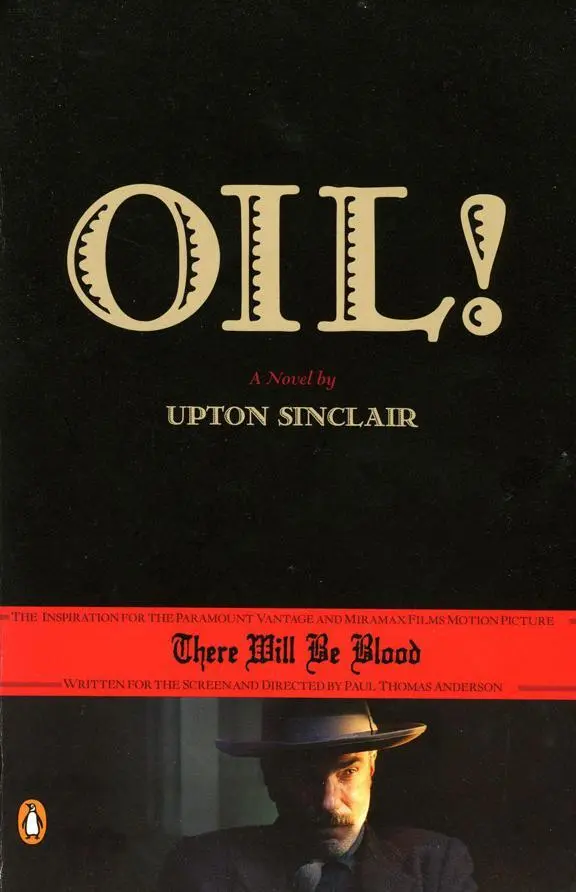
- Название:Oil!
- Автор:
- Издательство:Amereon Ltd
- Жанр:
- Год:1927
- ISBN:9780848823917
- Рейтинг книги:3 / 5. Голосов: 1
-
Избранное:Добавить в избранное
- Отзывы:
-
Ваша оценка:
Oil!: краткое содержание, описание и аннотация
Предлагаем к чтению аннотацию, описание, краткое содержание или предисловие (зависит от того, что написал сам автор книги «Oil!»). Если вы не нашли необходимую информацию о книге — напишите в комментариях, мы постараемся отыскать её.
In Oil! Upton Sinclair fashioned a novel out of the oil scandals of the Harding administration, providing in the process a detailed picture of the development of the oil industry in Southern California. Bribery of public officials, class warfare, and international rivalry over oil production are the context for Sinclair's story of a genial independent oil developer and his son, whose sympathy with the oilfield workers and socialist organizers fuels a running debate with his father. Senators, small investors, oil magnates, a Hollywood film star, and a crusading evangelist people the pages of this lively novel.
Oil! — читать онлайн бесплатно полную книгу (весь текст) целиком
Ниже представлен текст книги, разбитый по страницам. Система сохранения места последней прочитанной страницы, позволяет с удобством читать онлайн бесплатно книгу «Oil!», без необходимости каждый раз заново искать на чём Вы остановились. Поставьте закладку, и сможете в любой момент перейти на страницу, на которой закончили чтение.
Интервал:
Закладка:
Both Dad and Bunny took the university with the seriousness it expected. Neither of them doubted that money which had been gained by subsidizing political parties, and bribing legislators and executive officials and judges and juries—that such money could be turned at once into the highest type of culture, wholesale, by executive order. Bunny plunged into the excitements of courses and credits, he raced from English 5A to Spanish 2, and from there to Sociology 7 and Modern History 14, and accumulated a stack of text-books, and listened to lectures, and wrote notes, and stowed in his mind a mass of dates and other details.
It took him a long time to realize that the “English” was cruelly dull, and that the young man who taught it was bored to tears by what he was doing; that the “Spanish” had a French accent, and that the professor was secretly patronizing bootleggers to console himself for having to live in what he considered a land of barbarians; that the “Sociology” was an elaborate structure of classifications, wholly artificial, devised by learned gentlemen in search of something to be learned about; and that the Modern History was taught from text-books which had undergone the scrutiny of thousands of sharp eyes, in order to spare the sensibilities of Mr. Pete O’Reilly, and avoid giving to any student the slightest hint concerning the forces which control the modern world.
With equal seriousness Bunny took the social life of this enormous institution. It was the far-off wonderful goal to which all high school students had looked; a few lucky ones had got there, and he was among them. His sister’s chum had a brother who was a senior, and belonged to the best possible fraternity; so the word was spoken, and Bunny was snapped up. They were a fast, free-spending crowd, aggressive, self-confident, slangy, voluble over the prospects of this year’s track team. Bunny was a runner, so they had a reason for welcoming him that was more presentable than his old man’s oil.
Like all Western universities, Southern Pacific was co-educational; so Bunny was exposed to the impact of a mass of femininity, the distilled and concentrated essence of allurement. Such swarms of graceful figures, trim ankles, dimpled white and brown arms, costumes the color of Brazilian butterflies; a kaleidoscope of smiles and flashing eyes, a perpetual zephyr of soft scents, blown from lilac-bushes and jasmine vines and miles upon miles of California orange and lemon-orchards. Something was bound to happen to a young idealist in such an environment—especially when he had just spent the summer in a training-camp for men only!
Not all these bundles of feminine charm were accustomed to follow the market reports upon Ross Consolidated; yet somehow they managed to learn about the discoverer and heir-apparent of the Paradise oil field. Many sets of quick wits were concentrated upon him, he was invited to scores of dances and hundreds of fudge parties and thousands of motor-rides. Then a strange rumor spread; here was an unimaginable phenomenon, a young millionaire who would not “pet”! One by one the champion spell-weavers of Southern Pacific wove in vain; before long there were odds posted, and quite a trade in bets as to who would be the first girl that Bunny Ross would kiss! Researches were conducted in the Beach City High School, and word came that the young oil prince carried in his bosom a broken heart; which, of course, made him a romantic figure, and added enormously to his prestige.
These things go by contraries, and the girl who landed Bunny did so because she did not try. The family of Henrietta Ashleigh had had money for generations, and so could afford to look down upon it, and all those who sought it. This was the way to impress Bunny, who was aware that his money was painfully new. Never would he attain to the aggressive self-assurance of his sister; he was looking for something better than himself, and for a while he found it in the Ashleighs, with their perfect manners and well trained servants and mansion full of the debris of culture.
Henrietta was tall and slender, gentle, soft of voice, and reserved to the point of primness. Her mother had just died, and for a year she wore black, which of course was very conspicuous. She was high church Episcopal, and on Sunday mornings wore long kid gloves and carried a little prayer-book and hymnal joined together, bound in black leather with a gold border. She took Bunny to church and he learned that one does not have to take ancient Hebrew mythology with vulgar literalness, but may have its symbolic meaning explained by a white-haired old gentleman with a trace of English accent.
What Henrietta meant to Bunny was a refuge from the anguish and tumult of illegitimate desire. He fled to her as to a saint, a madonna alive and visible upon a college campus. She was so far above the glaring crudeness of the smart set; she did not use paint nor powder—nothing so common as perspiration would presume to appear on her delicately chiseled nose. You might dream of kissing her, but it would remain a dream; she would call you “Mr. Ross” during the first six months of your acquaintance, and after that she would call you “Arnold,” finding it dignified, perhaps because of Matthew. So long as you knew and truly appreciated her, you would make the highest grades in class, and, as the little black and gold prayer-book phrased it, “honour and obey the civil authority, and submit yourself to all your governors, teachers, spiritual pastors and masters.”
Bunny went up to Paradise for his Christmas holidays, and there was the first word from Paul; a plain card, bearing the stamp of the American Expeditionary Force, but no place; no picture postcard with “Scenes in Irkutsk” or “Camel-sleigh on the Volga,” or anything like that! “Dear Ruth,” it said: “Just a line to let you know that I am well and everything is all right. I have received three letters from you. Please write often. We are busy and I am having an interesting time. Give my love to all the family and to Bunny and Mr. Ross. Affectionately, Paul.”
Ruth had had this treasure for several days, and there was no telling how many times she had read it, and studied every mark on both sides. It seemed to Bunny a cold and unsatisfactory note, but he did not say so to Ruth; he asked Dad about it, and Dad said there would necessarily be a great deal of censoring of soldier’s mail, and Paul had probably written this bare message to make sure it got through. Why did there have to be so much censoring? Bunny asked; and Dad answered that these were ticklish times, and the army had to protect itself against enemy propaganda.
Dad had been reading a magazine article which explained what was happening in the world. The German and Austrian empires had come down with a crash, and that was a great triumph for democracy. But now the friends of democracy had a second big job to do, which was to crush the wild beast of Bolshevism. They were starving it by a blockade on every front, and wherever the well-behaved and respectable Russians had set up a government on the borders, the allies were helping them with money and supplies. General Denikin had taken possession of south Russia; on the west a lot of new states had been set up; on the north, at Archangel, an anti-Bolshevik group was making headway under British and American protection. As to Siberia, there had been a Socialist government, holding over from the Kerensky days; but these Socialists were a lot of talkers, and now they had been kicked out and replaced by a real fighting man, Admiral Kolchak, who had once commanded the Tsar’s fleet. It was this he-admiral the allies were backing to run Siberia, and our troops were there to keep the railroad open for him. Of course the Bolsheviks, and their sympathizers in this country, were making a fuss about it, and telling all the lies they could; that was why we had to have a censorhip, said Dad.
Читать дальшеИнтервал:
Закладка:
Похожие книги на «Oil!»
Представляем Вашему вниманию похожие книги на «Oil!» списком для выбора. Мы отобрали схожую по названию и смыслу литературу в надежде предоставить читателям больше вариантов отыскать новые, интересные, ещё непрочитанные произведения.




Обсуждение, отзывы о книге «Oil!» и просто собственные мнения читателей. Оставьте ваши комментарии, напишите, что Вы думаете о произведении, его смысле или главных героях. Укажите что конкретно понравилось, а что нет, и почему Вы так считаете.