Эптон Синклер - Oil!
Здесь есть возможность читать онлайн «Эптон Синклер - Oil!» весь текст электронной книги совершенно бесплатно (целиком полную версию без сокращений). В некоторых случаях можно слушать аудио, скачать через торрент в формате fb2 и присутствует краткое содержание. Год выпуска: 1927, ISBN: 1927, Издательство: Amereon Ltd, Жанр: Проза, на английском языке. Описание произведения, (предисловие) а так же отзывы посетителей доступны на портале библиотеки ЛибКат.
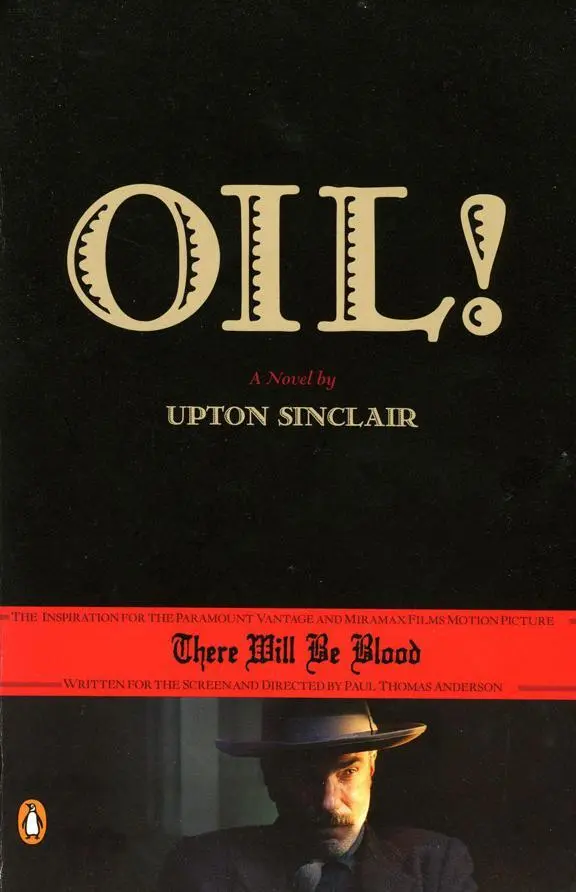
- Название:Oil!
- Автор:
- Издательство:Amereon Ltd
- Жанр:
- Год:1927
- ISBN:9780848823917
- Рейтинг книги:3 / 5. Голосов: 1
-
Избранное:Добавить в избранное
- Отзывы:
-
Ваша оценка:
Oil!: краткое содержание, описание и аннотация
Предлагаем к чтению аннотацию, описание, краткое содержание или предисловие (зависит от того, что написал сам автор книги «Oil!»). Если вы не нашли необходимую информацию о книге — напишите в комментариях, мы постараемся отыскать её.
In Oil! Upton Sinclair fashioned a novel out of the oil scandals of the Harding administration, providing in the process a detailed picture of the development of the oil industry in Southern California. Bribery of public officials, class warfare, and international rivalry over oil production are the context for Sinclair's story of a genial independent oil developer and his son, whose sympathy with the oilfield workers and socialist organizers fuels a running debate with his father. Senators, small investors, oil magnates, a Hollywood film star, and a crusading evangelist people the pages of this lively novel.
Oil! — читать онлайн бесплатно полную книгу (весь текст) целиком
Ниже представлен текст книги, разбитый по страницам. Система сохранения места последней прочитанной страницы, позволяет с удобством читать онлайн бесплатно книгу «Oil!», без необходимости каждый раз заново искать на чём Вы остановились. Поставьте закладку, и сможете в любой момент перейти на страницу, на которой закончили чтение.
Интервал:
Закладка:
There were very few people in the world who thought the Russians would be able to defend themselves against the hosts of all the world. Yet somehow they were managing it. There was a peculiar thing to be noticed in the newspaper despatches from the various anti-Bolshevik fronts. The allied troops would win great victories; they would take Perm, or Ufa, or whatever city it might be, and capture vast thousands of the enemy. A month or two later they would be cheered up—until it occurred to them to get the map, and compare the location of the two places, and discover that the second place was one or two hundred miles farther back than the first one!
Later on Bunny found out what this meant. The peasants had a way of staying quiet while the allied forces advanced, and then rising up behind their lines and forcing them to retreat. So mighty was Bolshevik propaganda—it was working thus at Archangel, and all along the western front from the Baltic to the Crimea, and all over Siberia; no victory ever lasted. Admiral Kolchak got all the way across Siberia, General Denikin, in the Ukraine, got within a hundred and twenty-fve miles of Moscow; but it all came to nothing.
Then, as summer turned into fall, and fall into winter, a still more terrifying thing began to happen. The armies of the great powers began to show signs of succumbing to the deadly propaganda poison! They were now in the second winter since the armistice, and the soldiers thought the war was over, and why couldn’t they go home? The very worst of the prophesies of Eldon Burdick began suddenly to come true. The sailors of the French fleet in the Black Sea rose up and overthrew their officers and captured several battle-ships! German troops declined to win their way back to respectability by putting down Bolshevism for the allies! British soldiers at Folkestone refused to go onto the ships that were to take them to Archangel!
And most appalling of all, a mutiny in the American army! The first mutiny in the whole history of “Old Glory”! Michigan lumbermen and farmer-boys, shipped up there under the Arctic circle, put under the command of British officers, and ordered out to shoot half-starved and ragged Russian workingmen at fifty degrees below zero—these boys laid down their arms! The facts were hushed up in the newspapers—but not in the higher circles of the army and of world diplomacy, nor yet in the office-buildings where the gentlemen and lady-patriots planned the future of the world!
In the month of October the allies made their last military effort. They sent in the tsarist General Yudenich to take Petrograd; they gave him all the supplies he could use, and troops of many nations, and he got within a few miles of the city, so that the Soviets had to move their capital to Moscow. But the half-starved and ragged Communists drove back their foes, and Bolshevik propaganda proceeded to cause a revolution in Hungary and another in Bavaria!
Also at home there were portents. In spite of all the raids and jailings and deportations, great numbers of people could not be prevented from saying publicly and loudly that we had no business making war upon a friendly people. More and more there was discontent with the program of keeping our soldiers abroad after the war was over. “Radical” newspapers and magazines continued to be circulated, and in the big cities at any rate it was not possible to prevent mass-meetings.
It was a little difficult to make any protest effective, because of the peculiar condition into which the government had fallen. The President had set out on a tour, to convince the people that they should be satisfied with the peace settlement. He had come to Angel City, and Dad and Bunny had gone to hear him—in a vast hall where ten thousand people were marshalled, and taught to stand up and sit down again, and cheer at signal, all very reverently, quite like royalty. The great man’s voice was strained, and his face had an unwholesome flush, and his arguments were as broken as his appearance. A few days later came word that his health had collapsed, and he was hurried back to Washington, where he had an apoplectic stroke. Now he lay, a helpless, half-conscious invalid, and the country was governed by a strange triumvirate—a Catholic private secretary, an army doctor, and one of the most fashionably dressed of Washington society ladies.
But somewhere, in the cabinet, perhaps, there was left a trace of intelligence, with which to realize the mounting dangers abroad and at home. At Christmas time, while Bunny was up at Paradise, hunting quail and watching the progress of Ross Consolidated, he went out one morning to meet the Ford car which brought the mail to the tract. He got his morning paper and opened it, and there on the front page was a despatch from Washington, announcing that the army authorities had decided it was no longer necessary for them to police the Trans-Siberian Railway; we were going to leave the Japanese in charge, and come home. Bunny gave a shout, and rushed into the house, calling for Ruth. “Paul is coming back! Paul is coming back!” And then he had to run quick and catch her by the arm and help her to a chair!
CHAPTER XI THE REBEL
At Southern Pacific University the class lines were tacitly but effectively drawn, and in the ordinary course of events a man of Bunny’s wealth, good looks and good manners, would have associated only with the members of fraternities and sororities. If some Negro boy were to develop eloquence as a debater, or is some one taking a course in millinery or plumbing were to display fleetness as a hurdler, the hurdler might hurdle and the debater might debate, but they would not be invited to tea-parties or dances, nor be elected to prominence in the student organizations; such honors were reserved for tall Anglo-Saxons having regular features, and hair plastered straight back from their foreheads, and trousers pressed to a knife edge and never worn two days in succession.
But here was Bunny Ross, persisting in fooling with “dangerous thoughts,” that made his friends angry. Of course, as anyone would have foreseen, there were “barbs” and “goats,” anxious to break in where they were not wanted, and perfectly willing to pretend to think that our country ought not to intervene in Russia, if by so professing they could get to know one of the socially élite. So Bunny found himself on talking terms with various queer fish. For example, there was Peter Nagle, whose father was president of a “rationalist society,” and who seemed to have one dominating desire in life—to blurt out in class that what was the matter with the world was superstition, and that mankind could never progress until they stopped believing in God. In a university all of whose faculty were required to be devout Methodists, you can imagine how popular this made him. Peter looked just as you would expect such a boor to look, with a large square head and a wide mouth full of teeth, and a shock of yellow hair which he allowed to straggle round his ears and drop white specks onto his coat collar—his coat did not match his trousers, and he brought his lunch to the university tied with a strap!
And then there was Gregor Nikolaieff. Gregor was all right, when you got to know him, but the trouble was, it was hard to know him, because his accent was peculiar, and at critical moments in his talk he would forget the English word. He had jet black hair, and black eyes with a sombre frown above them—in short, he was the very picture of what the students called a “Bolsheviki.” As it happened, Gregor’s father had belonged to one of the revolutionary parties whom the Bolsheviks were now sending to jail; but how could you explain that to a student body which dumped into one common garbage-can Socialists and Communists and Syndicalists and Anarchists, Communist-Anarchists and Anarchist-Syndicalists, Social Revolutionaries and Social Democrats, Populists, Progressives, Single-taxers, Nonpartisan Leaguers, Pacifists, Pragmatists, Altruists, Vegetarians, Anti-vivisectionists and opponents of capital punishment.
Читать дальшеИнтервал:
Закладка:
Похожие книги на «Oil!»
Представляем Вашему вниманию похожие книги на «Oil!» списком для выбора. Мы отобрали схожую по названию и смыслу литературу в надежде предоставить читателям больше вариантов отыскать новые, интересные, ещё непрочитанные произведения.



Обсуждение, отзывы о книге «Oil!» и просто собственные мнения читателей. Оставьте ваши комментарии, напишите, что Вы думаете о произведении, его смысле или главных героях. Укажите что конкретно понравилось, а что нет, и почему Вы так считаете.