Эптон Синклер - Oil!
Здесь есть возможность читать онлайн «Эптон Синклер - Oil!» весь текст электронной книги совершенно бесплатно (целиком полную версию без сокращений). В некоторых случаях можно слушать аудио, скачать через торрент в формате fb2 и присутствует краткое содержание. Год выпуска: 1927, ISBN: 1927, Издательство: Amereon Ltd, Жанр: Проза, на английском языке. Описание произведения, (предисловие) а так же отзывы посетителей доступны на портале библиотеки ЛибКат.
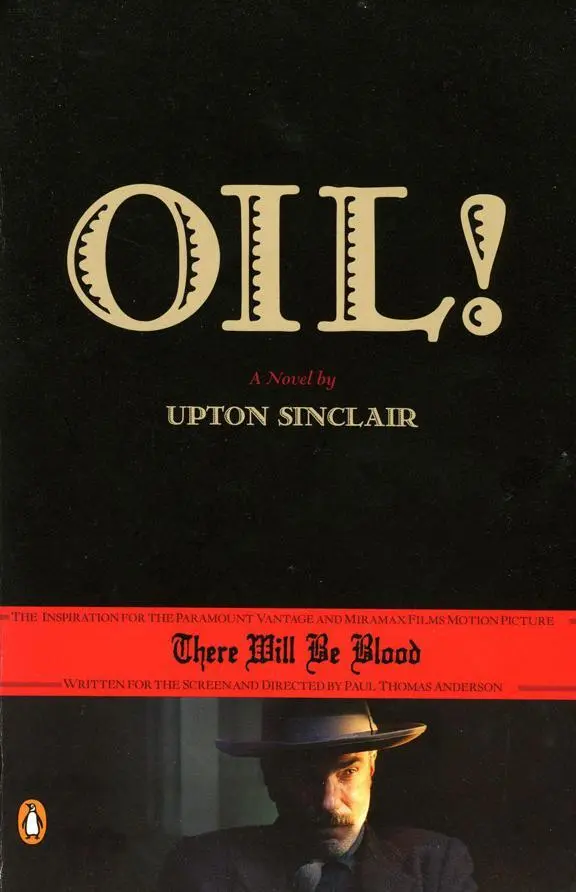
- Название:Oil!
- Автор:
- Издательство:Amereon Ltd
- Жанр:
- Год:1927
- ISBN:9780848823917
- Рейтинг книги:3 / 5. Голосов: 1
-
Избранное:Добавить в избранное
- Отзывы:
-
Ваша оценка:
Oil!: краткое содержание, описание и аннотация
Предлагаем к чтению аннотацию, описание, краткое содержание или предисловие (зависит от того, что написал сам автор книги «Oil!»). Если вы не нашли необходимую информацию о книге — напишите в комментариях, мы постараемся отыскать её.
In Oil! Upton Sinclair fashioned a novel out of the oil scandals of the Harding administration, providing in the process a detailed picture of the development of the oil industry in Southern California. Bribery of public officials, class warfare, and international rivalry over oil production are the context for Sinclair's story of a genial independent oil developer and his son, whose sympathy with the oilfield workers and socialist organizers fuels a running debate with his father. Senators, small investors, oil magnates, a Hollywood film star, and a crusading evangelist people the pages of this lively novel.
Oil! — читать онлайн бесплатно полную книгу (весь текст) целиком
Ниже представлен текст книги, разбитый по страницам. Система сохранения места последней прочитанной страницы, позволяет с удобством читать онлайн бесплатно книгу «Oil!», без необходимости каждый раз заново искать на чём Вы остановились. Поставьте закладку, и сможете в любой момент перейти на страницу, на которой закончили чтение.
Интервал:
Закладка:
It was while Paul was alone with Bunny that he told this; and the younger man sat, speechless with horror. “Oh, yes,” said Paul; “that’s the kind of thing we had to see—and know we were to blame for it. I could tell you things much worse—I’ve helped to bury a hundred bodies of people that had been killed, not in battle, just shot down in cold blood, men and women, children, even babies. I’ve seen a ‘white’ officer shoot women in the head, one after another; and with our bullets, brought there by our railway men—I mean our bankers’ railway men. A lot of our boys went plumb crazy with it. Out of the two thousand that came off our transport, I doubt if there were ten per cent quite normal. I said that to our surgeon, and he agreed.”
All this was so different from what Bunny had been taught that it was hard for him to adjust his thoughts to it. He would go off and think it over, and then come back with another string of questions. “Then Paul, you mean the Bolsheviks aren’t bad people at all!”
Paul answered, “Just apply the rule—remember Paradise! They were workingmen, like any other workingmen on strike. A lot of them have come from America—got their training here. I used to meet them and have long talks—all kinds of fellows, that had been all over this country. They are people with modern ideas, trying to dig the Russians out of their ignorance and superstition. They believe in education—I never saw such people for teaching; everywhere, whatever they were doing, they were always preaching, having lectures, printing things—why, son, I’ve seen newspapers printed on old scraps of brown butcher paper, or wrappings our army had thrown away. I learned Russian pretty well—and it was just the sort of thing our strikers printed at Paradise, only of course these people have got farther in their struggle against the bosses, they see things more clearly than we do.”
Bunny was staring, a little frightened. “Paul! Then you agree with the Bolsheviks?”
Paul laughed, a grim laugh. “You go up to Frisco and talk with the men on that transport! That army was Bolshevik to a man—and not only the privates, but the officers. I guess that’s why they brought us home. There was mutiny in Archangel, you know—or maybe you don’t.”
“I heard something—”
“Let me tell you, Bunny—I’ve been there, and I know. The Bolsheviks are the only people in that country that have any faith or any solidarity; and they’re going to run it, too—mark my words, the Japs will get out, the same as we did. You can’t beat people that will die for their cause, the last man and the last woman.”
Said Bunny, timidly, “Then it isn’t true what we’ve been told—I mean about their nationalizing the women?”
“Oh, my Lord!” said Paul. “Is that the sort of rot you’ve been thinking?”
“Well, but how can we know what to think?”
Paul laughed. “Come to think of it, I met some women that had been nationalized by the Bolsheviks—as school-teachers. They taught the men in their armies to read and write, and made every man swear to teach ten others what he had learned. I saw a couple of dozen such women in a cattle-car on the Trans-Siberian railway, without a single blanket, nothing but blocks of wood for pillows, not even a bucket to serve for a toilet. They had several cases of Asiatic cholera among them, and they’d been that way for ten or twelve days—prisoners of war, you understand, waiting until they got to Irkutsk, where they’d be shot without a trial. And on the other hand, Bunny—here’s the truth, I was in Siberia eighteen months, and never saw an atrocity committed by a Bolshevik, and never met a man in our army that had seen one. I don’t say there weren’t any; all I say is, I met men that had travelled all over Russia, our people as well as natives, and the only Bolshevik atrocity that anyone knew about was the fundamental one of teaching the workers they had a right to rule the world. You can set this down for a fact about the Russian revolution, all the way from Vladivostok to Odessa and Archangel—that where the ‘reds’ did any killing or executing, the ‘whites’ did ten, and a hundred times as much. You never hear about ‘white’ atrocities, because the newspapers don’t report them—they are too busy telling how Lenin has murdered Trotsky, and Trotsky has thrown Lenin into jail.”
This meeting with Paul was the most exciting event of Bunny’s life. It transvaluated all his values; things that had been wicked became suddenly heroic, while things that had been respectable became suddenly dull. Bunny, confronting the modern industrial world with its manifold injustices, had been like a man lost in a tangled forest. But here he had been taken up in a balloon, and shown the way out of the tangle. Everything was now simple, plain as a map. The workers were to take over the industries, and run them for themselves, instead of for the masters. Thus, with one stroke, the knot of social injustice would be cut!
Bunny had heard of this idea, and it had sounded fantastic and absurd. But now came Paul to tell him that it had actually been done! A hundred million people, occupying one-sixth of the earth’s surface, had taken over their industries, and were running them, and would make a success of them—if only the organized greed of the world would stand off and let them alone!
Bunny took Paul in his car, to show him all the field. They investigated the new refinery, that wonderful work of art. Before them rose a great building, made entirely of enormous baking-pans set one inside another—a stack half way to heaven; the angels were making caramels for the whole world, dainties with a new, patented flavor, and sickish sweet odors that spread over the hills for miles and frightened the quail away!
It was twilight, and the white steam that rose from these pans had a faint violet tinge as it merged with the sky. Electric lights came on, white and yellow and red, until the place looked like a section of Coney Island. And this resemblance increased as you drove farther, and came to a building, long and low, in which forty-four Dutchmen sat hidden puffing on forty-four pipes, and doing it all in unison, like an orchestra; the most comical effect you could imagine—forty-four exhausts all keeping time, quick and sharp—puff-puff-puff-puff-puff-puff-puff!
Bunny felt his old embarrassment in connection with the Paradise tract; his title to these vast possessions was not clear, and Paul was bound to be jealous, realizing how his family had been tricked. But, then, in swift flashes of revelation, Bunny discovered how completely out of date these old feelings had become. Nevermore would Paul be jealous for his lost heritage; never would he consider the claims of the Watkins family—any more than the claims of the Ross family! The Paradise tract belonged to the Paradise workers; the beautiful new refinery was a ripe peach, hanging on a tree and waiting to be picked! All that was needed was for some one to point this out to the men. If Paul had not been weak and exhausted, he might have pointed it out that evening, and they could have taken over the plant, and had it ready for operation under the new management by morning! All power to the Soviets!
Bunny went back to the university, charged with these electrical new thoughts; at one moment he would be trembling with excitement, and at the next he would be frightened to realize what he had been thinking. Some instinct warned him that the idea of expropriating the industries of Southern California would stand no chance with his class-mates; so he contented himself with telling the good tidings about Russia—that the revolution was not a blind outburst of ferocity, but the birth of a new social order. Bunny told this; and Peter Nagle received the gospel with his large mouth wide open; while Gregor Nikolaieff said yes, but why had they got his cousin in jail; and Rachel Menzies said they had got thousands of Socialists in jail; and Billy George said, “Let’s get a group of fellows together and have Paul come and talk to them.”
Читать дальшеИнтервал:
Закладка:
Похожие книги на «Oil!»
Представляем Вашему вниманию похожие книги на «Oil!» списком для выбора. Мы отобрали схожую по названию и смыслу литературу в надежде предоставить читателям больше вариантов отыскать новые, интересные, ещё непрочитанные произведения.


Обсуждение, отзывы о книге «Oil!» и просто собственные мнения читателей. Оставьте ваши комментарии, напишите, что Вы думаете о произведении, его смысле или главных героях. Укажите что конкретно понравилось, а что нет, и почему Вы так считаете.