Charlie Brooker - Inside Black Mirror
Здесь есть возможность читать онлайн «Charlie Brooker - Inside Black Mirror» весь текст электронной книги совершенно бесплатно (целиком полную версию без сокращений). В некоторых случаях можно слушать аудио, скачать через торрент в формате fb2 и присутствует краткое содержание. Город: London, Год выпуска: 2018, ISBN: 2018, Издательство: Ebury Publishing, Жанр: cine, на английском языке. Описание произведения, (предисловие) а так же отзывы посетителей доступны на портале библиотеки ЛибКат.
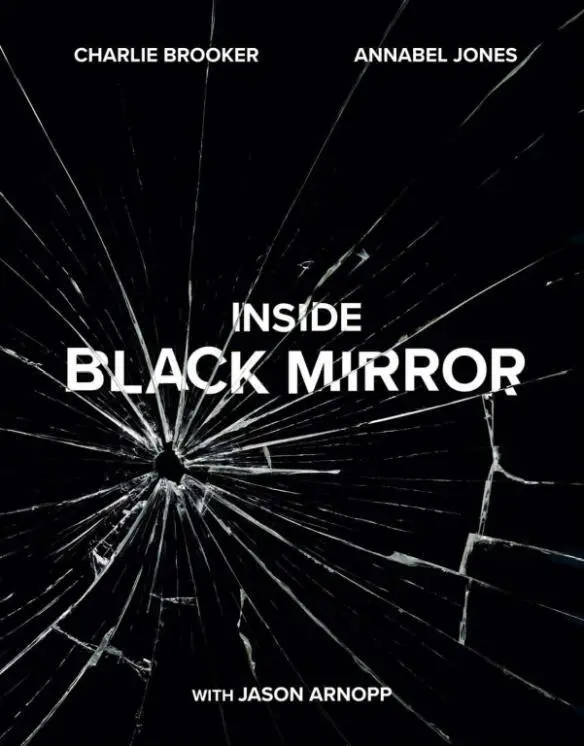
- Название:Inside Black Mirror
- Автор:
- Издательство:Ebury Publishing
- Жанр:
- Год:2018
- Город:London
- ISBN:978-15-2910-258-1
- Рейтинг книги:3 / 5. Голосов: 1
-
Избранное:Добавить в избранное
- Отзывы:
-
Ваша оценка:
Inside Black Mirror: краткое содержание, описание и аннотация
Предлагаем к чтению аннотацию, описание, краткое содержание или предисловие (зависит от того, что написал сам автор книги «Inside Black Mirror»). Если вы не нашли необходимую информацию о книге — напишите в комментариях, мы постараемся отыскать её.
This first official book logs the entire Black Mirror journey, from its origins in creator Charlie Brooker’s mind to its current status as one of the biggest cult TV shows to emerge from the UK. Alongside a collection of astonishing behind-the-scenes imagery and ephemera, Brooker and producer Annabel Jones will detail the creative genesis, inspiration and thought process behind each film for the first time, while key actors, directors and other creative talents relive their own involvement. cite – The Hollywood Reporter cite – Telegraph
Inside Black Mirror — читать онлайн бесплатно полную книгу (весь текст) целиком
Ниже представлен текст книги, разбитый по страницам. Система сохранения места последней прочитанной страницы, позволяет с удобством читать онлайн бесплатно книгу «Inside Black Mirror», без необходимости каждый раз заново искать на чём Вы остановились. Поставьте закладку, и сможете в любой момент перейти на страницу, на которой закончили чтение.
Интервал:
Закладка:
Charlie had written 80 pages – we were so nearly there! But when he gave up, I knew he’d come back to it. I said to him, “This is brilliant, this is thrilling and intriguing!” But other episodes came in and took priority.
Charlie Brooker:I went off and worked on San Junipero and Shut Up and Dance instead. And then, at some point around the writing of Men Against Fire , Hated in the Nation became a going concern again.
Annabel Jones:Tonally, I never worry about the show’s ability to land a compelling story, or Charlie’s ability to write a convincing, grounded story. It’s all about balance and where you place the emphasis. I think we’re quite good at managing all those things, so that nothing ever tips over into being preposterous. It’s all about what you show and what you don’t.
Charlie Brooker:When I dug the script back out again, I hadn’t looked at it for two months. I read it through, and this time I saw where I’d gone wrong.

Annabel Jones:Charlie remembered how, in White Christmas , we’d got through a lot of detail very quickly by having Jon and Rafe as narrators. So he came up with the flash-forward framing device of Karin and other characters giving evidence at the public enquiry, to do a lot of the narrative heavy-lifting. It also meant the film could span more time than the five-day killing spree and we didn’t have to explain every step along the way.
We didn’t end up using this framing device as much as we originally thought, because it actually cut into the pace of the story, but it was a really effective method for building intrigue. What happened on the day Karin is being interrogated about? We see that Blue isn’t present in the flash-forward, so has she been killed? Then we’re led to believe Blue killed herself, setting up the great ending.
When Charlie went back and re-read those first 80 pages, that’s when I knew everything was fine, because he said, “You know what? It was all right.” I thought, “Fucking hell, he must’ve enjoyed it, to give himself that level of praise!” Normally he’ll go, “We are doomed! We are over!”
Charlie Brooker:I’m better now. A bit less doomy, thanks to experience. Because after all the times I’ve gone, “We’re doomed!” we’ve always found solutions. Until of course, the one time we are doomed… which will happen.
Producer Sanne Wohlenberg had enjoyed a varied career, but her work on TV police shows Messiah and Wallander were a particularly good fit for Hated in the Nation .
Sanne Wohlenberg (producer):Originally, Lucy Dyke and Laurie Borg were supposed to produce three films each this season. But then they realised it would be impossible for, say, one producer to be shooting in Cape Town whilst also prepping in London! So I got a phone call out of the blue, saying they needed a producer for Hated in the Nation . Could I start on Monday? I read the script and said, “Ooh, yes please!”
We interviewed quite a few directors. James Hawes had done a beautifully judged TV production called The Challenger . He had collaborated with the cinematographer Lukas Strebel, and those two really bring the best out of each other onscreen. They got the DNA of Hated in the Nation .
James Hawes (director):I liked how Hated in the Nation started with a really slow burn, moving from local to global. The real challenge was how to pace it and craft the escalation. How to draw our audience into the world early on and then take them with us to the real darkness. Hated in the Nation could have gone wrong and become sci-fi horror. I wanted it far more rooted and honest than that, so that the enormous scale and consequence felt plausible.


Sanne Wohlenberg:One of our big challenges was how to portray London. It was ultimately a very normal world and terribly familiar, but five minutes ahead. We had 32 London locations to shoot in 23 days, which was a challenge in itself. It was about creating a visual coherence.
Joel Collins (series production designer):I did some Scandi-noir tonal design work, which became basically [the US anthology crime drama TV show] True Detective in terms of its edgy quality.
James Hawes:I often choose a reduced palette to bring a unity to the design. Lukas and I admire many of the Scandi series and sought to capture something of that aesthetic, which seemed appropriate to the story. The palette also seemed to speak of a world where the bees have died out, killed by human stupidity.
Morgan Kennedy (co-production designer):The decision to take a somewhat monochromatic approach worked really well with the idea of nature being replicated. We tried to restrict the colour palette in camera as much as possible, which gave the opportunity to use stronger colour when it was needed. My favourite example is the flowers in the foreground before the Granular HQ greenhouse scene.
Sanne Wohlenberg:We picked the right buildings, juxtaposing old with new. DCI Karin Parke’s apartment had to be a bland new-build, where a divorced woman had settled. We did subtle things like lights coming on automatically when she walks in. Things that make it feel a few years forward.
‘[Online hate] drifts off like weather. It’s half-hate. They don’t mean it… The hate in a marriage, that’s in 3D. That’s had work put into it. That’s sincere’
– KarinMorgan Kennedy:One of Hated in the Nation ’s strong themes was the mix of technology and nature. Granular HQ was possibly the biggest challenge, and went through quite a few looks to get it right. In the end, the mix of the huge greenhouse and the control room’s hi-tech but simple concrete design seemed to work very well.
James Hawes:Finding locations in which to shoot Granular HQ proved hard. In the end, we shot on five separate locations to build the journey from the drive, through the reception and glasshouses, all the way to the lab. It included a salad farm in Essex and the ExCel conference centre in London.
Annabel Jones:Poor Erica McEwan, our series graphic art director, had so much to do with all of the graphics and social media interfaces. Obviously they had to be very foregrounded in the film, often driving the narrative, and so their authenticity was key. We spent months in prep and post working through it all. Luckily Erica is as patient as she is talented.
James Hawes:We spent a great deal of effort deciding what police looked like in 2024. We used existing sirens but played them in reverse. We armed 85 per cent of the officers and made all their uniforms black. The cars were BMWs but with a new livery.
Oh, the driverless car! We had this Land Rover concept car. They went to huge lengths to make it driverless, reshaping doors and so on. However, on the day, we discovered that it could only move in a straight line and then only at 15kph! Also, from the moment you pressed the button to open the doors, it took over a minute before they were wide enough for our team of super cops to be able to jump out. This meant the whole car thing ate shoot-time, and relied far more heavily on VFX than anticipated.
Читать дальшеИнтервал:
Закладка:
Похожие книги на «Inside Black Mirror»
Представляем Вашему вниманию похожие книги на «Inside Black Mirror» списком для выбора. Мы отобрали схожую по названию и смыслу литературу в надежде предоставить читателям больше вариантов отыскать новые, интересные, ещё непрочитанные произведения.


Обсуждение, отзывы о книге «Inside Black Mirror» и просто собственные мнения читателей. Оставьте ваши комментарии, напишите, что Вы думаете о произведении, его смысле или главных героях. Укажите что конкретно понравилось, а что нет, и почему Вы так считаете.