Charlie Brooker - Inside Black Mirror
Здесь есть возможность читать онлайн «Charlie Brooker - Inside Black Mirror» весь текст электронной книги совершенно бесплатно (целиком полную версию без сокращений). В некоторых случаях можно слушать аудио, скачать через торрент в формате fb2 и присутствует краткое содержание. Город: London, Год выпуска: 2018, ISBN: 2018, Издательство: Ebury Publishing, Жанр: cine, на английском языке. Описание произведения, (предисловие) а так же отзывы посетителей доступны на портале библиотеки ЛибКат.
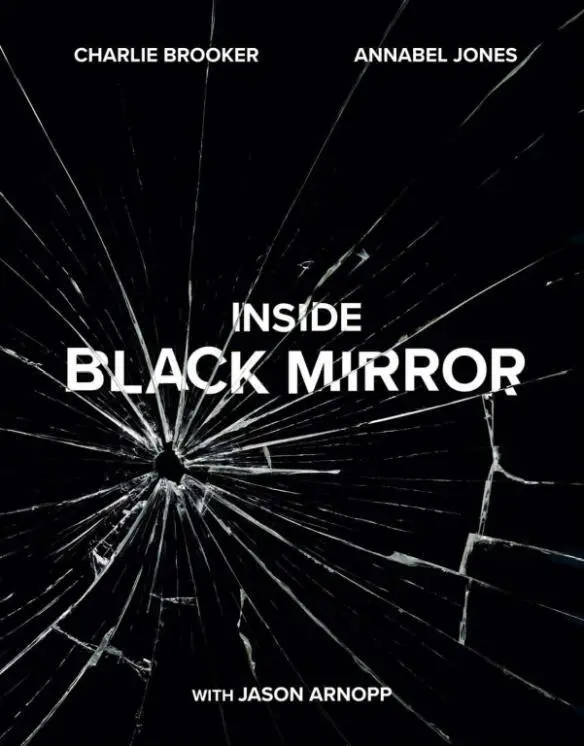
- Название:Inside Black Mirror
- Автор:
- Издательство:Ebury Publishing
- Жанр:
- Год:2018
- Город:London
- ISBN:978-15-2910-258-1
- Рейтинг книги:3 / 5. Голосов: 1
-
Избранное:Добавить в избранное
- Отзывы:
-
Ваша оценка:
Inside Black Mirror: краткое содержание, описание и аннотация
Предлагаем к чтению аннотацию, описание, краткое содержание или предисловие (зависит от того, что написал сам автор книги «Inside Black Mirror»). Если вы не нашли необходимую информацию о книге — напишите в комментариях, мы постараемся отыскать её.
This first official book logs the entire Black Mirror journey, from its origins in creator Charlie Brooker’s mind to its current status as one of the biggest cult TV shows to emerge from the UK. Alongside a collection of astonishing behind-the-scenes imagery and ephemera, Brooker and producer Annabel Jones will detail the creative genesis, inspiration and thought process behind each film for the first time, while key actors, directors and other creative talents relive their own involvement. cite – The Hollywood Reporter cite – Telegraph
Inside Black Mirror — читать онлайн бесплатно полную книгу (весь текст) целиком
Ниже представлен текст книги, разбитый по страницам. Система сохранения места последней прочитанной страницы, позволяет с удобством читать онлайн бесплатно книгу «Inside Black Mirror», без необходимости каждый раз заново искать на чём Вы остановились. Поставьте закладку, и сможете в любой момент перейти на страницу, на которой закончили чтение.
Интервал:
Закладка:

Gugu Mbatha-Raw:I’m really proud and somewhat surprised by the impact the film has had, in terms of the pride and joy and inspiration I know it’s become for the LGBTQ community. Many people have approached me to express how important this was: a love story between two women which was not about being ashamed of anything. It wasn’t about being gay or bisexual being a problem. It was a love story about souls, and that’s how I always saw it, so I’m super-proud.
It’s great for a work to be fun, first and foremost, but when it’s got something to say, touches people emotionally and potentially helps the culture to evolve in terms of how minorities are seen? That’s a very powerful gift.

MEN AGAINST FIRE
In Conversation
Charlie Brooker – writer and executive producer
Annabel Jones – executive producer
Jakob Verbruggen – director
Malachi Kirby – actor
Lucy Dyke – producer
Joel Collins – series production designer
Natalie Ward – costume designer
Young soldier Stripe joins a military unit commissioned to exterminate humanoid mutants known as ‘roaches’, which have reportedly terrorised the local villagers. After killing two roaches, Stripe discovers his superiors are manipulating the nature of the reality seen by him and his fellow grunts.
Charlie Brooker: Inbound , the first ever Black Mirror episode fully written but never made, had been based on a true, harrowing story. Konnie had made me watch this gut-wrenching 2010 John Pilger documentary called The War You Don’t See , about the Iraq war. There was a lengthy sequence following a grieving mother around her house, in which she was subtitled throughout, describing how members of her family had been killed. Usually you’d just glimpse a weeping relative for a two-second shot in a news report. This suddenly became more urgent and human. It got me thinking about a story in which we merely transposed a real incident from a warzone and had it play out in contemporary Britain. I read about various incidents and stumbled across one about a young boy from Iraq who was injured when soldiers mistakenly opened fire on his family’s car. His parents were killed, and he was left partially paralysed. They flew him to the States, got him state-of the-art treatment, and eventually got him to walk again. He voluntarily went back to Iraq and then got blown up by a bomb. I mean, it was horrifying.
We went through various incarnations with Inbound , but it was hard for me to unpick. In this story, you thought an alien force was attacking Britain, but it turned out they were Norwegian. As Jay Hunt once said, it was all a bit heavy-handed and overly earnest, as well as quite humourless, given the subject matter.
Annabel Jones:Sounds perfect! There was definitely something interesting in the way war footage was now constantly being broadcast to us and the resulting desensitisation, but we couldn’t find the story to make it more than that. Later, the idea became more about the future of warfare and military conditioning, and how technology could provide the ultimate propaganda tool.

Charlie Brooker: Inbound evolved into Men Against Fire , with this war in which combat is being censored for the soldiers. Thanks to these soldiers’ MASS systems, human beings are being made to look like ‘roach’ monsters. I can’t remember if our term ‘roaches’ pre-dated [controversial British columnist] Katie Hopkins writing cartoonishly horrible things about migrants in the newspaper and calling them ‘cockroaches’. Actually, that may have been a deliberate lift, because there’s a deliberately Katie Hopkins-type character in Hated in the Nation .
I was definitely looking for a word that could be used as a racist or dehumanising term to describe a whole group of people. At the time, I thought it was incredibly far-fetched, the notion that a future fascist government might come in and demonise a huge section of society. And then subsequently that’s felt closer to home.
Jakob Verbruggen (director):We’d seen a lot of young actors, but Malachi Kirby stood out for the role of Stripe. He has a lot of star quality and a very strong physique, but he’s also enigmatic, silent and observant.
Malachi Kirby (actor):I was already an admirer of the show from the first series – to the point where I was slightly conflicted by the knowledge that as soon as I read Men Against Fire , I would no longer be able to enjoy it as an audience member. That didn’t stop me. I was definitely touched by it. A harrowing read.

Jakob Verbruggen:Stripe starts out as an enthusiastic rookie, almost as if he’s in an American football team. I was inspired by [the 1997 sci-fi film] Starship Troopers to create that sense of fearless high energy, so I have to thank its director Paul Verhoeven there.
Malachi Kirby:To me, Stripe didn’t seem like an alpha male at all, but someone both naive and slightly aware that he may not be cut out for the journey he was about go on as a soldier. He has this chip installed in him that dulls his senses and emotions, but I still wanted to try and find some individuality and vulnerability in him.
Lucy Dyke (producer):This was a gritty film, without the gloss or sheen of some of the other Black Mirror s. Set in a semi post-apocalyptic world, it was intended to be slightly ‘other’ in terms of location, possibly somewhere in Eastern Europe. Time and budget constraints dictated we shot this in the UK, but it couldn’t look like the UK or indeed 2016.
Three key locations helped us achieve the look. The first was the ‘roach nest’, the derelict farmhouse in the middle of nowhere. The location we found was falling down and full of grimy 70s paraphernalia which looked great but came with many health and safety warnings! A disused army barracks just outside London became our abandoned ‘civilisation’, which we wanted to feel urban and Eastern Bloc. And then there was the village that people had fled to when the spread of the roaches began. Joel Collins and his brilliant team built this from scratch in a forest near London. Expensive but worth every penny.
‘Humans – we give ourselves a bad rap but we’re genuinely empathetic, as a species… We don’t actually really want to kill each other. Which is a good thing, until your future depends on wiping out the enemy’
– ArquetteJakob Verbruggen:Creating the roaches was a long and interesting journey. Were they a mutation, were they zombies, what were they? We looked at a lot of skin diseases and mutations. Considering our twist and how familiar everyone is with virtual reality and first-person shooter games, it was key to make the roaches as authentic as possible. There’s a lot of close contact, especially for the character of Stripe. They’re literally inches away from each other, so the roaches had to feel 100 per cent believable.
Читать дальшеИнтервал:
Закладка:
Похожие книги на «Inside Black Mirror»
Представляем Вашему вниманию похожие книги на «Inside Black Mirror» списком для выбора. Мы отобрали схожую по названию и смыслу литературу в надежде предоставить читателям больше вариантов отыскать новые, интересные, ещё непрочитанные произведения.

Обсуждение, отзывы о книге «Inside Black Mirror» и просто собственные мнения читателей. Оставьте ваши комментарии, напишите, что Вы думаете о произведении, его смысле или главных героях. Укажите что конкретно понравилось, а что нет, и почему Вы так считаете.