Charlie Brooker - Inside Black Mirror
Здесь есть возможность читать онлайн «Charlie Brooker - Inside Black Mirror» весь текст электронной книги совершенно бесплатно (целиком полную версию без сокращений). В некоторых случаях можно слушать аудио, скачать через торрент в формате fb2 и присутствует краткое содержание. Город: London, Год выпуска: 2018, ISBN: 2018, Издательство: Ebury Publishing, Жанр: cine, на английском языке. Описание произведения, (предисловие) а так же отзывы посетителей доступны на портале библиотеки ЛибКат.
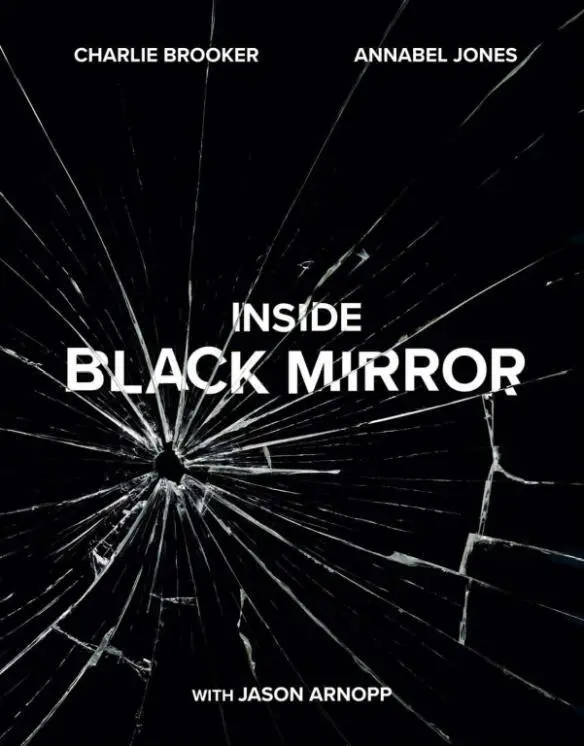
- Название:Inside Black Mirror
- Автор:
- Издательство:Ebury Publishing
- Жанр:
- Год:2018
- Город:London
- ISBN:978-15-2910-258-1
- Рейтинг книги:3 / 5. Голосов: 1
-
Избранное:Добавить в избранное
- Отзывы:
-
Ваша оценка:
Inside Black Mirror: краткое содержание, описание и аннотация
Предлагаем к чтению аннотацию, описание, краткое содержание или предисловие (зависит от того, что написал сам автор книги «Inside Black Mirror»). Если вы не нашли необходимую информацию о книге — напишите в комментариях, мы постараемся отыскать её.
This first official book logs the entire Black Mirror journey, from its origins in creator Charlie Brooker’s mind to its current status as one of the biggest cult TV shows to emerge from the UK. Alongside a collection of astonishing behind-the-scenes imagery and ephemera, Brooker and producer Annabel Jones will detail the creative genesis, inspiration and thought process behind each film for the first time, while key actors, directors and other creative talents relive their own involvement. cite – The Hollywood Reporter cite – Telegraph
Inside Black Mirror — читать онлайн бесплатно полную книгу (весь текст) целиком
Ниже представлен текст книги, разбитый по страницам. Система сохранения места последней прочитанной страницы, позволяет с удобством читать онлайн бесплатно книгу «Inside Black Mirror», без необходимости каждый раз заново искать на чём Вы остановились. Поставьте закладку, и сможете в любой момент перейти на страницу, на которой закончили чтение.
Интервал:
Закладка:
Charlie Brooker:What is Stripe actually looking at, in those final shots? I don’t really have an answer. That is a very oblique ending. I just knew it worked as an image. The idea originally was for the soldiers to come back to a homecoming parade and then you see it’s not real, and there’s no one showing up to see them.
Malachi Kirby:I really enjoyed that last scene, when Stripe gets out of the car and he’s in his uniform. We did quite a few different versions and interpretations of that, and it was fun to explore the possibilities. Also, I loved that costume!
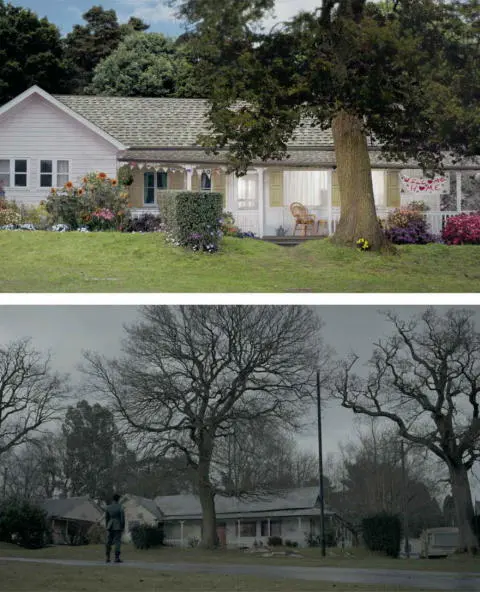
Despite how traumatised Stripe is by what has been revealed to him, he cannot bear to go back to ignorance. Here’s my own interpretation: he requests an option of keeping his memories but also having the chip alter what he sees again. So when he goes back home, the chip shows him a beautiful vision of his house and this virtual ‘spouse’, but he knows it’s not real.
HATED IN THE NATION
In Conversation
Faye Marsay – actor
Annabel Jones – executive producer
Charlie Brooker – writer and executive producer
Sanne Wohlenberg – producer
James Hawes – director
Joel Collins – series production designer
Morgan Kennedy – co-production designer
Dan May – visual effects supervisor
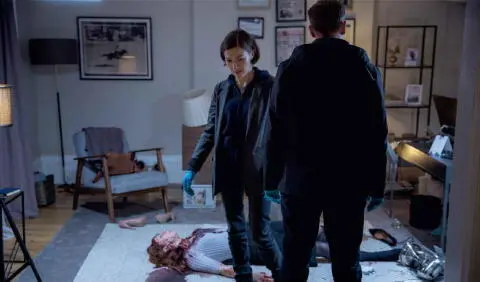
A controversial journalist is found dead, after attracting hatred on social media. A publicly shamed rapper suffers the same fate. When DCI Karin Parke and trainee detective Blue Coulson set out to find the connection between these deaths, they uncover one man’s mission to punish social media’s keyboard warriors.
Faye Marsay (actor):When I was in Game of Thrones , I played a character called The Waif who wasn’t very nice. Some days, I’d wake up and people would tweet the worst things, just basically telling me to die. That didn’t upset me in the sense that it felt real – it was just sad that people could hide behind a screen and say the most horrible stuff.
Social media’s wonderful in terms of activism and finding out what’s going on in the world, but there’s a real dark side. Kids bully each other on social media and people’s lives can be ruined. And that’s why Hated in the Nation appealed to me so much.
Annabel Jones:This film plays out almost like a serial-killer story, or a conventional detective whodunit mini-series, with gradual reveals of what’s going on. That was new for us. There were lots of world layers going on, and the plotting of all those things is quite complex. We’d done a bit of that in The National Anthem , but this was on a bigger scale.
I always thought Hated in the Nation was a very clever way of taking the online witch-hunt and making it feel very real. There are so many interesting themes being brought together. But for a long time, Charlie worried that the whole thing was preposterous.
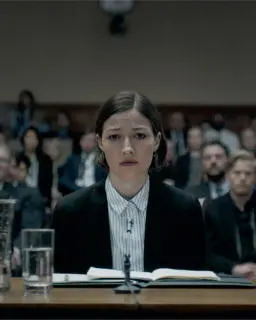
Charlie Brooker:This was one of the hardest Black Mirror s to write, and at one point I completely gave up. It has a lot of elements which are exactly the sort of thing we parodied when we did this spoof TV detective show called A Touch of Cloth , a sort of British take on [the 1988 comedy film] Naked Gun , with that Zucker Brothers humour. Because I’d only done a police procedural in the context of spoofing police procedurals, there was a lot of stuff to work out.
This one and Season Four’s Metalhead both sprang from the same idea: what if enough people voted for a particular person to be killed by a terrifying robot or several robots? So when we started doing the first Netflix season, I wondered how this idea might work. The next question was why somebody was being chased by a robot. Then it became a crowd-sourced assassination thing. I pictured a big thing chasing people, but I couldn’t quite work out why this person had been chosen to be killed.
For a while, I thought about a robot the size of the ones in [the 2013 sci-fi/fantasy blockbuster] Pacific Rim , or the size of Godzilla, gigantic and unstoppable. But I didn’t know how we’d do that. And then conversations led to it becoming the opposite: a robot so tiny you can’t see it. It’s literally the size of a mosquito and it kills you. And what if that was voted for?
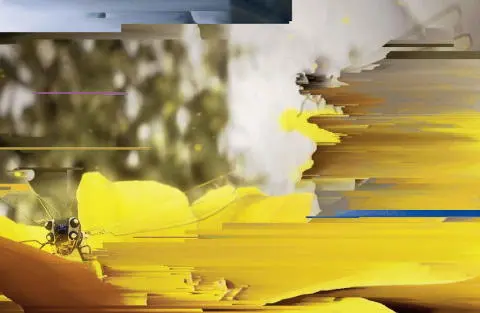
Thinking about it more, I got excited and wondered why the robot would be a little wasp or a bee. Since bees are dying out, what if they invent some? I didn’t know that real-life companies were actually working on drone bees, but I had the idea of this kind of programme being weaponised. So I created the company Granular to produce these bees.
Around this time, I had two conflicting thoughts. This idea seemed really silly: robot bees that kill people? Also, it could be really horrifying. But who’s doing this? Why are they doing it? How do I explain why this is happening?
When I get stuck on dialogue, it’s when I’m trying to capture the voice of an official who uses jargon. That throws me. So with Hated in the Nation , I didn’t know how the fuck the police speak and I worried about that too much, because they probably speak like us when they’re not spouting lingo as part of the job, and you can do research to find out what they would say.

I’m also allergic to another thing we almost did in Hated in the Nation , which is the evil corporation. Maybe this is naive of me, but I imagine few corporations sit around talking about how evil they are and enjoying it. Facebook might do thing that are mainly about profit, but they’ve probably convinced themselves they’re doing it for the good of humankind. That’s why we shy away from evil corporations – for a show with lots of gadgets and robots, we only allude to the companies that make these things.
So I wrote half of the script and then got really stuck. I just felt it was too silly. I said to Annabel, “I don’t think I can do that one. I’m going to write another instead.” The whole thing felt over-cooked. We’d spent so much time working out the logic of how it all worked that I’d slightly lost sight of things. It was upsetting, but mainly because I felt I’d squandered time. When you’re a writer, there’s always a voice in your head going, “You’re shit.” And this time, that voice seemed to have won.
Annabel Jones:We had worked out so much, including where the bees came from – originally, Scholes created his own network of self-replicating bees, before Charlie decided he should hack into an existing bee network. We established how the bees kill; the hashtag stuff and how it plays out; how the police work out the connection; the technical stuff, such as the cracking of the bees’ chip and getting the IMEI numbers; how Karin works out the killer’s identity. I remember us arguing vehemently about why the government just wouldn’t shut down the internet to prevent anyone being named and killed.
Читать дальшеИнтервал:
Закладка:
Похожие книги на «Inside Black Mirror»
Представляем Вашему вниманию похожие книги на «Inside Black Mirror» списком для выбора. Мы отобрали схожую по названию и смыслу литературу в надежде предоставить читателям больше вариантов отыскать новые, интересные, ещё непрочитанные произведения.

Обсуждение, отзывы о книге «Inside Black Mirror» и просто собственные мнения читателей. Оставьте ваши комментарии, напишите, что Вы думаете о произведении, его смысле или главных героях. Укажите что конкретно понравилось, а что нет, и почему Вы так считаете.