Charlie Brooker - Inside Black Mirror
Здесь есть возможность читать онлайн «Charlie Brooker - Inside Black Mirror» весь текст электронной книги совершенно бесплатно (целиком полную версию без сокращений). В некоторых случаях можно слушать аудио, скачать через торрент в формате fb2 и присутствует краткое содержание. Город: London, Год выпуска: 2018, ISBN: 2018, Издательство: Ebury Publishing, Жанр: cine, на английском языке. Описание произведения, (предисловие) а так же отзывы посетителей доступны на портале библиотеки ЛибКат.
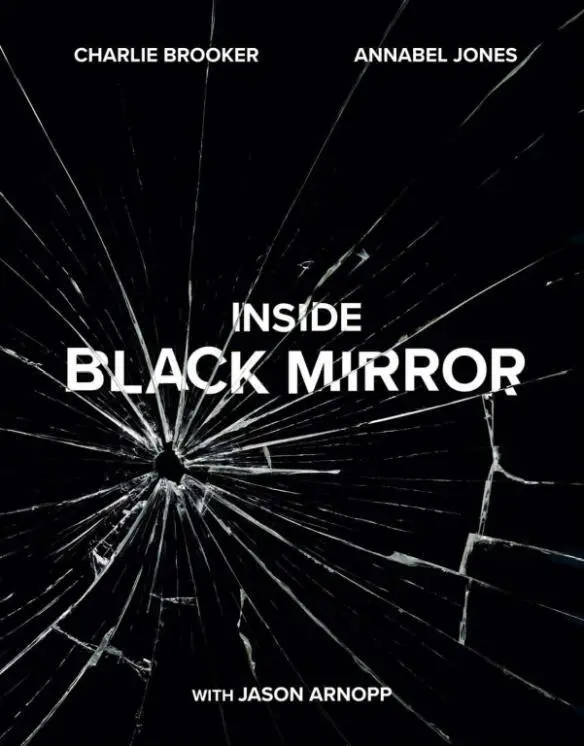
- Название:Inside Black Mirror
- Автор:
- Издательство:Ebury Publishing
- Жанр:
- Год:2018
- Город:London
- ISBN:978-15-2910-258-1
- Рейтинг книги:3 / 5. Голосов: 1
-
Избранное:Добавить в избранное
- Отзывы:
-
Ваша оценка:
Inside Black Mirror: краткое содержание, описание и аннотация
Предлагаем к чтению аннотацию, описание, краткое содержание или предисловие (зависит от того, что написал сам автор книги «Inside Black Mirror»). Если вы не нашли необходимую информацию о книге — напишите в комментариях, мы постараемся отыскать её.
This first official book logs the entire Black Mirror journey, from its origins in creator Charlie Brooker’s mind to its current status as one of the biggest cult TV shows to emerge from the UK. Alongside a collection of astonishing behind-the-scenes imagery and ephemera, Brooker and producer Annabel Jones will detail the creative genesis, inspiration and thought process behind each film for the first time, while key actors, directors and other creative talents relive their own involvement. cite – The Hollywood Reporter cite – Telegraph
Inside Black Mirror — читать онлайн бесплатно полную книгу (весь текст) целиком
Ниже представлен текст книги, разбитый по страницам. Система сохранения места последней прочитанной страницы, позволяет с удобством читать онлайн бесплатно книгу «Inside Black Mirror», без необходимости каждый раз заново искать на чём Вы остановились. Поставьте закладку, и сможете в любой момент перейти на страницу, на которой закончили чтение.
Интервал:
Закладка:
Annabel Jones:We had this funny moment while shooting the scene in which Karin and Blue thought they knew where the serial killer was and had the area surrounded by armed police. Karin and her senior team pulled up, about to jump out of the car and rush in… but had to stay seated for 60 seconds before the doors opened. Kelly and Faye struggled to hold it together.


Sanne Wohlenberg:It was wonderful to have two female leads. Charlie writes beautifully for women, which as we all know is not always the case in TV. We immediately gravitated towards Kelly Macdonald for DCI Karin Parke and were blessed that she loved it. Then we interviewed a few actors, but Faye Marsay brought Blue Coulson to life and we knew we’d found her.
Faye Marsay:I’d actually done a self-tape audition for Men Against Fire , which they liked, but they asked if they could see me for this other episode they were doing. I was really upset! I was like, “I wanted to have a gun and run about!” But then they sent me the script for Hated in the Nation and I was like, “Ooh, okay then!” Charlie writing about social media’s potentially negative impact grabbed me straight away. What a privilege and an honour to get a feature-length episode, too.
I wanted Blue to be really down to earth, rather than some brooding cop who knows everything. She’s quiet, quite sweet and really good at her job. I wasn’t interested in how she looked and all that crap: I just wanted her to come across as a relatable person who’s trying to do her best. While preparing, my main choice was to keep Blue’s energy contained and calm.
I love Kelly! We’re good friends: I saw her last week. We hadn’t met before Black Mirror , but we got on so well. We’re both complete dorks and constantly play tricks on each other. With some actors you get the job done and move on, but from the word go, I thought I’d know Kelly for a while.
The content was so dark, but if you saw us behind the scenes, we were all pissing ourselves laughing and punching each other! Black Mirror is so visceral that you have to have a laugh, otherwise you’d go a bit mad.
The film’s most elaborate and thrilling set-piece sees a swarm of Granular’s repurposed bees invade the remote safe house in which Parke, Coulson and NCA officer Shaun Li (Benedict Wong) are sheltering the ill-fated social pariah Clara (Holli Dempsey).
Sanne Wohlenberg:Only Charlie could bring the biggest action sequence of the entire film into a bathroom of a small house! It’s such a brave choice: so unexpected and terrifying. It feels so real.
Joel Collins: Hated in the Nation was the precursor to Metalhead , in terms of the scale of the VFX attempt. Charlie was starting to integrate things into his scripts that didn’t exist, at all, and we were starting to work out how to play them in the shows.
Dan May (visual effects supervisor):With the bees, we wanted to create something that was plausible, rather than being over designed. Something recognisable as bees, because within the world of the story they needed to have this kind of placebo effect, so that the population felt real bees were still there. And at the same time, they needed to be a little creepy.

James Hawes:As soon as I read the script, I knew the safe house sequence needed to be a signature moment. Obviously there is a nod to Alfred Hitchcock, but I wanted it to feel terrifying in a real and contemporary way. It was a mammoth sequence to shoot, completed over three days: one on location and two on set, where we built the bedroom and bathroom.
Faye Marsay:Because there were so many CGI bees, we didn’t even have a guide to react to, apart from James telling me and Kelly where to look. The cottage was kind of abandoned, so it had dead flies in the windows, which felt apt for what we were doing.
‘It’s like an unpopularity contest. Pick someone you don’t like and if enough other people choose the same name, then that’s who gets targeted’
– BlueJames Hawes:I was lucky to have actors who wholeheartedly threw themselves into believing where the bees would be and how terrifying the whole situation became. Their reactions were everything. We worked to have interactions, like the swinging light cord and the flapping fan vent – all details to help settle the VFX bees into the real world.
The early trials on the VFX bees were promising, but you never know how it will finally sit until it’s on screen. We had to use various VFX techniques for the different shots. The more distant swarms were one thing, but the bees crawling on fans and faces required a different approach.
The bees gathering on the window at the safe house was a huge challenge, in as much as we needed to create the shadow of the gathering swarm to play on the faces of the actors. If I’m honest, I was never wholly satisfied with the moment of the bees inside the letterbox. However, the individual bees – like the one that crawls out of the car, or the one that hits the downstairs window – were completely brilliant.
Charlie Brooker:We had a debate about whether to cut Hated in the Nation into two episodes. In the safe house, the stakes suddenly go right through the ceiling and you could end Part One there, then go to Part Two…

Annabel Jones: …But when you’re trying to set up an anthology for this new global Netflix audience, having a two-parter in the middle of the season is going to harm that. I also thought the first episode might feel like a standard police procedural, rather than a Black Mirror ep. So I was keen for it to be one 90-minute film.
Charlie Brooker:It was a challenge to fit it into 90 minutes. When I’d written those 80 pages, I was only two-thirds of the way through the story. Hated in the Nation culminates with the biggest massacre in Black Mirror history, as 387,000 social media users fall foul of Scholes’ airborne death machines.
James Hawes:The decision to keep all those deaths off-screen was wholly artistic. We had seen the individual deaths of people we had invested in, and now it was about the scale.
Sanne Wohlenberg:The image we have, of Karin and Blue walking into this appropriated hangar full of body bags, is incredibly strong. That felt like the right way to go, rather than to sensationalise it or wilfully shock people.
Charlie Brooker:There was nothing to gain by showing lots of people running around like in [1978’s bee-disaster movie] The Swarm . And don’t think I wasn’t aware of things like The Swarm ! I was thinking, “Fucking hell, the only time I’ve seen killer-bee movies, they’ve not been very good.” The Hollywood movie version of our massacre sequence would have had 15 minutes of people crashing their cars into buses and screaming and running around grabbing their heads. Yet the really frightening thing is the image of one bee crawling through a keyhole, coming to find you, wherever you are.
Читать дальшеИнтервал:
Закладка:
Похожие книги на «Inside Black Mirror»
Представляем Вашему вниманию похожие книги на «Inside Black Mirror» списком для выбора. Мы отобрали схожую по названию и смыслу литературу в надежде предоставить читателям больше вариантов отыскать новые, интересные, ещё непрочитанные произведения.


Обсуждение, отзывы о книге «Inside Black Mirror» и просто собственные мнения читателей. Оставьте ваши комментарии, напишите, что Вы думаете о произведении, его смысле или главных героях. Укажите что конкретно понравилось, а что нет, и почему Вы так считаете.