Charlie Brooker - Inside Black Mirror
Здесь есть возможность читать онлайн «Charlie Brooker - Inside Black Mirror» весь текст электронной книги совершенно бесплатно (целиком полную версию без сокращений). В некоторых случаях можно слушать аудио, скачать через торрент в формате fb2 и присутствует краткое содержание. Город: London, Год выпуска: 2018, ISBN: 2018, Издательство: Ebury Publishing, Жанр: cine, на английском языке. Описание произведения, (предисловие) а так же отзывы посетителей доступны на портале библиотеки ЛибКат.
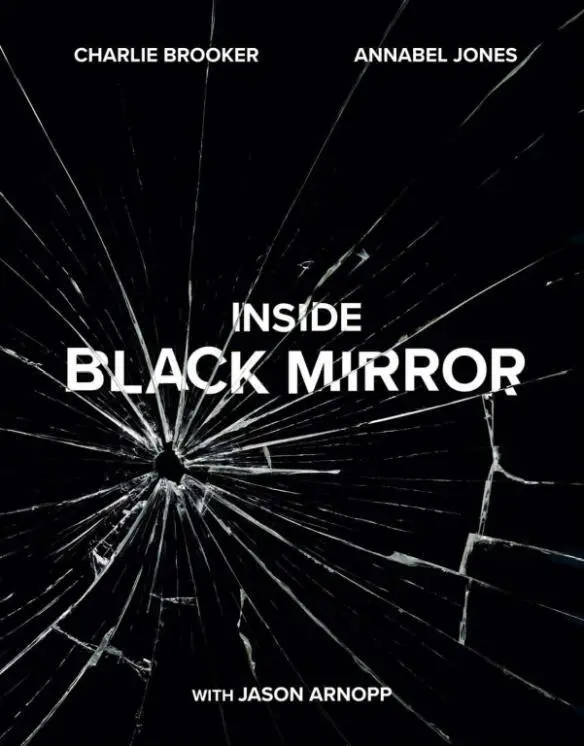
- Название:Inside Black Mirror
- Автор:
- Издательство:Ebury Publishing
- Жанр:
- Год:2018
- Город:London
- ISBN:978-15-2910-258-1
- Рейтинг книги:3 / 5. Голосов: 1
-
Избранное:Добавить в избранное
- Отзывы:
-
Ваша оценка:
Inside Black Mirror: краткое содержание, описание и аннотация
Предлагаем к чтению аннотацию, описание, краткое содержание или предисловие (зависит от того, что написал сам автор книги «Inside Black Mirror»). Если вы не нашли необходимую информацию о книге — напишите в комментариях, мы постараемся отыскать её.
This first official book logs the entire Black Mirror journey, from its origins in creator Charlie Brooker’s mind to its current status as one of the biggest cult TV shows to emerge from the UK. Alongside a collection of astonishing behind-the-scenes imagery and ephemera, Brooker and producer Annabel Jones will detail the creative genesis, inspiration and thought process behind each film for the first time, while key actors, directors and other creative talents relive their own involvement. cite – The Hollywood Reporter cite – Telegraph
Inside Black Mirror — читать онлайн бесплатно полную книгу (весь текст) целиком
Ниже представлен текст книги, разбитый по страницам. Система сохранения места последней прочитанной страницы, позволяет с удобством читать онлайн бесплатно книгу «Inside Black Mirror», без необходимости каждый раз заново искать на чём Вы остановились. Поставьте закладку, и сможете в любой момент перейти на страницу, на которой закончили чтение.
Интервал:
Закладка:
The National Anthem and Hated in the Nation both had bad guys with complicated schemes who we don’t hear anything from. In Hated in the Nation , with Garrett Scholes, I was thinking of people like the Unabomber or Anders Breivik, but I really didn’t want us to explain too much of his dastardly scheme. The best thing to do was to keep him mysterious and give him a manifesto that we glimpse.
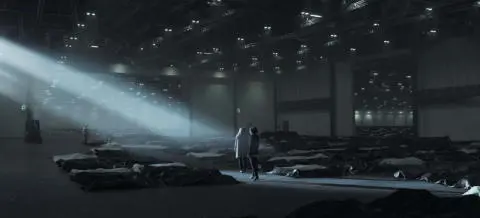
We don’t hear Scholes say anything, so he seems more interesting as a result. Again, I don’t know how that person would talk, except for the cliché of the artisan killer you get in cop dramas, post- Silence of the Lambs . You know, the killer who says, “Oh, hello Inspector, we’re very alike, you and I…”
Sanne Wohlenberg:Of course, how terrible for Scholes to respond to one wrong by trying to kill a whole load of other people. And yet it makes you think, “How much responsibility do I take for my own actions in the world of social media, which seems to create some kind of artificial distance?”
James Hawes:It is utterly true that people say anything that springs to mind with no sense of accountability. I am sure laws will evolve to make social media attacks sit alongside assault as a crime.
Faye Marsay:Scholes’ idea that people should be held accountable for what they do on social media, that’s something we need to pay attention to. But everyone makes mistakes and says things they don’t mean, and obviously the way he did it was totally abhorrent.
Charlie Brooker:I don’t have massive sympathy for Scholes’ aims. He’s being an utter fucking arsehole, killing hundreds of thousands of people.
Annabel Jones:Like a lot of deranged individuals, Scholes feels he’s coming from a place of moral superiority. So it was nice to take this relatable position and then blow it up.
Faye Marsay:Like a typical actor, I don’t usually like watching myself, but I went to a couple of screenings of Hated in the Nation and really enjoyed it. The cinematography and direction were gorgeous. One of my favourite scenes was Kelly calling the government a cunt. But in terms of us having a good old act with each other, I loved our first car scene. That was actually our first scene together in the shoot, and it was all bit awkward because we didn’t know each other. I also loved spending a week in Gran Canaria.
James Hawes:Charlie originally wrote that Scholes threw his gear into a lake as he rowed across some tropical lagoon. We did not have production time to fly to the tropics, so we looked for locations within flying time that would offer something very obviously and exotically abroad. Gran Canaria offered these fabulous mountains and even a white-painted hill town that felt Andean. We also found this fantastic remote reservoir and dam. So we shaped the script to fit our assets – and even found genuinely Peruvian and Colombian people living in Gran Canaria to be our extras.
The film ends on an uncertain note, with a missing-presumed-dead Blue Coulson on the trail of Garrett Scholes in some far-flung corner of the world.
Charlie Brooker:I’m generally not a fan of completely ambiguous endings, but this one was ambiguous enough. Throughout, Blue has been so diligent that she feels responsible for the mass murder. Evidently she’s been clever enough to work out where Scholes is, even though we don’t show how.
Annabel Jones:If we had shown exactly what happens after our final shot, it all might have seemed too neatly wrapped up.
Faye Marsay:I think Blue does get Scholes. I don’t know how, but I think she does get her victory. Might she kill him? Obviously he’s murdered 387,000 people, so he’s got to answer somehow. Do I believe in vengeful murder? No I don’t, but then I’m not Blue.
Charlie Brooker:I can’t remember if we filmed this, but originally there was a shot of Blue putting a knife in her bag as she goes after him. That was certainly in the script at one point, you knew she’s going to go and knife him. But anyway, you do kind of know that Blue’s going to sort him the fuck out.
SERIES FOUR
In Conversation
Joel Collins – series production designer
Annabel Jones – executive producer
Jo Kay – Head of Production, House of Tomorrow
Jina Jay – series casting director
Charlie Brooker – executive producer
Gugu Mbatha-Raw – actor, San Junipero
Mackenzie Davis – actor, San Junipero
Joel Collins (series production designer):I was in Canada when Season Three dropped on Netflix. While I was leaving a restaurant with Jodie Foster, this waitress stopped me, saying she’d heard I worked on Black Mirror and she was a huge fan. And Jodie Foster had just walked past her! Post-Netflix, the penny had dropped this was a fucking cool show, and that opened doors. We went from people not knowing what the show was, to people saying, “Come on in and shoot at our locations!” It changed everything.
Annabel Jones:We were happy with Season Three, and so were Netflix. Jodie Foster was directing Arkangel , our first new episode for Season Four, and so we felt quite confident.
Jo Kay (Head of Production, House of Tomorrow):Fortunately, the brilliant production team that worked on Season Three were able to return for Season Four, which meant we all had a shorthand. This meant that filming Arkangel in Canada could be dealt with quickly and efficiently.
Joel Collins:So we had Arkangel in Canada, USS Callister mostly at Twickenham Studios and Crocodile in Iceland. Hell on Earth! Great fun, but lots of travel. We were on planes twice a week.
Jo Kay:Either by careful scheduling or by good luck, we managed not to shoot two films back-to-back abroad. Budget-wise, Netflix continued to work with us on any demands that each script brought up, whether that was deciding to set Crocodile in Iceland, or the very heavy workload and cost of CGI on Metalhead .
Jina Jay (series casting director):I guess on Season Three, a lot of agents outside of the UK hadn’t actually watched Black Mirror , even though they might have heard of it. It was easy to educate them, though, because the existing series was brilliant and had achieved cult status – plus everyone loves Charlie’s voice, so we had a tangible foundation to work from. For me, it’s all about matching talent with a role, and trusting my instinct about who might excite Annabel and Charlie. Every role cast in my office is distilled by my team, chiefly Olivia Brittain.
Black Mirror ’s raised profile inevitably meant that online reviews, think pieces and reaction videos grew in volume, whether positive or negative.
Charlie Brooker:I’ve seen so many hot takes on Black Mirror , and you can’t keep up with it all. Maybe it’s a writer thing, but it’s all too easy to cancel out any positive responses and focus on the negatives. A critical thing will stick in your head more, either because you think it’s so completely wrong that it’s irritating, or you agree with an aspect of it, which is almost more irritating. So now, I’m more prone to just shrug.
It would be really hypocritical of me to complain about criticism, when I’ve been quite a vicious TV critic… but I am a hypocrite, so there you go. Occasionally it’s irritating when people miss the point of the show and think it’s more po-faced than I think it is. Or when they characterise it as a show warning about the dangers of technology. That slightly confuses and annoys me, because it’s like saying [Alfred Hitchcock’s 1960 classic] Psycho is a movie warning about the dangers of silverware. Black Mirror is not really about that… except when it is, just to fuck with people!
Читать дальшеИнтервал:
Закладка:
Похожие книги на «Inside Black Mirror»
Представляем Вашему вниманию похожие книги на «Inside Black Mirror» списком для выбора. Мы отобрали схожую по названию и смыслу литературу в надежде предоставить читателям больше вариантов отыскать новые, интересные, ещё непрочитанные произведения.



Обсуждение, отзывы о книге «Inside Black Mirror» и просто собственные мнения читателей. Оставьте ваши комментарии, напишите, что Вы думаете о произведении, его смысле или главных героях. Укажите что конкретно понравилось, а что нет, и почему Вы так считаете.