C. Lewis - Surprised by Joy
Здесь есть возможность читать онлайн «C. Lewis - Surprised by Joy» — ознакомительный отрывок электронной книги совершенно бесплатно, а после прочтения отрывка купить полную версию. В некоторых случаях можно слушать аудио, скачать через торрент в формате fb2 и присутствует краткое содержание. Жанр: unrecognised, на английском языке. Описание произведения, (предисловие) а так же отзывы посетителей доступны на портале библиотеки ЛибКат.
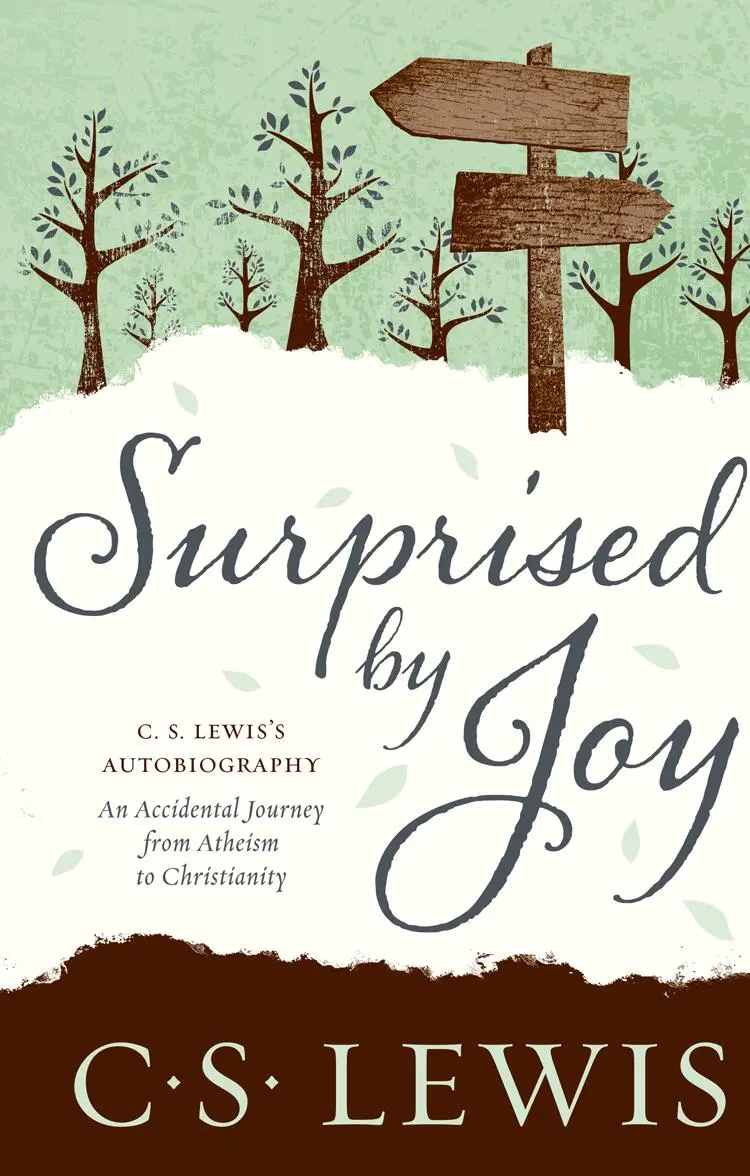
- Название:Surprised by Joy
- Автор:
- Жанр:
- Год:неизвестен
- ISBN:нет данных
- Рейтинг книги:4 / 5. Голосов: 1
-
Избранное:Добавить в избранное
- Отзывы:
-
Ваша оценка:
Surprised by Joy: краткое содержание, описание и аннотация
Предлагаем к чтению аннотацию, описание, краткое содержание или предисловие (зависит от того, что написал сам автор книги «Surprised by Joy»). Если вы не нашли необходимую информацию о книге — напишите в комментариях, мы постараемся отыскать её.
Surprised by Joy — читать онлайн ознакомительный отрывок
Ниже представлен текст книги, разбитый по страницам. Система сохранения места последней прочитанной страницы, позволяет с удобством читать онлайн бесплатно книгу «Surprised by Joy», без необходимости каждый раз заново искать на чём Вы остановились. Поставьте закладку, и сможете в любой момент перейти на страницу, на которой закончили чтение.
Интервал:
Закладка:
Which like to rich and various gems inlaid The unadorned bosom of the deep
- the deep being a shoreless ocean of arithmetic. At the end of the morning you had to say how many sums you had done; and it was not quite safe to lie. But supervision was slack and very little assistance was given. My brother - I have told you that he was already a man of the world - soon found the proper solution. He announced every morning with perfect truth that he had done five sums; he did not add that they were the same five every day. It would be interesting to know how many thousand times he did them.
I must restrain myself. I could continue to describe Oldie for many pages; some of the worst is unsaid. But perhaps it would be wicked, and it is certainly not obligatory, to do so. One good thing I can tell of him. Impelled by conscience, a boy once confessed to him an otherwise undetectable lie. The ogre was touched; he only patted the terrified boy’s back and said, ‘Always stick to the truth.’ I can also say that though he taught geometry cruelly, he taught it well. He forced us to reason, and I have been the better for those geometry lessons all my life. For the rest, there is a possible explanation of his behaviour which renders it more forgivable. Years after, my brother met a man who had grown up in the house next door to Oldie’s school. That man and his family, and (I think) the neighbours in general, believed Oldie to be insane. Perhaps they were right. And if he had fairly recently become so, it would explain a thing which puzzles me. At that school as I knew it most boys learned nothing and no boy learned much. But Oldie could boast an impressive record of scholarships in the past. His school cannot always have been the swindle it was in our time.
You may ask how our father came to send us there. Certainly not because he made a careless choice. The surviving correspondence shows that he had considered many other schools before fixing on Oldie’s; and I know him well enough to be sure that in such a matter he would never have been guided by his first thoughts (which would probably have been right) nor even by his twenty-first (which would at least have been explicable). Beyond doubt he would have prolonged deliberation till his hundred-and-first; and they would be infallibly and invincibly wrong. This is what always happens to the deliberations of a simple man who thinks he is a subtle one. Like Earle’s Scepticke in Religion he ‘is alwayes too hard for himself. My father piqued himself on what he called ‘reading between the lines’. The obvious meaning of any fact or document was always suspect: the true and inner meaning, invisible to all eyes except his own, was unconsciously created by the restless fertility of his imagination. While he thought he was interpreting Oldie’s prospectus, he was really composing a school-story in his own mind. And all this, I doubt not, with extreme conscientiousness and even some anguish. It might, perhaps, have been expected that this story of his would presently be blown away by the real story which we had to tell after we had gone to Belsen. But this did not happen. I believe it rarely happens. If the parents in each generation always or often knew what really goes on at their sons’ schools, the history of education would be very different. At any rate, my brother and I certainly did not succeed in impressing the truth on our father’s mind. For one thing (and this will become clearer in the sequel) he was a man not easily informed. His mind was too active to be an accurate receiver. What he thought he had heard was never exactly what you had said. We did not even try very hard. Like other children, we had no standard of comparison; we supposed the miseries of Belsen to be the common and unavoidable miseries of all schools. Vanity helped to tie our tongues. A boy home from school (especially during that first week when the holidays seem eternal) likes to cut a dash. He would rather represent his master as a buffoon than an ogre. He would hate to be thought a coward and a cry-baby, and he cannot paint the true picture of his concentration camp without admitting himself to have been for the last thirteen weeks a pale, quivering, tear-stained, obsequious slave. We all like showing scars received in battle; the wounds of the ergastulum, less. My father must not bear the blame for our wasted and miserable years at Oldie’s; and now, in Dante’s words, ‘to treat of the good that I found there’.
First, I learned, if not friendship, at least gregariousness. There had been bullying at the school when my brother first went there. I had my brother’s protection for my first few terms (after which he left to go to a school we may call Wyvern) but I doubt if it was necessary. During those last declining years of the school we boarders were too few and too badly treated to do or suffer much in that way. Also, after a certain time, there were no new boys. We had our quarrels, which seemed serious enough at the time; but long before the end we had known one another too long and suffered too much together not to be, at the least, very old acquaintance. That, I think, is why Belsen did me, in the long run, so little harm. Hardly any amount of oppression from above takes the heart out of a boy like oppression from his fellows. We had many pleasant hours alone together, we five remaining boarders. The abandonment of organised games, though a wretched preparation for the public school life to which most of us were destined, was at the time a great blessing. We were sent out for walks alone on half holidays. We did not do much walking. We bought sweets in drowsy village shops and pottered about on the canal bank or sat at the brow of a railway cutting watching a tunnel-mouth for trains. Hertfordshire came to look less hostile. Our talk was not bound down to the narrow interests which satisfy public school boys; we still had the curiosity of children. I can even remember from those days what must have been the first metaphysical argument I ever took part in. We debated whether the future was like a line you can’t see or like a line that is not yet drawn. I have forgotten which side I took though I know that I took it with great zeal. And always there was what Chesterton calls ‘the slow maturing of old jokes’.
The reader will notice that school was thus coming to reflect a pattern I had already encountered in my home life. At home, the bad times had drawn my brother and me closer together; here, where the times were always bad, the fear and hatred of Oldie had something of the same effect upon us all. His school was in some ways very like Dr Grimstone’s school in Vice Versa; but unlike Dr Grimstone’s it contained no informer. We stood foursquare against the common enemy. I suspect that this pattern, occurring twice and so early in my life, has unduly biassed my whole outlook. To this day the vision of the world which comes most naturally to me is one in which ‘we two’ or ‘we few’ (and in a sense ‘we happy few’) stand together against something stronger and larger. England’s position in 1940 was to me no surprise; it was the sort of thing that I always expect. Hence while friendship has been by far the chief source of my happiness, acquaintance or general society has always meant little to me, and I cannot quite understand why a man should wish to know more people than he can make real friends of. Hence, too, a very defective, perhaps culpably defective, interest in large impersonal movements, causes and the like. The concern aroused in me by a battle (whether in story or in reality) is almost in an inverse ratio to the number of the combatants.
In another way too Oldie’s school presently repeated my home experience. Oldie’s wife died; and in term time. He reacted to bereavement by becoming more violent than before; so much so that Wee Wee made a kind of apology for him to the boys. You will remember that I had already learned to fear and hate emotion; here was a fresh reason to do so.
Читать дальшеИнтервал:
Закладка:
Похожие книги на «Surprised by Joy»
Представляем Вашему вниманию похожие книги на «Surprised by Joy» списком для выбора. Мы отобрали схожую по названию и смыслу литературу в надежде предоставить читателям больше вариантов отыскать новые, интересные, ещё непрочитанные произведения.












Обсуждение, отзывы о книге «Surprised by Joy» и просто собственные мнения читателей. Оставьте ваши комментарии, напишите, что Вы думаете о произведении, его смысле или главных героях. Укажите что конкретно понравилось, а что нет, и почему Вы так считаете.