C. Lewis - Surprised by Joy
Здесь есть возможность читать онлайн «C. Lewis - Surprised by Joy» — ознакомительный отрывок электронной книги совершенно бесплатно, а после прочтения отрывка купить полную версию. В некоторых случаях можно слушать аудио, скачать через торрент в формате fb2 и присутствует краткое содержание. Жанр: unrecognised, на английском языке. Описание произведения, (предисловие) а так же отзывы посетителей доступны на портале библиотеки ЛибКат.
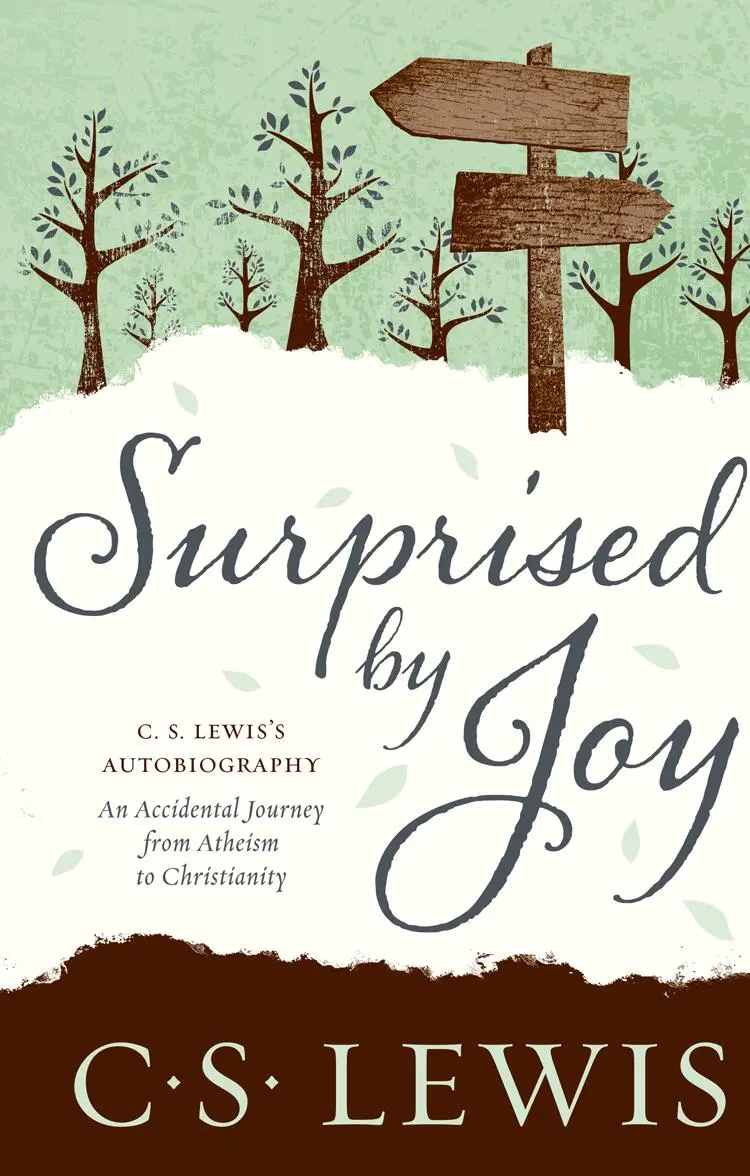
- Название:Surprised by Joy
- Автор:
- Жанр:
- Год:неизвестен
- ISBN:нет данных
- Рейтинг книги:4 / 5. Голосов: 1
-
Избранное:Добавить в избранное
- Отзывы:
-
Ваша оценка:
Surprised by Joy: краткое содержание, описание и аннотация
Предлагаем к чтению аннотацию, описание, краткое содержание или предисловие (зависит от того, что написал сам автор книги «Surprised by Joy»). Если вы не нашли необходимую информацию о книге — напишите в комментариях, мы постараемся отыскать её.
Surprised by Joy — читать онлайн ознакомительный отрывок
Ниже представлен текст книги, разбитый по страницам. Система сохранения места последней прочитанной страницы, позволяет с удобством читать онлайн бесплатно книгу «Surprised by Joy», без необходимости каждый раз заново искать на чём Вы остановились. Поставьте закладку, и сможете в любой момент перейти на страницу, на которой закончили чтение.
Интервал:
Закладка:
Sir W. (‘Cousin Quartus’) was the eldest of several brothers who owned between them one of the most important industrial concerns in Belfast. He belonged in fact to just that class and generation of which the modern man gets his impressions through Galsworthy’s Forsytes. Unless Cousin Quartus was very untrue to type (he may well have been) that impression is grossly unjust. No one less like a Galsworthian character ever existed. He was gracious, childlike, deeply and religiously humble, and abounding in charity. No man could feel more fully his responsibility to dependants. He had a good deal of boyish gaiety about him; at the same time I always felt that the conception of duty dominated his life. His stately figure, his grey beard, and his strikingly handsome profile make up one of the most venerable images in my memory. Physical beauty was indeed common to most of the family. Cousin Mary was the very type of the beautiful old lady, with her silver hair and her sweet Southern Irish voice; foreigners must be warned that this resembles what they call a ‘brogue’ about as little as the speech of a Highland gentleman resembles the jargon of the Glasgow slums. But it was the three daughters whom we knew best. All three were ‘grown up’ but in fact much nearer to us in age than any other grown-ups we knew, and all three were strikingly handsome. H., the eldest and the gravest, was a Juno, a dark queen who at certain moments looked like a Jewess. K. was more like a Valkyrie (though all, I think, were good horsewomen) with her father’s profile. There was in her face something of the delicate fierceness of a thoroughbred horse, an indignant fineness of nostril, the possibility of an excellent disdain. She had what the vanity of my own sex calls a ‘masculine’ honesty; no man ever was a truer friend. As for the youngest, G., I can only say that she was the most beautiful woman I have ever seen, perfect in shape and colour and voice and every movement - but who can describe beauty? The reader may smile at this as the far-off echo of a precocious calf-love, but he will be wrong. There are beauties so unambiguous that they need no lens of that kind to reveal them; they are visible even to the careless and objective eyes of a child. (The first woman who ever spoke to my blood was a dancing mistress at a school that will come in a later chapter.)
In some ways Mountbracken was like our Father’s house. There too we found the attics, the indoor silences, the endless bookshelves. In the early days, when we were still only a quarter tamed, we often neglected our hostesses and rummaged on our own; it was there that I found Lubbock’s Ants, Bees and Wasps. But it was also very different. Life there was more spacious and considered than with us, glided like a barge where ours bumped like a cart.
Friends of our own age - boy and girl friends - we had none. In part this is a natural result of boarding school; children grow up strangers to their next-door neighbours. But much more it was the result of our own obstinate choice. One boy who lived near us attempted every now and then to get to know us. We avoided him by every means in our power. Our lives were already full, and the holidays too short for all the reading, writing, playing, cycling, and talking that we wanted to get through. We resented the appearance of any third party as an infuriating interruption. We resented even more bitterly all attempts (excepting the great and successful attempt made by Mountbracken) to show us hospitality. At the period that I am now speaking of this had not yet become a serious nuisance, but as it became gradually and steadily more serious throughout our schooldays I may be allowed to say a word about it here and to get the subject out of our way. It was the custom of the neighbourhood to give parties which were really dances for adults but to which, none the less, mere schoolboys and schoolgirls were asked. One sees the advantages of this arrangement from the hostess’s point of view; and when the junior guests know each other well and are free from self-consciousness perhaps they enjoy themselves. To me these dances were a torment - of which ordinary shyness made only a part. It was the false position (which I was well able to realise) that tormented me; to know that one was regarded as a child and yet be forced to take part in an essentially grown-up function, to feel that all the adults present were being half-mockingly kind and pretending to treat you as what you were not. Add to this the discomfort of one’s Eton suit and stiff shirt, the aching feet and burning head, and the mere weariness of being kept up so many hours after one’s usual bedtime. Even adults, I fancy, would not find an evening party very endurable without the attraction of sex and the attraction of alcohol; and how a small boy who can neither flirt nor drink should be expected to enjoy prancing about on a polished floor till the small hours of the morning, is beyond my conception. I had of course no notion of the social nexus. I never realised that certain people were in civility obliged to ask me because they knew my father or had known my mother. To me it was all inexplicable, unprovoked persecution; and when, as often happened, such engagements fell in the last week of the holidays and wrested from us a huge cantle of hours in which every minute was worth gold, I positively felt that I could have torn my hostess limb from limb. Why should she thus pester me? I had never done her any harm, never asked her to a party.
My discomforts were aggravated by the totally unnatural behaviour which I thought it my duty to adopt at a dance; and that had come about in a sufficiently amusing way. Reading much and mixing little with children of my own age, I had, before I went to school, developed a vocabulary which must (I now see) have sounded very funny from the lips of a chubby urchin in an Eton jacket. When I brought out my ‘long words’ adults not unnaturally thought I was showing off. In this they were quite mistaken. I used the only words I knew. The position was indeed the exact reverse of what they supposed; my pride would have been gratified by using such schoolboy slang as I possessed, not at all by using the bookish language which (inevitably in my circumstances) came naturally to my tongue. And there were not lacking adults who would egg me on with feigned interest and feigned seriousness - on and on till the moment at which I suddenly knew I was being laughed at. Then, of course, my mortification was intense; and after one or two such experiences I made it a rigid rule that at ‘social functions’ (as I secretly called them) I must never on any account speak of any subject in which I felt the slightest interest nor in any words that naturally occurred to me. And I kept my rule only too well; a giggling and gurgling imitation of the vapidest grown-up chatter, a deliberate concealment of all that I really thought and felt under a sort of feeble jocularity and enthusiasm, was henceforth my party manner, assumed as consciously as an actor assumes his rôle, sustained with unspeakable weariness, and dropped with a groan of relief the moment my brother and I at last tumbled into our cab and the drive home (the only pleasure of the evening) began. It took me years to make the discovery that any real human intercourse could take place at a mixed assembly of people in their good clothes.
I am here struck by the curious mixture of justice and injustice in our lives. We are blamed for our real faults but usually not on the right occasions. I was, no doubt, and was blamed for being a conceited boy; but the blame was usually attached to something in which no conceit was present. Adults often accuse a child of vanity without pausing to discover on what points children in general, or that child in particular, are likely to be vain. Thus it was for years a complete mystery to me that my father should stigmatise as ‘affectation’ my complaints about the itching and tickling of new underclothes. I see it all now; he had in mind a social legend associating delicacy of skin with refinement and supposed that I was claiming to be unusually refined. In reality I was in simple ignorance of that social legend, and if vanity had come into the matter would have been much prouder of having skin like a sailor. I was being accused of an offence which I lacked resources to commit. I was on another occasion called ‘affected’ for asking what ‘stirabout’ was. It is, in fact, a ‘low’ Irish word for porridge. To certain adults it seems obvious that he who claims not to know the Low must be pretending to be High. Yet the real reason why I asked was that I had never happened to hear the word; had I done so I should have piqued myself on using it.
Читать дальшеИнтервал:
Закладка:
Похожие книги на «Surprised by Joy»
Представляем Вашему вниманию похожие книги на «Surprised by Joy» списком для выбора. Мы отобрали схожую по названию и смыслу литературу в надежде предоставить читателям больше вариантов отыскать новые, интересные, ещё непрочитанные произведения.









Обсуждение, отзывы о книге «Surprised by Joy» и просто собственные мнения читателей. Оставьте ваши комментарии, напишите, что Вы думаете о произведении, его смысле или главных героях. Укажите что конкретно понравилось, а что нет, и почему Вы так считаете.