C. Lewis - Surprised by Joy
Здесь есть возможность читать онлайн «C. Lewis - Surprised by Joy» — ознакомительный отрывок электронной книги совершенно бесплатно, а после прочтения отрывка купить полную версию. В некоторых случаях можно слушать аудио, скачать через торрент в формате fb2 и присутствует краткое содержание. Жанр: unrecognised, на английском языке. Описание произведения, (предисловие) а так же отзывы посетителей доступны на портале библиотеки ЛибКат.
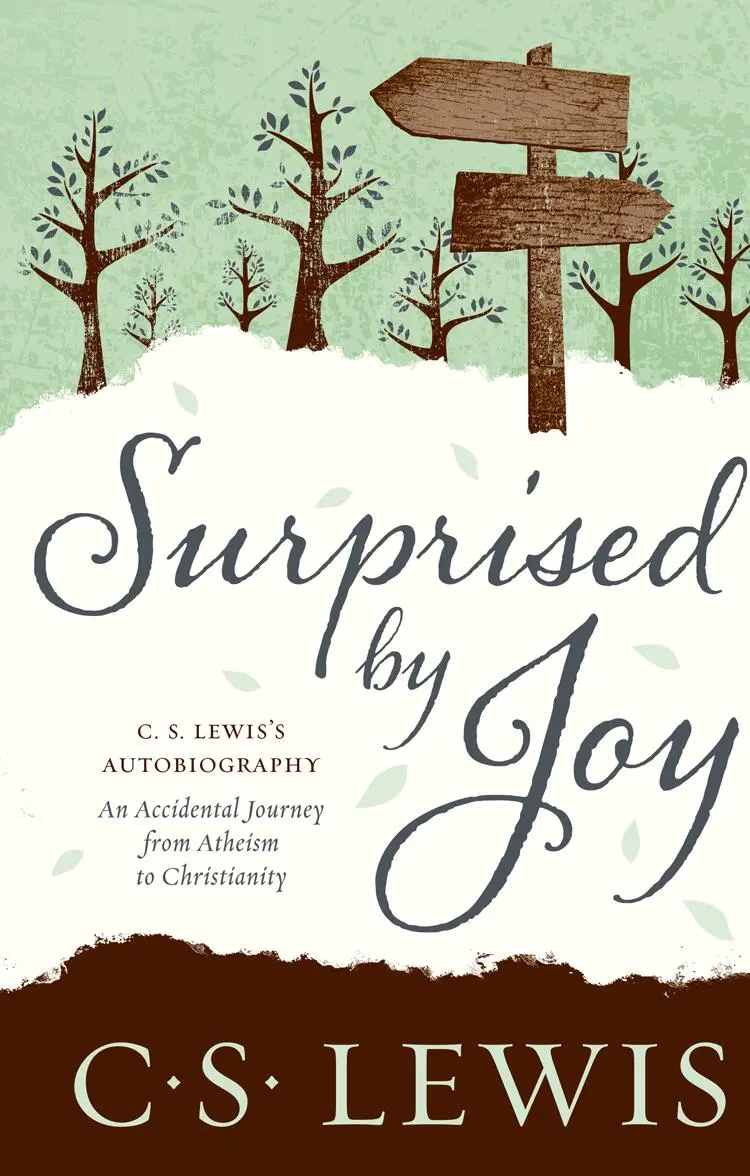
- Название:Surprised by Joy
- Автор:
- Жанр:
- Год:неизвестен
- ISBN:нет данных
- Рейтинг книги:4 / 5. Голосов: 1
-
Избранное:Добавить в избранное
- Отзывы:
-
Ваша оценка:
Surprised by Joy: краткое содержание, описание и аннотация
Предлагаем к чтению аннотацию, описание, краткое содержание или предисловие (зависит от того, что написал сам автор книги «Surprised by Joy»). Если вы не нашли необходимую информацию о книге — напишите в комментариях, мы постараемся отыскать её.
Surprised by Joy — читать онлайн ознакомительный отрывок
Ниже представлен текст книги, разбитый по страницам. Система сохранения места последней прочитанной страницы, позволяет с удобством читать онлайн бесплатно книгу «Surprised by Joy», без необходимости каждый раз заново искать на чём Вы остановились. Поставьте закладку, и сможете в любой момент перейти на страницу, на которой закончили чтение.
Интервал:
Закладка:
Oldie’s school, you will remember, sank unlamented in summer 1910; new arrangements had to be made for my education. My father now hit upon a plan which filled me with delight. About a mile from the New House rose the large red-brick walls and towers of Campbell College, which had been founded for the express purpose of giving Ulster boys all the advantages of a public school education without the trouble of crossing the Irish Sea. My clever cousin, Uncle Joe’s boy, was already there and doing well. It was decided that I should go as a boarder, but I could get an exeat to come home every Sunday. I was enchanted. I did not believe that anything Irish, even a school, could be bad; certainly not so bad as all I yet knew of England. To ‘Campbell’ I accordingly went.
I was at this school for so short a time that I shall attempt no criticism of it. It was very unlike any English public school that I have ever heard of. It had indeed prefects, but the prefects were of no importance. It was nominally divided into ‘houses’ on the English pattern, but they were mere legal fictions; except for purposes of games (which were not compulsory) no one took any notice of them. The population was socially much more ‘mixed’ than at most English schools; I rubbed shoulders there with farmers’ sons. The boy I most nearly made a friend of was the son of a tradesman who had recently been going the rounds with his father’s van because the driver was illiterate and could not keep ‘the books’. I much envied him this pleasant occupation, and he, poor fellow, looked back on it as a golden age. ‘This time last month, Lewis,’ he used to say, ‘I wouldn’t have been going in to Preparation. I’d have been coming home from my rounds and a wee tea-cloth laid for me at one end of the table and sausages to my tea.’
I am always glad, as a historian, to have known Campbell, for I think it was very much what the great English schools had been before Arnold. There were real fights at Campbell, with seconds, and (I think) betting, and a hundred or more roaring spectators. There was bullying, too, though no serious share of it came my way, and there was no trace of the rigid hierarchy which governs a modern English school; every boy held just the place which his fists and mother-wit could win for him. From my point of view the great drawback was that one had, so to speak, no home. Only a few very senior boys had studies. The rest of us, except when seated at table for meals or in a huge ‘preparation room’ for evening ‘Prep’, belonged nowhere. In out-of-school hours one spent one’s time either evading or conforming to all those inexplicable movements which a crowd exhibits as it thins here and thickens there, now slackens its pace and now sets like a tide in one particular direction, now seems about to disperse and then clots again. The bare brick passages echoed to a continual tramp of feet, punctuated with catcalls, scrimmages, gusty laughter. One was always ‘moving on’ or ‘hanging about’ - in lavatories, in store rooms, in the great hall. It was very like living permanently in a large railway station.
The bullying had this negative merit that it was honest bullying; not bullying conscience-salved and authorised in the maison tolérée of the prefectorial system. It was done mainly by gangs; parties of eight or ten boys each who scoured those interminable corridors for prey. Their sorties, though like a whirlwind, were not perceived by the victim till too late; the general, endless confusion and clamour, I suppose, masked them. Sometimes capture involved serious consequences; two boys whom I knew were carried off and flogged in some backwater - flogged in the most disinterested fashion, for their captors had no personal acquaintance with them; art for art’s sake. But on the only occasion when I was caught myself my fate was much milder and perhaps odd enough to be worth recording. When I had come to myself after being dragged at headlong speed through a labyrinth of passages which took me beyond all usual landmarks, I found that I was one of several prisoners in a low, bare room, half-lit (I think) by a single gas-jet. After a pause to recover their breath two of the brigands led out the first captive. I now noticed that a horizontal row of pipes ran along the opposite wall, about three feet from the floor. I was alarmed but not surprised when the prisoner was forced into a bending position with his head under the lowest pipe, in the very posture for execution. But I was very much surprised a moment later. You will remember that the room was half dark. The two gangsters gave their victim a shove; and instantly no victim was there. He vanished; without trace, without sound. It appeared to be sheer black magic. Another victim was led out; again the posture for a flogging was assumed; again, instead of flogging, - dissolution, atomisation, annihilation. At last my own turn came. I too received the shove from behind, and found myself falling through a hole or hatch in the wall into what turned out to be a coal-cellar. Another small boy came hurtling in after me, the door was slammed and bolted behind us, and our captors with a joyous whoop rushed away for more booty. They were, no doubt, playing against a rival gang with whom they would presently compare ‘bags’. We were let out again presently, very dirty and rather cramped, but otherwise none the worse.
Much the most important thing that happened to me at Campbell was that I there read Sohrab and Rustum in form under an excellent master whom we called Octie. I loved the poem at first sight and have loved it ever since. As the wet fog, in the first line, rose out of the Oxus stream, so out of the whole poem there rose and wrapped me round an exquisite, silvery coolness, a delightful quality of distance and calm, a grave melancholy. I hardly appreciated then, as I have since learned to do, the central tragedy; what enchanted me was the artist in Pekin with his ivory forehead and pale hands, the cypress in the queen’s garden, the backward glance at Rustum’s youth, the pedlars from Khabul, the hushed Chorasmian waste. Arnold gave me at once (and the best of Arnold gives me still) a sense, not indeed of passionless vision, but of a passionate, silent gazing at things a long way off. And here observe how literature actually works. Parrot critics say that Sohrab is a poem for classicists, to be enjoyed only by those who recognise the Homeric echoes. But I, in Octie’s form-room (and on Octie be peace) knew nothing of Homer. For me the relation between Arnold and Homer worked the other way; when I came, years later, to read the Iliad I liked it partly because it was for me reminiscent of Sohrab. Plainly, it does not matter at what point you first break into the system of European poetry. Only keep your ears open and your mouth shut and everything will lead you to everything else in the end - ogni parte ad ogni parte splende.
About half-way through my first and only term at Campbell I fell ill and was taken home. My father, for reasons I do not quite know, had become dissatisfied with the school. He had also been attracted by accounts of a preparatory school in the town of Wyvern, though quite unconnected with Wyvern College; especially by the convenience that if I went there my brother and I could still do the journey together. Accordingly I had a blessed six weeks at home, with the Christmas holidays to look forward to at the end and, after that, a new adventure. In a surviving letter my father writes to my brother that I think myself lucky but he ‘fears I shall be very lonely before the end of the week’. It is strange that having known me all my life he should have known me so little. During these weeks I slept in his room and was thus freed from solitude during most of those dark hours in which alone solitude was dreadful to me. My brother being absent, he and I could not lead one another into mischief; there was therefore no friction between my father and myself. I remember no other time in my life of such untroubled affection; we were famously snug together. And in the days when he was out, I entered with complete satisfaction into a deeper solitude than I had ever known. The empty house, the empty, silent rooms, were like a refreshing bath after the crowded noise of Campbell. I could read, write, and draw to my heart’s content. Curiously enough it is at this time, not in earlier childhood, that I chiefly remember delighting in fairy tales. I fell deeply under the spell of Dwarfs - the old bright-hooded, snowy-bearded dwarfs we had in those days before Arthur Rackham sublimed, or Walt Disney vulgarised, the earthmen. I visualised them so intensely that I came to the very frontiers of hallucination; once, walking in the garden, I was for a second not quite sure that a little man had not run past me into the shrubbery. I was faintly alarmed, but it was not like my night-fears. A fear that guarded the road to Faerie was one I could face. No one is a coward at all points.
Читать дальшеИнтервал:
Закладка:
Похожие книги на «Surprised by Joy»
Представляем Вашему вниманию похожие книги на «Surprised by Joy» списком для выбора. Мы отобрали схожую по названию и смыслу литературу в надежде предоставить читателям больше вариантов отыскать новые, интересные, ещё непрочитанные произведения.












Обсуждение, отзывы о книге «Surprised by Joy» и просто собственные мнения читателей. Оставьте ваши комментарии, напишите, что Вы думаете о произведении, его смысле или главных героях. Укажите что конкретно понравилось, а что нет, и почему Вы так считаете.