C. Lewis - Surprised by Joy
Здесь есть возможность читать онлайн «C. Lewis - Surprised by Joy» — ознакомительный отрывок электронной книги совершенно бесплатно, а после прочтения отрывка купить полную версию. В некоторых случаях можно слушать аудио, скачать через торрент в формате fb2 и присутствует краткое содержание. Жанр: unrecognised, на английском языке. Описание произведения, (предисловие) а так же отзывы посетителей доступны на портале библиотеки ЛибКат.
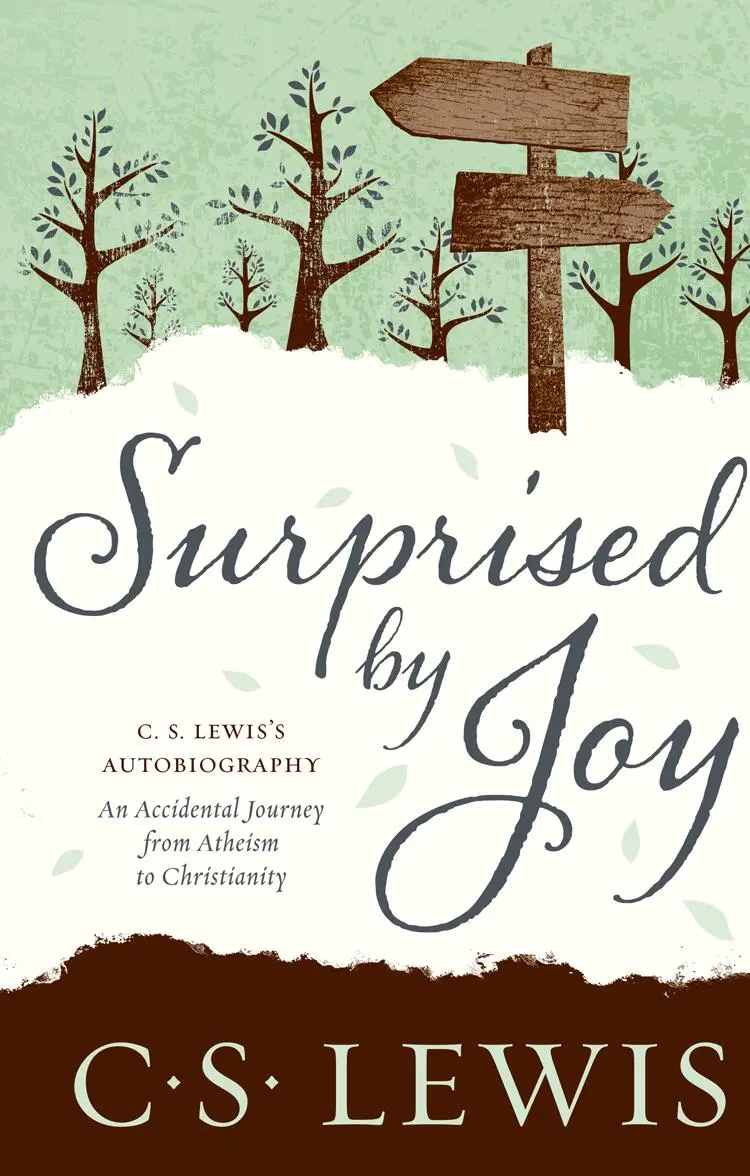
- Название:Surprised by Joy
- Автор:
- Жанр:
- Год:неизвестен
- ISBN:нет данных
- Рейтинг книги:4 / 5. Голосов: 1
-
Избранное:Добавить в избранное
- Отзывы:
-
Ваша оценка:
Surprised by Joy: краткое содержание, описание и аннотация
Предлагаем к чтению аннотацию, описание, краткое содержание или предисловие (зависит от того, что написал сам автор книги «Surprised by Joy»). Если вы не нашли необходимую информацию о книге — напишите в комментариях, мы постараемся отыскать её.
Surprised by Joy — читать онлайн ознакомительный отрывок
Ниже представлен текст книги, разбитый по страницам. Система сохранения места последней прочитанной страницы, позволяет с удобством читать онлайн бесплатно книгу «Surprised by Joy», без необходимости каждый раз заново искать на чём Вы остановились. Поставьте закладку, и сможете в любой момент перейти на страницу, на которой закончили чтение.
Интервал:
Закладка:
We reach the quay and go on board the old ‘Fleetwood boat’; after some miserable strolling about the deck my father bids us good-bye. He is deeply moved; I, alas, am mainly embarrassed and self-conscious. When he has gone ashore we almost, by comparison, cheer up. My brother begins to show me over the ship and tell me about all the other shipping in sight. He is an experienced traveller and a complete man of the world. A certain agreeable excitement steals over me. I like the reflected port and starboard lights on the oily water, the rattle of winches, the warm smell from the engine-room skylight. We cast off. The black space widens between us and the quay; I feel the throb of screws underneath me. Soon we are dropping down the Lough and there is a taste of salt on one’s lips, and that cluster of lights astern, receding from us, is everything I have known. Later, when we have gone to our bunks, it begins to blow. It is a rough night and my brother is sea-sick. I absurdly envy him this accomplishment. He is behaving as experienced travellers should. By great efforts I succeed in vomiting; but it is a poor affair - I was, and am, an obstinately good sailor.
No Englishman will be able to understand my first impressions of England. When we disembarked, I suppose at about six next morning (but it seemed to be midnight), I found myself in a world to which I reacted with immediate hatred. The flats of Lancashire in the early morning are in reality a dismal sight; to me they were like the banks of Styx. The strange English accents with which I was surrounded seemed like the voices of demons. But what was worst was the English landscape from Fleet-wood to Euston. Even to my adult eye that main line still appears to run through the dullest and most unfriendly strip in the island. But to a child who had always lived near the sea and in sight of high ridges it appeared as I suppose Russia might appear to an English boy. The flatness! The interminableness! The miles and miles of featureless land, shutting one in from the sea, imprisoning, suffocating! Everything was wrong; wooden fences instead of stone walls and hedges, red brick farmhouses instead of white cottages, the fields too big, haystacks the wrong shape. Well does the Kalevala say that in the stranger’s house the floor is full of knots. I have made up the quarrel since; but at that moment I conceived a hatred for England which took many years to heal.
Our destination was the little town of - let us call it Belsen - in Hertfordshire. ‘Green Hertfordshire’, Lamb calls it; but it was not green to a boy bred in County Down. It was flat Hertfordshire, flinty Hertfordshire, Hertfordshire of the yellow soil. There is the same difference between the climate of Ireland and of England as between that of England and the Continent. There was far more weather at Belsen than I had ever met before; there I first knew bitter frost and stinging fog, sweltering heat and thunderstorms on the great scale. There, through the curtainless dormitory windows, I first came to know the ghastly beauty of the full moon.
The school, as I first knew it, consisted of some eight or nine boarders and about as many day-boys. Organised games, except for endless rounders in the flinty playground, had long been moribund and were finally abandoned not very long after my arrival. There was no bathing except one’s weekly bath in the bathroom. I was already doing Latin exercises (as taught by my mother) when I went there in 1908, and I was still doing Latin exercises when I left there in 1910; I had never got in sight of a Roman author. The only stimulating element in the teaching consisted of a few well-used canes which hung on the green iron chimney-piece of the single school-room. The teaching staff consisted of the headmaster and proprietor (we called him Oldie), his grown-up son (Wee Wee), and an usher. The ushers succeeded one another with great rapidity; one lasted for less than a week. Another was dismissed in the presence of the boys, with a rider from Oldie to the effect that if he were not in Holy Orders he would kick him downstairs. This curious scene took place in the dormitory, though I cannot remember why. All these ushers (except the one who stayed less than a week) were obviously as much in awe of Oldie as we. But there came a time when there were no more ushers, and Oldie’s youngest daughter taught the junior pupils. By that time there were only five boarders, and Oldie finally gave up his school and sought a cure of souls. I was one of the last survivors, and left the ship only when she went down under us.
Oldie lived in a solitude of power, like a sea-captain in the days of sail. No man or woman in that house spoke to him as an equal. No one except Wee Wee initiated conversation with him at all. At meal times we boys had a glimpse of his family life. His son sat on his right hand; they two had separate food. His wife and three grown-up daughters (silent), the usher (silent), and the boys (silent) munched their inferior messes. His wife, though I think she never addressed Oldie, was allowed to make something of a reply to him; the girls - three tragic figures, dressed summer and winter in the same shabby black - never went beyond an almost whispered ‘Yes, Papa,’ or ‘No, Papa,’ on the rare occasions when they were addressed. Few visitors entered the house. Beer, which Oldie and Wee Wee drank regularly at dinner, was offered to the usher but he was expected to refuse; the one who accepted got his pint, but was taught his place by being asked a few moments later in a voice of thunderous irony, ‘Perhaps you would like a little more beer, Mr N.?’ Mr N., a man of spirit, replied casually, ‘Well, thank you, Mr C, I think I would.’ He was the one who did not stay till the end of his first week; and the rest of that day was a black one for us boys.
I myself was rather a pet or mascot of Oldie’s - a position which I swear I never sought and of which the advantages were purely negative. Even my brother was not one of his favourite victims. For he had his favourite victims, boys who could do nothing right. I have known Oldie enter the schoolroom after breakfast, cast his eyes round, and remark, ‘Oh, there you are, Rees, you horrid boy. If I’m not too tired I shall give you a good drubbing this afternoon.’ He was not angry, nor was he joking. He was a big, bearded man with full lips like an Assyrian king on a monument, immensely strong, physically dirty. Everyone talks of sadism nowadays but I question whether his cruelty had any erotic element in it. I half divined then, and seem to see clearly now, what all his whipping-boys had in common. They were the boys who fell below a certain social status, the boys with vulgar accents. Poor P. - dear, honest, hard-working, friendly, healthily pious P. - was flogged incessantly, I now think, for one offence only; he was the son of a dentist. I have seen Oldie make that child bend down at one end of the school-room and then take a run of the room’s length at each stroke; but P. was the trained sufferer of countless thrashings and no sound escaped him until, towards the end of the torture, there came a noise quite unlike a human utterance. That peculiar croaking or rattling cry, that, and the grey faces of all the other boys, and their deathlike stillness, are among the memories I could willingly dispense with. 1
The curious thing is that despite all this cruelty we did surprisingly little work. This may have been partly because the cruelty was irrational and unpredictable; but it was partly because of the curious methods employed. Except at geometry (which he really liked) it might be said that Oldie did not teach at all. He called his class up and asked questions. When the replies were unsatisfactory he said in a low, calm voice, ‘Bring me my cane. I see I shall need it.’ If a boy became confused Oldie flogged the desk, shouting in a crescendo, ‘Think - Think - THINK!!’ Then, as the prelude to execution, he muttered, ‘Come out, come out, come out.’ When really angry he proceeded to antics; worming for wax in his ear with his little finger and babbling, ‘Aye, aye, aye, aye …’ I have seen him leap up and dance round and round like a performing bear. Meanwhile, almost in whispers, Wee Wee or the usher, or (later) Oldie’s youngest daughter, was questioning us juniors at another desk. ‘Lessons’ of this sort did not take very long; what was to be done with the boys for the rest of the time? Oldie had decided that they could, with least trouble to himself, be made to do arithmetic. Accordingly, when you entered school at nine o’clock you took your slate and began doing sums. Presently you were called up to ‘say a lesson’. When that was finished you went back to your place and did more sums - and so for ever. All the other arts and sciences thus appeared as islands (mostly rocky and dangerous islands)
Читать дальшеИнтервал:
Закладка:
Похожие книги на «Surprised by Joy»
Представляем Вашему вниманию похожие книги на «Surprised by Joy» списком для выбора. Мы отобрали схожую по названию и смыслу литературу в надежде предоставить читателям больше вариантов отыскать новые, интересные, ещё непрочитанные произведения.












Обсуждение, отзывы о книге «Surprised by Joy» и просто собственные мнения читателей. Оставьте ваши комментарии, напишите, что Вы думаете о произведении, его смысле или главных героях. Укажите что конкретно понравилось, а что нет, и почему Вы так считаете.