C. Lewis - Surprised by Joy
Здесь есть возможность читать онлайн «C. Lewis - Surprised by Joy» — ознакомительный отрывок электронной книги совершенно бесплатно, а после прочтения отрывка купить полную версию. В некоторых случаях можно слушать аудио, скачать через торрент в формате fb2 и присутствует краткое содержание. Жанр: unrecognised, на английском языке. Описание произведения, (предисловие) а так же отзывы посетителей доступны на портале библиотеки ЛибКат.
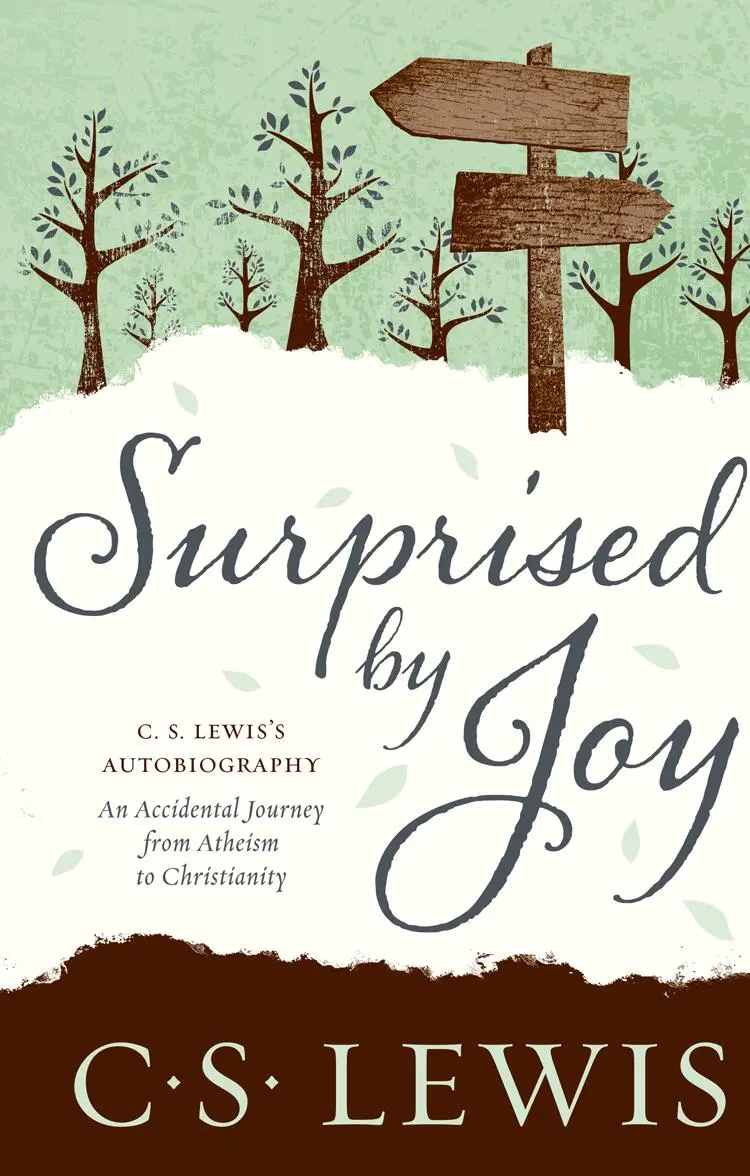
- Название:Surprised by Joy
- Автор:
- Жанр:
- Год:неизвестен
- ISBN:нет данных
- Рейтинг книги:4 / 5. Голосов: 1
-
Избранное:Добавить в избранное
- Отзывы:
-
Ваша оценка:
Surprised by Joy: краткое содержание, описание и аннотация
Предлагаем к чтению аннотацию, описание, краткое содержание или предисловие (зависит от того, что написал сам автор книги «Surprised by Joy»). Если вы не нашли необходимую информацию о книге — напишите в комментариях, мы постараемся отыскать её.
Surprised by Joy — читать онлайн ознакомительный отрывок
Ниже представлен текст книги, разбитый по страницам. Система сохранения места последней прочитанной страницы, позволяет с удобством читать онлайн бесплатно книгу «Surprised by Joy», без необходимости каждый раз заново искать на чём Вы остановились. Поставьте закладку, и сможете в любой момент перейти на страницу, на которой закончили чтение.
Интервал:
Закладка:
I soon staked out a claim to one of the attics and made it ‘my study’. Pictures, of my own making or cut from brightly coloured Christmas numbers of magazines, were nailed on the walls. There I kept my pen and inkpot and writing books and paint-box; and there
What more felicity can fall to creature Than to enjoy delight with liberty?
Here my first stories were written, and illustrated, with enormous satisfaction. They were an attempt to combine my two chief literary pleasures - ‘dressed animals’ and ‘knights-in-armour’. As a result, I wrote about chivalrous mice and rabbits who rode out in complete mail to kill not giants but cats. But already the mood of the systematiser was strong in me; the mood which led Trollope so endlessly to elaborate his Barsetshire. The Animal-Land which came into action in the holidays when my brother was at home was a modern Animal-Land; it had to have trains and steamships if it was to be a country shared with him. It followed, of course, that the medieval Animal-Land about which I wrote my stories must be the same country at an earlier period; and of course the two periods must be properly connected. This led me from romancing to historiography; I set about writing a full history of Animal-Land. Though more than one version of this instructive work is extant, I never succeeded in bringing it down to modern times; centuries take a deal of filling when all the events have to come out of the historian’s head. But there is one touch in the History that I still recall with some pride. The chivalric adventures which filled my stories were in it alluded to very lightly and the reader was warned that they might be ‘only legends’. Somehow - but heaven knows how - I realised even then that a historian should adopt a critical attitude towards epic material. From history it was only a step to geography. There was soon a map of Animal-Land - several maps, all tolerably consistent. Then Animal-Land had to be geographically related to my brother’s India, and India consequently lifted out of its place in the real world. We made it an island, with its north coast running along the back of the Himalayas; between it and Animal-Land my brother rapidly invented the principal steamship routes. Soon there was a whole world and a map of that world which used every colour in my paint-box. And those parts of that world which we regarded as our own - Animal-Land and India - were increasingly peopled with consistent characters.
Of the books that I read at this time very few have quite faded from memory, but not all have retained my love. Conan Doyle’s Sir Nigel, which first set my mind upon ‘knights in armour’, I have never felt inclined to re-read. Still less would I now read Mark Twain’s Yankee at the Court of King Arthur, which was then my only source for the Arthurian story, blissfully read for the sake of the romantic elements that came through and with total disregard of the vulgar ridicule directed against them. Much better than either of these was E. Nesbit’s trilogy, Five Children and It, The Phoenix and the Carpet, and The Story of the Amulet. The last did most for me. It first opened my eyes to antiquity, the ‘dark backward and abysm of time’. I can still re-read it with delight. Gulliver in an unexpurgated and lavishly illustrated edition was one of my favourites, and I pored endlessly over an almost complete set of old Punches which stood in my father’s study. Tenniel gratified my passion for ‘dressed animals’ with his Russian Bear, British Lion, Egyptian Crocodile and the rest, while his slovenly and perfunctory treatment of vegetation confirmed my own deficiencies. Then came the Beatrix Potter books, and here at last beauty.
It will be clear that at this time - at the age of six, seven, and eight - I was living almost entirely in my imagination; or at least that the imaginative experience of those years now seems to me more important than anything else. Thus I pass over a holiday in Normandy (of which, nevertheless, I retain very clear memories) as a thing of no account; if it could be cut out of my past I should still be almost exactly the man I am. But imagination is a vague word and I must make some distinctions. It may mean the world of reverie, day-dream, wish-fulfilling fantasy. Of that I knew more than enough. I often pictured myself cutting a fine figure. But I must insist that this was a totally different activity from the invention of Animal-Land. Animal-Land was not (in that sense) a fantasy at all. I was not one of the characters it contained. I was its creator, not a candidate for admission to it. Invention is essentially different from reverie; if some fail to recognise the difference that is because they have not themselves experienced both. Anyone who has will understand me. In my day-dreams I was training myself to be a fool; in mapping and chronicling Animal-Land I was training myself to be a novelist. Note well, a novelist; not a poet. My invented world was full (for me) of interest, bustle, humour, and character; but there was no poetry, even no romance, in it. It was almost astonishingly prosaic. 1 Thus if we use the word imagination in a third sense, and the highest sense of all, this invented world was not imaginative. But certain other experiences were, and I will now try to record them. The thing has been much better done by Traherne and Wordsworth, but every man must tell his own tale.
The first is itself the memory of a memory. As I stood beside a flowering currant bush on a summer day there suddenly arose in me without warning, and as if from a depth not of years but of centuries, the memory of that earlier morning at the Old House when my brother had brought his toy garden into the nursery. It is difficult to find words strong enough for the sensation which came over me; Milton’s ‘enormous bliss’ of Eden (giving the full, ancient meaning to ‘enormous’) comes somewhere near it. It was a sensation, of course, of desire; but desire for what? not, certainly, for a biscuit-tin filled with moss, nor even (though that came into it) for my own past. ‘Ioū(íav no(? 1 - and before I knew what I desired, the desire itself was gone, the whole glimpse withdrawn, the world turned commonplace again, or only stirred by a longing for the longing that had just ceased. It had taken only a moment of time; and in a certain sense everything else that had ever happened to me was insignificant in comparison.
The second glimpse came through Squirrel Nutkin; through it only, though I loved all the Beatrix Potter books. But the rest of them were merely entertaining; it administered the shock, it was a trouble. It troubled me with what I can only describe as the Idea of Autumn. It sounds fantastic to say that one can be enamoured of a season, but that is something like what happened; and, as before, the experience was one of intense desire. And one went back to the book, not to gratify the desire (that was impossible - how can one possess Autumn?) but to re-awake it. And in this experience also there was the same surprise and the same sense of incalculable importance. It was something quite different from ordinary life and even from ordinary pleasure; something, as they would now say, ‘in another dimension’.
The third glimpse came through poetry. I had become fond of Longfellow’s Saga of King Olaf: fond of it in a casual, shallow way for its story and its vigorous rhythms. But then, and quite different from such pleasures, and like a voice from far more distant regions, there came a moment when I idly turned the pages of the book and found the unrhymed translation of Tegner’s Drapa and read
I heard a voice that cried, Balder the beautiful Is dead, is dead -
I knew nothing about Balder; but instantly I was uplifted into huge regions of northern sky, I desired with almost sickening intensity something never to be described (except that it is cold, spacious, severe, pale, and remote) and then, as in the other examples, found myself at the very same moment already falling out of that desire and wishing I were back in it.
Читать дальшеИнтервал:
Закладка:
Похожие книги на «Surprised by Joy»
Представляем Вашему вниманию похожие книги на «Surprised by Joy» списком для выбора. Мы отобрали схожую по названию и смыслу литературу в надежде предоставить читателям больше вариантов отыскать новые, интересные, ещё непрочитанные произведения.






Обсуждение, отзывы о книге «Surprised by Joy» и просто собственные мнения читателей. Оставьте ваши комментарии, напишите, что Вы думаете о произведении, его смысле или главных героях. Укажите что конкретно понравилось, а что нет, и почему Вы так считаете.