C. Lewis - Surprised by Joy
Здесь есть возможность читать онлайн «C. Lewis - Surprised by Joy» — ознакомительный отрывок электронной книги совершенно бесплатно, а после прочтения отрывка купить полную версию. В некоторых случаях можно слушать аудио, скачать через торрент в формате fb2 и присутствует краткое содержание. Жанр: unrecognised, на английском языке. Описание произведения, (предисловие) а так же отзывы посетителей доступны на портале библиотеки ЛибКат.
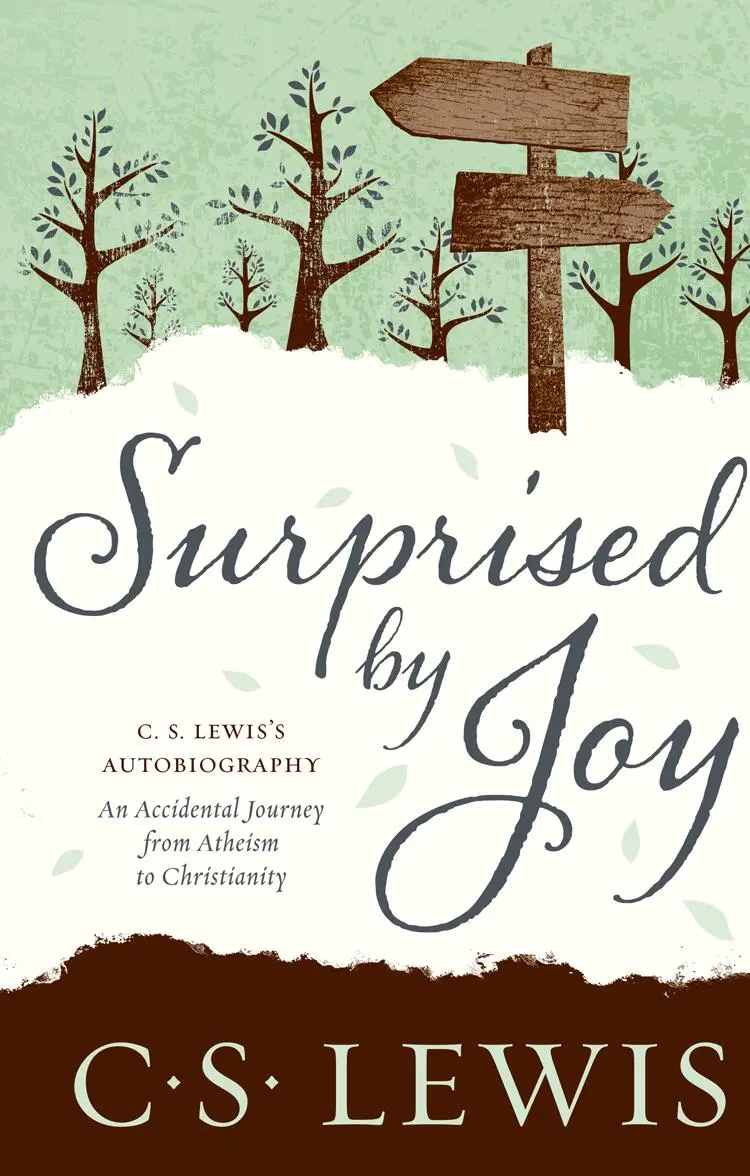
- Название:Surprised by Joy
- Автор:
- Жанр:
- Год:неизвестен
- ISBN:нет данных
- Рейтинг книги:4 / 5. Голосов: 1
-
Избранное:Добавить в избранное
- Отзывы:
-
Ваша оценка:
Surprised by Joy: краткое содержание, описание и аннотация
Предлагаем к чтению аннотацию, описание, краткое содержание или предисловие (зависит от того, что написал сам автор книги «Surprised by Joy»). Если вы не нашли необходимую информацию о книге — напишите в комментариях, мы постараемся отыскать её.
Surprised by Joy — читать онлайн ознакомительный отрывок
Ниже представлен текст книги, разбитый по страницам. Система сохранения места последней прочитанной страницы, позволяет с удобством читать онлайн бесплатно книгу «Surprised by Joy», без необходимости каждый раз заново искать на чём Вы остановились. Поставьте закладку, и сможете в любой момент перейти на страницу, на которой закончили чтение.
Интервал:
Закладка:
If aesthetic experiences were rare, religious experiences did not occur at all. Some people have got the impression from my books that I was brought up in strict and vivid Puritanism, but this is quite untrue. I was taught the usual things and made to say my prayers and in due time taken to church. I naturally accepted what I was told but I cannot remember feeling much interest in it. My father, far from being specially Puritanical, was, by nineteenth-century and Church of Ireland standards, rather ‘high’, and his approach to religion, as to literature, was at the opposite pole from what later became my own. The charm of tradition and the verbal beauty of Bible and Prayer Book (all of them for me late and acquired tastes) were his natural delight, and it would have been hard to find an equally intelligent man who cared so little for metaphysics. Of my mother’s religion I can say almost nothing from my own memory. My childhood, at all events, was not in the least other-worldly. Except for the toy garden and the Green Hills it was not even imaginative; it lives in my memory mainly as a period of humdrum, prosaic happiness and awakes none of the poignant nostalgia with which I look back on my much less happy boyhood. It is not settled happiness but momentary joy that glorifies the past.
To this general happiness there was one exception. I remember nothing earlier than the terror of certain dreams. It is a very common trouble at that age, yet it still seems to me odd that petted and guarded childhood should so often have in it a window opening on what is hardly less than Hell. My bad dreams were of two kinds, those about spectres and those about insects. The second were, beyond comparison, the worse; to this day I would rather meet a ghost than a tarantula. And to this day I could almost find it in my heart to rationalise and justify my phobia. As Owen Barfield once said to me, ‘The trouble about insects is that they are like French locomotives - they have all the works on the outside.’ The works - that is the trouble. Their angular limbs, their jerky movements, their dry, metallic noises, all suggest either machines that have come to life or life degenerating into mechanism. You may add that in the hive and the ant-hill we see fully realised the two things that some of us most dread for our own species - the dominance of the female and the dominance of the collective. One fact about the history of this phobia is perhaps worth recording. Much later, in my teens, from reading Lubbock’s Ants, Bees and Wasps, I developed for a short time a genuinely scientific interest in insects. Other studies soon crowded it out; but while my entomological period lasted my fear almost vanished, and I am inclined to think a real objective curiosity will usually have this cleansing effect.
I am afraid the psychologists will not be content to explain my insect fears by what a simpler generation would diagnose as their cause - a certain detestable picture in one of my nursery books. In it a midget child, a sort of Tom Thumb, stood on a toadstool and was threatened from below by a stag-beetle very much larger than himself. This was bad enough; but there is worse to come. The horns of the beetle were strips of cardboard separate from the plate and working on a pivot. By moving a devilish contraption on the verso you could make them open and shut like pincers: snip-snap - snip-snap - I can see it while I write. How a woman ordinarily so wise as my mother could have allowed this abomination into the nursery is difficult to understand. Unless, indeed (for now a doubt assails me), unless that picture itself is a product of nightmare. But I think not.
In 1905, my seventh year, the first great change in my life took place. We moved house. My father, growing, I suppose, in prosperity, decided to leave the semi-detached villa in which I had been born and built himself a much larger house, further out into what was then the country. The ‘New House’, as we continued for years to call it, was a large one even by my present standards; to a child it seemed less like a house than a city. My father, who had more capacity for being cheated than any man I have ever known, was badly cheated by his builders; the drains were wrong, the chimneys were wrong, and there was a draught in every room. None of this, however, mattered to a child. To me, the important thing about the move was that the background of my life became larger. The New House is almost a major character in my story. I am a product of long corridors, empty sunlit rooms, upstair indoor silences, attics explored in solitude, distant noises of gurgling cisterns and pipes, and the noise of wind under the tiles. Also, of endless books. My father bought all the books he read and never got rid of any of them. There were books in the study, books in the drawing-room, books in the cloakroom, books (two deep) in the great bookcase on the landing, books in a bedroom, books piled high as my shoulder in the cistern attic, books of all kinds reflecting every transient stage of my parents’ interests, books readable and unreadable, books suitable for a child and books most emphatically not. Nothing was forbidden me. In the seemingly endless rainy afternoons I took volume after volume from the shelves. I had always the same certainty of finding a book that was new to me as a man who walks into a field has of finding a new blade of grass. Where all these books had been before we came to the New House is a problem that never occurred to me until I began writing this paragraph. I have no idea of the answer.
Out of doors was ‘the view’ for which, no doubt, the site had principally been chosen. From our front door we looked down over wide fields to Belfast Lough and across it to the long mountain line of the Antrim shore - Divis, Colin, Cave Hill. This was in the faroff days when Britain was the world’s carrier and the Lough was full of shipping; a delight to both us boys, but most to my brother. The sound of a steamer’s horn at night still conjures up my whole boyhood. Behind the house, greener, lower, and nearer than the Antrim mountains, were the Holywood Hills, but it was not till much later that they won my attention. The north-western prospect was what mattered at first; the interminable summer sunsets behind the blue ridges, and the rooks flying home. In these surroundings the blows of change began to fall.
First of all, my brother was packed off to an English boarding-school and thus removed from my life for the greater part of every year. I remember well the rapture of his homecomings for the holidays but have no recollection of any corresponding anguish at his departures. His new life made no difference to the relations between us. I, meanwhile, was going on with my education at home; French and Latin from my mother and everything else from an excellent governess, Annie Harper. I made rather a bugbear of this mild and modest little lady at the time, but all that I can remember assures me that I was unjust. She was a Presbyterian; and a longish lecture which she once interpolated between sums and copies is the first thing I can remember that brought the other world to my mind with any sense of reality. But there were many things that I thought about more. My real life - or what memory reports as my real life - was increasingly one of solitude. I had indeed plenty of people to talk to: my parents, my grandfather Lewis, prematurely old and deaf, who lived with us; the maids; and a somewhat bibulous old gardener. I was, I believe, an intolerable chatterbox. But solitude was nearly always at my command, somewhere in the garden or somewhere in the house. I had now learned both to read and write; I had a dozen things to do.
What drove me to write was the extreme manual clumsiness from which I have always suffered. I attribute it to a physical defect which my brother and I both inherit from our father; we have only one joint in the thumb. The upper joint (that farthest from the nail) is visible, but it is a mere sham; we cannot bend it. But whatever the cause, nature laid on me from birth an utter incapacity to make anything. With pencil and pen I was handy enough, and I can still tie as good a bow as ever lay on a man’s collar, but with a tool or a bat or a gun, a sleeve-link or a corkscrew, I have always been unteachable. It was this that forced me to write. I longed to make things, ships, houses, engines. Many sheets of cardboard and pairs of scissors I spoiled, only to turn from my hopeless failures in tears. As a last resource, as a pis aller, I was driven to write stories instead; little dreaming to what a world of happiness I was being admitted. You can do more with a castle in a story than with the best cardboard castle that ever stood on a nursery table.
Читать дальшеИнтервал:
Закладка:
Похожие книги на «Surprised by Joy»
Представляем Вашему вниманию похожие книги на «Surprised by Joy» списком для выбора. Мы отобрали схожую по названию и смыслу литературу в надежде предоставить читателям больше вариантов отыскать новые, интересные, ещё непрочитанные произведения.









Обсуждение, отзывы о книге «Surprised by Joy» и просто собственные мнения читателей. Оставьте ваши комментарии, напишите, что Вы думаете о произведении, его смысле или главных героях. Укажите что конкретно понравилось, а что нет, и почему Вы так считаете.