Iain Finlayson - Browning
Здесь есть возможность читать онлайн «Iain Finlayson - Browning» — ознакомительный отрывок электронной книги совершенно бесплатно, а после прочтения отрывка купить полную версию. В некоторых случаях можно слушать аудио, скачать через торрент в формате fb2 и присутствует краткое содержание. Жанр: unrecognised, на английском языке. Описание произведения, (предисловие) а так же отзывы посетителей доступны на портале библиотеки ЛибКат.
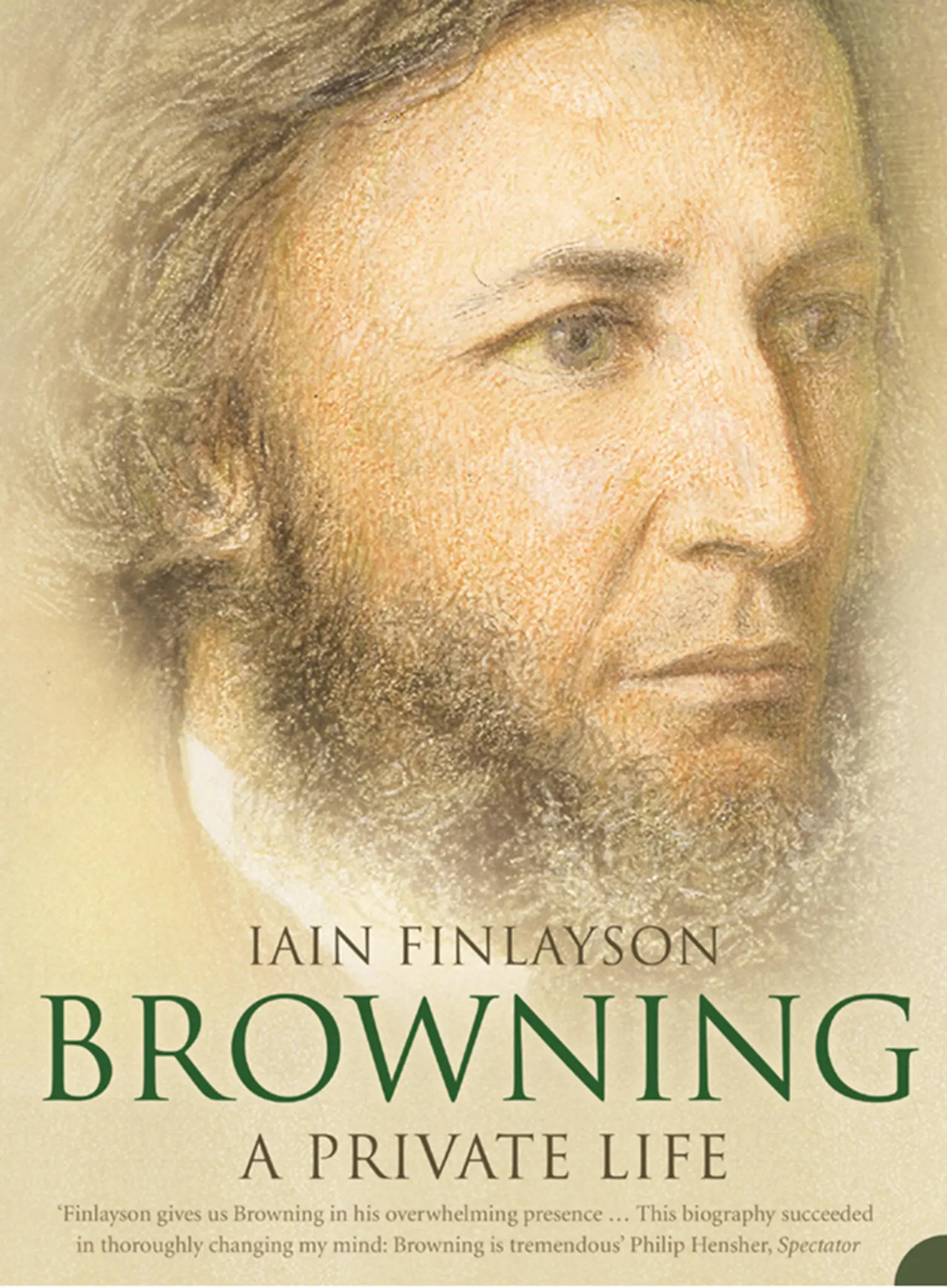
- Название:Browning
- Автор:
- Жанр:
- Год:неизвестен
- ISBN:нет данных
- Рейтинг книги:5 / 5. Голосов: 1
-
Избранное:Добавить в избранное
- Отзывы:
-
Ваша оценка:
Browning: краткое содержание, описание и аннотация
Предлагаем к чтению аннотацию, описание, краткое содержание или предисловие (зависит от того, что написал сам автор книги «Browning»). Если вы не нашли необходимую информацию о книге — напишите в комментариях, мы постараемся отыскать её.
Browning — читать онлайн ознакомительный отрывок
Ниже представлен текст книги, разбитый по страницам. Система сохранения места последней прочитанной страницы, позволяет с удобством читать онлайн бесплатно книгу «Browning», без необходимости каждый раз заново искать на чём Вы остановились. Поставьте закладку, и сможете в любой момент перейти на страницу, на которой закончили чтение.
Интервал:
Закладка:
London winters were cold, daylight turned a depressing grey, and dense, chilling fog hung like a malevolent yellow miasma about the streets, clutching at the throat and lungs. Elizabeth’s health deteriorated. In contrast to the open situation of Sidmouth, the reflective light of the sea and the green of the surrounding Devonshire countryside, she felt immured, ‘stuck to the fender’, almost literally bricked in. There was hardly a leaf or a blade of grass to be seen except if she drove out to Hampstead Heath, which hardly qualified as real country. As for acquiring stimulating literary and intellectual acquaintance, her sole resource and only constant visitor was her portly, red-faced, fifty-two-year-old cousin, John Kenyon whose advantage, in addition to a kindly and sociable nature, was that his house in Devonshire Place was a notable focus for literary men and women. He contrived, with some difficulty, to introduce Elizabeth to Wordsworth, Walter Savage Landor, and—more successfully—Mary Russell Mitford, chatty and opinionated and well-connected with literary persons, who became one of her few close friends and a regular recipient, until her death many years later, of Elizabeth’s most personally confiding and wittily conversational letters.
As the result of a cold contracted in the winter of 1837–8, Elizabeth began to cough again. She continued to feel unwell into the spring. When she consulted the eminent Dr Chambers, he recommended even more rest, to the point that she was rendered virtually immobile, moving only from sofa to bed and back again, hardly stirring from her room, which was closely sealed from the least possibility of a draught. Despite all precautions, she caught another cold, and Chambers gravely diagnosed an affection of the lungs. In August 1838, he advised a change of climate. Elizabeth should winter somewhere warm, and Mr Barrett was persuaded, with some difficulty, that she should go to Torquay with her maid, Elizabeth Crow. During the three years of her convalescence at Torquay, usually attended by one or other of her brothers and sisters, Elizabeth was fairly constantly unhappy. She didn’t like Torquay, she worried about the expense of it all, the climate was not particularly mild, and her health did not noticeably improve. At times, it took decided and distressing turns for the worse. She became increasingly reliant on laudanum to help her sleep. She wanted to be well for her father’s sake, and strenuously put her mind to feeling better, but she was convinced she was dying.
Many explanations have been given for Elizabeth’s chronic ill health: Betty Miller suggests that it derived from sibling rivalry, from jealousy of Bro. As a boy—it seemed to his elder sister—he was given the advantage by being sent to school to be properly, formally educated while she was obliged more or less to instruct herself. It is certainly true that Elizabeth was intellectually much cleverer than Bro. Mrs Miller’s theory implies that Elizabeth was malingering: perceiving herself as largely powerless, she put on suffering and incapacity as a means to obtain control of her life and so avoid the domestic and social duties of a woman of her class (she never liked sewing, for example), perhaps even deliberately to restrict the possibility of being obliged to marry. Illness attracted and focused the attention of her parents, and the household was at least partly run on the basis of her requirements. She imposed what she called a ‘rigid rein’ upon herself in order not to be ‘hurled with Phaeton far from everything human … everything reasonable!’ 130 In her own estimation, by imposing the restraint of immobility upon herself, she saved herself from acting upon the ‘violent inclination’ that remained in her ‘inmost heart’. Elizabeth at least partly acknowledged that her ill health might be a desirable condition.
The modern consensus is that Elizabeth was truly ill. There seems little doubt now that she contracted a form of tuberculosis in her mid-teens and, as Daniel Karlin comments, ‘Tuberculosis is an impressionable disease. Elizabeth Barrett’s health fluctuated according to variations in climate and state of mind; she had periods of remission followed by crises, and the crises generally corresponded with times when she was under nervous strain. In these circumstances, there is little point in drawing distinctions between “physical” and “psychological” illness.’ 131 This fits very well with Margaret Forster’s view that ‘It is impossible to over-emphasise how tension of any kind—pleasurable excitement just as much as unpleasant—had an immediate physical effect on Elizabeth. She was, as she described herself, “intensely nervous”.’ 132
In February 1840, the Barretts learned that Sam had died in Jamaica at the age of twenty-eight. The loss of a brother struck Elizabeth down instantly. She became delirious, fainting into unconsciousness when she was not in an opium-induced sleep, and could be comforted only by her father, who came down to Torquay to stay with her for several weeks. He rallied her with pious exhortations. He urged Christian submission to God’s will and invoked devotional feeling for His grace. She gave pious thanks for Sam’s life and everything she had loved in him—his amiability, his goodness, his wit, his delight in dandyish dress—but it was difficult not to be overwhelmed by his loss. She made the effort, however, to such an extent that Mr Barrett was gratified by his beloved daughter’s beauty of character as revealed in her staunch belief that love never dies, that Sam was but in another room, in another, better world, not dead to those who loved him. What she did not yet (if she ever did) know was that Sam had died—or so it was reported by missionaries who had worked to save his soul—of evil influences: the tropical climate, in part, but more perniciously of having resorted to native women and other carnal pleasures that had broken his health and imperilled his soul.
At about this time, Arabel and Bro had discovered romance. Bro’s affair seems to have been the more serious of the two, or perhaps it was merely more advanced than Arabel’s. Bro was thirty-three years old, an age at which his father had been married for eleven years and had sired eight children. Bro was refused paternal permission to marry. Mr Barrett set his face against any argument: he would hear no plea in favour of his son’s proposed nuptials. This was not unexpected. First of all, the fact was that Bro had no money of his own and stood in no position to marry without financial support from his father. Secondly, there exists the possibility that Mr Barrett had reasonable objections to the proposed bride, though we know no grounds on which they might have been well founded. Thirdly, it was well known among the Barretts that Mr Barrett had adopted the Irvingite principle, bolstered by his own reading of the Bible, that a father exercised absolute authority over his children. It was his first duty to lead them from the paths of corruption, to save them from sin, to preserve their purity. He might grieve for Sam, but—and we may assume he knew the disgraceful details of the wage Sam had earned from sin—the circumstances leading to his son’s spiritual ruin and consequent death would have surely confirmed his moral beliefs. For Mr Barrett to permit Bro to marry a woman who did not meet the exacting standards of the most rigorous morality would be to risk losing another son to perdition.
To an extent, from love, rather than from fear, the Barrett children were somewhat awed by the implications of their father’s attitude: no suitor other than a saint would be worthy of any of them, and a saint would hardly be the most likely material from which a spouse might be made. They might privately, among themselves, poke affectionate fun at their father’s protective concern for their spiritual salvation; but it was one thing to feel proud that they were special in his eyes, quite another when his interdict, as final as a ruling of the Last Judgement, frustrated their genuine emotions and commonplace desires. In a letter of 12 December 1845 to Robert Browning, Elizabeth summed up a situation that had unexpectedly arisen to affect her personally and to which she had once referred in jest to Arabel:
Читать дальшеИнтервал:
Закладка:
Похожие книги на «Browning»
Представляем Вашему вниманию похожие книги на «Browning» списком для выбора. Мы отобрали схожую по названию и смыслу литературу в надежде предоставить читателям больше вариантов отыскать новые, интересные, ещё непрочитанные произведения.









Обсуждение, отзывы о книге «Browning» и просто собственные мнения читателей. Оставьте ваши комментарии, напишите, что Вы думаете о произведении, его смысле или главных героях. Укажите что конкретно понравилось, а что нет, и почему Вы так считаете.