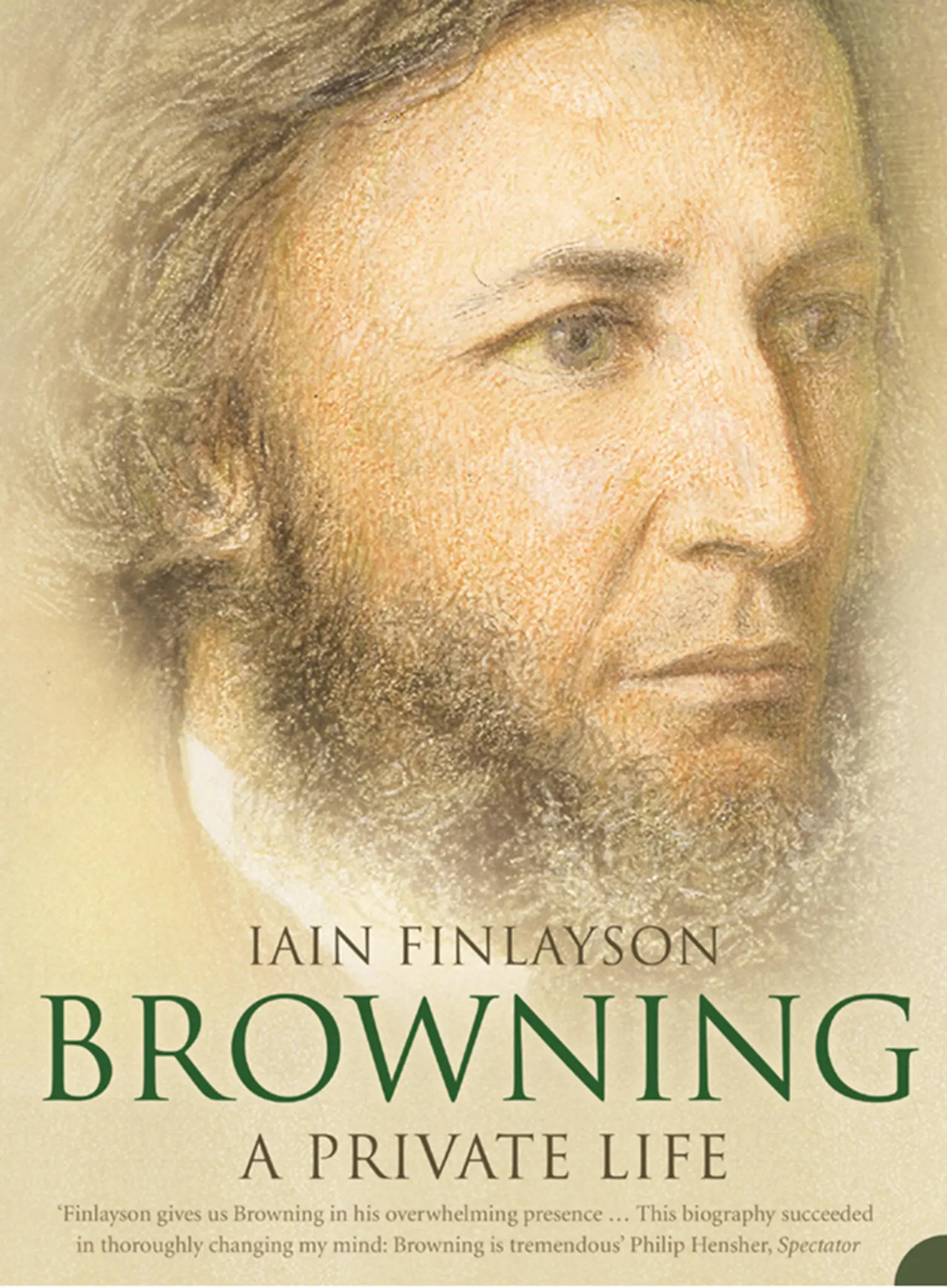
Iain Finlayson - Browning
Здесь есть возможность читать онлайн «Iain Finlayson - Browning» — ознакомительный отрывок электронной книги совершенно бесплатно, а после прочтения отрывка купить полную версию. В некоторых случаях можно слушать аудио, скачать через торрент в формате fb2 и присутствует краткое содержание. Жанр: unrecognised, на английском языке. Описание произведения, (предисловие) а так же отзывы посетителей доступны на портале библиотеки ЛибКат.
- Название:Browning
- Автор:
- Жанр:
- Год:неизвестен
- ISBN:нет данных
- Рейтинг книги:5 / 5. Голосов: 1
-
Избранное:Добавить в избранное
- Отзывы:
-
Ваша оценка:
Browning: краткое содержание, описание и аннотация
Предлагаем к чтению аннотацию, описание, краткое содержание или предисловие (зависит от того, что написал сам автор книги «Browning»). Если вы не нашли необходимую информацию о книге — напишите в комментариях, мы постараемся отыскать её.
Browning — читать онлайн ознакомительный отрывок
Ниже представлен текст книги, разбитый по страницам. Система сохранения места последней прочитанной страницы, позволяет с удобством читать онлайн бесплатно книгу «Browning», без необходимости каждый раз заново искать на чём Вы остановились. Поставьте закладку, и сможете в любой момент перейти на страницу, на которой закончили чтение.
Интервал:
Закладка:
If all this sounds like an idyll, it largely was. Hope End was an isolated rural property, deep in the agricultural west of the country, invisible from any road, silent but for bird song, and hedged from the outer world by dense foliage that to outsiders seemed oppressive. The Barretts lived in a quiet, secure, enclosed little world of their own, pretty much self-reliant and self-sufficient for their amusements. In this situation, Elizabeth discovered books at a very early age and her mother encouraged her to write about what she had read, nagging at her when her handwriting and critical standards didn’t come up to scratch. Supervised by Mary, Elizabeth ate up novels by Maria Edgeworth and Walter Scott, and begged for more. When a tutor was brought in to prepare Bro for school at Charterhouse, Elizabeth eagerly shared the lessons with her younger brother and learned Greek with him.
In April 1821, Arabel, Henrietta, and Elizabeth fell ill with headaches, pains in their sides, and convulsive twitchings of their muscles. They were treated, on the best medical advice, with a tincture of valerian, whereupon Arabel and Henrietta quickly recovered. Elizabeth did not, and in June she contracted a case of measles. It is at this time that she seems to have decided that she suffered from ‘natural ill health’, and her symptoms increased not only in quality but in quantity. She described her constant headache and her recurrent paroxysms—her ‘agony’—to her local and London doctors; how she swooned, the wild beating of her heart, her feeble pulse, the coldness of her feet, the constant pains in the right side of her chest that travelled round to her back, up to her right shoulder and down the arm. Margaret Forster succinctly describes how, ‘From the onset of menstruation middle-class women were encouraged to regard themselves as delicate creatures who must take great care of themselves. Vigorous exercise was discouraged, rest encouraged. Every ache and pain was taken seriously.’ 129 The result, too often, was a debilitated condition—a chronic invalidism at best; at worst, symptoms resulting from hysteria or a narcissistic hypochondria that derived from or provoked the social attitude that women were naturally weak, dependent creatures. Illness was considered to be virtually the norm for upper-and middle-class women: to be ‘pale and interesting’ was quite the thing; robust health was not fashionable.
Elizabeth, whose health in childhood had been good, allowing for seasonal coughs and colds, nothing to worry about in normal circumstances, was prescribed purgatives that gave little or no relief. Advice, of course trustfully taken and dutifully observed, to confine herself ‘in a recumbent posture’ for long hours every day to a sofa or bed probably only reinforced her condition. Her paroxysms continued at the rate of three a day, though none at night, and she began to complain that her spine was ‘swollen’. Though medical examination could detect ‘nothing obviously wrong with the spine’, she was put in a ‘spine crib’—a kind of hammock suspended some four feet off the ground—just in case a disorder of the spine should develop. It was at this point that laudanum—dried and powdered opium dissolved in alcohol—was prescribed for Elizabeth, who took this universal panacea with just as much thought as we might take any mildly palliative over-the-counter nostrum or prescription drug today. A solution of opium or morphine enabled her to sleep in a ‘red hood of poppies’. At first, the dose would have been mild, but in time she would come to depend upon taking up to forty drops a day, a serious quantity, and claim she could not do without it.
After a few months, Elizabeth recovered some of her usual high spirits. Her appetite improved, her symptoms of upper body pain and paroxysms abated, and she felt rested. But she continued to believe that she was truly suffering from a disease of the spine and, despite medical prognoses that she would make a complete recovery from ailments both real and imaginary, she behaved as though she were a chronic invalid with no hope of cure. Her body was as passive as her mind was active. For the next year, strung up in her spinal crib or recumbent on a sofa, she read voraciously, wrote quantities of gloomy verse, ‘sickly’ as she herself eventually characterized it, in the form of odes dedicated to her family, and continued her study of Greek. She read Shakespeare and the best modern poets—Byron, Shelley, Keats, Wordsworth—and became morbidly Romantic. She read Mary Wollstonecraft’s Vindication of the Rights of Woman and became enraged about the sufferings of womanhood. Mary Wollstonecraft, in fact, affected her as deeply in her view of wedlock and subservience to men as Shelley’s atheism and vegetarianism had affected Robert. Elizabeth rejected romantic love and marriage as a snare she should take care to avoid. Robert had rejected the prospect of marriage less philosophically, rather as an unlikely adventure which, even if he should find a compatible partner, he could not financially afford.
In common, too, with the young Robert Browning, Elizabeth Barrett had determined in her teens that to be a poet was an honourable profession, that poetry was real work of deep spiritual and high artistic value, that she herself could become a proper poet—‘one of God’s singers’. Her ambitions extended far beyond the charming verses that young dilettantish women composed as prettily as they painted watercolours. Since Elizabeth’s parents, like Robert’s, were respectful of major poetry and serious poets, they made no difficulty about their eldest daughter’s devotion to such a creditable art and encouraged her aspirations. From the age of eleven, after all, she had shown not just promise, but uncommon ability. However they might privately enjoy the lighter-minded versifying of the other children, her parents and siblings soon learned that Elizabeth’s poems were no laughing matter and to tread warily if ever tempted to take them lightly. By the age of twenty-one, Elizabeth was a published poet. She had proved the worth of her work to herself and enjoyed the regard of those who valued it. To buy time to pursue her high vocation and continue her scholarly studies, she insisted on respect for the importance of her work and indulgence for her precarious state of health.
Her physical condition had markedly improved: she no longer rode or walked great distances or played boisterously with the younger children as she had done before her first illness, but she did stroll around the house and the gardens of Hope End and tutored her younger brothers in Latin. For the best part of the day, however, she closeted herself in her room, writing and reading in bed until late in the morning and preferring not to join the rest of the family when visitors were entertained. Now that her physical frailty had become established, accepted by custom and usage, she no longer had to emphasize her mysteriously non-specific weakness by regular consultations with doctors: coughings and a susceptibility to colds were enough to provoke sympathy and promote a collective agreement within her family that Elizabeth should be protected from anything that might worsen her delicate state of health. For intellectual stimulation, she corresponded lengthily with neighbours, older gentlemen such as Sir Uvedale Price (author, in 1794, of An Essay on the Picturesque , which introduced a new aesthetic category), Sir James Commeline (a local vicar and classical scholar), and especially with Hugh Stuart Boyd, a scholar, translator, and poet who lived at nearby Malvern Wells. She fell half in love with Mr Boyd, who was sadly afflicted with blindness, the only man outside her family that she consented to see and to make the effort to visit. But Mr Boyd, a gentleman of some moderate private means, happened to be married already and the father of children.
Читать дальшеИнтервал:
Закладка:
Похожие книги на «Browning»
Представляем Вашему вниманию похожие книги на «Browning» списком для выбора. Мы отобрали схожую по названию и смыслу литературу в надежде предоставить читателям больше вариантов отыскать новые, интересные, ещё непрочитанные произведения.









Обсуждение, отзывы о книге «Browning» и просто собственные мнения читателей. Оставьте ваши комментарии, напишите, что Вы думаете о произведении, его смысле или главных героях. Укажите что конкретно понравилось, а что нет, и почему Вы так считаете.