Iain Finlayson - Browning
Здесь есть возможность читать онлайн «Iain Finlayson - Browning» — ознакомительный отрывок электронной книги совершенно бесплатно, а после прочтения отрывка купить полную версию. В некоторых случаях можно слушать аудио, скачать через торрент в формате fb2 и присутствует краткое содержание. Жанр: unrecognised, на английском языке. Описание произведения, (предисловие) а так же отзывы посетителей доступны на портале библиотеки ЛибКат.
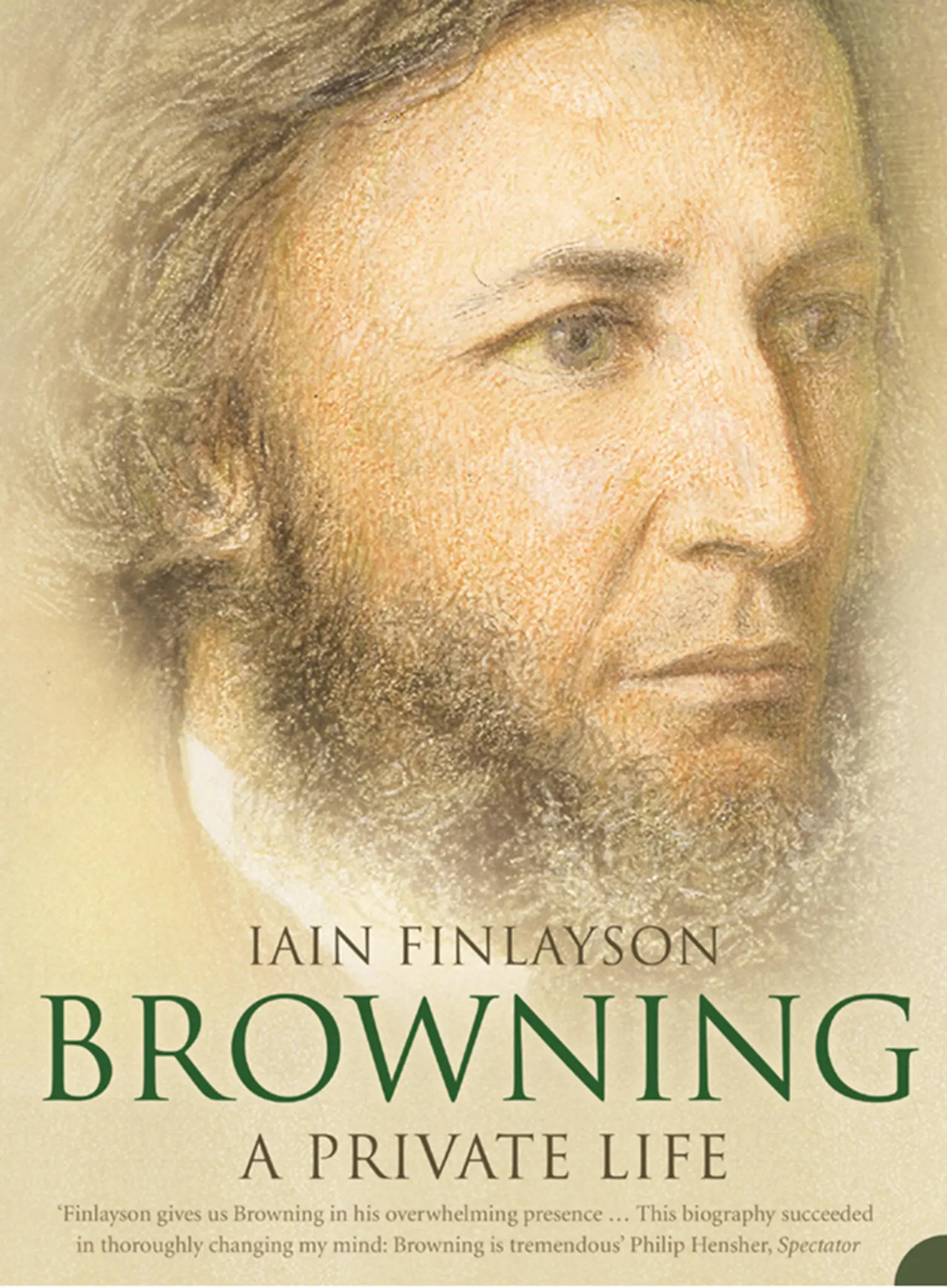
- Название:Browning
- Автор:
- Жанр:
- Год:неизвестен
- ISBN:нет данных
- Рейтинг книги:5 / 5. Голосов: 1
-
Избранное:Добавить в избранное
- Отзывы:
-
Ваша оценка:
Browning: краткое содержание, описание и аннотация
Предлагаем к чтению аннотацию, описание, краткое содержание или предисловие (зависит от того, что написал сам автор книги «Browning»). Если вы не нашли необходимую информацию о книге — напишите в комментариях, мы постараемся отыскать её.
Browning — читать онлайн ознакомительный отрывок
Ниже представлен текст книги, разбитый по страницам. Система сохранения места последней прочитанной страницы, позволяет с удобством читать онлайн бесплатно книгу «Browning», без необходимости каждый раз заново искать на чём Вы остановились. Поставьте закладку, и сможете в любой момент перейти на страницу, на которой закончили чтение.
Интервал:
Закладка:
Mary Barrett, exhausted by the birth of her twelfth child, Octavius, in 1824, distressed by the death of her mother, Grandmother Graham-Clarke, and suffering from rheumatoid arthritis, died at the age of forty-seven in October 1828. Elizabeth was twenty-two years old. As the oldest daughter, she might have been expected to take over the running of the Hope End household, but no such duty was imposed upon her. Instead, Aunt Bummy, Arabella Graham-Clark, an unmarried sister of Mary Barrett, came to live with the Barretts. She was forty-three years old, the same age as her brother-in-law, and capably took over the management of the household, so relieving Elizabeth of any domestic obligations. The death of his wife deeply affected Edward Barrett, who turned to religion for spiritual comfort.
On his trips to London he had fallen under the influence of the powerfully charismatic Scottish preacher Edward Irving who, by 1825, had started to go seriously off his theological head—and not quietly. Irving’s big moment of revelation arrived when, sensationally, he predicted the imminent second coming of Christ. From 1828, he began teaching Christ’s oneness with humanity in all its attributes and thus, heretically, to assert to his followers the sinfulness of Christ’s nature. Edward Barrett’s mind became infused with the Irvingite belief that salvation lay in purity, that translation to the next world, preferment in the afterlife, could be achieved only by remaining uncorrupted by this wretched and sinful world. Irving preached zealously to large crowds that flocked to hear his dramatic denunciations of the errors of turpitudinous humanity. His authority, he claimed, derived directly from God, whose mouthpiece he had become. As an instrument of the divine, Irving was regularly inspired to invoke the wrathful retribution of the Almighty upon the godless and the guilty.
Bereft of her mother, Elizabeth adhered emotionally to her father. They had always been close, though never dependent on one another. Edward Barrett’s feelings towards his eldest daughter were sympathetic towards her physical fragility and psychological sensitivity. His general conduct as a good paterfamilias was not exceptional: he could be severe when necessary in his principles of good Christian conduct, and strict, though not abusive, about correcting any backsliding among the young Barretts, though he tended to be more indulgent towards Elizabeth than towards the rest of his children. But now Elizabeth became clinging, resentful of his business trips to London, anxious even when he was out of her sight at home. She wept pitifully when he went away and wept for joy when he returned safely. It is now generally accepted that, in the first years after his wife’s death, Edward Barrett did not become abnormally possessive of Elizabeth: quite the reverse, in fact. If anything, it was Elizabeth who felt, however irrationally, abandoned and insecure to the extent that she became virtually reclusive and sought comfort to an unusual degree in the powerful protective presence and reassuring company of her father.
Mr Barrett, in turn, looked to his family for solace in his grief and loneliness. He was liable to fall into rages, justifiably or not, but he could generally put on a good-humoured face. If he was sometimes a beast, he was at least—like Dr Arnold of Rugby—a just beast. In whatever temper, thunderous or sunny, it was perfectly evident that he greatly missed his wife. As he turned inward upon himself and his children, so he excluded friends and barely tolerated the intrusions by various remote members of the Barrett and Graham-Clarke families. Like Elizabeth, he conceived a horror of visitors and refused to make visits to other houses. His children amply and affectionately returned his love for them, and so for a while their mutual need for security coincided. For the most part, harmony reigned throughout Hope End. Then, in 1830, just two years after the death of his wife, Edward Barrett’s mother died. His shock was unspeakable. He had no words to describe the immensity of his loss. For that matter, the entire Barrett family was shocked to the extent that they were all shackled even more securely together in the isolated house and in their passionate, almost exclusive involvement with one another.
Edward Barrett was experiencing other difficulties, beyond the deeply wounding, irreparable losses in his private life. Some long-standing business and financial worries, caused by sustained mismanagement of his interests in the West Indies and a damaging lawsuit, were brought to a head by a slave rebellion in 1832 on the Jamaican plantations managed by his brother Sam. Additionally, the imminent prospect of the complete abolition of slavery (which eventuated in 1833) implied higher production costs and an inevitable tumult in the price of sugar. The monetary losses would be severe. Hope End, a significant drain on his resources (it was heavily mortgaged and creditors were pressing), would have to be sold. He kept much of the land, but the loss of the house was bad enough. It represented, even worse, a loss of his fundamental security in the world after the deaths of his wife and mother, and a serious loss of face—humiliating evidence of failure. If such precious things could so easily slip from his grasp, what might he lose next? In fact, Edward Barrett was far from ruined: the prospect before him was not that he would be a poor man, but he would no longer be a rich man.
The Barretts left Hope End on 23 August 1832. Mr Barrett had taken a large, comfortable house by the sea at Sidmouth in Devon, and the family settled more or less cheerfully, at least without protest, into their new lives. Elizabeth slept soundly, her appetite increased, and her cough was less troublesome: perhaps the sea air had something to do with the revival of her health, and probably, too, the stimulation of a new, more open and extroverted environment after the backwater of Hope End was beneficial. It was as though a heavy burden of gloom had been lifted from the Barretts. The whole family, buzzing around the beach and enjoying a more active social life, felt better and looked healthier. They received local visitors and returned their calls—all except Elizabeth, who refused to visit or be visited by anyone and mostly stuck to her books.
Bro, Stormie, and George, the older brothers, were by now judged by their father to be adult enough to prepare themselves for employment in the world. Bro, twenty-five years old, travelled to Jamaica to help his Uncle Sam, while Stormie and George, aged sixteen and nineteen respectively, left to attend Glasgow University. Elizabeth experienced her familiar feeling that, as soon as any of the family disappeared from her sight, she might never see them again, lose them altogether; but she put up a brave front, appeared compliant of inevitable changes in family life, and applied herself even more diligently to her proper business of reading and writing until the family situation should, with any luck, return to normal.
The three Barrett brothers returned to Sidmouth in 1835. At the end of the year Mr Barrett announced that, for the sake of his sons, the family would move immediately to London. George, who intended to become a barrister, would enter the Inner Temple, one of the Inns of Court; Bro (who had acquired first-hand experience of the West Indian estates) and Stormie (who stammered so badly that he could not take his viva voce examination and thus had failed to take his degree) would join the family business; and the younger boys would be properly educated. Elizabeth, who had found little intellectual stimulation in Sidmouth—not that she had made much effort to seek it out—was better pleased than not at the prospect of a literary life in London. For two years the Barretts lived at 74 Gloucester Place before moving permanently, in 1838, to 50 Wimpole Street.
Читать дальшеИнтервал:
Закладка:
Похожие книги на «Browning»
Представляем Вашему вниманию похожие книги на «Browning» списком для выбора. Мы отобрали схожую по названию и смыслу литературу в надежде предоставить читателям больше вариантов отыскать новые, интересные, ещё непрочитанные произведения.










Обсуждение, отзывы о книге «Browning» и просто собственные мнения читателей. Оставьте ваши комментарии, напишите, что Вы думаете о произведении, его смысле или главных героях. Укажите что конкретно понравилось, а что нет, и почему Вы так считаете.