Iain Finlayson - Browning
Здесь есть возможность читать онлайн «Iain Finlayson - Browning» — ознакомительный отрывок электронной книги совершенно бесплатно, а после прочтения отрывка купить полную версию. В некоторых случаях можно слушать аудио, скачать через торрент в формате fb2 и присутствует краткое содержание. Жанр: unrecognised, на английском языке. Описание произведения, (предисловие) а так же отзывы посетителей доступны на портале библиотеки ЛибКат.
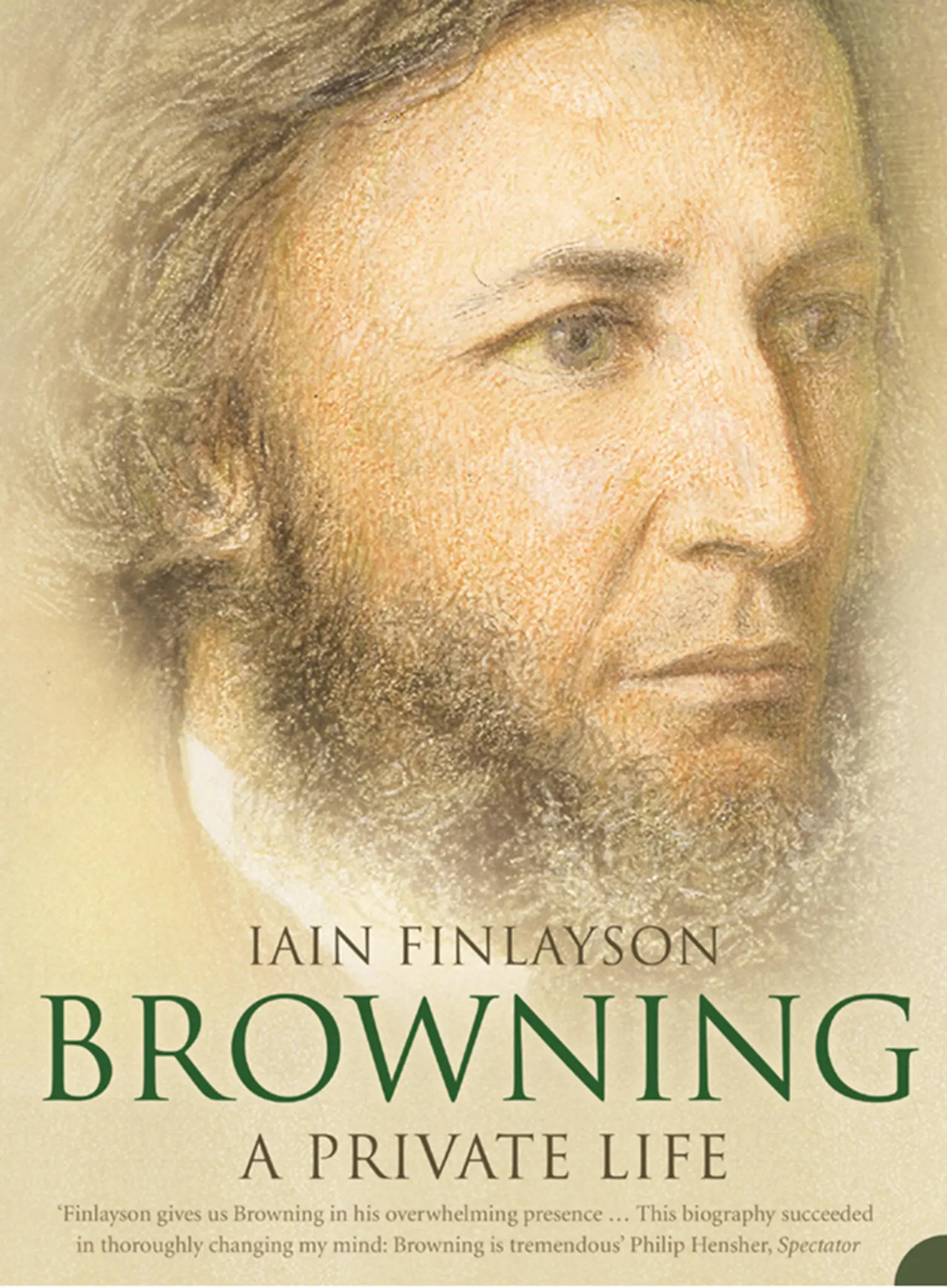
- Название:Browning
- Автор:
- Жанр:
- Год:неизвестен
- ISBN:нет данных
- Рейтинг книги:5 / 5. Голосов: 1
-
Избранное:Добавить в избранное
- Отзывы:
-
Ваша оценка:
Browning: краткое содержание, описание и аннотация
Предлагаем к чтению аннотацию, описание, краткое содержание или предисловие (зависит от того, что написал сам автор книги «Browning»). Если вы не нашли необходимую информацию о книге — напишите в комментариях, мы постараемся отыскать её.
Browning — читать онлайн ознакомительный отрывок
Ниже представлен текст книги, разбитый по страницам. Система сохранения места последней прочитанной страницы, позволяет с удобством читать онлайн бесплатно книгу «Browning», без необходимости каждый раз заново искать на чём Вы остановились. Поставьте закладку, и сможете в любой момент перейти на страницу, на которой закончили чтение.
Интервал:
Закладка:
Elizabeth attributed his change of manner to shyness, about which she expressed some exasperation; but the truth of the matter was that Edward Barrett now felt inadequate. To compensate, he refused all occasions on which he thought he might not act with advantage—worse, be perceived to his disadvantage. Within his own house and family circle, he generally showed kindness and tenderness and was persuaded by Elizabeth to permit the amiable John Kenyon to visit and to meet Miss Mitford, who was also regularly admitted to Elizabeth’s room. He was delighted with Mary Mitford, but his success with her did not encourage him to push his luck further with others, such as Mrs Anna Jameson, who thrust herself into 50 Wimpole Street in November 1844.
There was no keeping Mrs Jameson out. She had read and admired Elizabeth’s latest publication, Poems , and nothing would do but that she should meet the author. Anna Jameson was not unknown in her own right among respected and respectable London society. Obliged to make her own living, she had established herself as a popular authority on art, travel, and literary criticism (mostly about women in Shakespeare and poetry), producing well-received, profitable books that enabled her to travel widely at a fast clip and in modest comfort to research more books on these improving subjects. Her works were not scholarly, perhaps, but they demonstrated some artistic taste and good sense; they were well researched at first hand, vividly written, and they sold well.
As a self-sufficient woman, Mrs Jameson was a convinced feminist in the Harriet Martineau mould, and naturally wished to exchange sisterly views with the celebrated Miss Barrett. She saw no good reason why this ambition should not be achieved, and so she politely left a note at 50 Wimpole Street announcing herself. But many people had left notes at the Barrett house, to no positive advantage. Mrs Jameson, turned away unsatisfied from the doorstep the first time, made a second attempt. She left another note, and this time she was admitted by Wilson. Elizabeth had read at least one of Mrs Jameson’s dozen books and her curiosity about the woman’s determination seems to have overridden her habitual inclination to close the door against even the most distinguished callers.
Anna Jameson was no beauty—Elizabeth, who paid close attention to physical appearance, noted that her complexion was pale and so were her eyes, she possessed no eyebrows to speak of, her lips were thin and colourless, and her hair was a very pale red. Carlyle briskly described her as ‘a little, hard, brown, red-haired, freckled, fierce-eyed, square-mouthed woman’. But Carlyle was not one to varnish a plain portrait. He spoke as he found—and so, for that matter, did Mrs Jameson. She was Irish, which largely accounts for her colouring and partly for her character. Like Miss Mitford, Anna Jameson was of middling years. But with the coincidence of their ages, any resemblance to Miss Mitford ended.
Whereas Mary Mitford indulged Elizabeth’s taste for writing and receiving long, confidingly effusive letters rapturously devoted, for the most part, to the incomparable beauties of Flush, his adorable character, and detailed accounts of his daily doggie activities, Anna Jameson spoke forth uncompromisingly and brusquely on all manner of matters within her competence, and they were many, including the subject of women’s superiority of mind and the uselessness of what she called ‘carpet work’ to which the female sex was condemned and confined. ‘Carpet work’ was injurious to the female mind, she said, because it led, fatally, to the vapid habit of reverie. Elizabeth faintly protested this blanket condemnation, though she had never worked a carpet, far less knitted or plied a needle and thread, in her life. Mrs Jameson, taking stock of Elizabeth, generously made an exception for her on the ground that she might do carpet work with impunity because she could be writing poetry at the same time. Anna Jameson’s vigorous, sharply intelligent, unreserved discourse, and the underlying kindliness of her nature, endeared her immediately, and so this good woman was admitted to the small, exclusive pantheon of Elizabeth’s closest and most trusted allies. She could hardly have chosen anyone truer in friendship or more stout-hearted in the defence of her reputation and interests than Anna Jameson when such unqualified support was required and mattered most.
As Elizabeth’s spirits improved, as her work became more widely known and widely appreciated, and as she took more interest in the activities and gossip of London’s social, political and literary life—in response to her frequent letters, friends wrote back despatches from all these fronts and her chosen ambassadors reported to her in person—so her health also improved. In her letter to Robert of 5 March 1845, she wrote: ‘I am essentially better , and have been for several winters; and I feel as if it were intended for me to live and not die, and I am reconciled to the feeling … I am not desponding by nature, and after a course of bitter mental discipline and long bodily seclusion, I come out with two learnt lessons (as I sometimes say and oftener feel),—the wisdom of cheerfulness—and the duty of social intercourse.’
In her darker moments, Elizabeth felt she had been deprived of social and intellectual opportunities, ground to a husk in the mill of suffering, and she contrasted Robert’s luckier, fatter experience of life to date: ‘I do like to hear testimonies like yours, to happiness … it is obvious you have been spared, up to this time, the great natural afflictions, against which we are nearly all called, sooner or later, to struggle and wrestle … Remember that as you owe your unscathed joy to God, you should pay it back to His world. And I thank you for some of it already.’ She made some judicious criticism of attitudes towards her: ‘People have been kind to me , even without understanding me, and pitiful to me, without approving of me’: and now Robert—‘How kind you are!—how kindly and gently you speak to me! Some things you say are very touching, and some, surprising; and although I am aware that you unconsciously exaggerate what I can be to you, yet it is delightful to be broad awake and think of you as my friend.’
Robert retorted in his letter post-marked 12 March that ‘You think—for I must get to you —that “I unconsciously exaggerate what you are to me.” Now, you don’t know what that is, nor can I very well tell you, because the language with which I talk to myself of these matters is spiritual Attic, and “loves contradictions,” as grammarians say … but I read it myself and know very well what it means, that’s why I told you I was self-conscious—I meant that I never yet mistook my own feelings, one for another—there! … Do you think I shall see you in two months, three months? I may travel, perhaps.’ That last, apparently throwaway but more probably well calculated, line had its effect. Elizabeth replied eight days later, ending her letter by saying, ‘If you mean “to travel”, why, I shall have to miss you. Do you really mean it?’ She knew she was being pressed, that Robert’s patience had been tried and was running short. This long letter of 20 March opened with the assurance that ‘Whenever I delay to write to you, dear Mr Browning, it is not, to be sure, that I take “my own good time,” but submit to my own bad time … I have not been very well, nor have had much heart for saying so.’
The weather—‘this east wind that seems to blow through the sun and the moon!’—had been implacable and ‘I only grow weaker than usual, and learn my lesson of being mortal, in a corner—and then all this must end! April is coming. There will be both a May and a June if we live to see such things, and perhaps, after all, we may. And as to seeing you besides, I observe that you distrust me, and that perhaps you penetrate my morbidity and guess how when the moment comes to see a living human face to which I am not accustomed, I shrink and grow pale in the spirit. Do you? You are learned in human nature, and you know the consequences of leading such a secluded life as mine—notwithstanding all my fine philosophy about social duties and the like—well—if you have such knowledge or if you have it not, I cannot say, but I do say that I will indeed see you when the warm weather has revived me a little, and put the earth “to rights” again so as to make pleasures of the sort possible.’
Читать дальшеИнтервал:
Закладка:
Похожие книги на «Browning»
Представляем Вашему вниманию похожие книги на «Browning» списком для выбора. Мы отобрали схожую по названию и смыслу литературу в надежде предоставить читателям больше вариантов отыскать новые, интересные, ещё непрочитанные произведения.





Обсуждение, отзывы о книге «Browning» и просто собственные мнения читателей. Оставьте ваши комментарии, напишите, что Вы думаете о произведении, его смысле или главных героях. Укажите что конкретно понравилось, а что нет, и почему Вы так считаете.