Iain Finlayson - Browning
Здесь есть возможность читать онлайн «Iain Finlayson - Browning» — ознакомительный отрывок электронной книги совершенно бесплатно, а после прочтения отрывка купить полную версию. В некоторых случаях можно слушать аудио, скачать через торрент в формате fb2 и присутствует краткое содержание. Жанр: unrecognised, на английском языке. Описание произведения, (предисловие) а так же отзывы посетителей доступны на портале библиотеки ЛибКат.
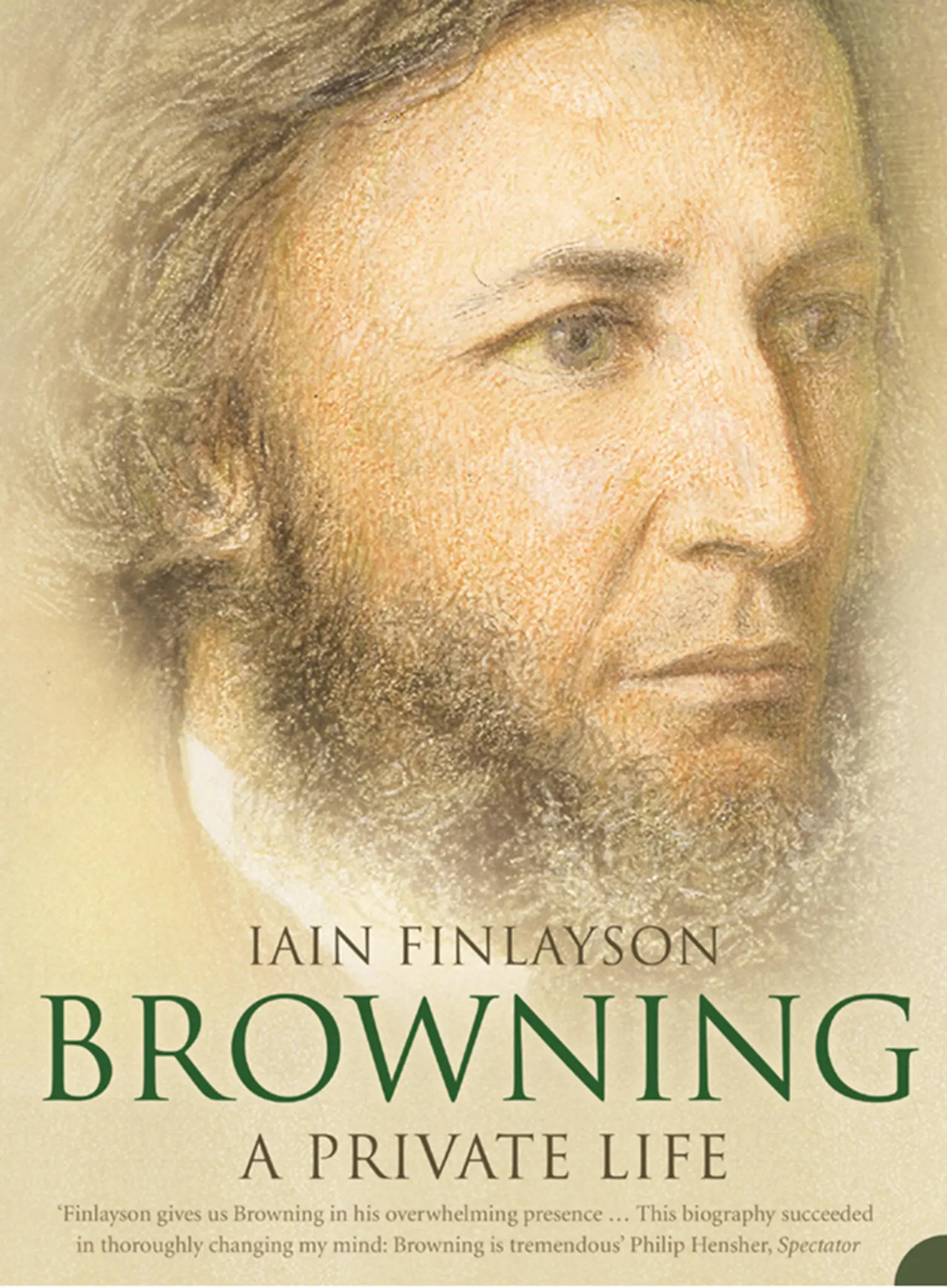
- Название:Browning
- Автор:
- Жанр:
- Год:неизвестен
- ISBN:нет данных
- Рейтинг книги:5 / 5. Голосов: 1
-
Избранное:Добавить в избранное
- Отзывы:
-
Ваша оценка:
Browning: краткое содержание, описание и аннотация
Предлагаем к чтению аннотацию, описание, краткое содержание или предисловие (зависит от того, что написал сам автор книги «Browning»). Если вы не нашли необходимую информацию о книге — напишите в комментариях, мы постараемся отыскать её.
Browning — читать онлайн ознакомительный отрывок
Ниже представлен текст книги, разбитый по страницам. Система сохранения места последней прочитанной страницы, позволяет с удобством читать онлайн бесплатно книгу «Browning», без необходимости каждый раз заново искать на чём Вы остановились. Поставьте закладку, и сможете в любой момент перейти на страницу, на которой закончили чтение.
Интервал:
Закладка:
In her reply to Robert post-marked 16 May, she protested: ‘But how “mistrustfulness”? And how “that way?” What have I said or done, I, who am not apt to be mistrustful of anybody and should be a miraculous monster if I began with you!’ She excused herself: ‘I have made what is vulgarly called a “piece of work” about little; or seemed to make it. Forgive me. I am shy by nature:—and by position and experience by having had my nerves shaken to excess, and by leading a life of such seclusion, … by these things together and by others besides, I have appeared shy and ungrateful to you. Only not mistrustful.’ She relented: she said that if Robert cared to come to see her, he could come. It would be her gain, she said, and not Robert’s. She did not normally admit visitors because, she wrote, ‘putting the question of health quite aside, it would be unbecoming to lie here on the sofa and make a company-show of an infirmity, and hold a beggar’s hat for sympathy.’ To the extent that she did exploit her condition of health, she was obscurely repulsed by it herself and thus certain that others would also be disgusted.
It is a convention that romantic and operatic heroines, especially if pale, languorous, and dying of consumption, should be beautiful, and so it is sentimentally assumed that Elizabeth was chiefly worried by the effect her looks might have on Robert. It is difficult to conceive a more banal idea than that Elizabeth, hearing Robert’s footsteps on the stair for the first time, should primp herself, pinch her cheeks for a little colour, and have Wilson, her maid, fuss with her hair to present herself to best advantage. She possessed no idea of herself as a tragic heroine, and still further from her mind was any concept of herself as a flirt, a coquette. Personally, she affected no mystery. To whatever extent she had been invested with glamour and mystery, that image of beauty unrevealed had arisen in the minds of others from her curious reclusiveness and invisibility. Conscious of public interest in her, and perhaps aware that her disinclination to put herself obligingly on show only served to fuel that curiosity, she feared, if anything, a constant troop of rubber-necking visitors curious to inspect her as a sort of freak show.
More to the point, Elizabeth worried that Robert would find her colourless in person, tongue-tied, less interesting than her poetry. He would be disappointed in her. ‘There is nothing to see in me;’ she warned him, ‘nor to hear in me—I never learnt to talk as you do in London; although I can admire that brightness of carved speech in Mr Kenyon and others. If my poetry is worth anything to any eye, it is the flower of me. I have lived most and been most happy in it, and so it has all my colours; the rest of me is nothing but a root, fit for the ground and the dark.’ The most he could expect should be ‘truth and simplicity for you, in any case; and a friend. And do not answer this—I do not write it as a fly trap for compliments. Your spider would scorn me for it too much.’ 135
Having consented to a meeting, Elizabeth promptly took fright and retreated a little, disingenuously procrastinating not on her own account but by offering Robert an excuse for delay, a mediator, or the opportunity to create an obstacle to his visit. In her letter post-marked 16 May she reminded Robert that he had not been well, that he had had a headache and a ringing in his ears, and she entreated him ‘not to think of coming until that is all put to silence satisfactorily. When it is done, … you must choose whether you would like best to come with Mr Kenyon or to come alone—and if you would come alone, you must just tell me on what day, and I will see you on any day unless there should be an unforeseen obstacle, … any day after two, or before six.’
Robert in turn had his anxieties. In his Friday evening reply postmarked 17 May, amusingly as he thought, he played with Elizabeth’s alleged ‘mistrust’ of him—not that he would make away with the Barrett cloaks and umbrellas downstairs, or publish a magazine article about his meeting with her, rather that she mistrusted his ‘commonsense,—nay, uncommon and dramatic-poet’s sense, if I am put on asserting it!—all which pieces of mistrust I could detect, and catch struggling, and pin to death in a moment, and put a label in, with name, genus and species, just like a horrible entomologist; only I won’t, because the first visit of the Northwind will carry the whole tribe into the Red Sea—and those horns and tails and scalewings are best forgotten altogether.’ Robert then conjured an elaborately facetious encounter between himself and an imaginary Mr Simpson, an avid admirer of Mr Browning’s poetry who earnestly wishes to meet its maker and is disappointed in the banality of Robert’s conversation about the weather and politics and makes his excuses to leave after five minutes, saying to himself, ‘Well, I did expect to see something different from that little yellow commonplace man.’ Robert then said that he would call on Miss Barrett—allowing for any adverse circumstances—on Tuesday at two o’clock.
Elizabeth, discontented with his letter, replied the same day that ‘I shall be ready on Tuesday I hope, but I hate and protest against your horrible “entomology.”’ Robert’s light-hearted little fantasy of Simpsonism had not been well received by Elizabeth, who crossly considered that ‘you, who know everything, or at least make awful guesses at everything in one’s feelings and motives, and profess to pin them down in a book of classified inscriptions, … should have been able to understand better, or misunderstand less, in a matter like this—Yes! I think so. I think you should have made out the case in some such way as it was in nature—viz. that you had lashed yourself up to an exorbitant wishing to see me, … (you who could see, any day, people who are a hundredfold and to all social purposes, my superiors!) because I was unfortunate enough to be shut up in a room and silly enough to make a fuss about opening the door; and that I grew suddenly abashed by the consciousness of this. How different from a distrust of you! how different!’ 136 Elizabeth and Robert had both, by this point, worked themselves up to such a pitch of apprehension that their hypersensitivity crackled like static electricity in the air between them. Of the two, Elizabeth was only marginally the less confident. Mr Barrett had been squared—he did not object to ‘Ba’s poet’ paying her a visit so long as he did not have to meet him. In any case, Mr Barrett, like his sons, was usually out during the afternoons, until about seven o’clock. From two to six was the quietest part of the day in the house. It wasn’t likely, in any case, that anyone would burst unexpectedly into Elizabeth’s room: she saw her brothers and their noisy friends ‘only at certain hours’ and, she later told Robert, ‘as you have “a reputation” and are opined to talk in blank verse, it is not likely that there should be much irreverent rushing into this room when you are known to be in it.’ 137 At three o’clock in the afternoon of Tuesday 20 May 1845, Robert was led up the stairs and shown into Elizabeth’s room. He left ninety minutes later, at half past four. Robert afterwards noted the date and time and length of the first meeting, as he would note all subsequent meetings, on the envelopes of Elizabeth’s letters.
And that was all he noted. Neither Robert nor Elizabeth directly referred in their letters, then or later, to what passed between them during their times together in her room. It is as though the letters are one dialogue, the conversations quite another. They seem rarely to have overlapped, or flowed into one another; at most, the letters may have continued discussions initiated verbally, but the written correspondence is remarkably self-contained. Perhaps, after all, Robert and Elizabeth at first confined themselves to polite ‘Simpsonisms’ about the weather and politics. We can make some guesses, but we not know. We know, nevertheless, what Robert saw when the door closed behind him and he sat down to talk privately with Elizabeth. The room she had described to a Devonshire friend, Mrs Martin, on 26 May 1843, would not have substantially changed over two years:
Читать дальшеИнтервал:
Закладка:
Похожие книги на «Browning»
Представляем Вашему вниманию похожие книги на «Browning» списком для выбора. Мы отобрали схожую по названию и смыслу литературу в надежде предоставить читателям больше вариантов отыскать новые, интересные, ещё непрочитанные произведения.









Обсуждение, отзывы о книге «Browning» и просто собственные мнения читателей. Оставьте ваши комментарии, напишите, что Вы думаете о произведении, его смысле или главных героях. Укажите что конкретно понравилось, а что нет, и почему Вы так считаете.