Iain Finlayson - Browning
Здесь есть возможность читать онлайн «Iain Finlayson - Browning» — ознакомительный отрывок электронной книги совершенно бесплатно, а после прочтения отрывка купить полную версию. В некоторых случаях можно слушать аудио, скачать через торрент в формате fb2 и присутствует краткое содержание. Жанр: unrecognised, на английском языке. Описание произведения, (предисловие) а так же отзывы посетителей доступны на портале библиотеки ЛибКат.
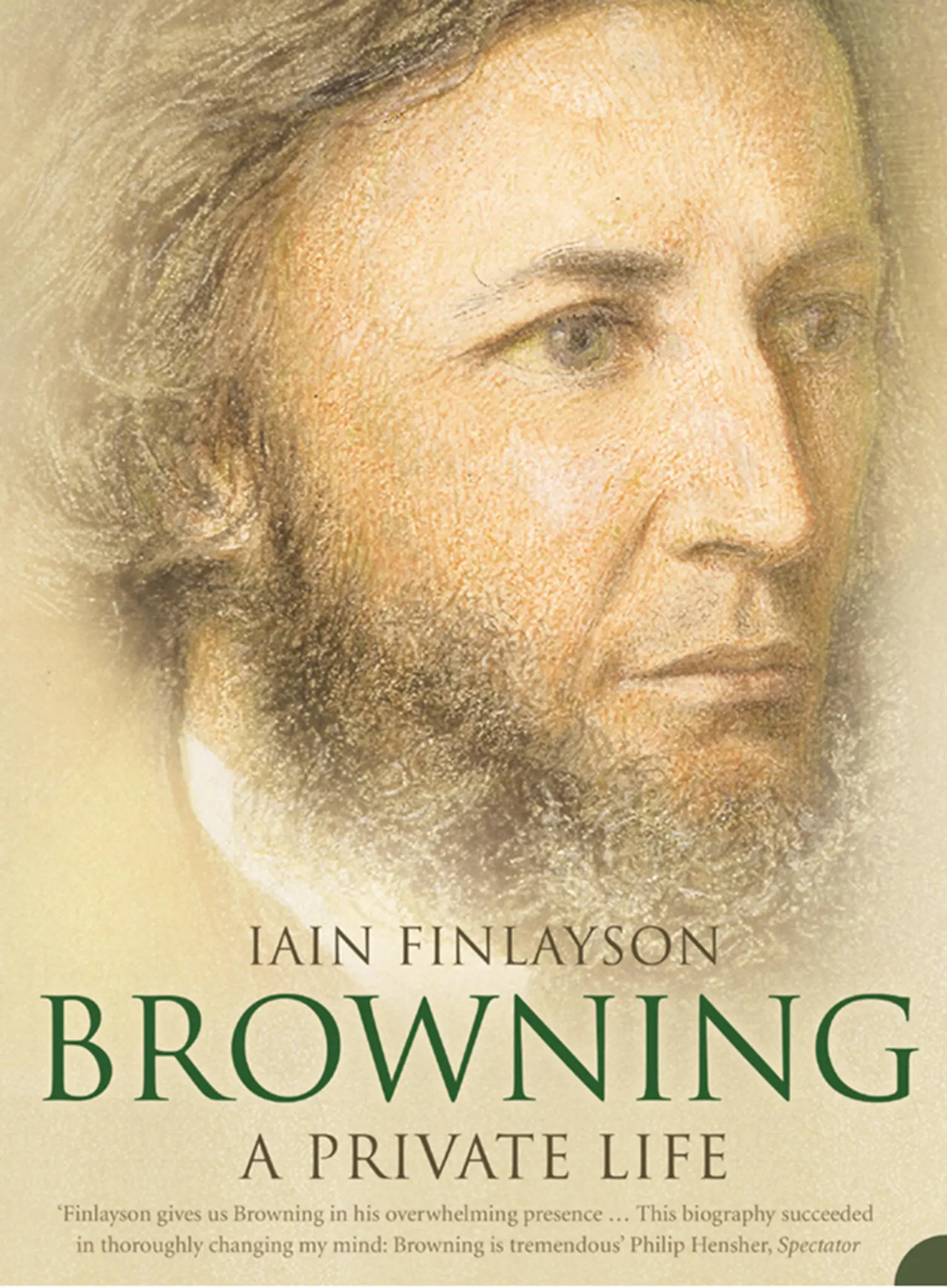
- Название:Browning
- Автор:
- Жанр:
- Год:неизвестен
- ISBN:нет данных
- Рейтинг книги:5 / 5. Голосов: 1
-
Избранное:Добавить в избранное
- Отзывы:
-
Ваша оценка:
Browning: краткое содержание, описание и аннотация
Предлагаем к чтению аннотацию, описание, краткое содержание или предисловие (зависит от того, что написал сам автор книги «Browning»). Если вы не нашли необходимую информацию о книге — напишите в комментариях, мы постараемся отыскать её.
Browning — читать онлайн ознакомительный отрывок
Ниже представлен текст книги, разбитый по страницам. Система сохранения места последней прочитанной страницы, позволяет с удобством читать онлайн бесплатно книгу «Browning», без необходимости каждый раз заново искать на чём Вы остановились. Поставьте закладку, и сможете в любой момент перейти на страницу, на которой закончили чтение.
Интервал:
Закладка:
Of this enduring but improbable friendship, Chesterton puts the matter succinctly: ‘Browning was, indeed, one of the few men who got on perfectly with Thomas Carlyle. It is precisely one of those little things which speak volumes for the honesty and unfathomable good humour of Browning, that Carlyle, who had a reckless contempt for most other poets of the day, had something amounting to a real attachment to him … Browning, on the other hand, with characteristic impetuosity, passionately defended and justified Carlyle in all companies.’ 114
Dramatic Lyrics had been published, at Mr Browning senior’s expense, in late November 1842. The pamphlet consisted of sixteen poems, fourteen of them new: ‘Porphyria’s Lover’ and ‘Johannes Agricola in Meditation’ had already been published in the Monthly Repository in 1836. Moxon had suggested a collection of small poems for popularity’s sake, and so Robert had collected up poems he had written over the past eight years, during and after his trip to Russia. ‘Porphyria’s Lover’ (first titled ‘The rain set in early to-night …’) and ‘Johannes Agricola’ (first titled ‘There’s Heaven above …’) are said to have actually been written in the spring of 1834, in St Petersburg. ‘Cavalier Tunes’, a set of three poems—‘Marching Along’, ‘Give a Rouse’, and ‘My Wife Gertrude’ (later titled ‘Boot and Saddle’)—was probably written in the summer of 1842, arising out of Robert’s background reading for Strafford and coinciding with the two-hundredth anniversary of the Civil War. Sordello and Robert’s visit to Italy in 1838 had inspired ‘My Last Duchess’ (here titled ‘Italy’) and ‘In a Gondola’. ‘The Pied Piper of Hamelin’ is said to have come from reading in his father’s library. These, together with ‘Waring’, were to figure among Robert’s most famous poems and, with ‘Porphyria’s Lover’ and ‘Johannes Agricola’, are among the best known, best loved, and best studied poems in the English language, from high school to high table.
On first publication, Robert had been anxious to allay any interpretation of Dramatic Lyrics as expressing anything that might be construed as personal to the author. A plain disclaimer asserted: ‘Such poems as the following come properly enough, I suppose, under the head of “Dramatic Pieces”; being, though for the most part Lyric in expression, always Dramatic in principle, and so many utterances of so many imaginary persons, not mine.’ This was largely true in principle: the poems are not notably introspective but are mostly based on legend or history; they depend on dramatic action more than philosophical themes; and—with the exception of ‘Cavalier Tunes’—they are distinctly flavoured with Robert’s observations of nations and nationalities other than England and the English. The title of the collection also directs readers away from any psychological analysis: the poems are by an author recently known for dramatic works and the word Lyrics in the title specifically casts them back to the lyrical poetry of the Romantic poets. Of course, this is somewhat disingenuous—they are in a distinctively modern, Browning idiom.
Robert might have saved himself all the trouble of dissociating himself personally from the utterances in Dramatic Lyrics since the pamphlet attracted little or no attention from readers or critics. John Forster reviewed it, more or less admiringly, in the Examiner , writing that ‘Mr Browning is a genuine poet, and only needs to have less misgiving on the subject himself.’ But difficult, of course, to believe in one’s genuine poetic ability when nobody else notices it or pays good money to read it. Perhaps Forster meant, however, that Robert had identified his true manner in Dramatic Lyrics . If so, he was right. The pamphlet proved definitively, for the first time, Robert’s personal, inimitable mastery of the dramatic lyric and the monologue.
‘The Pied Piper of Hamelin’, a last-minute addition to fill up space in the volume, had been written for young Willie Macready, the actor’s eldest son, when the boy was ill in bed. Willie liked to draw pictures and had asked Robert for something to illustrate. His retentive mind recalled a story about the death of the Pope’s Legate at the Council of Trent from Wanley’s The Wonders of the Little World . Willie’s clever drawings inspired the final version of the improvised poem, now a nursery classic, which was perfectly designed to thrill an imaginative little boy:
Rats!
They fought the dogs and killed the cats,
And bit the babies in the cradles,
And ate the cheeses out of the vats,
And licked the soup from the cooks’ own ladles,
Split open the kegs of salted sprats,
Made nests inside men’s Sunday hats,
And even spoiled the women’s chats
By drowning their speaking
With shrieking and squeaking
In fifty different sharps and flats. (ll. 10–20)
The poem is a perfectly structured, perfectly paced, perfectly psychologically judged dramatic story, perfectly suited to the human voice—to recitation, which Robert loved. If we are to look for the cadences of his own voice in conversation, we may look no further than ‘The Pied Piper’. Robert very likely enjoyed it as much as Willie. Indeed, it became one of his party pieces when entertaining at children’s parties. The rhythms are important here, just as they are in another poem in Dramatic Lyrics : ‘Through the Metidja to Abd-el-Kadr’, said to have been composed on horseback in 1842. The thudding phrase ‘As I ride, as I ride’ resonates throughout the poem, just as effectively creating the sense of a rhythmic, steady gallop as the cadences of ‘How They Brought the Good News from Ghent to Aix’, published in 1845 in Dramatic Romances and Lyrics :
Not a word to each other; we kept the great pace
Neck by neck, stride by stride, never changing our place;
I turned in my saddle and made its girths tight,
Then shortened each stirrup, and set the pique right,
Rebuckled the cheek-strap, chained slacker the bit,
Nor galloped less steadily Roland a whit. (ll. 7–12)
If ‘The Pied Piper’ was aesthetically a great dramatic success, no less were other poems in the pamphlet. Robert had been impressed by Tennyson’s poetry, though he preferred reality to Tennyson’s romance. It is this insistence on reality, rather than romance or sentiment, that gives such power not only in the fantasy of legend to the ambiguously happy though unambiguously moral ending of ‘The Pied Piper’, but also to the grim amorality of poems like ‘Porphyria’s Lover’ and ‘My Last Duchess’. Both these latter poems concern the murder of women. It is possible that the murderers in both are mad—fantasists to whom reality is a mirage; but to suppose any such thing is to flinch from Robert Browning’s insistence on character over the detail of narrative, in contrast to Tennyson’s emphasis on story over characterization. Ian Jack makes this important point: ‘Tennyson tells us that the old man who narrates the story is an artist, but we have to be told—whereas in Browning we would know from the smell of the paint.’ 115 G. K. Chesterton had earlier made this point in a different way: Robert knew about painting, sculpture, music, and the rest because he had practised painting, sculpture, and music with his own hands.
And in these two poems of muted horror, just as in the poems of action and adventure, the unemphatic pace of the narrative underlines the matter-of-fact nature of the act and its matter-of-fact acceptance:
Porphyria worshipped me; surprise
Made my heart swell, and still it grew
While I debated what to do.
Читать дальшеИнтервал:
Закладка:
Похожие книги на «Browning»
Представляем Вашему вниманию похожие книги на «Browning» списком для выбора. Мы отобрали схожую по названию и смыслу литературу в надежде предоставить читателям больше вариантов отыскать новые, интересные, ещё непрочитанные произведения.





Обсуждение, отзывы о книге «Browning» и просто собственные мнения читателей. Оставьте ваши комментарии, напишите, что Вы думаете о произведении, его смысле или главных героях. Укажите что конкретно понравилось, а что нет, и почему Вы так считаете.