Iain Finlayson - Browning
Здесь есть возможность читать онлайн «Iain Finlayson - Browning» — ознакомительный отрывок электронной книги совершенно бесплатно, а после прочтения отрывка купить полную версию. В некоторых случаях можно слушать аудио, скачать через торрент в формате fb2 и присутствует краткое содержание. Жанр: unrecognised, на английском языке. Описание произведения, (предисловие) а так же отзывы посетителей доступны на портале библиотеки ЛибКат.
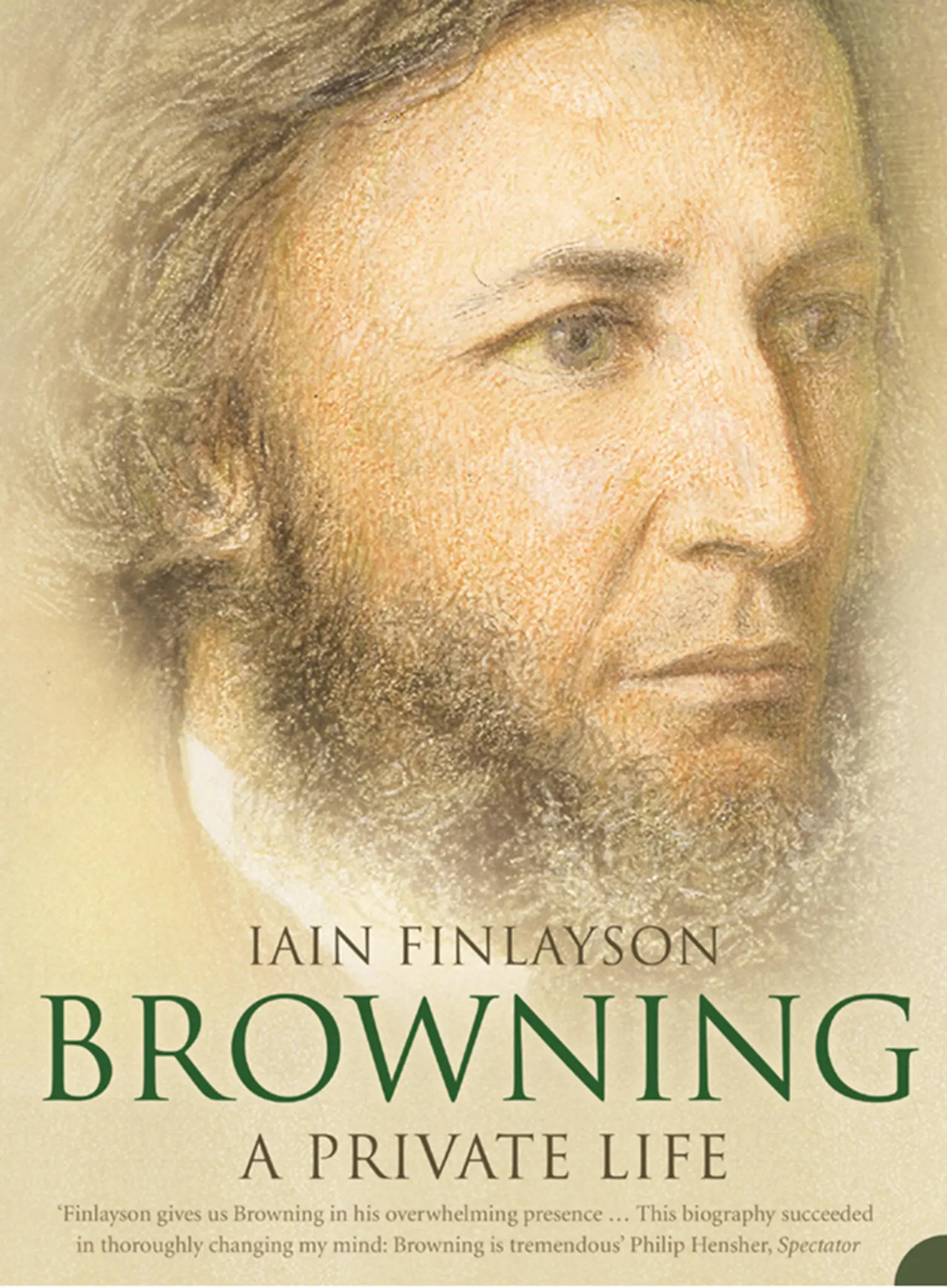
- Название:Browning
- Автор:
- Жанр:
- Год:неизвестен
- ISBN:нет данных
- Рейтинг книги:5 / 5. Голосов: 1
-
Избранное:Добавить в избранное
- Отзывы:
-
Ваша оценка:
Browning: краткое содержание, описание и аннотация
Предлагаем к чтению аннотацию, описание, краткое содержание или предисловие (зависит от того, что написал сам автор книги «Browning»). Если вы не нашли необходимую информацию о книге — напишите в комментариях, мы постараемся отыскать её.
Browning — читать онлайн ознакомительный отрывок
Ниже представлен текст книги, разбитый по страницам. Система сохранения места последней прочитанной страницы, позволяет с удобством читать онлайн бесплатно книгу «Browning», без необходимости каждый раз заново искать на чём Вы остановились. Поставьте закладку, и сможете в любой момент перейти на страницу, на которой закончили чтение.
Интервал:
Закладка:
If A Blot in the ’Scutcheon had fragmented Robert’s friendship with Macready beyond ready repair, Colombe’s Birthday was to deal yet another devastating blow, this time to his friendship with John Forster. The play had been published by Edward Moxon as one of a continuing series of Browning’s works, and it was reviewed by Forster on 22 June 1844 in the Examiner . Forster concluded his generally respectful review with the fatal words, ‘There can be no question as to the nerve and vigour of this writing, or of its grasp of thought. Whether the present generation of readers will take note of it or leave it to the uncertain mercies of the future, still rests with Mr Browning himself. As far as he has gone, we abominate his tastes as much as we respect his genius.’ That did it for Robert Browning—until, a year later, Forster apologized, ‘very profuse of graciocities’ as Robert reported to Miss Barrett on 18 September 1845, and so ‘we will go on again with the friendship as the snail repairs its battered shell’. But the friendship was never the same, and much later there were no more than fragments of the shell strewn around to be trodden upon and utterly crushed.
To frustrate Macready’s attempts to edit or alter the text of his plays in production and performance, Robert had had them printed by Edward Moxon, who eventually suggested publishing Browning’s works at the expense of the Browning family as a continuing part work, a series of paper-covered pamphlets: ‘each poem should form a separate brochure of just one sheet—sixteen pages in double columns—the entire cost of which should not exceed twelve or fifteen pounds.’ 106 By using the same small, cheap type as was being used to print a low-priced edition of Elizabethan dramatists, Moxon could afford to offer bargain terms which Robert was quick to accept. The umbrella title of Bells and Pomegranates was, as usual, perfectly clear in its symbolism to Robert Browning, but he was obliged to provide some cues and hints to less erudite readers as to its origin. The perplexity of the general astonished Robert, but he finally, graciously explained that the intention was to express ‘something like an alternation, or mixture, of music with discoursing, sound with sense, poetry with thought; which looks too ambitious thus expressed, so the symbol was preferred’. 107
If this was still not clear enough, the reference to bells and pomegranates derived from the Book of Exodus, wherein is described the fashioning of Aaron the priest’s ephod: ‘And beneath upon the hem of it thou shalt make pomegranates of blue, and of purple, and of scarlet, round about the hem thereof; and bells of gold between them round about:/A golden bell and a pomegranate, a golden bell and a pomegranate, upon the hem of the robe round about.’ (Exodus 28: 33–4) There is poetry in the rhythm of these words and in their symbols, in the alternating images around the hem of the garment worn by Aaron whose ‘sound shall be heard when he goeth in unto the holy place before the Lord, and when he cometh out, that he die not’ (ibid., verse 35). Robert further explained that ‘Giotto placed a pomegranate fruit in the hand of Dante, and Raffaelle [Raphael] crowned his Theology (in the Camera della Segnatura ) with blossoms of the same’—the fruit being symbolic of fine works.
The series of eight pamphlets was published over a period of some five years. It began in 1841 with Pippa Passes , a moderately long dramatic poem which Robert had written while he was finishing Sordello and after his trip to Italy. The second pamphlet, in spring 1842, comprised the text of an unperformed play, King Victor and King Charles . The third was Dramatic Lyrics , in November or December 1842. The Return of the Druses was the fourth pamphlet in January 1843. A Blot in the ’Scutcheon , the fifth, was published on the day of its first performance on 11 February 1843. Colombe’s Birthday , published in March 1844, was the sixth pamphlet. The seventh in the series was a collection of short poems, Dramatic Romances and Lyrics , in November 1845. The final pamphlet, the eighth, on 13 April 1846, was the text of Luria and A Soul’s Tragedy , two unperformed plays.
These successive publications were prefaced in the first, Pippa Passes , with a dedication to Thomas Talfourd. The complete dedication, later omitted except for Talfourd’s name, expressed Robert Browning’s hopes and aspirations and also alluded subtly and ruefully to past experiences: ‘Two or three years ago I wrote a Play, about which the chief matter I much care to recollect at present is, that a Pit-full of goodnatured people applauded it:—ever since, I have been desirous of doing something in the same way that should better reward their attention. What follows I mean for the first of a series of Dramatical Pieces, to come out at intervals, and I amuse myself by fancying that the cheap mode in which they appear will for once help me to a sort of Pit-audience again.’ The Pit-audience was to take its time—some twenty years—to applaud the eager poet-dramatist optimistic of acclaim and certain of celebrity.
A letter from Thomas Carlyle of 21 June 1841, acknowledging Robert’s gift of a copy of Pippa Passes and of Sordello , suggested some difficulties ahead: ‘Unless I very greatly mistake, judging from these two works, you seem to possess a rare spiritual gift, poetical, pictorial, intellectual, by whatever name we may prefer calling it; to unfold which into articulate clearness is naturally the problem of all problems for you. This noble endowment, it seems to me farther, you are not at present on the best way for unfolding;—and if the world had loudly called itself content with these two Poems, my surmise is, the world could have rendered you no fataller disservice than that same! Believe me, I speak with sincerity; and if I had not loved you well, I would not have spoken at all.’
Carlyle, in contemporary critical terms, was perfectly right, and much of what he had read of Robert’s work was obscure to him. On those grounds, critical and public discontent with Browning’s poetry was by no means a bad thing. His view that Robert had not yet come into full inheritance of his ‘noble endowment’ boiled down to a sort of headmaster’s mid-term report—in simple terms, ‘shows promise, could do better’. But of course, in Carlylean terms, it was not that simple. Carlyle continued sincerely but perhaps depressingly: his Scottish, rather Calvinistic, disposition assumed not only the value of struggle in itself but also the enhanced value of achievement as a result of it. What followed was virtually a moral sermon:
A long battle, I could guess, lies before you, full of toil and pain and all sorts of real fighting : a man attains to nothing here below without that. Is it not verily the highest prize you fight for? Fight on; that is to say, follow truly, with steadfast singleness of purpose, with valiant humbleness and openness of heart, what best light you can attain to; following truly so, better and ever better light will rise on you. The light we ourselves gain, by our very errors if not otherwise, is the only precious light. Victory, what I call victory, if well fought for, is sure to you.
Excelsior! was Carlyle’s hortatory word to Robert Browning who, if anyone, bore a banner with a strange, indecipherable device. Mocked and misunderstood, nevertheless the hero’s way led upward through—doubtless—a cold and lonely and desolate territory until the sunlit peak was reached. But even Carlyle recognized the difficulty. He kindly offered the weary wayfarer a short respite, a room for the night, as it were, where he could check his equipment, take his bearings, fully assess his commitment to the arduous journey ahead, consider the true philosophical meaning of the journey rather than be focused upon its artistic, symbolic value:
Читать дальшеИнтервал:
Закладка:
Похожие книги на «Browning»
Представляем Вашему вниманию похожие книги на «Browning» списком для выбора. Мы отобрали схожую по названию и смыслу литературу в надежде предоставить читателям больше вариантов отыскать новые, интересные, ещё непрочитанные произведения.





Обсуждение, отзывы о книге «Browning» и просто собственные мнения читателей. Оставьте ваши комментарии, напишите, что Вы думаете о произведении, его смысле или главных героях. Укажите что конкретно понравилось, а что нет, и почему Вы так считаете.