Iain Finlayson - Browning
Здесь есть возможность читать онлайн «Iain Finlayson - Browning» — ознакомительный отрывок электронной книги совершенно бесплатно, а после прочтения отрывка купить полную версию. В некоторых случаях можно слушать аудио, скачать через торрент в формате fb2 и присутствует краткое содержание. Жанр: unrecognised, на английском языке. Описание произведения, (предисловие) а так же отзывы посетителей доступны на портале библиотеки ЛибКат.
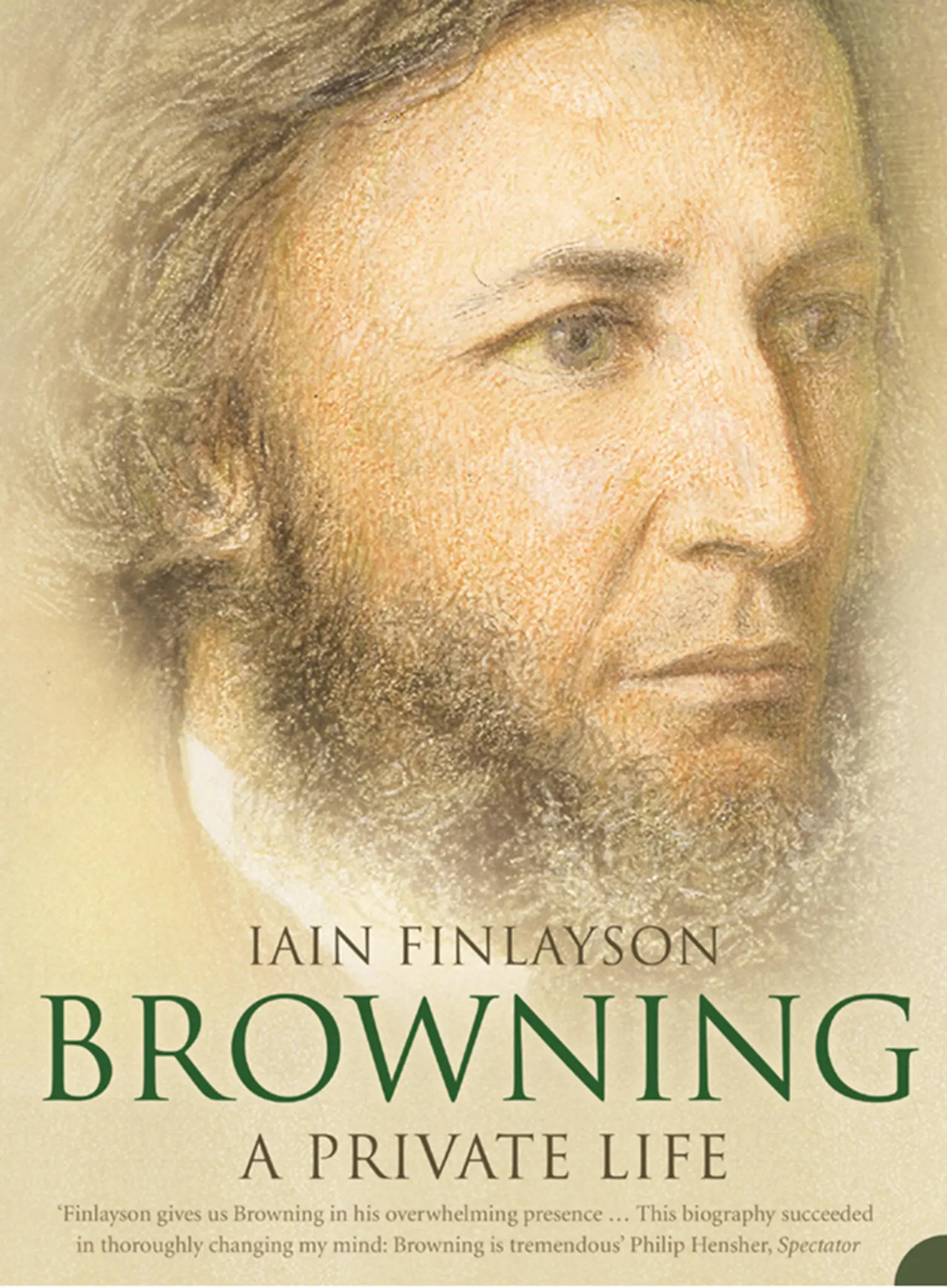
- Название:Browning
- Автор:
- Жанр:
- Год:неизвестен
- ISBN:нет данных
- Рейтинг книги:5 / 5. Голосов: 1
-
Избранное:Добавить в избранное
- Отзывы:
-
Ваша оценка:
Browning: краткое содержание, описание и аннотация
Предлагаем к чтению аннотацию, описание, краткое содержание или предисловие (зависит от того, что написал сам автор книги «Browning»). Если вы не нашли необходимую информацию о книге — напишите в комментариях, мы постараемся отыскать её.
Browning — читать онлайн ознакомительный отрывок
Ниже представлен текст книги, разбитый по страницам. Система сохранения места последней прочитанной страницы, позволяет с удобством читать онлайн бесплатно книгу «Browning», без необходимости каждый раз заново искать на чём Вы остановились. Поставьте закладку, и сможете в любой момент перейти на страницу, на которой закончили чтение.
Интервал:
Закладка:
On 11 February the three-act tragedy A Blot in the ’Scutcheon was performed to no great acclaim. The play lasted three nights before it disappeared forever from Macready’s repertoire. The Times shortly declared it to be ‘one of the most faulty dramas we ever beheld’, and on 18 February the Athenaeum unkindly laid into the play: ‘If to pain and perplex were the end and aim of tragedy, Mr Browning’s poetic melodrama called A Blot in the ’Scutcheon would be worthy of admiration, for it is a very puzzling and unpleasant piece of business. The plot is plain enough, but the acts and feelings of the characters are inscrutable and abhorrent, and the language is as strange as their proceedings.’ 98 On 18 March, Macready records in his Diary: ‘Went out; met Browning, who was startled into accosting me, but seeming to remember that he did not intend to do so, started off in great haste. What but contempt, which one ought not to feel, can we with galled spirit feel for those wretched insects about one? Oh God! how is it all to end?’ One thing had certainly ended: the association and friendship between Robert and Macready, which was not resumed for some twenty years thereafter. When they did cross one another’s paths, as happened on 4 June 1846 at a garden party, Robert cut Macready: ‘Browning —who did not speak to me—the puppy!’ 99
Most of the preceding account leading to production of A Blot in the ’Scutcheon has been told from Macready’s point of view, taken from his Diaries (as edited for publication). Robert Browning’s side of the matter is naturally somewhat different in detail and emphasis. Much later in life, he gave his own version to Edmund Gosse, and Mrs Orr 100 publishes in full a letter of 15 December 1884 to Frank Hill, in which Robert thanks Hill, then editor of the Daily News , for suppressing a paragraph referring to A Blot in the ’Scutcheon in an article about the theatre. What Robert had to say to Gosse pretty much corresponds with the frank account he disclosed to Hill. Additionally, a letter from Joseph Arnould to Alfred Domett substantially describes, from his own firsthand observation, the play’s first night; and finally a letter from Charles Dickens recommending the play completes the full knowledge we have of this crisis in Browning’s professional life before his personal life was about to be thrown into upheaval.
Macready, it should be understood by connoisseurs of the backstage drama to A Blot in the ’Scutcheon , was experiencing severe domestic as well as professional difficulties in the early 1840s, some of which were public knowledge, some of which were public gossip, and some of which were nobody’s business but Macready’s. When, in October 1841, he took over the management of the Drury Lane theatre, he needed new plays to add to his existing repertoire and John Forster, on 29 September 1841, had ‘importuned’ him to read A Blot in the ’Scutcheon . Macready, although doubtful of Browning’s ability to write anything ever again, and despite his wavering faith in Forster himself, whose intemperate enthusiasms by now matched not only his intemperance of character but increasingly his intemperate taste for the bottle, read Browning’s Blot and was not impressed. Forster, too, by now had his doubts about the play, which was dispatched to Charles Dickens for a third opinion. Dickens did not reply for a year. When he did, on 25 November 1842, Forster showed the great novelist’s response to Macready. Dickens’ letter read:
Browning’s play has thrown me into a perfect passion of sorrow. To say that there is anything in its subject save what is lovely, true, deeply affecting, full of the best emotion, the most earnest feeling, and the most true and tender source of interest, is to say that there is no light in the sun, and no heat in the blood. It is full of genius, natural and great thoughts, profound and yet simple and beautiful in its vigour. I know nothing that is so affecting, nothing in any book I have ever read, as Mildred’s recurrence to that ‘I was so young—I had no mother.’ I know no love like it, no passion like it, no moulding of a splendid thing after its conception, like it. And I swear it is a tragedy that MUST be played: and must be played, moreover, by Macready … And if you tell Browning that I have seen it, tell him that I believe from my soul there is no man living (and not many dead) who could produce such a work.
This letter, as quoted by Forster in the biography he later wrote of Dickens, was not in fact known to Robert Browning until, some thirty years later, he read it in Forster’s Dickens . This unqualified testimonial to the sublimities of Blot put Macready in a difficult position: Dickens’ opinion could not be ignored. The plot and sentiments of A Blot in the ’Scutcheon had deeply affected Dickens not just as an objective critic, but subjectively for deep-seated reasons of his own that served to heighten his enthusiasm for the play, which took the eighteenth century for its setting and family pride as its theme.
Lord Henry Mertoun, a landowner, asks Lord Tresham for the hand of his sister, Mildred, in marriage. Tresham, delighted, agrees. When Tresham is told by an aged servant that Mildred has been entertaining a secret lover—identity unknown—in her room, he confronts this clandestine cloaked figure and they fight. In the course of the duel, the secret lover—Lord Mertoun himself, whose awe of his idol Tresham has inspired his covert activity—is fatally wounded. Tresham, overwhelmed by remorse, takes poison. Mildred, overcome by her own remorse, dies of grief in her brother’s arms. The stage is littered with three corpses, and a fourth—the play itself—is dead by the time the curtain falls on it. This is to put the matter of A Blot in the ’Scutcheon a little bluntly: it is easy enough to render it ridiculous as melodrama; but the sentiment of pathos and the irony of self-righteousness were not fully realized in its principal characters, who lacked not for Shakespearean speeches but for Shakespearean credibility of character. This, then, is the play that Robert conceived when, two or three years earlier, he had written to Fanny Haworth, ‘I want a subject of the most wild and passionate love.’
Joseph Arnould attended the play’s first night, a lengthy account of which he wrote for the benefit of Alfred Domett in May 1843:
The first night was magnificent (I assume that Browning has sent you the play). Poor Phelps did his utmost, Helen Faucit very fairly, and there could be no mistake at all about the honest enthusiasm of the audience. The gallery—and of course this was very gratifying, because not to be expected at a play of Browning’s— took all the points as quickly as the pit, and entered into the general feeling and interest of the action far more than the boxes, some of whom took it upon themselves to be shocked at being betrayed into so much interest in a young woman who had behaved so improperly as Mildred. Altogether the first night was a triumph. The second night was evidently presided over by the spirit of the manager. I was one of about sixty or seventy in the pit, and we yet seemed crowded compared to the desolate emptiness of the boxes. The gallery was again full, and again, among all who were there, were the same decided impressions of pity and horror produced. The third night I took my wife again to the boxes: it was evident at a glance that it was to be the last . My own delight and hers, too, in the play, was increased at this third representation, and would have gone on increasing to a thirtieth; but the miserable great chilly house, with its apathy and emptiness, produced on us both the painful sensation which made her exclaim that ‘she could cry with vexation’ at seeing so noble a play so basely marred. 101
Читать дальшеИнтервал:
Закладка:
Похожие книги на «Browning»
Представляем Вашему вниманию похожие книги на «Browning» списком для выбора. Мы отобрали схожую по названию и смыслу литературу в надежде предоставить читателям больше вариантов отыскать новые, интересные, ещё непрочитанные произведения.











Обсуждение, отзывы о книге «Browning» и просто собственные мнения читателей. Оставьте ваши комментарии, напишите, что Вы думаете о произведении, его смысле или главных героях. Укажите что конкретно понравилось, а что нет, и почему Вы так считаете.