Iain Finlayson - Browning
Здесь есть возможность читать онлайн «Iain Finlayson - Browning» — ознакомительный отрывок электронной книги совершенно бесплатно, а после прочтения отрывка купить полную версию. В некоторых случаях можно слушать аудио, скачать через торрент в формате fb2 и присутствует краткое содержание. Жанр: unrecognised, на английском языке. Описание произведения, (предисловие) а так же отзывы посетителей доступны на портале библиотеки ЛибКат.
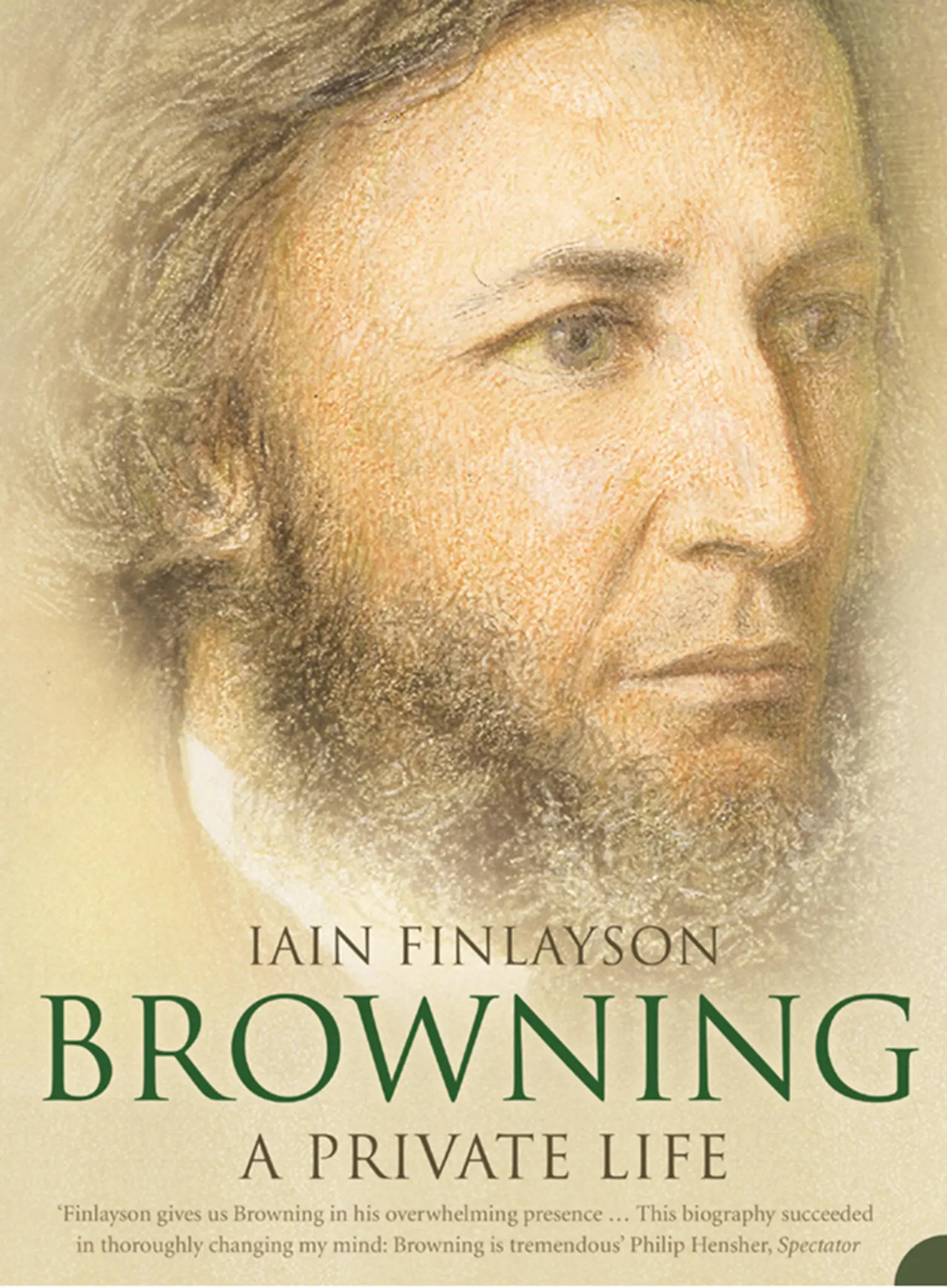
- Название:Browning
- Автор:
- Жанр:
- Год:неизвестен
- ISBN:нет данных
- Рейтинг книги:5 / 5. Голосов: 1
-
Избранное:Добавить в избранное
- Отзывы:
-
Ваша оценка:
Browning: краткое содержание, описание и аннотация
Предлагаем к чтению аннотацию, описание, краткое содержание или предисловие (зависит от того, что написал сам автор книги «Browning»). Если вы не нашли необходимую информацию о книге — напишите в комментариях, мы постараемся отыскать её.
Browning — читать онлайн ознакомительный отрывок
Ниже представлен текст книги, разбитый по страницам. Система сохранения места последней прочитанной страницы, позволяет с удобством читать онлайн бесплатно книгу «Browning», без необходимости каждый раз заново искать на чём Вы остановились. Поставьте закладку, и сможете в любой момент перейти на страницу, на которой закончили чтение.
Интервал:
Закладка:
Fox’s review was delightful. It admitted Pauline: A Fragment of a Confession to be ‘evidently a hasty and imperfect sketch’. Nevertheless, ‘In recognising a poet,’ wrote Fox, ‘we cannot stand upon trifles, nor fret ourselves about such matters. Time enough for that afterwards, when larger works come before us. Archimedes in the bath had many particulars to settle about specific gravities and Hiero’s crown; but he first gave a glorious leap and shouted Eureka! ’ Fox’s own leap was of faith that he had discovered a true poet. Of the work of genius before him, he had no doubt: he recommended the whole composition as being ‘of the spirit, spiritual. The scenery is in the chambers of thought; the agencies are powers and passions; the events are transitions from one state of spiritual existence to another.’ There was ‘truth and life in it, which gave us the thrill and laid hold of us with the power, the sensation of which has never yet failed us as a test of genius.’ Tennyson had passed the Fox test of genius, and now so did Browning. Both had raised the hair on the back of his neck. Mrs Orr begs to differ in respect of Fox’s acceptance of the ‘confessional and introspective quality of the poem as an expression of the highest emotional life—of the essence, therefore, of religion’. But she gives her full approbation to the ‘encouraging kindness’ of the one critic who alone, discerning enough to cry Eureka !, discovered Robert Browning in his first obscurity.
Allan Cunningham in the Athenaeum noticed Pauline with some graceful compliments—‘fine things abound … no difficulty in finding passages to vindicate our praise … To one who sings so naturally, poetry must be as easy as music is to a bird.’ This was gratifying stuff, gilding the Fox lily which scented the air Robert Browning breathed and which he acknowledged as ‘the most timely piece of kindness in the way of literary help that ever befell me’. 35 Fox had, however, given a copy of Pauline to John Stuart Mill who, besides being Fox’s friend and assistant on the Monthly Repository , contributed reviews and articles to the Examiner and to Tait’s Edinburgh Magazine , where, in August 1830, in an omnibus review of some dozen books, Mill briefly dismissed the poem as ‘a piece of pure bewilderment’.
This might not have been so bad as a glancing cuff at an author’s head by a reviewer too pressed for time to have read the poem properly and too squeezed for space to give it more than a line. But Mill, either then or later, had taken trouble to read Pauline: A Fragment of a Confession very thoroughly, and more than once. At the end of his copy, on the fly-leaf, he made a long note presumably for his own reference. What he wrote was this:
With considerable poetic powers, the writer seems to me possessed with a more intense and morbid self-consciousness than I ever knew in any sane human being. I should think it a sincere confession, though of a most unlovable state, if the ‘Pauline’ were not evidently a mere phantom. All about her is full of inconsistency—he neither loves her nor fancies he loves her, yet insists upon talking love to her. If she existed and loved him, he treats her most ungenerously and unfeelingly. All his aspirings and yearnings and regret point to other things, never to her; then he pays her off toward the end by a piece of flummery, amounting to the modest request that she will love him and live with him and give herself up to him without his loving her moyennant quoi he will think her and call her everything that is handsome, and he promises her that she shall find it mighty pleasant. Then he leaves off by saying he knows he will have changed his mind by to-morrow, and despite ‘these intents which seem so fair,’ but that having been thus visited once no doubt he will be again—and is therefore in ‘perfect joy’, bad luck to him! as the Irish say. A cento of most beautiful passages might be made from this poem, and the psychological history of himself is powerful and truthful— truth-like certainly, all but the last stage. That , he evidently has not yet got into. The self-seeking and self-worshipping state is well described—beyond that, I should think the writer has made, as yet, only the next step, viz. into despising his own state. I even question whether part even of that self-disdain is not assumed . He is evidently dissatisfied , and feels part of the badness of his state; he does not write as if it were purged out of him. If he once could muster a hearty hatred of his selfishness it would go ; as it is, he feels only the lack of good , not the positive evil. He feels not remorse, but only disappointment; a mind in that state can only be regenerated by some new passion, and I know not what to wish for him but that he may meet with a real Pauline. Meanwhile he should not attempt to show how a person may be recovered from this morbid state, for he is hardly convalescent, and ‘what should we speak of but that which we know?’
This is raw, unedited—though by no means unreflecting—stuff, the sort of thing a reviewer or critic will write for himself before dressing it up or toning it down for publication. It shows Mill’s mind working largely on spontaneous impressions, though—or therefore—fresh and certainly, in this particular instance, acute in literary and psychological insights into a poet whose name and very existence were unknown to Mill. Just six years older than Robert Browning, he was already making a name for himself in literary, political, and journalistic circles. Just as well, then, that Mill’s notes were never polished up and printed. It was quite enough that Mill’s annotated copy of Pauline was included among the review copies that Fox returned to Robert on 30 October 1833. It is surmised that Mill’s words, when Robert read them, prompted his own holograph note on his own copy of Pauline , referring to the poem as an ‘abortion’ and as a ‘crab’ on the Tree of Life in his paradise. Robert refused to permit republication of Pauline for nigh on thirty-five years, acknowledging merely his authorship of the poem ‘with extreme repugnance and indeed purely of necessity’. Not only the review copies were returned to him by Fox; the publishers also sent Robert a bundle of unbound sheets. Not a single copy of Pauline had been sold.
If Mill had been a little too harsh in his disparagement, Fox had perhaps been a little too generous in his praise. Mrs Orr pointedly says of Mill that, ‘there never was a large and cultivated intelligence one can imagine less in harmony than his with the poetic excesses, or even the poetic qualities, of Pauline ’; and she acutely recognizes that Fox ‘made very light of the artistic blemishes of the work … it was more congenial to him to hail that poet’s advent than to register his shortcomings’. Mill recognized what Fox did not: the poet’s morbid self-consciousness and the self-seeking state of his mind, the poem as a sincere confession, and its power and truth as a psychological history of its author. For in truth, Pauline was written, says Mrs Orr, whose view is enthusiastically confirmed in turn by Betty Miller, in a moment of ‘supreme moral or physical crisis’. 36 Nobody, then or since, has doubted this for a minute. Mill may have been right to suggest that the poet was barely convalescent, far less recovered, from his morbid state of introspection, of self-examination—for Pauline , real or imagined as Browning’s confessor, occupied his attentions as a woman less than his own interesting condition as a young man, slicing himself into an infinity of thin tissue samples and inspecting the results under a microscope of forensic self-analysis.
Читать дальшеИнтервал:
Закладка:
Похожие книги на «Browning»
Представляем Вашему вниманию похожие книги на «Browning» списком для выбора. Мы отобрали схожую по названию и смыслу литературу в надежде предоставить читателям больше вариантов отыскать новые, интересные, ещё непрочитанные произведения.








Обсуждение, отзывы о книге «Browning» и просто собственные мнения читателей. Оставьте ваши комментарии, напишите, что Вы думаете о произведении, его смысле или главных героях. Укажите что конкретно понравилось, а что нет, и почему Вы так считаете.