Charles S. Cockell - Astrobiology
Здесь есть возможность читать онлайн «Charles S. Cockell - Astrobiology» — ознакомительный отрывок электронной книги совершенно бесплатно, а после прочтения отрывка купить полную версию. В некоторых случаях можно слушать аудио, скачать через торрент в формате fb2 и присутствует краткое содержание. Жанр: unrecognised, на английском языке. Описание произведения, (предисловие) а так же отзывы посетителей доступны на портале библиотеки ЛибКат.
- Название:Astrobiology
- Автор:
- Жанр:
- Год:неизвестен
- ISBN:нет данных
- Рейтинг книги:3 / 5. Голосов: 1
-
Избранное:Добавить в избранное
- Отзывы:
-
Ваша оценка:
Astrobiology: краткое содержание, описание и аннотация
Предлагаем к чтению аннотацию, описание, краткое содержание или предисловие (зависит от того, что написал сам автор книги «Astrobiology»). Если вы не нашли необходимую информацию о книге — напишите в комментариях, мы постараемся отыскать её.
offers an introductory text that explores the structure of living things, the formation of the elements required for life in the Universe, the biological and geological history of the Earth, and the habitability of other planets. Written by a noted expert on the topic, the book examines many of the major conceptual foundations in astrobiology, which cover a diversity of traditional fields including chemistry, biology, geosciences, physics, and astronomy.
The book explores many profound questions such as: How did life originate on Earth? How has life persisted on Earth for over three billion years? Is there life elsewhere in the Universe? What is the future of life on Earth?
is centered on investigating the past and future of life on Earth by looking beyond Earth to get the answers. Astrobiology links the diverse scientific fields needed to understand life on our own planet and, potentially, life beyond. This new second edition:
Expands on information about the nature of astrobiology and why it is useful Contains a new chapter “What is Life?” that explores the history of attempts to understand life Contains 20% more material on the astrobiology of Mars, icy moons, the structure of life, and the habitability of planets New ‘Discussion Boxes’ to stimulate debate and thought about key questions in astrobiology New review and reflection questions for each chapter to aid learning New boxes describing the careers of astrobiologists and how they got into the subject Offers revised and updated information throughout to reflect the latest advances in the field Written for students of life sciences, physics, astronomy and related disciplines, the updated edition of
is an essential introductory text that includes recent advances to this dynamic field.
Astrobiology — читать онлайн ознакомительный отрывок
Ниже представлен текст книги, разбитый по страницам. Система сохранения места последней прочитанной страницы, позволяет с удобством читать онлайн бесплатно книгу «Astrobiology», без необходимости каждый раз заново искать на чём Вы остановились. Поставьте закладку, и сможете в любой момент перейти на страницу, на которой закончили чтение.
Интервал:
Закладка:
A remarkable characteristic of these so-called amphiphilic phospholipid molecules is that when added to water, they have a tendency to assemble spontaneously in such a way that the hydrophilic head is oriented into the water, and the hydrophobic tails, which would like to escape the water surrounding the molecules, are attracted toward each other to expel water. The result is a lipid bilayer membrane (Figure 5.5). These bilayers themselves tend to assemble into vesicles, small spherical structures with fluid in the inside. This shape, like a water droplet, is a minimal energy shape.
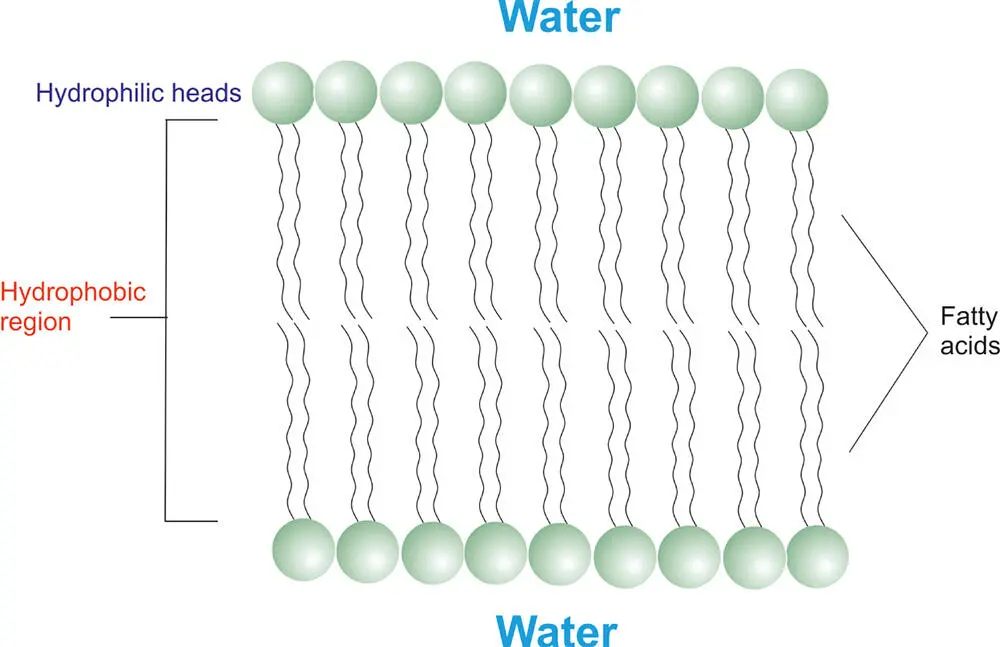
Figure 5.5 A simplified diagram showing the structure of a lipid bilayer that makes up cell membranes.
The phospholipids can also assemble in a single layer whereby a ball of lipids is formed, the tails pointing toward the center with a layer of hydrophilic heads on the outside of the ball. These are called micelles. They are less interesting than bilayer vesicles because vesicles have a hollow center in which cellular components can collect.
This property, whereby amphiphilic molecules can form a membranous layer, is by no means rare. Even fatty acids on their own, such as the long-chained carboxylic acid, decanoic acid, extracted from meteorites ( Chapter 12) tend to form membranous vesicles, suggesting that this is a fundamental property of this class of molecules and that the assembly of the first cell membranes on Earth may not have been a difficult or extraordinary event.
Within the lipid membrane other proteins are incorporated, resulting in a complex system that regulates the interaction of the internal cell environment with the outside environment. Many of these proteins are trans-membrane proteins acting, for example, as thin channels both for ions and molecules to move into the cell and for wastes to be expelled. Some of these proteins act as a line of communication, allowing the cell to sense changes in physical and chemical conditions in the outside environment and respond to them.
5.5.1 Gram-Negative and -Positive Prokaryotic Membranes
The lipid bilayers found in life are assembled into more complex structures. It was recognized early in the study of cellular membranes that the bilayer is filled with different proteins that play roles in attachment to surfaces, transport of nutrients into the cell, and movement of waste outward. This led to the concept of the fluid-mosaic model of the membrane, where the word “mosaic” is a reference to its similar appearance to a mosaic or tiled art work. The complexity of membranes reflects the fact that although crudely we can think of it as a “bag” to hold cell constituents in, it is also a gateway in and out of the cell during the cell's many interactions with the environment. It is instructive to explore the complexity of the membrane a little more to understand these ideas.
In bacteria, membranes can be broadly separated into Gram-positive and Gram-negative membrane structures, a separation defined by how organisms stain in the Gram stain, a method of dyeing bacteria developed by microbiologist Hans Christian Gram (1853–1938) in the nineteenth century. In the Gram stain, microorganisms are first stained with crystal violet stain, which gives them a dark blue/violet color. After washing with ethanol and adding a paler dye (safranin), Gram-positive organisms retain the dye and show up as dark blue, whereas Gram-negative organisms lose it, becoming a red color. These differences are understood to be due to the quite different membrane structures in the two groups of organisms.
Gram-negative membranes (found, for example, in the ubiquitous gut bacterium E. coli ) have an inner and outer membrane. The inner membrane is the plasma membrane. The space between the inner and outer membrane is termed the periplasm. The liquid in this space is somewhat more viscous than the cytoplasm and contains a wide variety of proteins involved in sugar and amino acid transport.
Sandwiched between the inner and outer membrane is a peptidoglycanmesh (Figure 5.6) containing just a few layers of peptidoglycan. Peptidoglycan is a complex matrix made up of sugars cross-linked to amino acids. It is one of the few structures in life that contains D-amino acids (Figure 5.7). The peptidoglycan helps the cell maintain its shape, and it is involved in cell division.
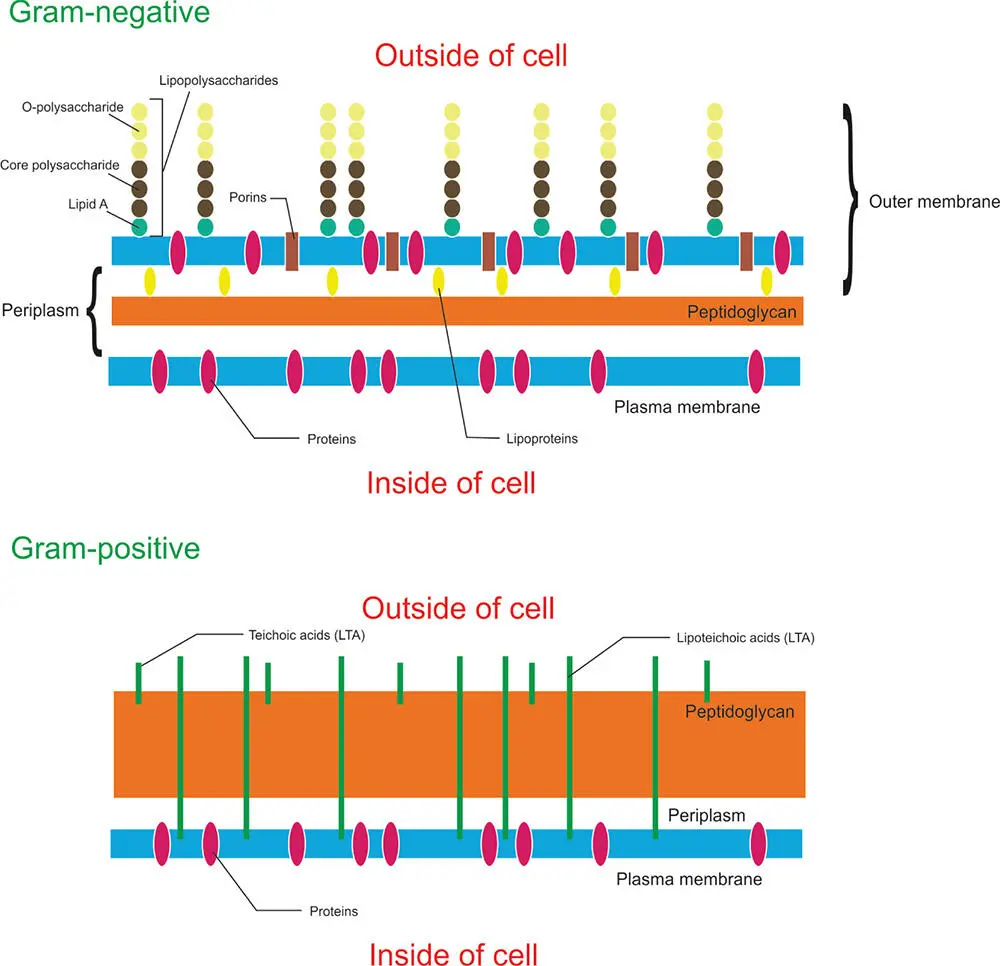
Figure 5.6 Gram-negative and Gram-positive cell membranes.
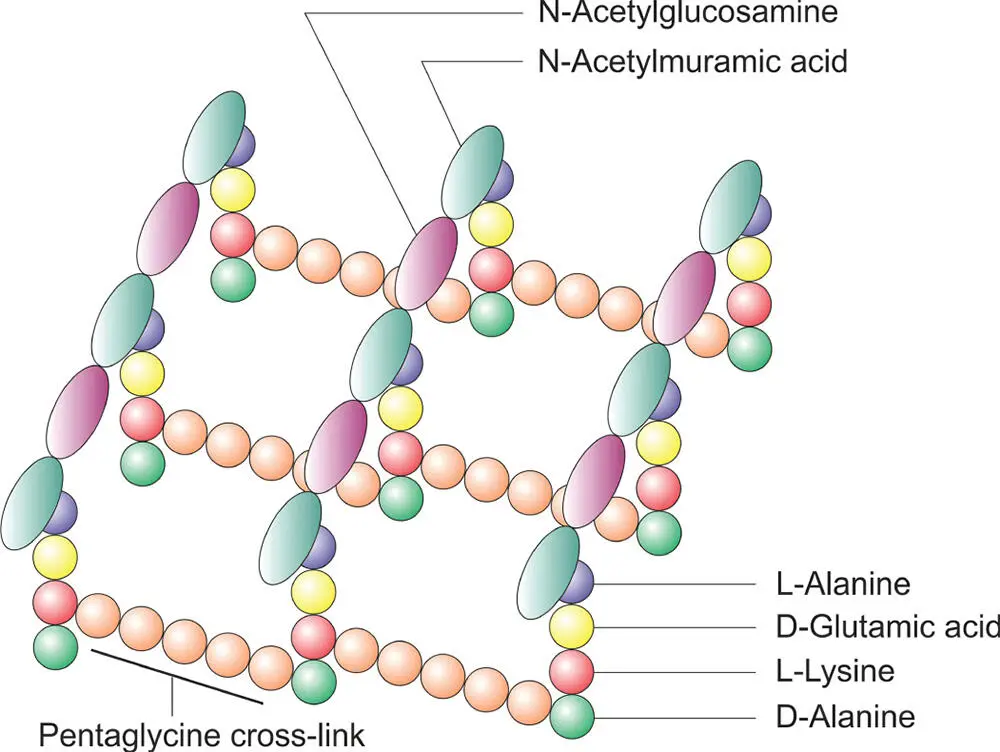
Figure 5.7 A typical structure of peptidoglycan. The pentaglycine cross-link is made from five glycine amino acids. N-acetylglucosamine and N-acetylmuramic acid are sugars and are derivatives of the sugar glucose.
Other structures in the membrane include porins, which are one class of outer-membrane proteins. They control the movement of ions and other small compounds across the cell membrane. There are other trans-membrane proteins involved in communication and interactions between the cell and the outside environment. Lipopolysaccharides(LPS), long sugar chains attached to the outer membrane with lipids, are involved in the attachment of cells to surfaces. A variety of lipoproteinswithin the inner envelope of the outer cell membrane take part in mediating biochemical reactions. They also play a role in linking the outer membrane to the peptidoglycan layer.
In Gram-positive cell walls (Figure 5.6) there is one cell membrane, with a periplasmic space above it, and the cell is surrounded by a thick peptidoglycan mesh made up of around 40 peptidoglycan layers (between 30 and 100 nm thick, compared to the Gram-negative peptidoglycan layer, which is just a few nanometers thick). Teichoicacids and lipoteichoicacids are long-chain sugars present on the surface and threaded through the peptidoglycan layers. They are involved in the integrity of the peptidoglycan layers, but some also play a role in cell attachment, like the LPS in the Gram-negative cell wall. An example of a Gram-positive organism is the very versatile bacterium Bacillus subtilis , found in diverse places from soils to spacecraft assembly rooms.
The structures outside of the plasma membrane in both Gram-positive and negative bacteria are generally referred to as the cell wall.
Discussion Point: Are Prokaryotes “Simple”?
The complexity of Gram-positive and -negative membranes should leave you in no doubt that the commonly held idea that prokaryotes are “simple” or “primitive” is likely to be misleading. Clearly, the first cells to have emerged on Earth could not have had the complexity of the modern cell membrane. The question arises – how far away, biochemically, are the most “ancient” prokaryotes on Earth today from the first cells to emerge on Earth? As this chapter progresses, you might like to consider this question. As we discuss microbial motility, the complexity of the genetic machinery, the replication of DNA, and other facets of cells, you will see the exquisite complexity of a whole range of biochemical functions represented in modern prokaryotes. Other questions emerge from this picture: Can we reconstruct the biochemistry of the earliest cells on Earth using modern-day cells, or have they advanced too far for us to truly know the biochemistry of the first living things? What is the minimum set of biochemical machinery needed to build a replicating, evolving cell? Has the evolution of the major fundamental capabilities of prokaryotes finished, or could even more complex machinery and capabilities naturally evolve in future prokaryotes?
Читать дальшеИнтервал:
Закладка:
Похожие книги на «Astrobiology»
Представляем Вашему вниманию похожие книги на «Astrobiology» списком для выбора. Мы отобрали схожую по названию и смыслу литературу в надежде предоставить читателям больше вариантов отыскать новые, интересные, ещё непрочитанные произведения.












Обсуждение, отзывы о книге «Astrobiology» и просто собственные мнения читателей. Оставьте ваши комментарии, напишите, что Вы думаете о произведении, его смысле или главных героях. Укажите что конкретно понравилось, а что нет, и почему Вы так считаете.