Siegfried Siegesmund - Monument Future
Здесь есть возможность читать онлайн «Siegfried Siegesmund - Monument Future» — ознакомительный отрывок электронной книги совершенно бесплатно, а после прочтения отрывка купить полную версию. В некоторых случаях можно слушать аудио, скачать через торрент в формате fb2 и присутствует краткое содержание. Жанр: unrecognised, на немецком языке. Описание произведения, (предисловие) а так же отзывы посетителей доступны на портале библиотеки ЛибКат.
- Название:Monument Future
- Автор:
- Жанр:
- Год:неизвестен
- ISBN:нет данных
- Рейтинг книги:4 / 5. Голосов: 1
-
Избранное:Добавить в избранное
- Отзывы:
-
Ваша оценка:
Monument Future: краткое содержание, описание и аннотация
Предлагаем к чтению аннотацию, описание, краткое содержание или предисловие (зависит от того, что написал сам автор книги «Monument Future»). Если вы не нашли необходимую информацию о книге — напишите в комментариях, мы постараемся отыскать её.
Alle vier Jahre treffen sich auf einer internationalen Tagung Experten, die sich mit den entsprechenden Sachfragen beschäftigen. Der „14th International Congress on the Deterioration and Conservation of Stone“ findet im September 2020 in Göttingen statt. Er ist die wichtigste Veranstaltung zur Verbreitung des Wissens von Praktikern und Forschern, die im Bereich der Steinkonservierung zur Erhaltung des baulichen Kulturerbes arbeiten: Geowissenschaftler, Architekten, Bauspezialisten, Ingenieure, Restauratoren, Denkmalpfleger und Bauherren.
Der Tagungsband mit über 150 wissenschaftlichen Beiträgen repräsentiert und erfasst den neuesten Stand der Technik auf diesem Gebiet.
Themen sind:
– Charakterisierung von Schadensphänomenen von Steinen und verwandten Baumaterialien (Stuck, Putz, Mörtel usw.)
– Methoden zur Untersuchung des Steinverfalls in situ und zerstörungsfreie Prüfung
– Langzeitüberwachung von Steindenkmälern und Gebäuden
– Simulation und Modellierung des Zerfalls
– Technologien und Entwicklung verbesserter Bearbeitung und Verwendung von Stein in Neubauten
– Bewertung der Langzeitwirkung von Bearbeitungstechniken
– Auswirkungen des Klimawandels auf die Steinverwitterung des Kulturerbes
– Berichte zur Steinkonservierung: Fallstudien und Projekte
– Digitalisierung und Dokumentation von Steinkonservierung
–
The 14th International Congress on the Deterioration and Conservation of Stone, entitled MONUMENT FUTURE: DECAY AND CONSERVATION OF STONE is a quadrennial event that brings together a world-wide community of geoscientists, architects, building specialists, engineers, conservators, restorators, monument curators and building owners who are concerned about the conservation of cultural stone structures and objects. Since antiquity, the weathering and deterioration of historical buildings, masonry, monuments, sculptures etc. using natural stones has been a very well-known problem.
This conference is the main gathering for the dissemination of knowledge in the field of stone deterioration issues. It represents and captures the state-of-the-art in the field of stone conservation and cultural heritage conservation with regards to the following topics:
– Characterisation of damage phenomena of stone and related building materials (plaster, rendering, mortar etc.)
– Methods for the investigation of stone decay; in-situ and non-destructive testing
– Long-term monitoring of stone monuments and buildings
– Simulation and modelling of decay
– Technology and development of improved treatments and use of stone in new buildings
– Assessment of long-term effects of treatments
– Impact of climate change on stone decay of Cultural Heritage
– Reports about stone conservation: case studies and projects
– Digitalization and documentation in stone conservation
Monument Future — читать онлайн ознакомительный отрывок
Ниже представлен текст книги, разбитый по страницам. Система сохранения места последней прочитанной страницы, позволяет с удобством читать онлайн бесплатно книгу «Monument Future», без необходимости каждый раз заново искать на чём Вы остановились. Поставьте закладку, и сможете в любой момент перейти на страницу, на которой закончили чтение.
Интервал:
Закладка:
The main factors that cause crystal fabric loose on marble surface, development of spalls and cracks should be sharp drop in temperature caused by sudden rain in summer, repeated uneven expansion and contraction, scouring and dissolution of 178acid rain, ice splitting action and growth of lower organisms such as mosses and lichens, etc.
If no effective measures are taken, the deterioration level of the statue may increase quickly, perhaps even seriously in the next 50 years producing a similar state as the marble railing of Tian’anmen-Qing Dynasty monument (Fig. 10).
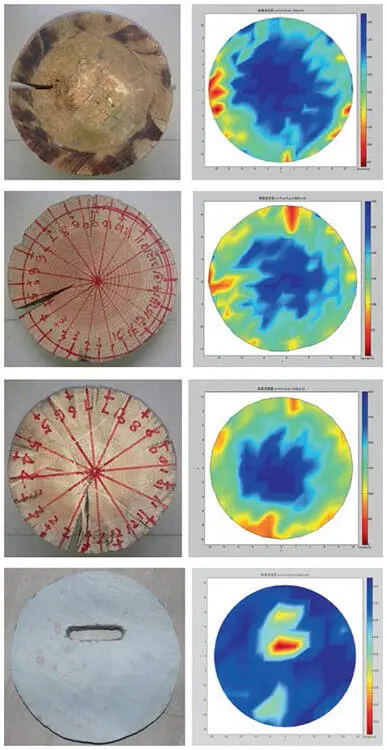
Figure 7 :Laboratory samples and corresponding USCT images. a. Ø 22 cm wood sample and corresponding USCT image. b. Ø 28 cm wood sample and corresponding USCT image. c. Ø 22 cm wood sample and the corresponding USCT image. d. Ø 55 cm limestone sample and corresponding USCT image.
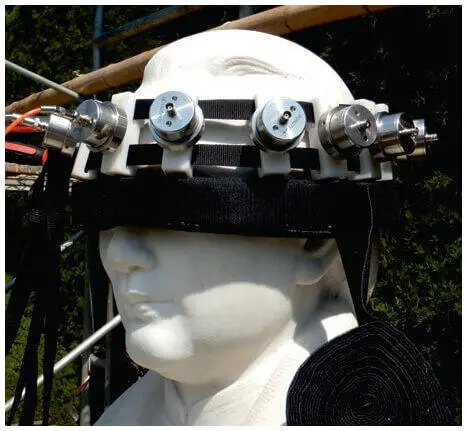
Figure 8:USCT testing section.
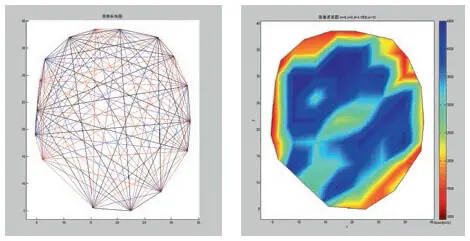
Figure 9:USCT testing. a. USCT testing array b. USCT image

Figure 10:Lack of effective protection leads to serious deterioration. a. Head of the Statue b. Marble railing of Qing Dynasty monument
It is absolutely necessary to fill cracks and crystal gaps with suitable materials to slow down the deterioration process. We also suggest physical protecting methods be taken to prevent the statue from the weathering factors as sudden rain, sun light, ice and acid rain, etc.
Acknowledgements
This research was financially supported by the Honorary Chairman Soong Ching-ling Mausoleum Of The P. R. C. and by National Natural Science Foundation of China (No 51978472).
References
Bei Yan, Chongke Wu & Honglin Ma. 2018. Ultrasonic detection of contour node represented voids and cracks. Nondestructive testing and evaluation. http://www.tandfonline.com/loi/gnte20
Ma Hong-lin, Xiang Jian-kai, Zhang Gang, Ma Tao, Yan Bei, Wu Chong-ke, Li Zhan. 2018. The use of ultrasonic CT to detecting defects in timber structures of historic building. Science of Conservation and Archeology, Vol 30, No 6. pp74–81.
Bei Yan, Chongke Wu & Honglin Ma. 2017. Study on the method of nonmetallic defects based on ultrasonic tomography and morphology. 2017. 12th IEEE Conference on Industrial Electronics and Applications (ICIEA), pp1287–1292.
Ma Honglin, Qi Yang, Ma Tao, Yang Junchang, Yan Min, Zhen Gang. 2015. Application of ultrasonic CT technique on weathering condition of stone sculptures of Qianling mausoleum. Science of conservation and archeology, Vol 27, Suppl. pp64–70.
Ma Honglin, Ma Tao, Qi Yang & Yang Junchang. 2014. Research on ultrasonic detection of stone sculptures of Qian Mausoleum –Tang dynasty. Proceedings of the international conference on conservation of stone and earthen architectural heritage, Gungju. pp2530.
179
ACOUSTIC EMISSION BEHAVIOR OF ROCKS SUBJECTED TO TEMPERATURE CHANGES
Tetsuya Waragai 1 , Takato Takemura 2
IN: SIEGESMUND, S. & MIDDENDORF, B. (EDS.): MONUMENT FUTURE: DECAY AND CONSERVATION OF STONE.
– PROCEEDINGS OF THE 14TH INTERNATIONAL CONGRESS ON THE DETERIORATION AND CONSERVATION OF STONE –
VOLUME I AND VOLUME II. MITTELDEUTSCHER VERLAG 2020.
1Department of Geography, Nihon University, Sakurajyosui Setagaya Tokyo 156-8550, Japan
2Department of Earth and Environmental Sciences, Nihon University, Sakurajyosui Setagaya Tokyo 156-8550, Japan
Abstract
Increasing temperatures associated with global warming are an imminent threat to European countries, where many historical items or edifices composed of stone are important to their cultural heritage. Repetitive cycles of heating and cooling by solar radiation generate large thermal stresses and increase the possibility of microcrack formation in stone and subsequent weathering. However, there are many unsolved questions regarding the relation among the rate of temperature change (RTC), microcrack detection and extension, and weathering processes. Accordingly, herein, we estimated thermally induced weathering of stone via nondestructive monitoring of acoustic emission (AE) concurrently generated with microcrack formation. Rock types that have frequently been used for stone items or edifices important to cultural heritage are granite, marble, and sandstone. The strain and AE of specimens composed of these rock types were measured in a temperature-controlled chamber programed with a heating–cooling range of 4–84 °C and RTC of ±2 °C/min. As a result, we confirmed strain changes and detected the AE amplitude in the specimens associated with temperature changes. This AE signal is considered to correspond to stress waves when microcracks form at grain boundaries. Microcrack formation in the stone and deterioration may be estimated using a system for monitoring strain and AE.
Keywords: thermal weathering, acoustic emission, microcrack, cultural stone
Introduction
The fracture process of rock via heat is important as the most universal form of weathering. The process can be considered to have two phases: thermal fatigue fracture and thermal shock fracture. However, the boundaries of this process greatly vary from 2 °C/min to 44 °C/min depending on the study. For example, Yamaguchi & Miyazaki (1970) reported from experiments that rock specimens did not break because of thermal shock when the heating rate was ≤ 200 °C/h (3.3 °C/min). However, Richter & Simmons (1974) reported that when the heating rate exceeded 2 °C/min and the maximum temperature was higher than 350 °C, cracks formed in a rock specimen and permanent deformation occurred. Thus, the threshold of the rate of temperature change (RTC) at which thermal shock fracturing occurs varies among studies. However, in many cases, the threshold value is set at 2 °C/ min (Matsuoka et al. 2017). At such a threshold, thermal 180shock fracturing of stone is likely to occur outdoors due to solar radiation.
Minerals have various coefficients of thermal expansion, therefore, heating leads to the formation of thermal stresses in a polycrystalline mineral assemblage. The thermal stress is a result of the anisotropy in the thermal expansion properties of different minerals. As a result, microcracks initiate at the mineral grain boundaries. To capture microcrack occurrence along such grain boundaries, the use of acoustic emission (AE) technology in geotechnical engineering has been developed during recent years. When a material is subjected to a stress and cracks develop, a transient elastic wave is produced by a sudden redistribution of stress in the material. This phenomenon of transient elastic wave generation is termed acoustic emission.
The AE technique is effective in that it is possible to nondestructively investigate the progress of stone degradation. However, there are few measurement cases in the field, and monitoring is an issue. To monitor crack growth in a brittle material, therefore, an AE technique that picks up the elastic wave is among the unique technologies as a nondestructive technique. Accordingly, herein, we estimate thermally induced weathering of stone via nondestructive monitoring of AE concurrently generated with microcrack formation.
Читать дальшеИнтервал:
Закладка:
Похожие книги на «Monument Future»
Представляем Вашему вниманию похожие книги на «Monument Future» списком для выбора. Мы отобрали схожую по названию и смыслу литературу в надежде предоставить читателям больше вариантов отыскать новые, интересные, ещё непрочитанные произведения.







Обсуждение, отзывы о книге «Monument Future» и просто собственные мнения читателей. Оставьте ваши комментарии, напишите, что Вы думаете о произведении, его смысле или главных героях. Укажите что конкретно понравилось, а что нет, и почему Вы так считаете.