Howdunit
Здесь есть возможность читать онлайн «Howdunit» — ознакомительный отрывок электронной книги совершенно бесплатно, а после прочтения отрывка купить полную версию. В некоторых случаях можно слушать аудио, скачать через торрент в формате fb2 и присутствует краткое содержание. Жанр: unrecognised, на английском языке. Описание произведения, (предисловие) а так же отзывы посетителей доступны на портале библиотеки ЛибКат.
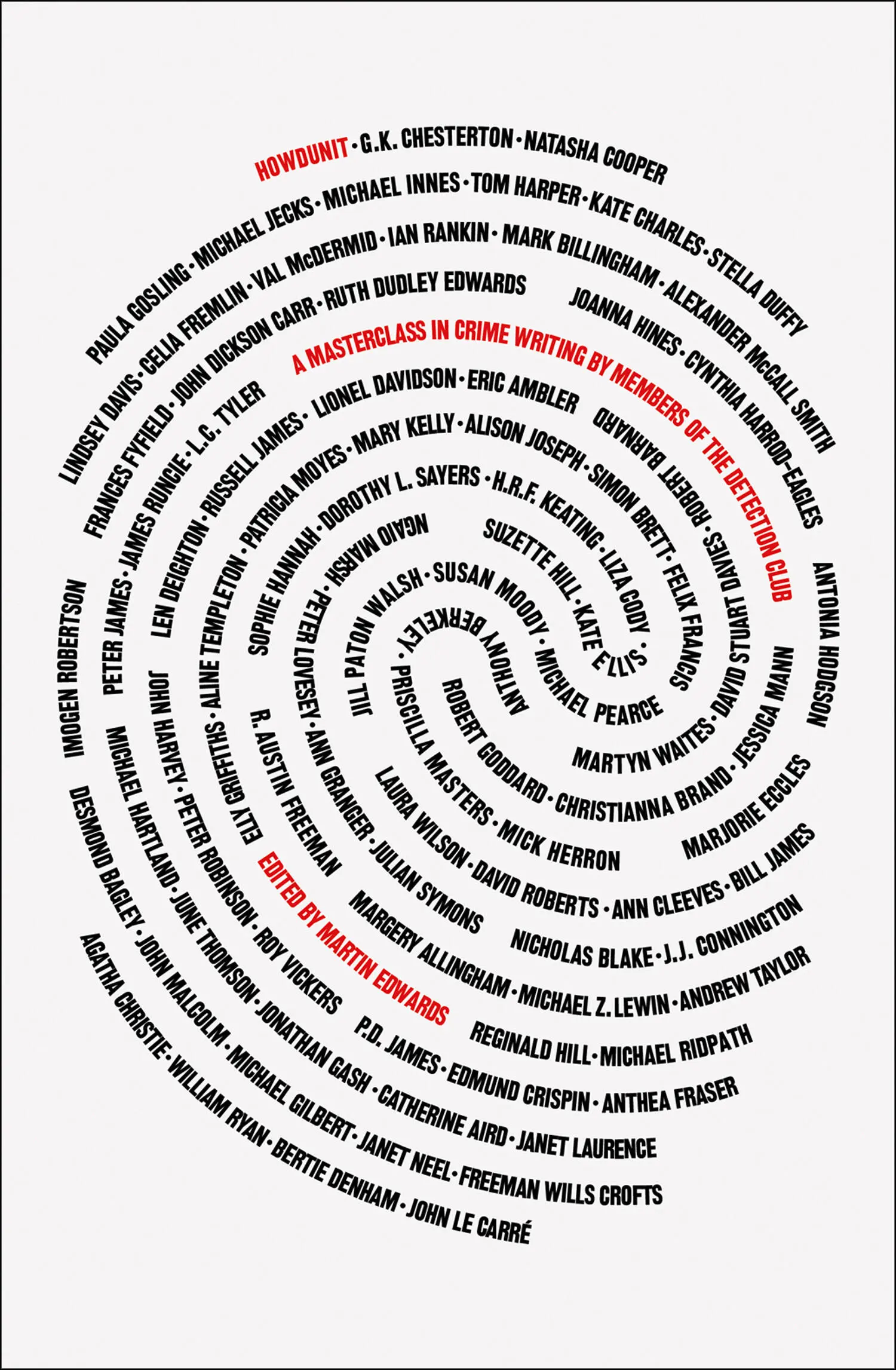
- Название:Howdunit
- Автор:
- Жанр:
- Год:неизвестен
- ISBN:нет данных
- Рейтинг книги:5 / 5. Голосов: 1
-
Избранное:Добавить в избранное
- Отзывы:
-
Ваша оценка:
Howdunit: краткое содержание, описание и аннотация
Предлагаем к чтению аннотацию, описание, краткое содержание или предисловие (зависит от того, что написал сам автор книги «Howdunit»). Если вы не нашли необходимую информацию о книге — напишите в комментариях, мы постараемся отыскать её.
Howdunit — читать онлайн ознакомительный отрывок
Ниже представлен текст книги, разбитый по страницам. Система сохранения места последней прочитанной страницы, позволяет с удобством читать онлайн бесплатно книгу «Howdunit», без необходимости каждый раз заново искать на чём Вы остановились. Поставьте закладку, и сможете в любой момент перейти на страницу, на которой закончили чтение.
Интервал:
Закладка:
There must be suspects with a motive for murder, one of whom actually is the murderer and must occupy a reasonable space in the action. No bringing in the culprit just before the end. Finally you need the victim, or victims. Often there will need to be a second victim, or even a third. There may be one or two subplots which somehow link in with, or reflect in some way, the main plot.
The actual crime doesn’t have to be complicated: it can be a blow to the skull with a blunt instrument; a hit-and-run with a car; a push off a balcony or through a window. Less simple will be poison; a gangland kidnap and torture before death; a fire that makes identification of the victim difficult; and so on. Your imagination can provide any number of other examples.
Every crime has a motive. What has driven someone to kill? In your novel there should be several candidates who can have a motive for wishing the victim dead. They are the suspects. It is difficult to keep the reader guessing as to which one was responsible with fewer than four suspects, though Minette Walters has in one instance done an excellent job with only three. However, more than six suspects and the reader, sometimes even the writer, can get confused.
Alongside motivation your investigator has to consider the evidence surrounding the murder scene. These days the official investigation involves forensic teams minutely scanning both body and area and sending samples to a laboratory for analysis. Personally, I don’t feel equipped to enter this world and these days much prefer to set my crime novels in the past, with three novels featuring the Italian artist Canaletto and two more set in the Edwardian era with Ursula Grandison as the lead character. I like to make my investigator use eyes, ears and brain to assess what the scene offers as evidence, rather than looking to science. It is possible, though, for a modern unofficial investigator to manage without the forensic science aspect.
Crime novels rose to popularity in the Twenties. Most relied on the puzzle element in their story to keep the reader engrossed. Some were fiendishly clever. In the Thirties, what is known as the Golden Age of crime writing, female authors such as Dorothy L. Sayers, Margery Allingham and Josephine Tey wrote detective novels with strong and memorable characters. Their investigators Lord Peter Wimsey, Albert Campion and Inspector Grant, have remained popular; new editions of their books are constantly being produced and their influence has continued into the present day.
Some element of puzzle, as superbly demonstrated by Agatha Christie, continues to have appeal. It is taken for granted that readers will look for clues to enable them to work out who ‘did it’ before the writer reveals the answer. There will be ‘red herrings’, clues that suggest the perpetrator is one of the other suspects, alongside subtle references that keep the reader in the dark until the denouement. There will usually be a number of ‘twists’, turning what has been suggested as the answer to the mystery on its head, maybe more than once, with a stunning ‘revelation’ providing the climax to the book. When I told P. D. James that I’d be hopeless at writing a crime novel as I could never sort out who ‘did it’ in any of the books I so enjoyed, she said, ‘It’s easier when you know who “did it”.’ This is true, though sometimes the writer will change their mind as to which suspect was the murderer. Ruth Rendell once said she had sometimes changed the perpetrator as she approached the end of a book: ‘If I can fool myself, then I’ll fool the reader as well.’
The setting and background to a crime novel can be anything that fires the writer’s imagination; it can look at a social problem such as knife killing or forms of dementia, reveal how a cruise ship is run or a television programme put together, or consider the need for food banks. Readers love to learn while enjoying a good read.
Most good crime novels will involve a theme, usually subtly suggested rather than shouted out. Writers such as Philip Pullman and Val McDermid say that they discover their theme while they are writing the book.
The denouement of a crime novel has to offer a resolution, one that will satisfy the reader. Many of today’s most successful crime novels work on a number of different levels but the ending has to bring the various strands together. Subplots should be settled before the final revelation. The main questions that have been raised need to be answered but there can be others left to the reader’s imagination, or that may provide hooks for another crime novel that includes a character or two from your initial one. Many authors find the kernel of their next plot emerging as they get towards the end of writing the current book.
To sum up, you need an interesting setting for your story, a strong plot, believable characters and a resolution that surprises whilst it makes sense of everything that has gone before. Writing a crime novel is hard work – Ian Rankin once said that being a crime writer was absolutely great, apart from the actual writing. There will be times, though, when the characters come alive, the plot explodes with new ideas, when that elusive ending is staring you in the face and you know that writing crime novels is the best thing in the world.

‘Ideas are everywhere’, Janet Laurence points out. Patricia Highsmith, who said in her fascinating book Plotting and Writing Suspense Fiction that she was driven to creativity ‘out of boredom with reality’, recommended writers to keep a notebook. You can jot ideas down before they are forgotten. Highsmith also argued that emotions, both positive and negative, could be a fertile source of ideas. In her view, it is almost impossible to be out of ideas, and the usual reason why writers sometimes feel bereft of inspiration is that they are suffering from fatigue or external pressures.
One of the most successful writers during the Golden Age of detective fiction between the wars was Freeman Wills Crofts. His work suffered neglect for half a century following his death, but has recently enjoyed a revival. Reprints of his novels have brought him back into the public eye after a long absence from the shelves, and his work has even been optioned for television. Resolutely traditionalist in approach, he outlines five types of ideas for crime stories.
Finding Ideas
Freeman Wills Crofts
If we’re lucky we shall begin with a really good idea. This may be one of five kinds. Firstly, it may be an idea for the opening of our book: some dramatic situation or happening to excite and hold the reader’s interest. The standard way of finding a body in the first chapter, if hackneyed, is hard to beat.
Secondly, our idea may be for the closing or climax of our book. This must also be dramatic. As an example I suggest the well-known situation in which Tom, who thinks Jack is dead and has impersonated him, is unexpectedly confronted with Jack in a police office or court of law.
Our idea, thirdly, may be for a good way of committing a crime, probably a murder. It should be novel and ingenious – but not too ingenious – and if possible concerned with things with which the man in the street is familiar. This is probably the most usual way of starting work on a book. Every detective fan will think of dozens of examples.
A fourth kind of idea on which to build a book is that we shall write about some definite crime, such as smuggling, gun-running, coining, arson, or frauds in high finance.
Читать дальшеИнтервал:
Закладка:
Похожие книги на «Howdunit»
Представляем Вашему вниманию похожие книги на «Howdunit» списком для выбора. Мы отобрали схожую по названию и смыслу литературу в надежде предоставить читателям больше вариантов отыскать новые, интересные, ещё непрочитанные произведения.



Обсуждение, отзывы о книге «Howdunit» и просто собственные мнения читателей. Оставьте ваши комментарии, напишите, что Вы думаете о произведении, его смысле или главных героях. Укажите что конкретно понравилось, а что нет, и почему Вы так считаете.