Howdunit
Здесь есть возможность читать онлайн «Howdunit» — ознакомительный отрывок электронной книги совершенно бесплатно, а после прочтения отрывка купить полную версию. В некоторых случаях можно слушать аудио, скачать через торрент в формате fb2 и присутствует краткое содержание. Жанр: unrecognised, на английском языке. Описание произведения, (предисловие) а так же отзывы посетителей доступны на портале библиотеки ЛибКат.
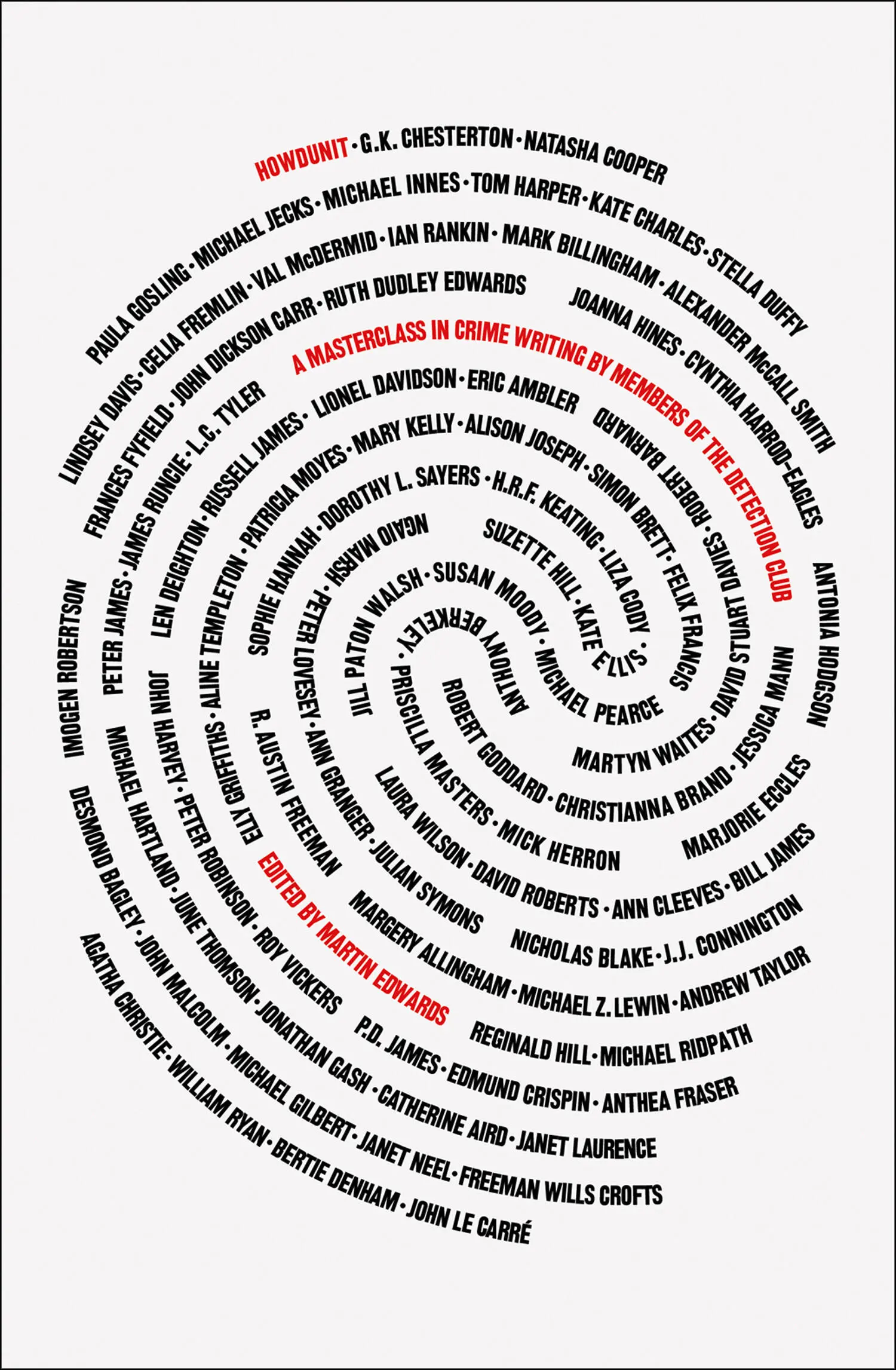
- Название:Howdunit
- Автор:
- Жанр:
- Год:неизвестен
- ISBN:нет данных
- Рейтинг книги:5 / 5. Голосов: 1
-
Избранное:Добавить в избранное
- Отзывы:
-
Ваша оценка:
Howdunit: краткое содержание, описание и аннотация
Предлагаем к чтению аннотацию, описание, краткое содержание или предисловие (зависит от того, что написал сам автор книги «Howdunit»). Если вы не нашли необходимую информацию о книге — напишите в комментариях, мы постараемся отыскать её.
Howdunit — читать онлайн ознакомительный отрывок
Ниже представлен текст книги, разбитый по страницам. Система сохранения места последней прочитанной страницы, позволяет с удобством читать онлайн бесплатно книгу «Howdunit», без необходимости каждый раз заново искать на чём Вы остановились. Поставьте закладку, и сможете в любой момент перейти на страницу, на которой закончили чтение.
Интервал:
Закладка:
Unless the perpetrator happens to be psychopathic, with no emotions on the normal register, who likes pulling wings off things and killing for fun. His choices are limited: his capacity for regret no more than damage limitation and evasion. An all-too-convenient device in a crime novel, but not, to my mind, nearly as interesting as the examination of choice and regret.
The crime novel always has a moral compass. It cannot be self-indulgent: the rule is, tell the story, and above all, add more than a dash of pity.
P. D. James wrote about choice and consequences; about retribution, revenge and the enduring power of love. She said in her memoir, ‘The intention of any novelist must surely be to make that straight avenue to the human heart … every novelist writes what he or she needs to write, a subconscious compulsion to express and explain his unique view of reality.’
P. D. James again: ‘The crime novelist needs to deal with the atavistic fear of death, to exorcize the terror of violence and to restore at least fictional peace and tranquillity after the disruptive terror of murder, and to affirm the sanctity of human life, and the possibility of justice, even if it is only the fallible justice of men.’
Most writers do not make a conscious decision, moral or otherwise, to write about crime. The subject matter chooses them. If you are going to write, write about what fascinates you, a matter of taste and compulsion. P. D. James never considered writing any other kind of novel than the detective kind and this was not because her career in forensic science gave her a taste for death, but because she saw the detective/crime novel as the very best of all vehicles to write a good, strong novel about human passions. Of all writers, she is the most steeped in English Literature and the most rooted in Samuel Johnson, Austen, the Book of Common Prayer and more. And yet she wrote crime novels. She did not write romantic fiction, poetry, or novels of espionage, because murder chose her.
Murder chose me. I did not choose to write about crime, although I chose to write. During my day job which featured homicide on paper, I moonlighted with short stories of a romantic nature. In which boy and girl take a walk on the cliff path of an evening, hand in hand, happily contemplating the pretty sunset of their future. Only I could not let them do it; the pen failed. They argue; he pushes her over, and she falls, she falls, she falls.
I had sat through several trials of carefully prepared and honestly compiled evidence, only to conclude that facts alone don’t do it. At the end of it all a compilation of facts and witness statements will not tell you exactly what went on that fateful night. I wanted to bring order into chaos and fill in the gaps that evidence alone cannot fulfil. Only imagination and putting yourself in the shoes of another can do that. Also, I wanted to write about good people as well as bad. I think the crime novel has to acknowledge and celebrate goodness as well as badness, and always allow for the possibility of redemption. Because good people outnumber the bad by a long, long way. Only problem is, they have the inhibitions of decency, whereas evil has none. Says Raymond Chandler, ‘Down these mean streets a man must go who is not himself mean.’
There are no rules. The only moral compass is honesty, writing to the best of your ability.
A straight avenue to the heart.
Beginning
Deciding to write a crime story is one thing. To make a start and then keep going is quite another. Tackling the blank page demands drive and determination. How to banish the self-doubts and maintain confidence? Or, as Peter James puts it, to keep the dream?

Motivation
Peter James
One writer asks the other, ‘What are you up to these days?’
He replies, ‘I’m writing a novel.’
The first one says, ‘Neither am I.’
The easiest thing in the world for a writer to do is to not write. Most novelists I’ve ever talked to could procrastinate for England. I’m just as much a culprit – I could captain the British Olympic Procrastination Team. Our motto would be Anything but writing!
Social media has been a wonderful boon for all of us procrastinators. We can avoid getting those first words down by checking email, Twitter, Facebook, Instagram, LinkedIn, whatever. When we’ve exhausted that, it’s time to let the dogs out again. Then make a cup of coffee. Next we remember something we need to order on Amazon. Then with a flash of guilt, we realize we forgot to call an old friend back two days ago. We know she’ll chat for ages, but get it out the way, and afterwards we’ll have a clear morning for writing. Or what’s left of the morning. Ooops, what’s that van pulling up outside? Aha, the plumber! Have to go down and let him in, make him a cuppa, find some biscuits …
But at the end of the day there is no escaping that if we want to make a living as authors, then we need to write. A mantra that always spurs me on is You cannot edit a blank page. It’s a sign that all of us should have on our desks. But that business of getting started in the morning is always hard. Graham Greene, one of my favourite authors, had a neat solution to this issue: he would always stop writing in the middle of a sentence. That way, his first task the next the morning was to finish the sentence – and it got him straight back into the flow.
It may not sound it, but I do actually love writing, although it took me years of perseverance before I could make a living from it, and during all that time I had to do a day job. My first three novels were never published (luckily, in retrospect!) My next three, not very good spy thrillers, were published but sold a negligible amount of copies – around 1,800 in hardback and 3,000 in paperback. But I kept going because I believed in myself. I changed direction, wrote two more novels, one a kidnap story and one a political assassination which were never published. Then, with my ninth novel Possession, a supernatural thriller, I struck lucky. Every major British publisher bid for the book and it was auctioned around the world, going into twenty-three languages. Finally, twenty-one years after I had sat down to type the first line of my first novel, I was able to actually make a living as an author.
Possession hit number two on the bestseller lists. But it was to be another fourteen novels and twenty years before I finally achieved my dream of hitting that coveted Sunday Times number one spot.
I’m seldom happier than when I’m hammering away at my keyboard and the story is flowing. I especially love the satisfaction of coming up with an inventive description for something, or a character I’m pleased with, or a plot twist that makes me punch the air with excitement. But it’s not been easy and writing never is. The hours are long and often lonely, and when I’ve finished I’m a bag of nerves waiting for my agent and my editor’s reactions – and then, much later, the reactions of my readers. Those nervous peeps at Amazon to see how the star ratings are going. Followed by an anxious wait for the first chart news … Plus the knowledge that I’m on a treadmill to turn out a new book every year – and my one golden rule is that with each new novel I want to raise the bar.
So, what is my motivation? Simple. First and foremost, it is the way I know best how to make a living. And that I want to do my best to try to please my loyal readers by making each book I write better than the last. I could list a dozen other factors, such as getting even with teachers at school who never thought I would amount to anything. Getting my revenge on the bullies who tormented me at school. A sense that I have something to say. A mission to try to understand human nature and why people do the things that they do. It is all of these and more. But at the end of the day my wife and I need food on our table and our animals need food in their bowls.
Читать дальшеИнтервал:
Закладка:
Похожие книги на «Howdunit»
Представляем Вашему вниманию похожие книги на «Howdunit» списком для выбора. Мы отобрали схожую по названию и смыслу литературу в надежде предоставить читателям больше вариантов отыскать новые, интересные, ещё непрочитанные произведения.



Обсуждение, отзывы о книге «Howdunit» и просто собственные мнения читателей. Оставьте ваши комментарии, напишите, что Вы думаете о произведении, его смысле или главных героях. Укажите что конкретно понравилось, а что нет, и почему Вы так считаете.