Howdunit
Здесь есть возможность читать онлайн «Howdunit» — ознакомительный отрывок электронной книги совершенно бесплатно, а после прочтения отрывка купить полную версию. В некоторых случаях можно слушать аудио, скачать через торрент в формате fb2 и присутствует краткое содержание. Жанр: unrecognised, на английском языке. Описание произведения, (предисловие) а так же отзывы посетителей доступны на портале библиотеки ЛибКат.
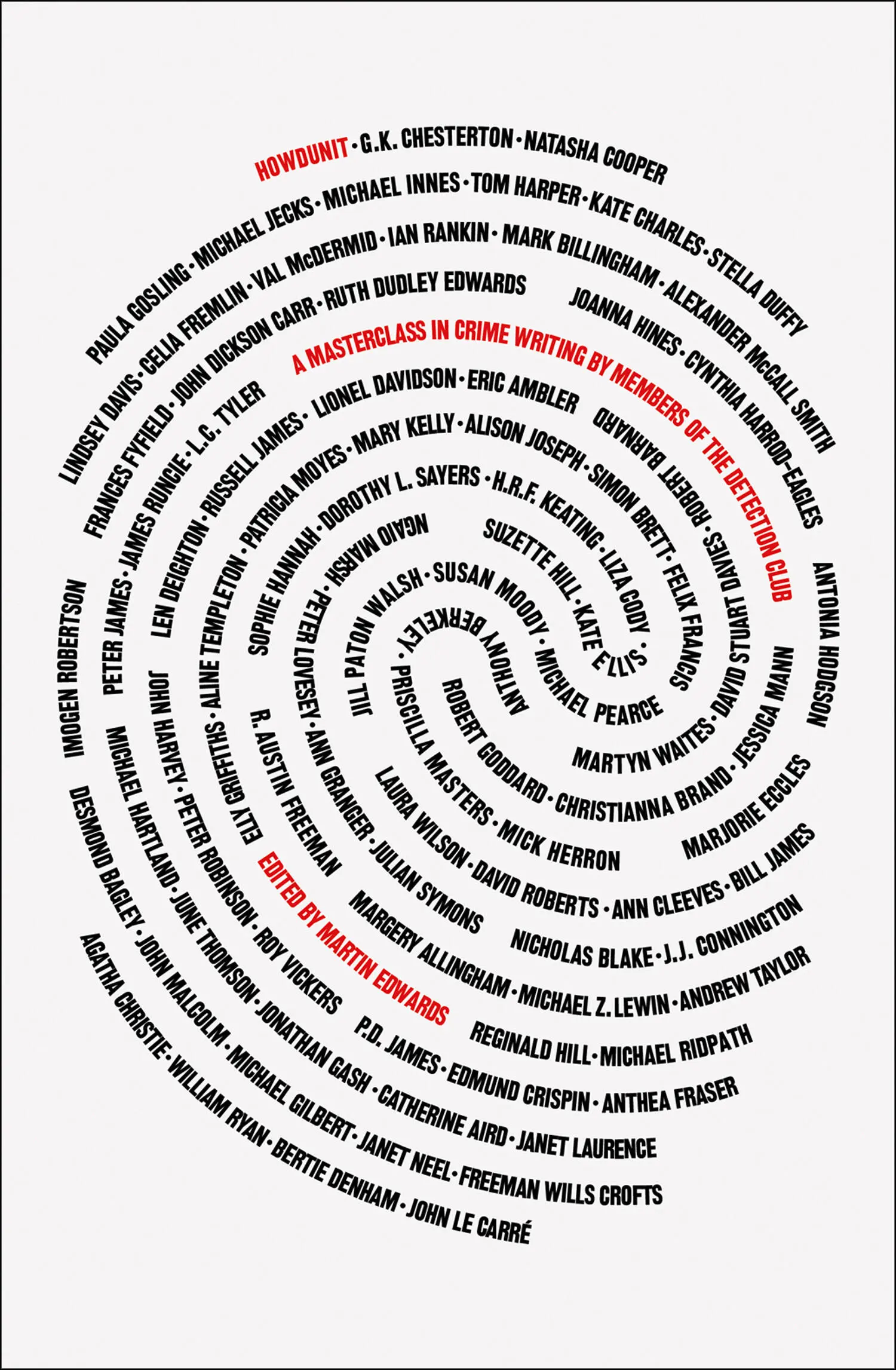
- Название:Howdunit
- Автор:
- Жанр:
- Год:неизвестен
- ISBN:нет данных
- Рейтинг книги:5 / 5. Голосов: 1
-
Избранное:Добавить в избранное
- Отзывы:
-
Ваша оценка:
Howdunit: краткое содержание, описание и аннотация
Предлагаем к чтению аннотацию, описание, краткое содержание или предисловие (зависит от того, что написал сам автор книги «Howdunit»). Если вы не нашли необходимую информацию о книге — напишите в комментариях, мы постараемся отыскать её.
Howdunit — читать онлайн ознакомительный отрывок
Ниже представлен текст книги, разбитый по страницам. Система сохранения места последней прочитанной страницы, позволяет с удобством читать онлайн бесплатно книгу «Howdunit», без необходимости каждый раз заново искать на чём Вы остановились. Поставьте закладку, и сможете в любой момент перейти на страницу, на которой закончили чтение.
Интервал:
Закладка:
The late, odious film director Michael Winner was once asked by a precious actor, whom he had instructed to walk down a street, what exactly his motivation was in walking down the street. Displaying all his normal charm, Winner bellowed at him, ‘You’re walking down that street because I’m fucking paying you to walk down that street!’
Oscar Wilde, another writer whose work I love and admire, lamented on his deathbed, ‘I’ve lived beyond my means so I suppose I will have to die beyond my means.’ His drive to produce his great work was produced largely from his need to make money. He used his gruelling American lecture tours to help boost his sales there, and once famously said, ‘Of course, if one had the money to go to America, one would not go.’
Helping his nation to win the Second World War did little to help Sir Winston Churchill’s bank account. Having financially stretched himself buying his beloved country estate, Chartwell, much later he began writing the first of his six-volume opus, The Second World War , because he needed the money.
In 1974, scammed out of everything he had by a Ponzi scheme and left deeply in debt, Jeffery Archer penned Not A Penny More, Not A Penny Less in a last-ditch attempt to stave off bankruptcy. It worked, launching a career that would make him one of the richest novelists on the planet.
It is pretty simple. If you are a professional author, money is going to be pretty high up your motivation list. Over the years I’ve met a number of people who told me they have writers’ block. But I cannot remember a single author who writes for a living ever telling me that. What other profession complains of block – other than perhaps plumbers? You don’t hear of solicitors complaining they have solicitors’ block , or taxi drivers saying they have cab drivers’ block , or accountants having accountants’ block .
I can’t imagine any professional author I know saying to his or her family, ‘Sorry everyone, I have writer’s block, I’m afraid there’s no food today.’
Sure, writing isn’t easy – if it was, everyone would be doing it. As it is, a great number of people do, mistakenly, think it’s a doddle. Margaret Atwood tells of the time she was at a cocktail party and had a what-do-you-do-what-do-you-do conversation with a rather pompous man. In response to her question he said, ‘I’m a brain surgeon. What do you do?’
When she replied that she was an author, he immediately responded, somewhat arrogantly, ‘Actually I’m planning to write a novel when I retire.’
‘How very interesting,’ Atwood retorted. ‘Because when I retire, I’m planning to be a brain surgeon.’
I often wonder, did he ever write that novel? And if he did, was it published? I’m doubtful of both, for one simple reason: lack of motivation. As a successful brain surgeon he was probably wealthy, living a nice lifestyle. In his mid-sixties, was he seriously going to lock himself away in his study for months and months of hard grind, trying to forge a whole new career, then go on the road and engage in social media? And then spend the next ten years writing more books to try to build his name? I doubt it, because I just don’t think he would have had that crucial motivation.
Thirty-five novels on, I still get a huge buzz out of the page proofs arriving. Out of seeing my publisher’s first cover ideas. It was a dream when I first began writing that one day I would see a copy of my book on an airport bookshelf. Now that dream comes true pretty much every time I enter an airport bookstore. I know I’ve been lucky, but I also I know how easy it is for an author’s sales to slide if they don’t keep up their standards. I guess my biggest motivation of all today is to keep that dream.

One question facing all writers is: how do I make a living? For anyone who isn’t independently wealthy, the challenge is to strike a balance between time spent writing, often with little or no immediate financial reward, and working to put bread on the table.
Many people dream of becoming full-time writers. Research undertaken in recent years, most notably by the Society of Authors, is discouraging: authors’ earnings seem, in broad general terms, to be low and in steady decline. And even if giving up the day job were feasible, would it be such a good idea?
Not according to Celia Fremlin, a Detection Club member who coped with demanding domestic commitments while pursuing a successful career as a writer. On her family website is a letter she sent in 1984, in which she said, ‘The first bit of advice I’d give to anyone aspiring to be a writer is to start by deciding what else he/she is going to be? It always saddens me to hear a talented young person saying: “The only thing I want to do is to write” – because this is virtually a guarantee that this is just the one thing they won’t do.
‘Writing (I’m talking here about fiction, of course – text-books and such are another matter) is, and must be, an off-shoot, an out-growth, of a full and interesting life, lived among all sorts of tiresome and uncongenial people, and beset by all the problems, difficulties, pressures and pre-occupations that real living involves. The best writing is, and always has been, squeezed out somehow from the turmoil of a demanding and absorbing life – happy or miserable, in sickness or in health, loved or hated – it doesn’t matter, so long as you are right there, in the thick of it.
‘Peace and quiet is fatal. Tuck yourself away in a country cottage, with a private income and freedom from all interruptions and distractions – and you’ve had it! Sorry, but you have!’
So how to get started? Janet Laurence is the author of, in addition to a variety of novels with contemporary and historical backgrounds, Writing Crime Fiction ; in an introduction to the book, Val McDermid said it ‘will teach you to flex your writing muscles … and offers guidance on developing your own voice so that you can tell the stories that clamour in your heart and your head.’ Here are Janet’s thoughts about how to get started.
Getting Started
Janet Laurence
You may have an investigative character or a fiendishly clever way of disposing of someone buzzing around your brain. If this is the case, what are you waiting for?
Maybe you enjoy reading crime novels and feel that you could write one as good if not better than the ones you have come across. That is how Colin Dexter started during a wet holiday in Wales. His chosen setting was Oxford, a city he knew very well. The outcome was Last Bus to Woodstock , which introduced Inspector Morse and Sergeant Lewis. The rest is history. All you need is the right idea.
Ideas are everywhere, you only need to open your mind to the possibilities. Read the newspapers, browse the library, listen to people talking, in the train, in the office, at social gatherings; there will be stories that can form the basis of a crime novel. Look for motives, methods, and how crimes are solved. Do beware, though, of opening yourself to being sued through not disguising the source of your plot and characters.
The best crime novels provide characters that grab the reader and drive the story. They need to have attractive qualities but also flaws. Think about your friends, what makes you like them enough to forgive their drawbacks? Who are the people you meet or read about in your daily life that you remember and why? We are not talking background or appearance here, but inbred qualities. You need characters who will behave in ways that will take your plot in interesting directions and that the reader will enjoy spending time with. The investigator you create, whether a member of the CID murder squad, a forensic pathologist, or someone unofficial, needs to be interested in the human psyche, someone who can explore questionable situations and puzzle out unexpected answers.
Читать дальшеИнтервал:
Закладка:
Похожие книги на «Howdunit»
Представляем Вашему вниманию похожие книги на «Howdunit» списком для выбора. Мы отобрали схожую по названию и смыслу литературу в надежде предоставить читателям больше вариантов отыскать новые, интересные, ещё непрочитанные произведения.


Обсуждение, отзывы о книге «Howdunit» и просто собственные мнения читателей. Оставьте ваши комментарии, напишите, что Вы думаете о произведении, его смысле или главных героях. Укажите что конкретно понравилось, а что нет, и почему Вы так считаете.