Howdunit
Здесь есть возможность читать онлайн «Howdunit» — ознакомительный отрывок электронной книги совершенно бесплатно, а после прочтения отрывка купить полную версию. В некоторых случаях можно слушать аудио, скачать через торрент в формате fb2 и присутствует краткое содержание. Жанр: unrecognised, на английском языке. Описание произведения, (предисловие) а так же отзывы посетителей доступны на портале библиотеки ЛибКат.
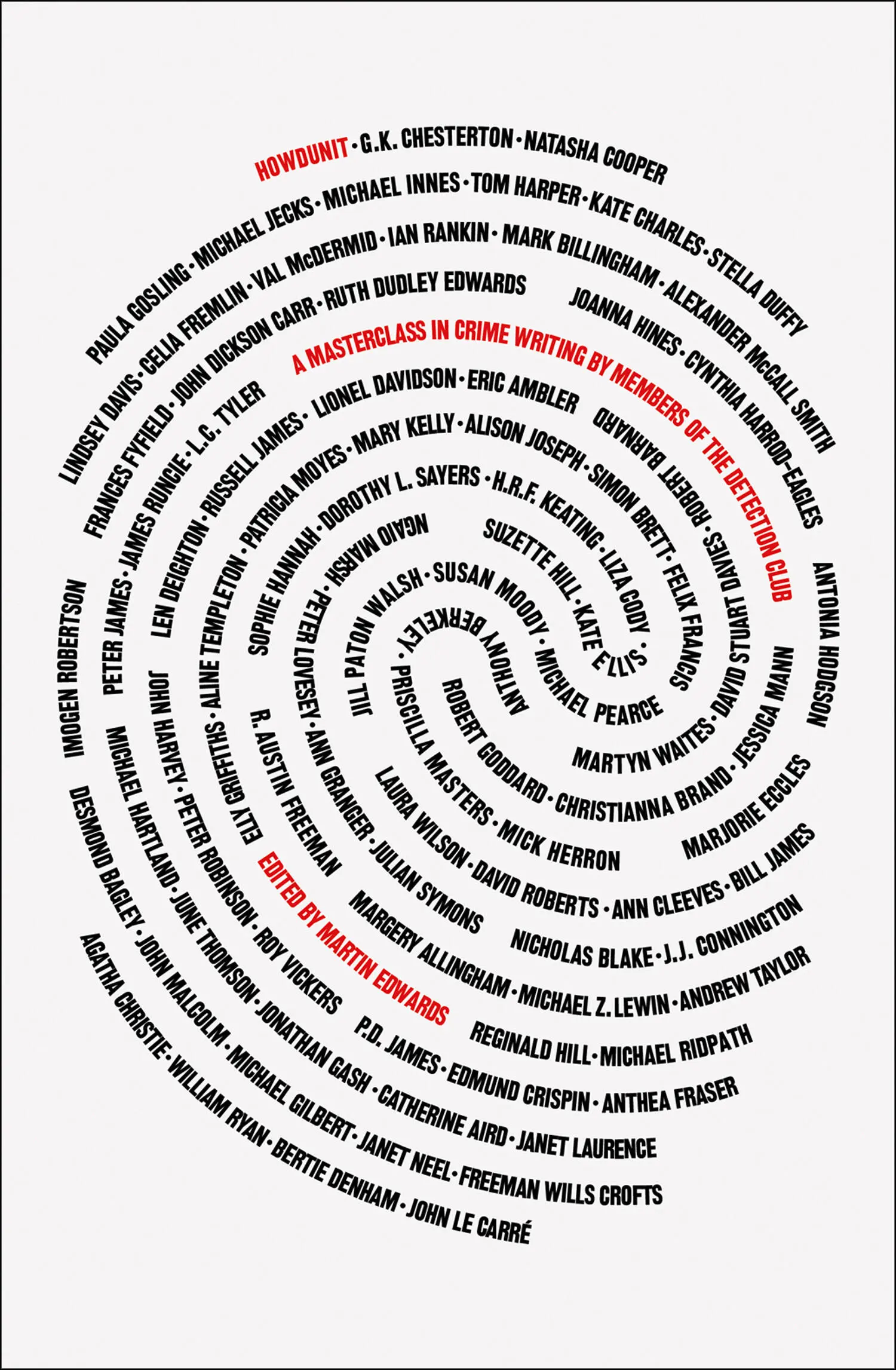
- Название:Howdunit
- Автор:
- Жанр:
- Год:неизвестен
- ISBN:нет данных
- Рейтинг книги:5 / 5. Голосов: 1
-
Избранное:Добавить в избранное
- Отзывы:
-
Ваша оценка:
Howdunit: краткое содержание, описание и аннотация
Предлагаем к чтению аннотацию, описание, краткое содержание или предисловие (зависит от того, что написал сам автор книги «Howdunit»). Если вы не нашли необходимую информацию о книге — напишите в комментариях, мы постараемся отыскать её.
Howdunit — читать онлайн ознакомительный отрывок
Ниже представлен текст книги, разбитый по страницам. Система сохранения места последней прочитанной страницы, позволяет с удобством читать онлайн бесплатно книгу «Howdunit», без необходимости каждый раз заново искать на чём Вы остановились. Поставьте закладку, и сможете в любой момент перейти на страницу, на которой закончили чтение.
Интервал:
Закладка:
If you’re lucky, you might find your characters already waiting in the wings, fully formed and ready to go, but failing that it’s useful to keep a ‘Faces and Places’ file containing photos torn out of magazines or newspapers of interesting faces (preferably not anyone well known) and the interiors of houses, or town or village streets along which you can imagine your characters walking. If any of these are applicable for the plot you have in mind, you can stick them up on a cork board in front of you. It’s helpful to look at them and think, ‘What would you do in this situation?’
Character names are extremely important and often people won’t come to life if you choose the wrong name. Sometimes, as the characters develop, it might be necessary to change one halfway through – no problem with the Replace All key. Since names go in and out of fashion, consideration must be given to the age and social status of the character. I also try to avoid any that are unisex or begin with the same letter, which might cause confusion.
The setting you choose is crucial; personally I’ve found it gives me more freedom to use imaginary locations. I do, however, picture them in a particular part of the country, and try to ensure the made-up place names fit in with those in the appropriate locality. Then I draw town plans, filling in shops, police station, church, etc., so that I know in which direction a character will turn when he comes out of his gate and – important in establishing an alibi – how long it will take to get from A to B. I also do plans of the main house in the story, again with the aim of being able to ‘see’ the action taking place. The reader should feel completely at home there, able to follow the characters as they move from room to room.
A series might require the invention of a complete county, in which case I draw a map of it, positioning towns and villages at random and working out the travelling distance between them in both mileage and time. I can then choose the one that best fits the plot, and if there doesn’t happen to be a town in a suitable place, I can always add a new one!
It can be quite a challenge to invent someone who’ll mature and develop and whose personal life will progress through an indefinite number of books – someone, in short, whom you could live with. Your characters will, of course, age and develop as you go along. Relationships will be formed or ended, family members might die, couples divorce and children be born.
One problem with a series can be timing – how much has elapsed between the end of one book and the beginning of the next. My DCI Webb series lasted for sixteen books and it became increasingly difficult to keep track of children’s ages and how long ago a certain event had taken place. So I invented my own time zone, in which the first book took place in year one and the second in the following year. The characters had met each other in year minus one or two. I could then check back in later books and life became easier.
After those sixteen books I wanted a rest from police procedure so wrote a stand-alone for the first time in years. And since I intended to limit police presence to the minimum, it had to involve a cold case that wouldn’t tread on their toes, a past murder in the family that had never been solved. Families fascinate me, the dynamics between the different members, the tensions and unsuspected jealousies.
After this book I wrote another stand-alone, but when I embarked on what was intended to be a third, I began to miss the comfortable familiarity of a series and decided to expand it into a new one, which became the first of the Rona Parish books. I didn’t want to return to police themes – in any case forensics had moved on in the past couple of years and I was out of date – but I wanted my protagonist to have a legitimate reason for repeatedly coming up against crime, so I made her a journalist and biographer. Both these seemingly harmless occupations led her, over the course of ten books, into considerable danger.
I have continued to slot stand-alones in between the series books. There’s a sense of freedom in being able to visit an entirely different location with totally new characters who will obligingly tidy up their problems within the covers of that one book.
A perennial question every writer faces is ‘Where do you get your ideas?’ They can, of course, come from anywhere – a snippet in the newspaper, an overheard conversation – and don’t discount dreams! I dreamed the idea for one novel and several short stories, so I keep a notebook and pen by my bed and make a quick note of any that might be useful before they fade.
If the title comes to mind first, that’s a great advantage and points you in the right direction. There are various ways of choosing a suitable title. I occasionally use quotes – and was berated by no fewer than three fellow crime writers for choosing A Necessary End , when their own books, also under that title, were still at the proof stage.
The title of Whistler’s Lane , one of the paranormal novels, actually evolved from looking at the portrait of Whistler’s Mother, when I toyed with the fantasy that the whistler referred to was not a proper name. Ghostly figures in a dark countryside came to mind, and the plot developed from there. Another time I heard someone on the radio refer to a Macbeth prophecy , i.e. a self-fulfilling one, and filed it away for future use.
In terms of choosing titles, my easiest ride was with the Green Grow the Rushes series. The song itself has appeared in many forms in ancient and modern languages from Hebrew onwards, and the first time it was written down in English was in 1625. Whatever the original meaning of the verses – and they’ve become distorted over the years, like a game of Chinese Whispers – I’ve always thought they were most evocative. Who were the April Rainers, the Nine Bright Shiners, the Lily-White Boys?
I’d originally intended to use two at most, but as I wrote, more ideas offered, until I realized I’d have to use them all. They weren’t written in order, but as ideas presented themselves. It was pure chance that the final three were Ten, Eleven and Twelve, and I have to admit Eleven that Went Up to Heaven was quite a challenge! Short of killing off an entire cricket side, it took me some time to come up with a hopefully convincing mass murder.
I used to plan my books meticulously, knowing how far the plot would progress in every chapter, though obviously changes were made as I went along. (In one case an old lady was due to be murdered, but I became fond of her so I spared her and killed someone else!) Then the time came when I was in such a hurry to start writing that I couldn’t be bothered planning and jumped straight in, pushing the plot ahead of me chapter by chapter. It all worked out in the end, and that is basically the way I write now – a rough idea of what’s going to happen, but letting the details emerge as I go along. Unlike most of my fellow writers, I never do drafts. I prefer to stick to the original, though since I can’t read a page without making alterations, it will inevitably have changed considerably by the time I reach the end.
It has been said that writing is 10 per cent inspiration and 90 per cent perspiration, and certainly it’s no good sitting back and waiting till you feel in the mood. If inspiration doesn’t come, I write anything, however unsatisfactory, like working in a new biro. Then, when the flow is re-established, I go back and polish it. And I always try to stop for the day at an interesting point, which will give me the impetus to get going the following day.

Putting Murder on the Page
Интервал:
Закладка:
Похожие книги на «Howdunit»
Представляем Вашему вниманию похожие книги на «Howdunit» списком для выбора. Мы отобрали схожую по названию и смыслу литературу в надежде предоставить читателям больше вариантов отыскать новые, интересные, ещё непрочитанные произведения.

Обсуждение, отзывы о книге «Howdunit» и просто собственные мнения читателей. Оставьте ваши комментарии, напишите, что Вы думаете о произведении, его смысле или главных героях. Укажите что конкретно понравилось, а что нет, и почему Вы так считаете.