Rethinking Prototyping
Здесь есть возможность читать онлайн «Rethinking Prototyping» — ознакомительный отрывок электронной книги совершенно бесплатно, а после прочтения отрывка купить полную версию. В некоторых случаях можно слушать аудио, скачать через торрент в формате fb2 и присутствует краткое содержание. Жанр: unrecognised, на английском языке. Описание произведения, (предисловие) а так же отзывы посетителей доступны на портале библиотеки ЛибКат.
- Название:Rethinking Prototyping
- Автор:
- Жанр:
- Год:неизвестен
- ISBN:нет данных
- Рейтинг книги:3 / 5. Голосов: 1
-
Избранное:Добавить в избранное
- Отзывы:
-
Ваша оценка:
Rethinking Prototyping: краткое содержание, описание и аннотация
Предлагаем к чтению аннотацию, описание, краткое содержание или предисловие (зависит от того, что написал сам автор книги «Rethinking Prototyping»). Если вы не нашли необходимую информацию о книге — напишите в комментариях, мы постараемся отыскать её.
The Design Modelling Symposium Berlin 2013 would like to challenge the participants to reflect on the possibility of computational systems that bridge design phase and occupancy of buildings. This rethinking of the designed artifact beyond its physical has had profound effects on other industries already. How does it affect architecture and engineering?
At the scale of engineering and building systems new perspectives may open up by engaging built form as a continuous prototype, which can track and respond during use and serve as a real world implementation of its design model. This has been tried many times from intelligent façades to smart homes and networked grids but much of it was only technology driven and not approached from a more holistic design perspective.
Rethinking Prototyping — читать онлайн ознакомительный отрывок
Ниже представлен текст книги, разбитый по страницам. Система сохранения места последней прочитанной страницы, позволяет с удобством читать онлайн бесплатно книгу «Rethinking Prototyping», без необходимости каждый раз заново искать на чём Вы остановились. Поставьте закладку, и сможете в любой момент перейти на страницу, на которой закончили чтение.
Интервал:
Закладка:
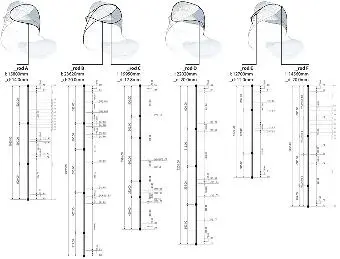
Fig. 10 Topology map of GFRP rods for M1 (Ahlquist and Lienhard, 2012)
6 Conclusion
This research establishes the coordinated means by which aspects of material behaviour can be explored in forming complex textile hybrid structures. The critical consideration is in the priority of prototyping constructional and behavioural logics through physical form-finding. In the two cases between the meta- and meso-scale textile hybrid systems though there is a difference in the application of the physical prototype to further study. As applied to computational exploration through spring-based methods the prototype is referential to a series of topological, geometric and material descriptions. On the other hand, in furthering the design through FEM the initial physical prototype defines literal parameters of topology and geometry. The behaviour is then more accurately reformed by engaging real material values, internal pre-stresses and external forces.
Because of the complexities inherent in engaging material behaviour as a design agent, the architectures formed are often based upon repeating modules whose differentiation is shaped by a singular relation of material make-up to structural behaviour. With the development of the M1 a design framework is proposed, which allows for the development of a structurally continuous system that is based upon the alignment of multiple differentiated agents in material, force and geometric constraints.
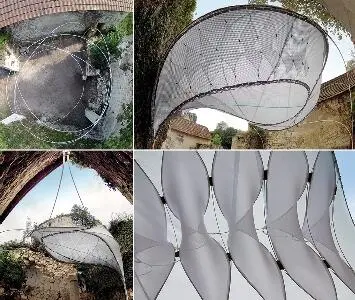
Fig. 11 Textile Hybrid M1 at La Tour de l’Architecte in Monthoiron, France, 2012 (Ahlquist and Lienhard, 2012)
Acknowledgements
The research on bending-active structures was developed through a collaboration between the Institute for Computational Design (ICD) and the Institute for Building Structures and Structural Design (ITKE) at the University of Stuttgart. The research from the ITKE is supported within the funding directive BIONA by the German Federal Ministry of Education and Research. The student team for the M1 Project was Markus Bernhard, David Cappo, Celeste Clayton, Oliver Kaertkemeyer, Hannah Kramer, Andreas Schoenbrunner. Funding of the M1 Project was provided by DVA Stiftung, The Serge Ferrari Group, Esmery Caron Structures, and Studiengeld zurück University of Stuttgart.
References
Adrianessens, S.M.L.; Barnes, M.R., 2001: Tensegrity Spline Beam and Grid Shell Structures. Engineering Structures , 23 (2), pp. 29-36.
Ahlquist, S.; Menges, A., 2011: Behavior-Based Computational Design Methodologies – Integrative Processes for Force Defined Material Structures. In: Taron, J.; Parlac, V.; Kolarevic, B.; Johnson, J. (eds.): Proceedings of the 31st Annual Conference of the Association for Computer Aided Design in Architecture (ACADIA), Banff (Canada), pp. 82-89.
Ahlquist, S.; Lienhard, J.; Knippers, J.; Menges, A., 2013: Exploring Material Reciprocities for Textile-Hybrid Systems as Spatial Structures. In: Stacey, M. (ed.): Prototyping Architecture: The Conference Paper, London, February 2013, London, Building Centre Trust, pp. 187-210.
Coyne, R.D.; Rosenman, M.A.; Radford, A.D.; Balachandran, M.; Gero, J.S., 1990: Knowledge-Based Design Systems. Reading, Addison-Wesley Publishing Company.
Levien, R. L., 2009: From Spiral to Spline. Dissertation, University of California, Berkeley.
Kilian, A.; Ochsendorf, J., 2005: Particle-Spring Systems for Structural Form Finding. Journal of the International Association for Shell and Spatial Structures, 46 (148), pp. 77-84.
Fertis, D. G., 2006: Nonlinear Structural Engineering: With Unique Theories and Methods to Solve Effectively Complex Nonlinear Problems. Berlin Heidelberg, Springer.
Lienhard, J., Ahlquist, S., Knippers, J., and Menges, A., 2012: Extending the Functional and Formal Vocabulary of Tensile Membrane Structures through the Interaction with Bending-Active Elements. In: [RE]THINKING Lightweight Structures, Proceedings of Tensinet Symposium, Istanbul, May 2013. (Accepted, awaiting publication).
Provot, X., 1995: Deformation Constraints in a Mass-Spring Model to Describe Rigid Cloth Behavior. In: Graphics Interface 95, Quebec, pp. 147-154.
Volino, P.; Magnenat-Thalmann, N., 2006: Simple Linear Bending Stiffness in Particle Systems. In: Cani, M.P. and O’Brien, J. (eds.): Proceedings for Eurographics/ACM Siggraph Symposium on Computer Animation, Vienna. Aire-la-Ville: Eurographics Association, pp. 101-105.
From Shape to Shell: A Design Tool to Materialise FreeForm Shapes Using Gridshell Structures
Lionel du Peloux, Olivier Baverel, Jean-François Caron and Frederic Tayeb
AbstractThis paper introduces and explains the design process of a gridshell in composite materials built in Paris in 2011 for the festival Soliday. A brief introduction presents the structural concept and the erection methodology employed. It explains why composite materials are relevant for such applications. Following this practical case, the whole process from 3D shape to real-shell is then detailed. Firstly, the shape is rationalized and optimized to smooth local curvature concentrations. Secondly, a specific computing tool is used to mesh the surface according to the compass method. This tool allows designers to look for optimal mesh orientations regarding the elements curvature. Finally, a full structural analysis is performed to find the relaxed shape of the grid and check its stability, strength and stiffness under loads. The authors conclude on the overall relevance of such structures.
Olivier Baverel
UR Navier, Ecole des Ponts ParisTech, Champs-sur-Marne, France
ENSAG, Grenoble, France
Jean-François Caron, Frederic Tayeb
UR Navier, Ecole des Ponts ParisTech, Champs-sur-Marne, France
Lionel du Peloux
UR Navier, Ecole des Ponts ParisTech, Champs-sur-Marne, France
T/E/S/S, Paris, France
1 Introduction
The emergence of gridshell structures – intensively studied by the German architect Frei Otto – is a major step in the development of complex shapes in AEC (Architecture, Engineering and Construction). Since the 1970s this structural concept has led to emblematic realizations (Mannheim [Happold and Lidell 1975], Downland [Harris et al 2003], Savill, Hanovre [Ban 2006]). They have shown that beyond their architectural potential, gridshells are well suitable for complex shape materialization because of their intrinsic geometric rationality.
However, the very few number of gridshells constructed up to now attests that they are quite tricky to design compared to standard buildings. Architects and engineers would face both demanding conceptual knowledge in 3D geometry, form-finding techniques, non-linear behaviour, large-scale deformations, permanent bending stresses, etc. and real lack of tools dedicated to their design.
This paper presents a computing tool based on Rhinoceros & Grasshopper that aims at meshing NURBS surfaces with the compass method. This tool also includes a one-way interface for GSA (a structural analysis software from Oasys ) to perform the structural analysis of the resulting grid. Thereby, this tool introduces shape-driven design of gridshells. Following a case study – the construction of the first composite gridshell to host people – a methodology to design these shape-driven structures is proposed. Finally, future prospects to their development are discussed.
Читать дальшеИнтервал:
Закладка:
Похожие книги на «Rethinking Prototyping»
Представляем Вашему вниманию похожие книги на «Rethinking Prototyping» списком для выбора. Мы отобрали схожую по названию и смыслу литературу в надежде предоставить читателям больше вариантов отыскать новые, интересные, ещё непрочитанные произведения.

Обсуждение, отзывы о книге «Rethinking Prototyping» и просто собственные мнения читателей. Оставьте ваши комментарии, напишите, что Вы думаете о произведении, его смысле или главных героях. Укажите что конкретно понравилось, а что нет, и почему Вы так считаете.