Rethinking Prototyping
Здесь есть возможность читать онлайн «Rethinking Prototyping» — ознакомительный отрывок электронной книги совершенно бесплатно, а после прочтения отрывка купить полную версию. В некоторых случаях можно слушать аудио, скачать через торрент в формате fb2 и присутствует краткое содержание. Жанр: unrecognised, на английском языке. Описание произведения, (предисловие) а так же отзывы посетителей доступны на портале библиотеки ЛибКат.
- Название:Rethinking Prototyping
- Автор:
- Жанр:
- Год:неизвестен
- ISBN:нет данных
- Рейтинг книги:3 / 5. Голосов: 1
-
Избранное:Добавить в избранное
- Отзывы:
-
Ваша оценка:
Rethinking Prototyping: краткое содержание, описание и аннотация
Предлагаем к чтению аннотацию, описание, краткое содержание или предисловие (зависит от того, что написал сам автор книги «Rethinking Prototyping»). Если вы не нашли необходимую информацию о книге — напишите в комментариях, мы постараемся отыскать её.
The Design Modelling Symposium Berlin 2013 would like to challenge the participants to reflect on the possibility of computational systems that bridge design phase and occupancy of buildings. This rethinking of the designed artifact beyond its physical has had profound effects on other industries already. How does it affect architecture and engineering?
At the scale of engineering and building systems new perspectives may open up by engaging built form as a continuous prototype, which can track and respond during use and serve as a real world implementation of its design model. This has been tried many times from intelligent façades to smart homes and networked grids but much of it was only technology driven and not approached from a more holistic design perspective.
Rethinking Prototyping — читать онлайн ознакомительный отрывок
Ниже представлен текст книги, разбитый по страницам. Система сохранения места последней прочитанной страницы, позволяет с удобством читать онлайн бесплатно книгу «Rethinking Prototyping», без необходимости каждый раз заново искать на чём Вы остановились. Поставьте закладку, и сможете в любой момент перейти на страницу, на которой закончили чтение.
Интервал:
Закладка:
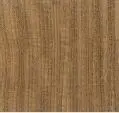
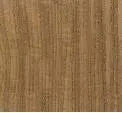
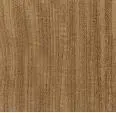
Fig. 7 Original image (1st), reconstruction using two (2nd) and only the first (3rd) out of three eigenvectors
Because of its ease of implementation, the approach described first ( Colour space ) was chosen. Hereby the three-colour channels are preserved and can be treated separately for other calculations.
4 Results
This encoding of image’s colour data is implemented in a synthesizer. Similar to a multichannel-mixing desk for recording engineers, this allows to edit and cross breed different inputs. The available tools are different filters, real part only, imaginary part only, low pass of one, high pass of another image, and real part of one and high pass of another, etc.
4.1 Crossover
By combining all these, one is able to implant the Quilted Maple (a distortion of the grain pattern, similar to ripples on water) of one wood on the yearly rings of another (Fig. 8). The frequencies responsible for the quilt are above and below the central bright spot on a more or less vertical axis.
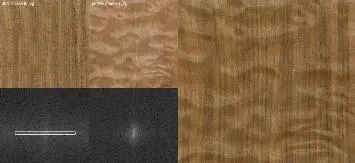
Fig. 8 Result of mixing Afrormosia (white rectangle filter) with Quilted Maple
4.2 Fugue
Artifacts somewhere between ornament and texture, synthetic wood can be generated by copying a row flipped upper half sub-matrix to the lower half. The pattern strains begin both, at the top and at the bottom and interweave over the entire image (Fig. 9). Images can be composed and arranged to something like the visual equivalent to musical fugues.
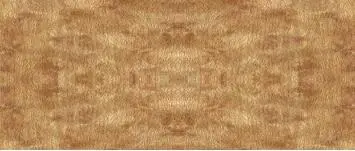
Fig. 9 Ornamented bird‘s eye maple
4.3 Mapping
Encoding of a lot of information in only few parameters allows measuring and comparing different woods productively. A corresponding proximity layout in two-dimensional space is done by self-organizing maps (SOM), made popular by Teuvo Kohonen (Kohonen 2001). SOMs do not produce binary classification such as whether a wood is hard or soft or whether it is from a deciduous or from a coniferous tree. All the cells in Fig. 10 are synthetic and comprise all of the training samples to a certain degree. Possible measurements are for instance What is half way between oak and maple? or What is the birchness of balsa?”
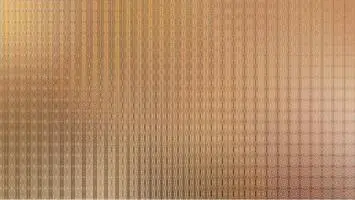
Fig. 10 Self-organizing map trained by 20 wood samples
5 Conclusion
The present study offers a way to encode large amounts of image data in an effective set of limited size. This limitation does not mean a linear loss of information but compiles the most effective parameters in a very productive set of steering handles. The applied method recognizes connections among spatially distributed but periodically reappearing features. The goal is to build up a model space from the instances (and not for them). Within this model space, one is able to compute with the instances and fluently fade between instead of categorizing them. This can be accomplished by abstraction and by transferring the objects into one specific body of thinking, in the present case into the frequency domain.
Architecture among many other sciences applies models to develop, test and compare ideas. A model view on something existing in the real world always involves certain degrees of abstraction in order to be successful. One has to squint the eyes – also in a metaphorical sense – to be able to distinguish aspects that matter from rather secondary features. Aspects that matter may be differences between instances that allow them to be distinguished as well as things all have in common or are at least similar. Similarity is something like the reciprocal value of difference.
5.2 Statistics
The tools of multivariate statistics applied here show the need for procedures that preserve the richness and heterogeneity of every individual instance. The simplest value to be calculated, the arithmetic mean colour of every pixel is not of any use and strips off all characteristics of every sample. Local variations in brightness are mutually levelled and what remains is an almost homogeneous monochromatic surface (Fig. 11). With the levels adjusted, the image reveals at least some remaining texture reminding of a kind of but no particular wood (Fig. 12).
5.3 Information Theory
The search for How to say more with less ? starts early with the development of big distance speech transmission such as telegraphs. Bandwidth was limited and expensive long before that name existed. Therefore, it was important to condense content to its essence consisting of as few symbols as possible, as many as necessary. A lot of different strategies where developed in information theory – a term also coined only when that branch already was in its first period of prosperity. Systems where developed not only by Claude Elwood Shannon , whose paper A Mathematical Theory of Communication (Shannon and Weaver 1949) gave that branch its name but also by predecessors like Morse, Hartley or Nyquist (Gleick 2011). These strategies are not only employed when transmitting but also when storing information in as few storage as possible, for example in image compression. Two widely known techniques are the Graphics Interchange Format (GIF) and the format developed by the Joint Photographic Expert Group ( JPEG). GIF reduces the number of allowed colours to a limited precise set of e.g. 256 colours and a matrix of indexes, where which colour is placed. JPEG on the other hand splits up the image in 8 x 8 pixel blocks and applies a discrete cosine transformation (DCT), a procedure very similar to the Fourier transformation described in this paper. Both, GIF and JPEG are so-called lossy-compression methods that try to discard neglectable parts (such as the high frequencies in JPEG). Both methods – and any other method of compression or more generally formulated: abstraction – are only a certain view on things. In addition, because they are views, they pose a certain filter to the data and in turn, produce their own artifacts. Therefore, they all qualify best for some uses while being unserviceable for others. The method described fits well for wood. But it also represents a specific model, who’s encryption has been negotiated and tested and must be known to the receiver in order to be able to decrypt. This can be overcome by having the computer learn this over time as well.
5.4 Outlook
The above-described methods of detecting repetitive occurrences of pattern and treating them as redundancies that one can get rid of are mainly used to compress data. For the sake of speed, bandwidth or storage space efficiency, they try to cut off as much as possible while derogating readability as little as necessary.
Читать дальшеИнтервал:
Закладка:
Похожие книги на «Rethinking Prototyping»
Представляем Вашему вниманию похожие книги на «Rethinking Prototyping» списком для выбора. Мы отобрали схожую по названию и смыслу литературу в надежде предоставить читателям больше вариантов отыскать новые, интересные, ещё непрочитанные произведения.

Обсуждение, отзывы о книге «Rethinking Prototyping» и просто собственные мнения читателей. Оставьте ваши комментарии, напишите, что Вы думаете о произведении, его смысле или главных героях. Укажите что конкретно понравилось, а что нет, и почему Вы так считаете.