Walter Tevis - Mockingbird
Здесь есть возможность читать онлайн «Walter Tevis - Mockingbird» весь текст электронной книги совершенно бесплатно (целиком полную версию без сокращений). В некоторых случаях можно слушать аудио, скачать через торрент в формате fb2 и присутствует краткое содержание. Город: London, Год выпуска: 2007, ISBN: 2007, Издательство: Gollancz, Жанр: Фантастика и фэнтези, на английском языке. Описание произведения, (предисловие) а так же отзывы посетителей доступны на портале библиотеки ЛибКат.
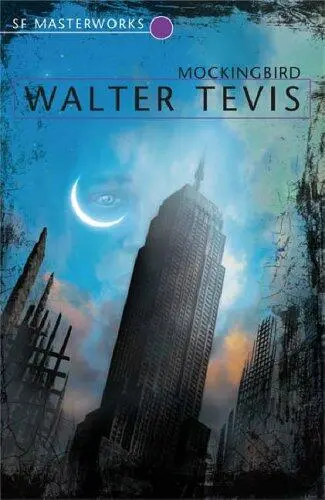
- Название:Mockingbird
- Автор:
- Издательство:Gollancz
- Жанр:
- Год:2007
- Город:London
- ISBN:978-0575079151
- Рейтинг книги:5 / 5. Голосов: 1
-
Избранное:Добавить в избранное
- Отзывы:
-
Ваша оценка:
Mockingbird: краткое содержание, описание и аннотация
Предлагаем к чтению аннотацию, описание, краткое содержание или предисловие (зависит от того, что написал сам автор книги «Mockingbird»). Если вы не нашли необходимую информацию о книге — напишите в комментариях, мы постараемся отыскать её.
Mockingbird
Review
From the Inside Flap “A moral tale that has elements of Aldous Huxley’s
,
, and
.”
—
“Set in a far future in which robots run a world with a small and declining human population, this novel could be considered an unofficial sequel to
, for its central event and symbol is the rediscovery of reading.”
—
“Because of its affirmation of such persistent human values as curiosity, courage, and compassion, along with its undeniable narrative power,
will become one of those books that coming generations will periodically rediscover with wonder and delight.”
—
“I’ve read other novels extrapolating the dangers of computerization but Mockingbird stings me, the writer, the hardest. The notion, the possibility, that people might indeed lose the ability, and worse, the desire to read, is made acutely probable.”
—
bestselling author ANNE MCCAFFREY “Walter Tevis is science fiction’s great neglected master, one of the definitive bridges between sf and literature. For those who know his work only through the movies, the lucid prose and literary vision of
and
will come as a revelation.”
—AL SARRANTONIO, Author of
saga
Mockingbird — читать онлайн бесплатно полную книгу (весь текст) целиком
Ниже представлен текст книги, разбитый по страницам. Система сохранения места последней прочитанной страницы, позволяет с удобством читать онлайн бесплатно книгу «Mockingbird», без необходимости каждый раз заново искать на чём Вы остановились. Поставьте закладку, и сможете в любой момент перейти на страницу, на которой закончили чтение.
Интервал:
Закладка:
I opened it. In it was a bright red coat with a black velvet collar. I took it out and tried it on. It was certainly red . And I didn’t much like the collar. But it sure was warm.
“Where did you get this?” I said. “And what took you so long?”
“I searched the inventories of five warehouses,” he said, staring at me, “before I found it.”
I raised my eyebrows but said nothing. The coat fit pretty well as long as I didn’t try to button it over my belly. “How do you like it?” I said, turning around in front of him.
He said nothing, but stared at me thoughtfully for a long moment. Then he said, “It’s all right. It might look better if you had black hair.”
That was an odd thing for him to say. And he had never given any sign before that he ever noticed how I looked. “Should I have the color changed?” I said. My hair is brown. Just plain brown, with no particular character to it. Where I have it is in the figure. And the eyes. I like my eyes.
“No,” he said. “I don’t want you to dye your hair.” There was something sad about the way he said it. And then he said another strange thing: “Would you like to take a walk with me?”
I looked up at him, not letting myself blink for a moment. Then I said, “Sure.”
And when we were out on the street he took my hand. Surprised hell out of me. He began to whistle. We walked like that for about an hour on the nearly empty streets in the snow and through Washington Square, where only a few zonked old ladies sat smoking their joints in silence. Bob was careful to walk slowly so that I could keep up with him—he really is enormous—but he said nothing the whole time. He would stop whistling every now and then and look down at me, as if he were studying my face; but he did not say a word.
It was strange. Yet I felt somehow pleased with it. I felt there was something important to him about the red coat and the walking and the holding of my hand, and I didn’t really feel it necessary to know exactly what it was. If he had wanted me to know he would have told me. Somehow I felt needed by him, and for a while very important. It was a good feeling. I wish he had put his arm around me.
Sometimes the thought that I will soon be a mother frightens me and makes me feel alone. I’ve never talked to Bob about this, would not know how to talk to him; he seems so absorbed in bis own longings.
I have read a book about having babies and taking care of them. But I have no idea of what it will feel like to be a mother. I have never seen one.
SEVEN
Here in New York, when walking by myself through the snow I watch the faces. They are not always bland, not always empty, not stupid. Some are frowning in concentration, as if difficult thought were trying to burst out in speech. I see middle-aged men with lean bodies and gray hair and bright clothing, their eyes glazed, lost in thought. Suicides by immolation abound in this city. Are the men thinking of death? I never ask them. One doesn’t.
Why don’t we talk to one another? Why don’t we huddle together against the cold wind that blows down the empty streets of this city? Once, long ago, there were private telephones in New York. People talked to one another then—perhaps distantly, strangely, with their voices made thin and artificial by electronics; but they talked. Of the price of groceries, the presidential elections, the sexual behavior of their teen-age children, their fear of the weather and their fear of death. And they read , hearing the voices of the living and the dead speaking to them in eloquent silence, in touch with a babble of human talk that must have filled the mind in a manner that said: I am human. I talk and I listen and I read .
Why can no one read ? What happened?
I have a copy of the last book ever published by Random House, once a place of business that caused books to be printed and sold by the millions. The book is called Heavy Rape; it was published in 2189. On the flyleaf is a statement that begins: “With this novel, fifth in a series, Random House closes its editorial doors. The abolition of reading programs in the schools during the past twenty years has helped bring this about. It is with regret…” And so on.
Bob seems to know almost everything; but he doesn’t know when or why people stopped reading. “Most people are too lazy,” he said. “They only want distractions.”
Maybe he is right, but I don’t really feel that he is. In the basement of the apartment building we live in, a very old building that has been restored many times, is a crudely lettered phrase on the wall near the reactor: WRITING SUCKS. The wall is painted in an institutional green, and scratched into the paint are crude drawings of penises and women’s breasts and of couples engaged in oral sex or hitting one another, but those are the only words: WRITING SUCKS. There is no laziness in that statement, nor in the impulse to write it by scratching into tough paint with the point of a nail or a knife. What I think of when I read that harsh, declarative phrase is how much hatred there is in it.
Perhaps the grimness and coldness that I see everywhere exist because there are no children. No one is young anymore. In my whole life I have never seen anyone younger than I am. My only idea of childhood comes from memory, and from the obscene charade of those robot children at the zoo.
I must be at least thirty. When my child comes he will have no playmates. He will be alone in a world of old and tired people who have lost the gift for living.
EIGHT
There must have been a period in the ancient world when there were still television writers who wrote their scripts, even though none of the actors could read them. And, although there were some writers who would use tape recorders to write with— especially for the sex-and-pain shows that were popular at the time—many refused to out of a kind of snobbery and would continue to type their scripts. Although the manufacturing of typewriters had ceased years before and spare parts and ribbons were almost impossible to find, typewritten scripts continued to be turned out. Every studio therefore had to have a reader —a person whose job it was to read aloud the typed scripts into a tape recorder so the director could understand them and the actors could learn their parts. Alfred Fain, whose book was used to insulate the walls of our apartment against the cold weather after the Death of Oil, was both a scriptwriter and a reader during the last days of story-television—or Literal-Video. His book is called The Last Autobiography and it starts like this:
When I was a young man reading was still taught in the public schools, as an elective. I can clearly remember the group of twelve-year-olds in Miss Warburton’s reading class back in St. Louis. There were seventeen of us and we thought of ourselves proudly as an intellectual elite. The other thousands of students in the school, who could only spell words like “fuck” and “shit”—scrawling them on the walls of the sports arenas and gymnasiums and TV rooms that made up most of the space in the school—treated us with a kind of grudging awe. Even though they bullied us at times—and I still shudder to remember the hockey player who used to bloody my nose regularly after our class in Mind Tripping— they seemed secretly to envy us. And they had a pretty fair idea of what reading was.
But that was a long time ago, and I am fifty now. The young people I work with—porno stars, hot young directors of game shows, pleasure experts, emotion manipulators, admen—neither understand nor care about what reading is . One day on a set we were dealing with a script written by an old-timer that called for a book to be thrown by a young girl at an older woman. The scene was part of a Good-Feeling Religion story, adapted from some forgotten ancient, and it took place in the waiting room of a clinic. The crew had put together a pretty convincing waiting room with plastic chairs and a shag rug, but when the director arrived the prop man had a quick conference with him, telling him he “didn’t quite follow that thing about the book .” And the director, clearly unsure what a book was but not wanting to admit he didn’t know, asked me what it was for. I told him it established the girl who was reading it as an intellectual and somewhat antisocial. He pretended to consider this, although he probably did not recognize the word “intellectual” either, and then he said, “Let’s use a glass ashtray. And some blood, when it cuts her. The scene’s too flat anyhow.”
Читать дальшеИнтервал:
Закладка:
Похожие книги на «Mockingbird»
Представляем Вашему вниманию похожие книги на «Mockingbird» списком для выбора. Мы отобрали схожую по названию и смыслу литературу в надежде предоставить читателям больше вариантов отыскать новые, интересные, ещё непрочитанные произведения.



Обсуждение, отзывы о книге «Mockingbird» и просто собственные мнения читателей. Оставьте ваши комментарии, напишите, что Вы думаете о произведении, его смысле или главных героях. Укажите что конкретно понравилось, а что нет, и почему Вы так считаете.