Walter Tevis - Mockingbird
Здесь есть возможность читать онлайн «Walter Tevis - Mockingbird» весь текст электронной книги совершенно бесплатно (целиком полную версию без сокращений). В некоторых случаях можно слушать аудио, скачать через торрент в формате fb2 и присутствует краткое содержание. Город: London, Год выпуска: 2007, ISBN: 2007, Издательство: Gollancz, Жанр: Фантастика и фэнтези, на английском языке. Описание произведения, (предисловие) а так же отзывы посетителей доступны на портале библиотеки ЛибКат.
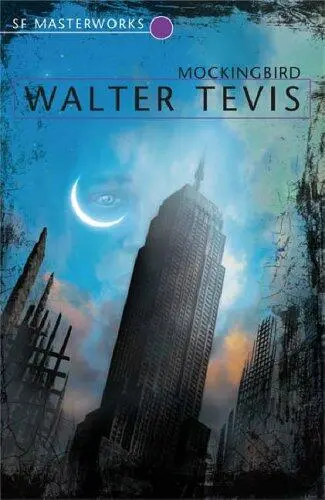
- Название:Mockingbird
- Автор:
- Издательство:Gollancz
- Жанр:
- Год:2007
- Город:London
- ISBN:978-0575079151
- Рейтинг книги:5 / 5. Голосов: 1
-
Избранное:Добавить в избранное
- Отзывы:
-
Ваша оценка:
Mockingbird: краткое содержание, описание и аннотация
Предлагаем к чтению аннотацию, описание, краткое содержание или предисловие (зависит от того, что написал сам автор книги «Mockingbird»). Если вы не нашли необходимую информацию о книге — напишите в комментариях, мы постараемся отыскать её.
Mockingbird
Review
From the Inside Flap “A moral tale that has elements of Aldous Huxley’s
,
, and
.”
—
“Set in a far future in which robots run a world with a small and declining human population, this novel could be considered an unofficial sequel to
, for its central event and symbol is the rediscovery of reading.”
—
“Because of its affirmation of such persistent human values as curiosity, courage, and compassion, along with its undeniable narrative power,
will become one of those books that coming generations will periodically rediscover with wonder and delight.”
—
“I’ve read other novels extrapolating the dangers of computerization but Mockingbird stings me, the writer, the hardest. The notion, the possibility, that people might indeed lose the ability, and worse, the desire to read, is made acutely probable.”
—
bestselling author ANNE MCCAFFREY “Walter Tevis is science fiction’s great neglected master, one of the definitive bridges between sf and literature. For those who know his work only through the movies, the lucid prose and literary vision of
and
will come as a revelation.”
—AL SARRANTONIO, Author of
saga
Mockingbird — читать онлайн бесплатно полную книгу (весь текст) целиком
Ниже представлен текст книги, разбитый по страницам. Система сохранения места последней прочитанной страницы, позволяет с удобством читать онлайн бесплатно книгу «Mockingbird», без необходимости каждый раз заново искать на чём Вы остановились. Поставьте закладку, и сможете в любой момент перейти на страницу, на которой закончили чтение.
Интервал:
Закладка:
“The children?” I said.
“Yes,” he said. Then he sat down again. “Let me tell you about thought buses.”
“But what about children?” I said. “Paul told me once…”
He looked at me strangely. “Mary,” he said, “I don’t know why children aren’t being born. It’s something to do with the population control equipment.”
“If no one gets born,” I said, “there won’t be any more people on the earth.”
He was silent for a minute. Then he looked at me. “Do you care?” he said. “Do you really care?”
I looked back at him. I didn’t know what to say. I didn’t know if I did care.
FIVE
We moved into this apartment a week after Paul was sent away and over the months I have grown to like it fairly well. Bob has tried to get repair and maintenance robots in to fix the peeling walls and put on new wallpaper and repair the burners on the stove and reupholster the couch, but so far he has had no luck. He is probably the highest-ranking power in New York; at least I don’t know of any creature with more authority. But he can’t get much done. Simon used to say to me when I was a little girl that things were all falling apart and good riddance. “The Age of Technology has rusted,” he would say. Well, it’s gotten worse in the forty yellows since Simon died. Still, it’s not too bad here. I wash the windows and clean the floors myself, and there is plenty of food.
I have learned to enjoy drinking beer during my pregnancy and Bob knows a place where there is an inexhaustible supply that comes from an automated brewery. Every third or fourth can turns out to be rancid, but it’s easy enough to pour those down the toilet. The sink drain is too stopped up.
The other day Bob brought me a hand-painted ancient picture from the archives to hang over a big ugly spot on the living-room wall. There was a little brass plaque on the frame, and I could read it: “Pieter Bruegel, Landscape with the Fall of Icarus .” It is very good-looking. I can see it when I look up from the table where I am writing this. There is a body of water in the picture— an ocean or a large lake—and sticking up out of the water is a leg. I don’t understand it; but I like the stillness of the rest of the scene. Except for that leg, which is splashing in the water. I might try to get some blue paint someday and paint over it.
Bob has a way of picking up on a conversation days after I thought we had finished with it. I suppose it has to do with the way his mind stores information. He says he is incapable of forgetting anything. But if that is true why was it necessary for him to labor at learning things during his early training?
This morning while I was eating breakfast and he was sitting with me he started talking about thought buses again. I suppose he had been thinking about it while I was asleep. Sometimes it seems spooky to me when I get out of bed in the morning and find him sitting in the living room with his hands folded under his chin or pacing around in the kitchen. I offered, once, to teach him to read so that he would have something to do all night, but he just said, “I know too much already, Mary.” I didn’t pursue it.
I was eating a bowl of synthetic protein flakes and not liking the taste of them much when Bob said, appropos of nothing, “A thought bus brain isn’t really awake all the time. Just receptive. It might not be too bad to have a brain like that. Just receptiveness and a limited sense of purpose.”
“I’ve met people like that,” I said, chewing the tough flakes. I didn’t look at him; I was still, rather sleepily, staring at the bright identification picture on the side of the cereal box. It showed a face that everyone presumably trusted—but whose name almost no one knew—a face smiling over a big bowl of what were clearly synthetic protein flakes. The picture of the cereal was, of course, necessary to let people know what was in the box, but I had been wondering about the meaning of the man’s picture. One thing I have to say about Paul is that he gets you wondering about things like that. He has more curiosity about the meanings of things and how they make you feel than anyone I have ever known. I must have picked up some of it from him.
The face on the box was, Paul had told me, the face of Jesus Christ. It was used to sell a lot of things. “Vestigial reverence” was the term Paul read somewhere that was supposed to be the idea, probably a hundred or more blues ago, when such things were all planned out.
“All the brain of a bus does,” Bob was saying, “is read the mind of a passenger who has a destination thought out, and then work out a way to drive him there without any accidents. And to fit his destination in with those of the other passengers. It probably isn’t a bad life.”
I looked up at him. “If you like rolling around on wheels,” I said.
“The first models of thought buses that were made at the Ford works were two-way telepaths. They would broadcast music or pleasant thoughts into the heads of their passengers. Some of the night runs would send out erotic thoughts.”
“Why don’t they do that anymore? The equipment broke down?”
“No,” he said. “As I told you, thought buses are different from the rest of the junk. They don’t break down. What happened was that nobody would get off the buses.”
I nodded. Then I said, “ I might have.”
“But you’re different,” he said. “You’re the only unprogrammed woman in North America. And certainly the only pregnant one.”
“Why would I be pregnant if no one else is?” I said.
“Because you don’t use pills or marijuana. Most drugs for the past thirty years have contained a fertility-inhibiting agent. I checked some control tapes at the library after the subject came up between us the other day. There was a Directed Plan to cut back population for a year. A computer decision. But something went wrong with it, and the population was never turned back on again.”
That was a shocker. I just sat there for a moment, thinking about it. Another equipment malfunction, or another burned-out computer, and no more babies. Ever.
“Could you do anything about it? Fix it, I mean?”
“Maybe,” he said. “But I’m not programmed for repair.”
“Oh, come on, Bob,” I said, suddenly irritated. “I bet you could paint these walls and fix the sink if you really wanted to.”
He said nothing.
I was feeling strange, annoyed. Something about our conversation about the lack of children in the world—a thing I had never noticed until Paul had pointed it out to me—was bothering me.
I looked at him hard—with that look that Paul calls mystical and says he loves me for. “Are robots able to lie?” I said.
He didn’t answer.
SIX
Yesterday afternoon Bob came home early from the university. I’m seven months pregnant now, and I loaf around the apartment a lot, just letting the time pass by and watching the snow falling. Sometimes I read a little, and sometimes I just sit. Yesterday when Bob came in I was bored and restless and I told him, “If I had a decent coat I’d take a walk.”
He looked at me strangely a moment. Then he said, “I’ll get you a coat,” and he turned around and walked out the door.
It must have been two hours before he got back. By that time I was even more bored, and impatient with him for taking so long.
He had a package with him and held it a minute, standing in front of me, before he gave it to me. There was something odd about his face. He looked very serious and—how can I say this?—vulnerable. Yes, big as he is, and powerful, he looked vulnerable to me, like a child, as he handed me the box.
Читать дальшеИнтервал:
Закладка:
Похожие книги на «Mockingbird»
Представляем Вашему вниманию похожие книги на «Mockingbird» списком для выбора. Мы отобрали схожую по названию и смыслу литературу в надежде предоставить читателям больше вариантов отыскать новые, интересные, ещё непрочитанные произведения.





Обсуждение, отзывы о книге «Mockingbird» и просто собственные мнения читателей. Оставьте ваши комментарии, напишите, что Вы думаете о произведении, его смысле или главных героях. Укажите что конкретно понравилось, а что нет, и почему Вы так считаете.