Мартин Рис - On the Future - Prospects for Humanity
Здесь есть возможность читать онлайн «Мартин Рис - On the Future - Prospects for Humanity» весь текст электронной книги совершенно бесплатно (целиком полную версию без сокращений). В некоторых случаях можно слушать аудио, скачать через торрент в формате fb2 и присутствует краткое содержание. Город: Princeton, Год выпуска: 2018, ISBN: 2018, Издательство: Princeton University Press, Жанр: Публицистика, sci_popular, на английском языке. Описание произведения, (предисловие) а так же отзывы посетителей доступны на портале библиотеки ЛибКат.
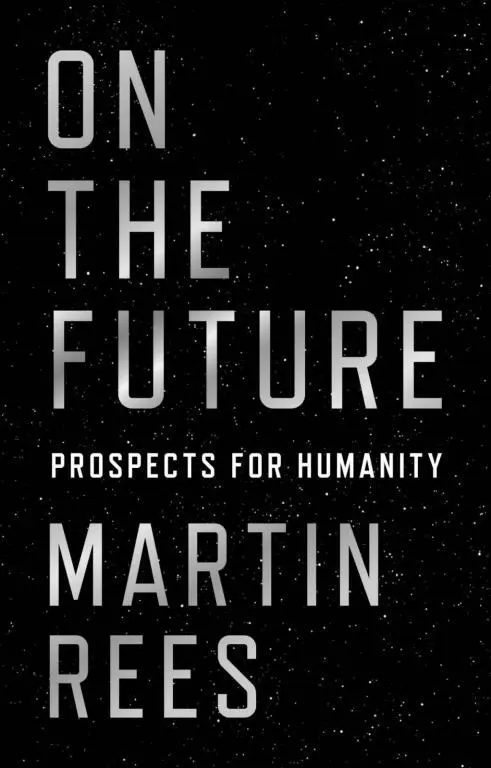
- Название:On the Future: Prospects for Humanity
- Автор:
- Издательство:Princeton University Press
- Жанр:
- Год:2018
- Город:Princeton
- ISBN:978-0-691-18044-1
- Рейтинг книги:5 / 5. Голосов: 1
-
Избранное:Добавить в избранное
- Отзывы:
-
Ваша оценка:
On the Future: Prospects for Humanity: краткое содержание, описание и аннотация
Предлагаем к чтению аннотацию, описание, краткое содержание или предисловие (зависит от того, что написал сам автор книги «On the Future: Prospects for Humanity»). Если вы не нашли необходимую информацию о книге — напишите в комментариях, мы постараемся отыскать её.
Humanity has reached a critical moment. Our world is unsettled and rapidly changing, and we face existential risks over the next century. Various outcomes―good and bad―are possible. Yet our approach to the future is characterized by short-term thinking, polarizing debates, alarmist rhetoric, and pessimism. In this short, exhilarating book, renowned scientist and bestselling author Martin Rees argues that humanity’s prospects depend on our taking a very different approach to planning for tomorrow.
The future of humanity is bound to the future of science and hinges on how successfully we harness technological advances to address our challenges. If we are to use science to solve our problems while avoiding its dystopian risks, we must think rationally, globally, collectively, and optimistically about the long term. Advances in biotechnology, cybertechnology, robotics, and artificial intelligence―if pursued and applied wisely―could empower us to boost the developing and developed world and overcome the threats humanity faces on Earth, from climate change to nuclear war. At the same time, further advances in space science will allow humans to explore the solar system and beyond with robots and AI. But there is no “Plan B” for Earth―no viable alternative within reach if we do not care for our home planet.
Rich with fascinating insights into cutting-edge science and technology, this accessible book will captivate anyone who wants to understand the critical issues that will define the future of humanity on Earth and beyond.
On the Future: Prospects for Humanity — читать онлайн бесплатно полную книгу (весь текст) целиком
Ниже представлен текст книги, разбитый по страницам. Система сохранения места последней прочитанной страницы, позволяет с удобством читать онлайн бесплатно книгу «On the Future: Prospects for Humanity», без необходимости каждый раз заново искать на чём Вы остановились. Поставьте закладку, и сможете в любой момент перейти на страницу, на которой закончили чтение.
Интервал:
Закладка:
It would plainly be a momentous discovery to detect any cosmic ‘signal’ that was manifestly artificial—radio ‘beeps’, or flashes of light from some celestial laser scanning the Earth. Searches for extraterrestrial intelligence (SETI) are worthwhile, even if the odds seem stacked against success, because the stakes are so high. Earlier searches led by Frank Drake, Carl Sagan, Nikolai Kardashev, and others didn’t find anything artificial. But they were very limited—it’s like claiming that there’s no life in the oceans after analysing one glassful of seawater. That’s why we should welcome the launch of Breakthrough Listen, a ten-year commitment by Yuri Milner, a Russian investor, to buy time on the world’s best radio telescopes and develop instruments to scan the sky in a more comprehensive and sustained fashion than before. The searches will cover a wide range of radio and microwave frequencies, using specially developed signal processing equipment. And they will be supplemented by searches for ‘flashes’ of visible light or X-rays that don’t seem to have a natural origin. Moreover, the advent of social media and citizen science will enable a global community of enthusiasts to download data and participate in this cosmic quest.
In popular culture, aliens are depicted as vaguely humanoid—generally two-legged, though maybe with tentacles, or eyes on stalks. Perhaps such creatures exist. But they aren’t the kind of alien that we’d be most likely to detect. I would argue strongly that an ET transmission, if we were to find it, would more likely come from immensely intricate and powerful electronic brains. I infer this from what has happened on Earth, and—more important—how we expect life and intelligence to evolve in the far future. The first tiny organisms emerged when the Earth was young, nearly four billion years ago; this primordial biosphere has evolved into today’s marvellously complex web of life—of which we humans are a part. But humans aren’t the end of this process—indeed, they may not be even the halfway stage. So future evolution—the posthuman era, where the dominant creatures aren’t flesh and blood—could extend billions of years into the future.
Suppose that there are many other planets where life began, and that on some of them Darwinian evolution followed a similar track to what has happened here. Even then, it’s highly unlikely that the key stages would be synchronised. If the emergence of intelligence and technology on a planet lagged significantly behind what has happened on Earth (because the planet is younger, or because the ‘bottlenecks’ have taken longer to negotiate), then that planet would reveal no evidence of ET. But around a star older than the Sun, life could have had a head start of a billion years or more.
The history of human technological civilisation is measured in millennia (at most)—and it may be only one or two more centuries before humans are overtaken or transcended by inorganic intelligence, which will then persist, continuing to evolve, for billions of years. If ‘organic’ human-level intelligence is, generically, just a brief interlude before the machines take over, we would be most unlikely to ‘catch’ alien intelligence in the brief sliver of time when it was still in organic form. Were we to detect ET, it would be far more likely to be electronic.
But even if the search succeeded, it would still be improbable that the ‘signal’ would be a decodable message. It would more likely represent a by-product (or even a malfunction) of some supercomplex machine far beyond our comprehension that could trace its lineage back to alien organic beings (which might still exist on their home planet or might long ago have died out). The only type of intelligence whose messages we could decode would be the (perhaps small) subset that used a technology attuned to our own parochial concepts. So, could we tell whether a signal is intended as a message or just some ‘leakage’? Could we build up communication?
The philosopher Ludwig Wittgenstein said, ‘If a lion could speak, we couldn’t understand him’. Would the ‘culture gap’ with aliens be unbridgeable? I don’t think it necessarily would be. After all, if they managed to communicate, they would share with us an understanding of physics, mathematics, and astronomy. They may come from planet Zog and have seven tentacles; they may be metallic and electronic. But they would be made of similar atoms to us; they would (if they had eyes) stare out at the same cosmos and trace their origins back to the same hot dense beginning—the ‘big bang’ around 13.8 billion years ago. But there’s no hope for snappy repartee—if they exist, they would be so far away that exchanging messages would take decades, or even centuries.
Even if intelligence were widespread in the cosmos, we may only ever recognise a small and atypical fraction of it. Some ‘brains’ may package reality in a fashion that we can’t conceive. Others could be living contemplative energy-conserving lives, doing nothing to reveal their presence. It makes sense to focus searches first on Earthlike planets orbiting long-lived stars. But science fiction authors remind us that there are more exotic alternatives. In particular, the habit of referring to an ‘alien civilisation’ may be too restrictive. A ‘civilisation’ connotes a society of individuals; in contrast, ET might be a single integrated intelligence. Even if signals were being transmitted, we may not recognise them as artificial because we may not know how to decode them. A veteran radio engineer familiar only with amplitude modulation might have a hard time decoding modern wireless communications. Indeed, compression techniques aim to make the signal as close to noise as possible—insofar as a signal is predictable, there’s scope for more compression.
The focus has been on the radio part of the spectrum. But of course, in our state of ignorance about what might be out there, we should explore all wavebands; we should look in the optical and X-ray band and also be alert for other evidence of nonnatural phenomena or activity. One might seek evidence for artificially created molecules such as CFCs in an exoplanet atmosphere, or else for massive artefacts such as a Dyson sphere. (This idea, due to Freeman Dyson, envisions that an energy-profligate civilisation might harness all the energy of its parent star by surrounding it with photovoltaic cells, and that the ‘waste heat’ would emerge as infrared emission.) And it’s worth looking for artefacts within our solar system; maybe we can rule out visits by human-scale aliens, but if an extraterrestrial civilisation had mastered nanotechnology and transferred its intelligence to machines, the ‘invasion’ might consist of a swarm of microscopic probes that could have evaded notice. It’s even worth keeping an eye open for especially shiny or oddly shaped objects lurking among the asteroids. But it would of course be easier to send a radio or laser signal than to traverse the mind-boggling distances of interstellar space.
I don’t think even the optimistic SETI searchers would rate the chance of success as more than a few percent—and most of us are more pessimistic. But it’s so fascinating that it seems worth a gamble—we’d all like to see searches begun in our lifetime. And there are two familiar maxims that pertain to this quest: ‘Extraordinary claims will require extraordinary evidence’, and, ‘Absence of evidence isn’t evidence of absence’.
Also, we have to realise just how surprising some natural phenomena can be. For instance, in 1967 Cambridge astronomers found regular radio ‘beeps’, repeating several times a second. Could this have been an alien transmission? Some were open to accepting this option, but soon it became clear that these beeps came from a hitherto undetected kind of very dense object: neutron stars, which are only a few kilometres across and spin at several revs per second (sometimes several hundred), sending a ‘lighthouse beam’ of radiation towards us from deep space. The study of neutron stars—of which thousands are now known—has proved an especially exciting and fruitful topic because they manifest extreme physics, where nature has created conditions that we could never simulate in the laboratory. [8]More recently, a new and still perplexing class of ‘radio bursts’ has been discovered, emitting even more powerfully than pulsars, [9]but the general disposition is to seek natural explanations for them.
Читать дальшеИнтервал:
Закладка:
Похожие книги на «On the Future: Prospects for Humanity»
Представляем Вашему вниманию похожие книги на «On the Future: Prospects for Humanity» списком для выбора. Мы отобрали схожую по названию и смыслу литературу в надежде предоставить читателям больше вариантов отыскать новые, интересные, ещё непрочитанные произведения.

![Мартин Рис - Всего шесть чисел. Главные силы, формирующие Вселенную [litres]](/books/414169/martin-ris-vsego-shest-chisel-glavnye-sily-formir-thumb.webp)







Обсуждение, отзывы о книге «On the Future: Prospects for Humanity» и просто собственные мнения читателей. Оставьте ваши комментарии, напишите, что Вы думаете о произведении, его смысле или главных героях. Укажите что конкретно понравилось, а что нет, и почему Вы так считаете.