Мартин Рис - On the Future - Prospects for Humanity
Здесь есть возможность читать онлайн «Мартин Рис - On the Future - Prospects for Humanity» весь текст электронной книги совершенно бесплатно (целиком полную версию без сокращений). В некоторых случаях можно слушать аудио, скачать через торрент в формате fb2 и присутствует краткое содержание. Город: Princeton, Год выпуска: 2018, ISBN: 2018, Издательство: Princeton University Press, Жанр: Публицистика, sci_popular, на английском языке. Описание произведения, (предисловие) а так же отзывы посетителей доступны на портале библиотеки ЛибКат.
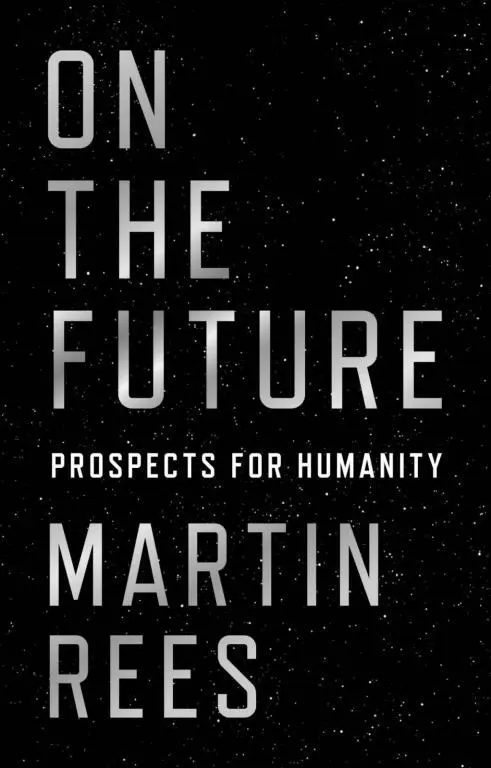
- Название:On the Future: Prospects for Humanity
- Автор:
- Издательство:Princeton University Press
- Жанр:
- Год:2018
- Город:Princeton
- ISBN:978-0-691-18044-1
- Рейтинг книги:5 / 5. Голосов: 1
-
Избранное:Добавить в избранное
- Отзывы:
-
Ваша оценка:
On the Future: Prospects for Humanity: краткое содержание, описание и аннотация
Предлагаем к чтению аннотацию, описание, краткое содержание или предисловие (зависит от того, что написал сам автор книги «On the Future: Prospects for Humanity»). Если вы не нашли необходимую информацию о книге — напишите в комментариях, мы постараемся отыскать её.
Humanity has reached a critical moment. Our world is unsettled and rapidly changing, and we face existential risks over the next century. Various outcomes―good and bad―are possible. Yet our approach to the future is characterized by short-term thinking, polarizing debates, alarmist rhetoric, and pessimism. In this short, exhilarating book, renowned scientist and bestselling author Martin Rees argues that humanity’s prospects depend on our taking a very different approach to planning for tomorrow.
The future of humanity is bound to the future of science and hinges on how successfully we harness technological advances to address our challenges. If we are to use science to solve our problems while avoiding its dystopian risks, we must think rationally, globally, collectively, and optimistically about the long term. Advances in biotechnology, cybertechnology, robotics, and artificial intelligence―if pursued and applied wisely―could empower us to boost the developing and developed world and overcome the threats humanity faces on Earth, from climate change to nuclear war. At the same time, further advances in space science will allow humans to explore the solar system and beyond with robots and AI. But there is no “Plan B” for Earth―no viable alternative within reach if we do not care for our home planet.
Rich with fascinating insights into cutting-edge science and technology, this accessible book will captivate anyone who wants to understand the critical issues that will define the future of humanity on Earth and beyond.
On the Future: Prospects for Humanity — читать онлайн бесплатно полную книгу (весь текст) целиком
Ниже представлен текст книги, разбитый по страницам. Система сохранения места последней прочитанной страницы, позволяет с удобством читать онлайн бесплатно книгу «On the Future: Prospects for Humanity», без необходимости каждый раз заново искать на чём Вы остановились. Поставьте закладку, и сможете в любой момент перейти на страницу, на которой закончили чтение.
Интервал:
Закладка:
These key issues may soon be clarified. The origin of life is now attracting stronger interest; it’s no longer deemed to be one of those ultrachallenging problems (consciousness, for instance, is still in this category) which, though manifestly important, don’t seem timely or tractable—and are relegated to the ‘too difficult’ box. Understanding life’s beginnings is important not only for assessing the likelihood of alien life but also because life’s emergence on Earth is still a mystery.
We should be open-minded about where in the cosmos life might emerge and what forms it could take—and devote some thought to non-Earthlike life in non-Earthlike locations. Even here on Earth, life survives in the most inhospitable places—in black caves where sunlight has been blocked for thousands of years, inside arid desert rocks, deep underground, and around hot vents in the deepest ocean bed. But it makes sense to start with what we know (the ‘searching under the streetlight’ strategy) and to deploy all available techniques to discover whether any Earthlike exoplanet atmospheres display evidence for a biosphere. Clues should come, in the next decade or two, from the deep space James Webb Space Telescope and from the E-ELT and similar giant telescopes on the ground that will come on line in the 2020s.
Even these next-generation telescopes will have a hard job separating out the spectrum of the planet’s atmosphere from the spectrum of the brighter central star. But, looking beyond midcentury, one can imagine an array of vast space telescopes, each with gossamer-thin kilometre-scale mirrors, being assembled in deep space by robotic fabricators. By 2068, the centenary of the Apollo 8 ‘Earthrise’ photo, such an instrument could give us an even more inspirational image: another Earth orbiting a distant star.
3.3. SPACEFLIGHT—MANNED AND UNMANNED
Among my favourite things to read during my childhood (in England, way back in the 1950s), was a comic called the Eagle, especially the adventures of ‘Dan Dare—Pilot of the Future’—where the brilliant artwork depicted orbiting cities, jet packs, and alien invaders. When spaceflight became real, the suits worn by NASA astronauts (and their Soviet ‘cosmonaut’ counterparts) were therefore familiar, as were the routines of launching, docking, and so forth. My generation avidly followed the succession of heroic pioneering exploits: Yuri Gagarin’s first orbital flight, Alexey Leonov’s first space walk, and then, of course, the lunar landings. I recall a visit to my home town by John Glenn, the first American to go into orbit. He was asked what he was thinking while in the rocket’s nose cone, awaiting launch. He responded, ‘I was thinking that there were twenty thousand parts in this rocket, and each was made by the lowest bidder’. (Glenn later became a US senator, and, later still, the oldest astronaut when, at age seventy-seven, he became part of the STS-95 Space Shuttle crew.)
Only twelve years elapsed between the flight of the Soviet Sputnik 1 —the first artificial object to go into orbit—and the historic ‘one small step’ on the lunar surface in 1969. I never look at the Moon without being reminded of Neil Armstrong and Buzz Aldrin. Their exploits seem even more heroic in retrospect, when we realise how they depended on primitive computing and untested equipment. Indeed, President Nixon’s speechwriter William Safire had drafted a eulogy to be given if the astronauts had crash-landed on the Moon or were stranded there:
Fate has ordained that the men who went to the moon to explore in peace will stay on the moon to rest in peace. [They] know that there is no hope for their recovery. But they also know that there is hope for mankind in their sacrifice.
The Apollo programme remains, a half century later, the high point of human ventures into space. It was a ‘space race’ against the Russians—a contest in superpower rivalry. Had that momentum been maintained, there would surely be footprints on Mars by now; that’s what our generation expected. However, once that race was won, there was no motivation for continuing the requisite expenditure. In the 1960s, NASA absorbed more than 4 percent of the US federal budget. The current figure is 0.6 percent. Today’s young people know Americans landed men on the Moon. They know the Egyptians built pyramids. But these enterprises seem like ancient history, motivated by almost equally bizarre national goals.
Hundreds more have ventured into space in the ensuing decades—but, anticlimactically, they have done no more than circle the Earth in low orbit. The International Space Station (ISS) was probably the most expensive artefact ever constructed. Its cost, plus that of the shuttles whose main purpose was to service it (though they have now been decommissioned) ran well into twelve figures. The scientific and technical payoff from the ISS hasn’t been negligible, but it has been less cost effective than unmanned missions. Nor are these voyages inspiring in the way that the pioneering Russian and US space exploits were. The ISS only makes news when something goes wrong: when the loo fails, for instance; or when astronauts perform ‘stunts’, such as the Canadian Chris Hadfield’s guitar playing and singing.
The hiatus in manned space exploration exemplifies that when there’s no economic or political demand, what is actually done is far less than what could be achieved. (Supersonic flight is another example—the Concorde airliner went the way of the dinosaurs. In contrast, the spin-offs from IT have advanced, and spread globally, far faster than forecasters and management gurus predicted.)
Space technology has nonetheless burgeoned in the last four decades. We depend routinely on orbiting satellites for communication, satnav, environmental monitoring, surveillance, and weather forecasting. These services mainly use spacecraft that, though unmanned, are expensive and elaborate. But there is a growing market for relatively inexpensive miniaturised satellites, the demand for which several private companies are aiming to meet.
The San Francisco–based company PlanetLab has developed and launched swarms of shoebox-sized spacecraft with the collective mission of giving repeated imaging and global coverage, albeit at not-specially-sharp resolution (3–5 metres): the mantra (with only slight exaggeration) is to observe every tree in the world every day. Eighty-eight of the craft were launched in 2017 as payload on a single Indian rocket; Russian and US rockets have been used to launch more, as well as a fleet of somewhat larger and more elaborately equipped SkySats (each weighing 100 kilograms). For much sharper resolution, a larger satellite with more elaborate optics is needed, but there is nonetheless a commercial market for the data from these tiny ‘cubesats’ to monitor crops, construction sites, fishing boats, and suchlike; they are also useful for planning a response to disasters. Even smaller wafer-thin satellites can now be deployed—exploiting the technology that has emerged from the colossal investment in consumer microelectronics.
Telescopes in space offer astronomy a huge boost. Orbiting far above the blurring and absorptive effects of Earth’s atmosphere, they have beamed back sharp images from the remotest parts of the cosmos. They have surveyed the sky in infrared, UV, X-ray, and gamma ray bands that don’t penetrate the atmosphere and therefore can’t be observed from the ground. They have revealed evidence for black holes and other exotica and have probed with high precision the ‘afterglow of creation’—the microwaves pervading all space whose properties hold clues to the very beginning, when the entire observable cosmos was squeezed to microscopic size.
Of more immediate public appeal are the findings from spacecraft that have journeyed to all the planets of the solar system. NASA’s New Horizons beamed back amazing pictures from Pluto, ten thousand times farther away than the Moon. And the European Space Agency’s Rosetta landed a robot on a comet. These spacecraft took five years to design and build and then nearly ten years journeying to their remote targets. The Cassini probe spent thirteen years studying Saturn and its moons and was even more venerable; more than twenty years elapsed between its launch and its final plunge into Saturn in late 2017. It is not hard to envisage how much more sophisticated today’s follow-ups to these missions could be.
Читать дальшеИнтервал:
Закладка:
Похожие книги на «On the Future: Prospects for Humanity»
Представляем Вашему вниманию похожие книги на «On the Future: Prospects for Humanity» списком для выбора. Мы отобрали схожую по названию и смыслу литературу в надежде предоставить читателям больше вариантов отыскать новые, интересные, ещё непрочитанные произведения.
![Мартин Рис - Всего шесть чисел. Главные силы, формирующие Вселенную [litres]](/books/414169/martin-ris-vsego-shest-chisel-glavnye-sily-formir-thumb.webp)






Обсуждение, отзывы о книге «On the Future: Prospects for Humanity» и просто собственные мнения читателей. Оставьте ваши комментарии, напишите, что Вы думаете о произведении, его смысле или главных героях. Укажите что конкретно понравилось, а что нет, и почему Вы так считаете.