Мартин Рис - On the Future - Prospects for Humanity
Здесь есть возможность читать онлайн «Мартин Рис - On the Future - Prospects for Humanity» весь текст электронной книги совершенно бесплатно (целиком полную версию без сокращений). В некоторых случаях можно слушать аудио, скачать через торрент в формате fb2 и присутствует краткое содержание. Город: Princeton, Год выпуска: 2018, ISBN: 2018, Издательство: Princeton University Press, Жанр: Публицистика, sci_popular, на английском языке. Описание произведения, (предисловие) а так же отзывы посетителей доступны на портале библиотеки ЛибКат.
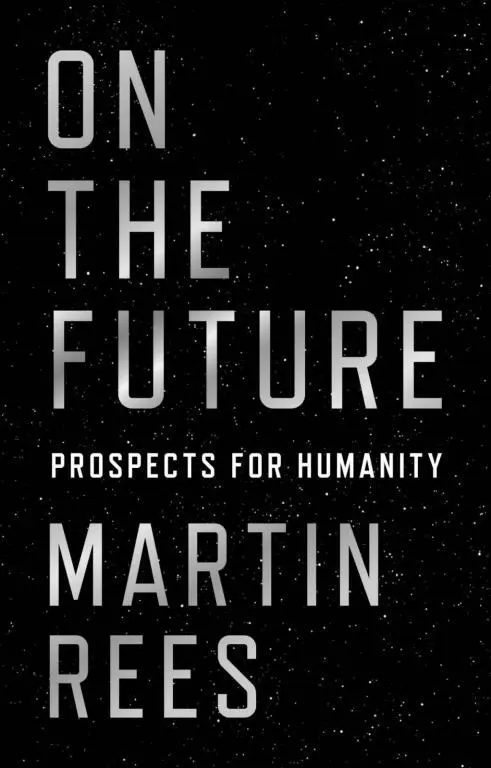
- Название:On the Future: Prospects for Humanity
- Автор:
- Издательство:Princeton University Press
- Жанр:
- Год:2018
- Город:Princeton
- ISBN:978-0-691-18044-1
- Рейтинг книги:5 / 5. Голосов: 1
-
Избранное:Добавить в избранное
- Отзывы:
-
Ваша оценка:
On the Future: Prospects for Humanity: краткое содержание, описание и аннотация
Предлагаем к чтению аннотацию, описание, краткое содержание или предисловие (зависит от того, что написал сам автор книги «On the Future: Prospects for Humanity»). Если вы не нашли необходимую информацию о книге — напишите в комментариях, мы постараемся отыскать её.
Humanity has reached a critical moment. Our world is unsettled and rapidly changing, and we face existential risks over the next century. Various outcomes―good and bad―are possible. Yet our approach to the future is characterized by short-term thinking, polarizing debates, alarmist rhetoric, and pessimism. In this short, exhilarating book, renowned scientist and bestselling author Martin Rees argues that humanity’s prospects depend on our taking a very different approach to planning for tomorrow.
The future of humanity is bound to the future of science and hinges on how successfully we harness technological advances to address our challenges. If we are to use science to solve our problems while avoiding its dystopian risks, we must think rationally, globally, collectively, and optimistically about the long term. Advances in biotechnology, cybertechnology, robotics, and artificial intelligence―if pursued and applied wisely―could empower us to boost the developing and developed world and overcome the threats humanity faces on Earth, from climate change to nuclear war. At the same time, further advances in space science will allow humans to explore the solar system and beyond with robots and AI. But there is no “Plan B” for Earth―no viable alternative within reach if we do not care for our home planet.
Rich with fascinating insights into cutting-edge science and technology, this accessible book will captivate anyone who wants to understand the critical issues that will define the future of humanity on Earth and beyond.
On the Future: Prospects for Humanity — читать онлайн бесплатно полную книгу (весь текст) целиком
Ниже представлен текст книги, разбитый по страницам. Система сохранения места последней прочитанной страницы, позволяет с удобством читать онлайн бесплатно книгу «On the Future: Prospects for Humanity», без необходимости каждый раз заново искать на чём Вы остановились. Поставьте закладку, и сможете в любой момент перейти на страницу, на которой закончили чтение.
Интервал:
Закладка:
But on the other hand, if a congressman asked: ‘Could such an experiment disclose a transformative discovery that—for instance—provided a new source of energy for the world?’ I’d again offer odds against it. The issue is then the relative likelihood of these two unlikely events—one hugely beneficial; the other catastrophic. I would guess that the ‘upside’—a benefit to humanity—though highly improbable, was much less unlikely than the ‘universal doom’ scenario. Such thoughts would remove any compunction about going ahead—but it is impossible to quantify the relative probabilities. So, it might be hard to make a convincingly reassuring case for such a Faustian bargain. Innovation is often hazardous, but if we don’t take risks we may forgo benefits. Application of the ‘precautionary principle’ has an opportunity cost—‘the hidden cost of saying no’.
Nonetheless, physicists should be circumspect about carrying out experiments that generate conditions with no precedent, even in the cosmos. In the same way, biologists should avoid creation of potentially devastating genetically modified pathogens, or large-scale modification of the human germ line. Cyberexperts are aware of the risk of a cascading breakdown in global infrastructure. Innovators who are furthering the beneficent uses of advanced AI should avoid scenarios where a machine ‘takes over’. Many of us are inclined to dismiss these risks as science fiction—but given the stakes, they should not be ignored, even if deemed highly improbable.
These examples of near-existential risks also exemplify the need for interdisciplinary expertise, and for proper interaction between experts and the public. Moreover, ensuring that novel technologies are harnessed optimally will require communities to think globally and in a longer-term context. These ethical and political issues are discussed further in chapter 5.
And, by the way, the priority we should accord to avoiding truly existential disasters depends on an ethical question that has been discussed by the philosopher Derek Parfit: the rights of those who aren’t yet born. Consider two scenarios: scenario A wipes out 90 percent of humanity; scenario B wipes out 100 percent. How much worse is B than A ? Some would say 10 percent worse: the body count is 10 percent higher. But Parfit would argue that B might be incomparably worse, because human extinction forecloses the existence of billions, even trillions, of future people—and indeed an open-ended posthuman future spreading far beyond the Earth. [15]Some philosophers criticise Parfit’s argument, denying that ‘possible people’ should be weighted as much as actual ones (‘We want to make more people happy, not to make more happy people’). And even if one takes these naive utilitarian arguments seriously, one should note that if aliens already existed (see section 3.5), terrestrial expansion, by squeezing their habitats, might make a net negative contribution to overall ‘cosmic contentment’!
However, aside from these intellectual games about ‘possible people’, the prospect of an end to the human story would sadden those of us now living. Most of us, aware of the heritage we’ve been left by past generations, would be depressed if we believed that there would not be many generations to come.
(This is a megaversion of the issues that arise in climate policy, discussed in section 1.5, where it is controversial how much weight we should give to those as yet unborn who will live a century from now. It also influences our attitude to global population growth.)
Even if we’d bet against an accelerator experiment or a genetic disaster destroying humanity, I think it is worth considering such scenarios as a ‘thought experiment’. We have no grounds for assuming that human-induced threats far worse than those on our current risk register can be dismissed. Indeed, we have zero grounds for confidence that we can survive the worst that future technologies could bring. It’s an important maxim that ‘the unfamiliar is not the same as the improbable’. [16]
These ethical questions are far from the ‘everyday’, but it’s not premature to address them—it’s good that some philosophers are doing so. But they also challenge scientists. Indeed, they suggest an extra reason for addressing questions about the physical world that may seem arcane and remote: the stability of space itself, the emergence of life, and the extent and nature of what we might call ‘physical reality’.
Such thoughts lead us from a terrestrial focus to a more cosmic perspective, which will be the theme of the next chapter. Despite the ‘glamour’ of human spaceflight, space is a hostile environment to which humans are ill-adapted. So, it’s there that robots, enabled by human-level AI, will have the grandest scope, and where humans may use bio- and cybertechniques to evolve further.
3
HUMANITY IN A COSMIC PERSPECTIVE
3.1. THE EARTH IN A COSMIC CONTEXT
In 1968, the Apollo 8 astronaut Bill Anders photographed ‘Earthrise’, showing the distant Earth, shining above the lunar horizon. He didn’t realise that it would become an iconic image for the global environmental movement. It revealed Earth’s delicate biosphere, contrasted with the sterile moonscape where Neil Armstrong, one year later, took his ‘one small step’. Another famous image was taken in 1990 by the probe Voyager 1 from a distance of six billion kilometres. The Earth appeared as a ‘pale blue dot’, which inspired Carl Sagan’s thoughts: [1]
Look again at that dot. That’s here. That’s home. That’s us. On it everyone you love, everyone you know, everyone you ever heard of, every human being who ever was, lived out their lives…. Every saint and sinner in the history of our species lived there—on a mote of dust suspended in a sunbeam.
Our planet is a lonely speck in the great enveloping cosmic dark. There is no hint that help will come from elsewhere to save us from ourselves—The Earth is the only world known so far to harbor life. Like it or not, for the moment the Earth is where we make our stand.
These sentiments resonate today; indeed, there is serious discussion about how cosmic exploration far beyond the solar system, by machines if not by humans, could become reality—albeit in the remote future. ( Voyager 1 is now, after more than forty years, still in the outskirts of the solar system. It will take it tens of thousands of years to reach the nearest star.)
We’ve been aware since Darwin of the Earth’s long history. He concludes On the Origin of Species with these familiar words: ‘Whilst this planet has gone cycling on according to the fixed law of gravity, from so simple a beginning endless forms most beautiful and most wonderful have been, and are being, evolved’. We now speculate about equally long time spans stretching into the future, and these will be the themes of this chapter.
Darwin’s ‘simple beginning’—the young Earth—is complex in its chemistry and structure. Astronomers aim to probe still further back than Darwin and the geologists were able to—to the origin of planets, stars, and their constituent atoms.
Our entire solar system condensed from a swirling disc of dusty gas about 4.5 billion years ago. But where did the atoms come from—why are oxygen and iron atoms common, but not gold atoms? Darwin would not have fully understood this question; in his time, the very existence of atoms was controversial. But we now know that not only do we share a common origin, and many genes, with the entire web of life on Earth, but we also are linked to the cosmos. The Sun and stars are nuclear fusion reactors. They derive their power by fusing hydrogen into helium, and then helium into carbon, oxygen, phosphorus, and iron, and other elements in the periodic table. When stars end their lives, they expel ‘processed’ material back into interstellar space (via supernova explosions in the case of heavy stars). Some material is then recycled into new stars. The Sun was one such star.
Читать дальшеИнтервал:
Закладка:
Похожие книги на «On the Future: Prospects for Humanity»
Представляем Вашему вниманию похожие книги на «On the Future: Prospects for Humanity» списком для выбора. Мы отобрали схожую по названию и смыслу литературу в надежде предоставить читателям больше вариантов отыскать новые, интересные, ещё непрочитанные произведения.
![Мартин Рис - Всего шесть чисел. Главные силы, формирующие Вселенную [litres]](/books/414169/martin-ris-vsego-shest-chisel-glavnye-sily-formir-thumb.webp)






Обсуждение, отзывы о книге «On the Future: Prospects for Humanity» и просто собственные мнения читателей. Оставьте ваши комментарии, напишите, что Вы думаете о произведении, его смысле или главных героях. Укажите что конкретно понравилось, а что нет, и почему Вы так считаете.