Мартин Рис - On the Future - Prospects for Humanity
Здесь есть возможность читать онлайн «Мартин Рис - On the Future - Prospects for Humanity» весь текст электронной книги совершенно бесплатно (целиком полную версию без сокращений). В некоторых случаях можно слушать аудио, скачать через торрент в формате fb2 и присутствует краткое содержание. Город: Princeton, Год выпуска: 2018, ISBN: 2018, Издательство: Princeton University Press, Жанр: Публицистика, sci_popular, на английском языке. Описание произведения, (предисловие) а так же отзывы посетителей доступны на портале библиотеки ЛибКат.
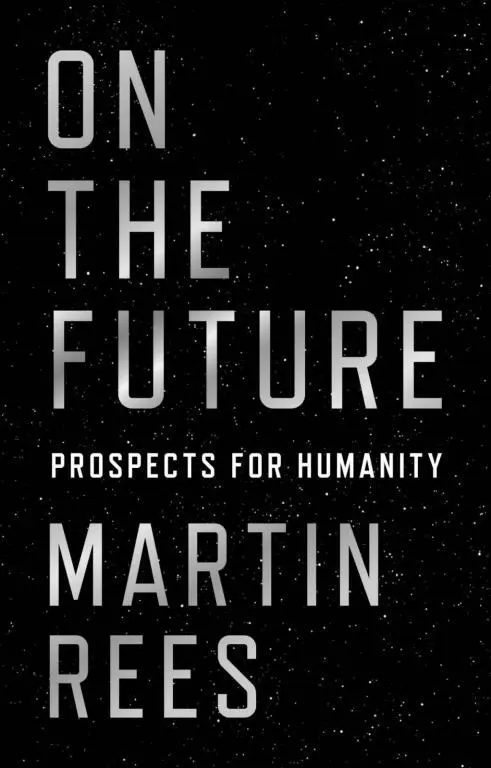
- Название:On the Future: Prospects for Humanity
- Автор:
- Издательство:Princeton University Press
- Жанр:
- Год:2018
- Город:Princeton
- ISBN:978-0-691-18044-1
- Рейтинг книги:5 / 5. Голосов: 1
-
Избранное:Добавить в избранное
- Отзывы:
-
Ваша оценка:
On the Future: Prospects for Humanity: краткое содержание, описание и аннотация
Предлагаем к чтению аннотацию, описание, краткое содержание или предисловие (зависит от того, что написал сам автор книги «On the Future: Prospects for Humanity»). Если вы не нашли необходимую информацию о книге — напишите в комментариях, мы постараемся отыскать её.
Humanity has reached a critical moment. Our world is unsettled and rapidly changing, and we face existential risks over the next century. Various outcomes―good and bad―are possible. Yet our approach to the future is characterized by short-term thinking, polarizing debates, alarmist rhetoric, and pessimism. In this short, exhilarating book, renowned scientist and bestselling author Martin Rees argues that humanity’s prospects depend on our taking a very different approach to planning for tomorrow.
The future of humanity is bound to the future of science and hinges on how successfully we harness technological advances to address our challenges. If we are to use science to solve our problems while avoiding its dystopian risks, we must think rationally, globally, collectively, and optimistically about the long term. Advances in biotechnology, cybertechnology, robotics, and artificial intelligence―if pursued and applied wisely―could empower us to boost the developing and developed world and overcome the threats humanity faces on Earth, from climate change to nuclear war. At the same time, further advances in space science will allow humans to explore the solar system and beyond with robots and AI. But there is no “Plan B” for Earth―no viable alternative within reach if we do not care for our home planet.
Rich with fascinating insights into cutting-edge science and technology, this accessible book will captivate anyone who wants to understand the critical issues that will define the future of humanity on Earth and beyond.
On the Future: Prospects for Humanity — читать онлайн бесплатно полную книгу (весь текст) целиком
Ниже представлен текст книги, разбитый по страницам. Система сохранения места последней прочитанной страницы, позволяет с удобством читать онлайн бесплатно книгу «On the Future: Prospects for Humanity», без необходимости каждый раз заново искать на чём Вы остановились. Поставьте закладку, и сможете в любой момент перейти на страницу, на которой закончили чтение.
Интервал:
Закладка:
The digital revolution generates enormous wealth for an elite group of innovators and for global companies, but preserving a healthy society will require redistribution of that wealth. There is talk of using it to provide a universal income. The snags to implementing this are well known, and the societal disadvantages are intimidating. It would be far better to subsidise the types of jobs for which there is currently a large unmet demand and for which pay and status is unjustly low.
It’s instructive to observe (sometimes with bemusement) the spending choices made by those who are not financially constrained. Rich people value personal service; they employ personal trainers, nannies, and butlers. When they’re elderly, they employ human caregivers. The criterion for a progressive government should be to provide for everyone the kind of support preferred by the best-off—the ones who now have the freest choice. To create a humane society, governments will need to vastly enhance the number and status of those who carry out caregiving roles; there are currently far too few, and even in wealthy countries caregivers are poorly paid and insecure in their positions. (It’s true that robots can take over some aspects of routine care—indeed, we may find it less embarrassing for basic washing, feeding, and bedpan routines to be handled by an automaton. But those who can afford it want the attention of real human beings as well.) And there are other jobs that would make our lives better and could provide worthwhile employment for far more people—for example, gardeners in public parks, custodians, and so forth.
It’s not just the very young and very old who need human support. When so much business, including interaction with government, is done via the internet, we should worry about, for instance, a disabled person living alone who needs to access websites online to claim their rightful government benefits, or to order basic provisions. Think of the anxiety and frustration when something goes wrong. Such people will have peace of mind only if there are computer-savvy caregivers to help the bewildered cope with IT, to ensure that they can get help and are not disadvantaged. Otherwise, the ‘digitally deprived’ will become a new ‘underclass’.
It is better when we can all perform socially useful work rather than receive a handout. However, the typical working week could be shortened—to shorter even than France’s current thirty-five hours. Those for whom work is intrinsically satisfying are atypical and especially lucky. Most people would welcome shorter hours, which would release more time for entertainment, socialising, and for participation in collective rituals—whether religious, cultural, or sporting.
There will also be a resurgence of arts and crafts. We’ve seen the emergence of ‘celebrity chefs’—even celebrity hairdressers. We’ll see more scope for other crafts, and more respect accorded to their most talented exponents. Again, the wealthy, those who have the most freedom of choice, spend heavily on patronising labour-intensive activities.
The erosion of routine work and lifetime careers will stimulate ‘life-long learning’. Formal education, based on teaching done in classrooms and lecture halls, is perhaps the most sclerotic sector of societies worldwide. Distance learning via online courses may never replace the experience of attending a residential college that offers personal mentoring and tuition, but it will become a cost effective and more flexible replacement for the typical ‘mass university’. There is boundless potential for the model pioneered by the United Kingdom’s Open University, a model that is now being spread widely via US organisations like Coursera and edX, where leading academics provide content for online courses. Teachers who do this best can become global online stars. These courses will be enhanced by the personalisation that AI will increasingly be able to provide. Those who become scientists often attribute their initial motivation to the web or media rather than to classroom instruction.
The lifestyle a more automated world offers seems benign—indeed enticing—and could in principle promote Scandinavian-level satisfaction throughout Europe and North America. However, citizens of these privileged nations are becoming far less isolated from the disadvantaged parts of the world. Unless inequality between countries is reduced, embitterment and instability will become more acute because the poor, worldwide, are now, via IT and the media, far more aware of what they’re missing. Technical advances could amplify international disruption. Moreover, if robotics renders it economically viable for wealthy countries to shore up manufacturing within their own borders, the transient but crucial developmental boost that the ‘tigers’ in the Far East received by undercutting Western labour costs will be denied to the still-poor nations in Africa and the Middle East, rendering the inequalities more persistent.
Also, the nature of migration has changed. A hundred years ago a European or Asian individual’s decision to move to North America or Australia required severing ties with his or her indigenous culture and extended family. There was therefore an incentive to integrate into the new society. In contrast, daily video calls and social media contacts now enable immigrants, if they so choose, to remain embedded in the culture of their homeland, and affordable intercontinental travel can sustain personal contacts.
National and religious loyalties and divisions will persist (or even be strengthened by internet echo chambers) despite greater mobility and less sentimentality about ‘place’. Nomads of the technocratic world will expand in numbers. The impoverished will see ‘following the money’ as their best hope—migrating legally or illegally. International tensions will get more acute.
If there is indeed a growing risk of conflicts triggered by ideology or perceived unjust inequality, it will be aggravated by the impact of new technology on warfare and terrorism. For the last decade at least, we’ve seen TV reports of drones or rockets attacking targets in the Middle East. They are controlled from bunkers in the continental United States—by individuals even more remote from the consequences of their actions than aircrews carrying out bombing raids. The ethical queasiness this engenders is somewhat allayed by claims that higher-precision targeting reduces collateral damage. But at least there is a human ‘in the loop’ who decides when and what to attack. In contrast, there is now the possibility of autonomous weapons, which can seek out a target—using facial recognition to identify individuals and then kill them. This would be a precursor to automated warfare—a development that raises deep concerns. Near-term possibilities include automated machine guns; drones; and armoured vehicles or submarines that can identify targets, decide whether to open fire, and learn as they go.
There is rising concern about ‘killer robots’. In August 2017, the heads of one hundred leading companies in this field signed an open letter calling on the United Nations to outlaw ‘lethal autonomous weapons’, just as international conventions constrain the use of chemical and biological weapons. [11]The signatories warn about an electronic battlefield ‘at a scale greater than ever, and at timescales faster than humans can comprehend’. How effective any such treaty would be remains unclear; just as in the case of bioweapons, nations may pursue these technologies for allegedly ‘defensive’ motives, and through fear that rogue nations or extremist groups would go ahead with such developments anyway.
These are near-term concerns, for which the key technologies are already understood. But let’s now look further ahead.
2.4. HUMAN-LEVEL INTELLIGENCE?
Интервал:
Закладка:
Похожие книги на «On the Future: Prospects for Humanity»
Представляем Вашему вниманию похожие книги на «On the Future: Prospects for Humanity» списком для выбора. Мы отобрали схожую по названию и смыслу литературу в надежде предоставить читателям больше вариантов отыскать новые, интересные, ещё непрочитанные произведения.

![Мартин Рис - Всего шесть чисел. Главные силы, формирующие Вселенную [litres]](/books/414169/martin-ris-vsego-shest-chisel-glavnye-sily-formir-thumb.webp)









Обсуждение, отзывы о книге «On the Future: Prospects for Humanity» и просто собственные мнения читателей. Оставьте ваши комментарии, напишите, что Вы думаете о произведении, его смысле или главных героях. Укажите что конкретно понравилось, а что нет, и почему Вы так считаете.