Мартин Рис - On the Future - Prospects for Humanity
Здесь есть возможность читать онлайн «Мартин Рис - On the Future - Prospects for Humanity» весь текст электронной книги совершенно бесплатно (целиком полную версию без сокращений). В некоторых случаях можно слушать аудио, скачать через торрент в формате fb2 и присутствует краткое содержание. Город: Princeton, Год выпуска: 2018, ISBN: 2018, Издательство: Princeton University Press, Жанр: Публицистика, sci_popular, на английском языке. Описание произведения, (предисловие) а так же отзывы посетителей доступны на портале библиотеки ЛибКат.
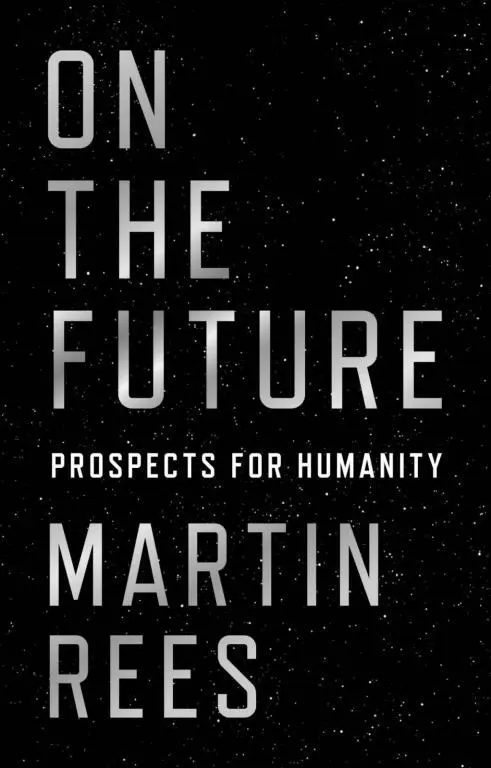
- Название:On the Future: Prospects for Humanity
- Автор:
- Издательство:Princeton University Press
- Жанр:
- Год:2018
- Город:Princeton
- ISBN:978-0-691-18044-1
- Рейтинг книги:5 / 5. Голосов: 1
-
Избранное:Добавить в избранное
- Отзывы:
-
Ваша оценка:
On the Future: Prospects for Humanity: краткое содержание, описание и аннотация
Предлагаем к чтению аннотацию, описание, краткое содержание или предисловие (зависит от того, что написал сам автор книги «On the Future: Prospects for Humanity»). Если вы не нашли необходимую информацию о книге — напишите в комментариях, мы постараемся отыскать её.
Humanity has reached a critical moment. Our world is unsettled and rapidly changing, and we face existential risks over the next century. Various outcomes―good and bad―are possible. Yet our approach to the future is characterized by short-term thinking, polarizing debates, alarmist rhetoric, and pessimism. In this short, exhilarating book, renowned scientist and bestselling author Martin Rees argues that humanity’s prospects depend on our taking a very different approach to planning for tomorrow.
The future of humanity is bound to the future of science and hinges on how successfully we harness technological advances to address our challenges. If we are to use science to solve our problems while avoiding its dystopian risks, we must think rationally, globally, collectively, and optimistically about the long term. Advances in biotechnology, cybertechnology, robotics, and artificial intelligence―if pursued and applied wisely―could empower us to boost the developing and developed world and overcome the threats humanity faces on Earth, from climate change to nuclear war. At the same time, further advances in space science will allow humans to explore the solar system and beyond with robots and AI. But there is no “Plan B” for Earth―no viable alternative within reach if we do not care for our home planet.
Rich with fascinating insights into cutting-edge science and technology, this accessible book will captivate anyone who wants to understand the critical issues that will define the future of humanity on Earth and beyond.
On the Future: Prospects for Humanity — читать онлайн бесплатно полную книгу (весь текст) целиком
Ниже представлен текст книги, разбитый по страницам. Система сохранения места последней прочитанной страницы, позволяет с удобством читать онлайн бесплатно книгу «On the Future: Prospects for Humanity», без необходимости каждый раз заново искать на чём Вы остановились. Поставьте закладку, и сможете в любой момент перейти на страницу, на которой закончили чтение.
Интервал:
Закладка:
2.5. TRULY EXISTENTIAL RISKS?
Our world increasingly depends on elaborate networks: electricity power grids, air traffic control, international finance, globally dispersed manufacturing, and so forth. Unless these networks are highly resilient, their benefits could be outweighed by catastrophic (albeit rare) breakdowns—real-world analogues of what happened in the 2008 global financial crisis. Cities would be paralysed without electricity—the lights would go out, but that would be far from the most serious consequence. Within a few days our cities would be uninhabitable and anarchic. Air travel can spread a pandemic worldwide within days, wreaking havoc on the disorganised megacities of the developing world. And social media can spread panic and rumour, and economic contagion, literally at the speed of light.
When we realise the power of biotech, robotics, cybertechnology, and AI—and, still more, their potential in the coming decades—we can’t avoid anxieties about how this empowerment could be misused. The historical record reveals episodes when ‘civilisations’ have crumbled and even been extinguished. Our world is so interconnected it’s unlikely a catastrophe could hit any region without its consequences cascading globally. For the first time, we need to contemplate a collapse—societal or ecological—that would be a truly global setback to civilisation. The setback could be temporary. On the other hand, it could be so devastating (and could have entailed so much environmental or genetic degradation) that the survivors could never regenerate a civilisation at the present level.
But this prompts the question: could there be a separate class of extreme events that would be ‘curtains’ for us all—catastrophes that could snuff out all humanity or even all life? Physicists working on the Manhattan Project during World War II raised these kinds of Promethean concerns. Could we be absolutely sure that a nuclear explosion wouldn’t ignite all the world’s atmosphere or oceans? Before the 1945 Trinity Test of the first atomic bomb in New Mexico, Edward Teller and two colleagues addressed this issue in a calculation that was (much later) published by the Los Alamos Laboratory; they convinced themselves that there was a large safety factor. And luckily, they were right. We now know for certain that a single nuclear weapon, devastating though it is, cannot trigger a nuclear chain reaction that would utterly destroy the Earth or its atmosphere.
But what about even more extreme experiments? Physicists aim to understand the particles that make up the world and the forces that govern those particles. They are eager to probe the most extreme energies, pressures, and temperatures; for this purpose, they build huge, elaborate machines—particle accelerators. The optimum way to produce an intense concentration of energy is to accelerate atoms to enormous speeds, close to the speed of light, and crash them together. When two atoms crash together, their constituent protons and neutrons implode to a density and pressure far greater than when they were packed into a normal nucleus, releasing their constituent quarks. They may then break up into still smaller particles. The conditions replicate, in microcosm, those that prevailed in the first nanosecond after the big bang.
Some physicists raised the possibility that these experiments might do something far worse—destroy the Earth, or even the entire universe. Maybe a black hole could form, and then suck in everything around it. According to Einstein’s theory of relativity, the energy needed to make even the smallest black hole would far exceed what these collisions could generate. Some new theories, however, invoke extra spatial dimensions beyond our usual three; a consequence would be to strengthen gravity’s grip, rendering it less difficult for a small object to implode into a black hole.
The second scary possibility is that the quarks would reassemble themselves into compressed objects called strangelets. That in itself would be harmless. However, under some hypotheses, a strangelet could, by contagion, convert anything else it encountered into a new form of matter, transforming the entire Earth into a hyperdense sphere about a hundred metres across.
The third risk from these collision experiments is still more exotic, and potentially the most disastrous of all: a catastrophe that engulfs space itself. Empty space—what physicists call ‘the vacuum’—is more than just nothingness. It is the arena for everything that happens; it has, latent in it, all the forces and particles that govern the physical world. It is the repository of the dark energy that controls the universe’s fate. Space might exist in different ‘phases’, as water can exist in three forms: ice, liquid, or steam. Moreover, the present vacuum could be fragile and unstable. The analogy here is with water that is ‘supercooled’. Water can cool below its normal freezing point if it is pure and still; however, it only takes a small localised disturbance—for instance, a speck of dust falling into it—to trigger supercooled water’s conversion into ice. Likewise, some have speculated that the concentrated energy created when particles crash together could trigger a ‘phase transition’ that would rip the fabric of space. This would be a cosmic calamity—not just a terrestrial one.
The most favoured theories are reassuring; they imply that the risks from the kind of experiments within our current powers are zero. However, physicists can dream up alternative theories (and write down equations for them) that are consistent with everything we know, and therefore can’t be absolutely ruled out, which would allow one or another of these catastrophes to happen. These alternative theories may not be frontrunners, but are they all so incredible that we needn’t worry?
Physicists were (in my view quite rightly) pressured to address these speculative ‘existential risks’ when powerful new accelerators came on line at the Brookhaven National Laboratory and at CERN in Geneva, generating unprecedented concentrations of energy. Fortunately, reassurance could be offered; indeed, I was one of those who pointed out that ‘cosmic rays’—particles of much higher energies than can be made in accelerators—collide frequently in the galaxy but haven’t ripped space apart. [14]And they have penetrated very dense stars without triggering their conversion into strangelets.
So how risk averse should we be? Some would argue that odds of ten million to one against an existential disaster would be good enough, because that is below the chance that, within the next year, an asteroid large enough to cause global devastation will hit the Earth. (This is like arguing that the extra carcinogenic effect of artificial radiation is acceptable if it doesn’t so much as double the risk from natural radiation—radon in the local rocks, for example.) But to some, this limit may not seem stringent enough. If there were a threat to the entire Earth, the public might properly demand assurance that the probability is below one in a billion—even one in a trillion—before sanctioning such an experiment if the purpose was simply to assuage the curiosity of theoretical physicists.
Can we credibly give such assurances? We may offer these odds against the Sun not rising tomorrow, or against a fair die giving one hundred sixes in a row, because we’re confident that we understand these things. But if our understanding is shaky—as it plainly is at the frontiers of physics—we can’t really assign a probability, or confidently assert that something is unlikely. It’s presumptuous to place confidence in any theories about what happens when atoms are smashed together with unprecedented energy. If a congressional committee asked: ‘Are you really claiming that there’s less than a one in a billion chance that you’re wrong?’ I’d feel uncomfortable saying yes.
Читать дальшеИнтервал:
Закладка:
Похожие книги на «On the Future: Prospects for Humanity»
Представляем Вашему вниманию похожие книги на «On the Future: Prospects for Humanity» списком для выбора. Мы отобрали схожую по названию и смыслу литературу в надежде предоставить читателям больше вариантов отыскать новые, интересные, ещё непрочитанные произведения.
![Мартин Рис - Всего шесть чисел. Главные силы, формирующие Вселенную [litres]](/books/414169/martin-ris-vsego-shest-chisel-glavnye-sily-formir-thumb.webp)





Обсуждение, отзывы о книге «On the Future: Prospects for Humanity» и просто собственные мнения читателей. Оставьте ваши комментарии, напишите, что Вы думаете о произведении, его смысле или главных героях. Укажите что конкретно понравилось, а что нет, и почему Вы так считаете.