Мартин Рис - On the Future - Prospects for Humanity
Здесь есть возможность читать онлайн «Мартин Рис - On the Future - Prospects for Humanity» весь текст электронной книги совершенно бесплатно (целиком полную версию без сокращений). В некоторых случаях можно слушать аудио, скачать через торрент в формате fb2 и присутствует краткое содержание. Город: Princeton, Год выпуска: 2018, ISBN: 2018, Издательство: Princeton University Press, Жанр: Публицистика, sci_popular, на английском языке. Описание произведения, (предисловие) а так же отзывы посетителей доступны на портале библиотеки ЛибКат.
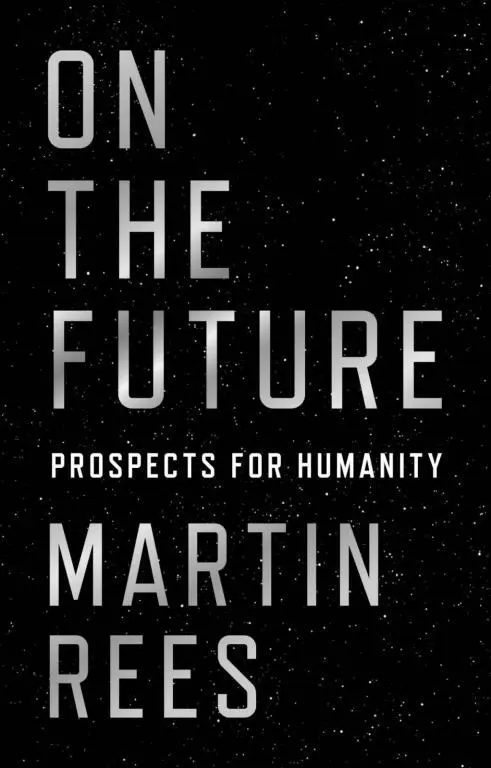
- Название:On the Future: Prospects for Humanity
- Автор:
- Издательство:Princeton University Press
- Жанр:
- Год:2018
- Город:Princeton
- ISBN:978-0-691-18044-1
- Рейтинг книги:5 / 5. Голосов: 1
-
Избранное:Добавить в избранное
- Отзывы:
-
Ваша оценка:
On the Future: Prospects for Humanity: краткое содержание, описание и аннотация
Предлагаем к чтению аннотацию, описание, краткое содержание или предисловие (зависит от того, что написал сам автор книги «On the Future: Prospects for Humanity»). Если вы не нашли необходимую информацию о книге — напишите в комментариях, мы постараемся отыскать её.
Humanity has reached a critical moment. Our world is unsettled and rapidly changing, and we face existential risks over the next century. Various outcomes―good and bad―are possible. Yet our approach to the future is characterized by short-term thinking, polarizing debates, alarmist rhetoric, and pessimism. In this short, exhilarating book, renowned scientist and bestselling author Martin Rees argues that humanity’s prospects depend on our taking a very different approach to planning for tomorrow.
The future of humanity is bound to the future of science and hinges on how successfully we harness technological advances to address our challenges. If we are to use science to solve our problems while avoiding its dystopian risks, we must think rationally, globally, collectively, and optimistically about the long term. Advances in biotechnology, cybertechnology, robotics, and artificial intelligence―if pursued and applied wisely―could empower us to boost the developing and developed world and overcome the threats humanity faces on Earth, from climate change to nuclear war. At the same time, further advances in space science will allow humans to explore the solar system and beyond with robots and AI. But there is no “Plan B” for Earth―no viable alternative within reach if we do not care for our home planet.
Rich with fascinating insights into cutting-edge science and technology, this accessible book will captivate anyone who wants to understand the critical issues that will define the future of humanity on Earth and beyond.
On the Future: Prospects for Humanity — читать онлайн бесплатно полную книгу (весь текст) целиком
Ниже представлен текст книги, разбитый по страницам. Система сохранения места последней прочитанной страницы, позволяет с удобством читать онлайн бесплатно книгу «On the Future: Prospects for Humanity», без необходимости каждый раз заново искать на чём Вы остановились. Поставьте закладку, и сможете в любой момент перейти на страницу, на которой закончили чтение.
Интервал:
Закладка:
3.2. BEYOND OUR SOLAR SYSTEM
To find promising ‘real estate’ on which life can exist, we must extend our gaze beyond our solar system—beyond the reach of any probe we can devise today. What has transformed and energised the whole field of exobiology is the realisation that most stars are orbited by planets. The Italian monk Giordano Bruno speculated about this in the sixteenth century. From the 1940s onward, astronomers suspected he was correct. An earlier theory that the solar system formed from a filament torn out of the Sun by the gravitational pull of a close-passing star (which would have implied that planetary systems were rare) had by then been discredited. This theory was superseded by the idea that when an interstellar cloud contracted under gravity to form a star, it would, if it were rotating, ‘spin off’ a disc whose constituent gas and dust would agglomerate into planets. But it wasn’t until the 1990s that evidence for exoplanets started to emerge. Most exoplanets are not detected directly; they are inferred through careful observation of the star they’re orbiting. There are two main techniques.
The first is this. If a star is orbited by a planet, then both planet and star move around their centre of mass—what’s called the barycentre. The star, being more massive, moves slower. But the cyclic motion induced by an orbiting planet can be detected by precise study of the starlight, which reveals a changing Doppler effect. The first success came in 1995 when Michel Mayor and Didier Queloz, based at the Observatory of Geneva, found a ‘Jupiter-mass’ planet around the nearby star 51 Pegasi. [3]In the subsequent years, more than four hundred exoplanets have been found in this way. This ‘stellar wobble’ technique pertains mainly to ‘giant’ planets—objects the size of Saturn or Jupiter.
Possible ‘twins’ of Earth are specially interesting: planets the same size as ours, orbiting other Sun-like stars, on orbits with temperatures such that water neither boils nor stays frozen. But detecting these—hundreds of times less massive than Jupiter—is a real challenge. They induce wobbles of merely centimetres per second in their parent star—this motion has hitherto been too small for the Doppler method to detect (though the instrumentation advances apace).
But there’s a second technique: we can look for the planets’ shadows. A star would appear to dim slightly when a planet was ‘in transit’ in front of it; these dimmings would repeat at regular intervals. Such data reveal two things: the interval between successive dimmings tells us the length of the planet’s year, and the amplitude of the dimming tells us what fraction of the star’s light a planet blocks out during the transit, and therefore how big it is.
The most important search (so far) for transiting planets was carried out by a NASA spacecraft named after astronomer Johannes Kepler, [4]which spent more than three years measuring the brightness of 150,000 stars, to a precision of one part in 100,000—it did this once or more times an hour for each star. Kepler found thousands of transiting planets, some no bigger than Earth. The prime mover behind the Kepler project was Bill Borucki, an American engineer who had worked for NASA since 1964. He conceived the concept in the 1980s and doggedly pursued it despite funding setbacks and initial scepticism from many in the community of ‘established’ astronomers. His triumphant success—achieved when he was already in his seventies—deserves special acclaim. It reminds us of how much even the ‘purest’ science owes to the instrument builders.
There is variety among the already discovered exoplanets. Some are on eccentric orbits. And one planet has four suns in its sky; it is orbiting a binary star, which is orbited by another binary star. This discovery involved amateur ‘planet hunters’; any enthusiast had the chance to access Kepler data from some stars, and the human eye was able to pick out ‘dips’ in the stars’ brightness (which occurred less regularly than in the case when a planet orbits a single star).
There’s a planet orbiting the nearest star, Proxima Centauri, which is only four light years from Earth. Proxima Centauri is a so-called M dwarf star, about a hundred times fainter than our Sun. In 2017 a team led by the Belgian astronomer Michaël Gillon discovered a miniature solar system around another M dwarf; [5]seven planets, with ‘years’ lasting from 1.5 to 18.8 Earth days, are orbiting around it. The outer three are in the habitable zone. They’d be spectacular places to live. Viewed from the surface of one of the planets, the others would swing fast across the sky, looming as large as our Moon does to us. But they’re very un-Earthly. They’re probably tidally locked so that they present the same face to their star—one hemisphere in perpetual light; the other always dark. (In the unlikely event that it harboured intelligent life, a kind of ‘segregation’ might prevail—the astronomers quarantined in one hemisphere, everyone else in the other!) But it’s likely that their atmospheres have been stripped away by the intense magnetic flaring that is common on M dwarf stars, rendering them less propitious for life.
The known exoplanets are nearly all inferred indirectly, by detecting their effect on the motions or brightness of the stars they’re orbiting. We’d really like to see them directly but that’s hard. To realise just how hard, suppose that aliens existed, and that an alien astronomer with a powerful telescope was viewing the Earth from (say) thirty light years away—the distance of a nearby star. Our planet would seem, in Carl Sagan’s phrase, a ‘pale blue dot’, very close to a star (our Sun) that outshines it by many billions: a firefly next to a searchlight. The shade of blue would be slightly different, depending on whether the Pacific Ocean or the Eurasian land mass was facing them. The alien astronomers could infer the length of our day, the seasons, the existence of continents and oceans, and the climate. By analysing the faint light, the astronomers could infer that the Earth had a green surface and an oxygenated atmosphere.
Today, the largest terrestrial telescopes are built by international consortia. They are mushrooming on Mauna Kea (Hawai‘i) and under the clear dry skies of the high Andes in Chile. And South Africa not only has one of the world’s largest optical telescopes but will also have a leadership role, along with Australia, in constructing the world’s largest radio telescope, the Square Kilometre Array. A telescope now being built on a Chilean mountaintop by European astronomers will have the required sensitivity to pick up light from planets the same size as Earth orbiting other sun-like stars. It’s called the European Extremely Large Telescope (E-ELT)—literal rather than imaginative nomenclature! Newton’s first reflecting telescope had a 10-centimeter-diameter mirror; the E-ELT will be 39 meters—a mosaic of small mirrors with a total collecting area more than a hundred thousand times larger.
From the statistics of planets around the nearby stars studied so far, we can infer that the entire Milky Way harbours around a billion planets that are ‘Earthlike’ in the sense that they are about the size of Earth and at a distance from their parent star such that water can exist, neither boiling away nor staying permanently frozen. We’d expect a variety: some might be ‘waterworlds’, completely covered with oceans; others might (like Venus) have been heated and sterilised by an extreme ‘greenhouse effect’.
How many of these planets might harbour life-forms far more interesting and exotic than anything we might find on Mars—even something that could be called intelligent? We don’t know what the odds are. Indeed, we can’t yet exclude the possibility that life’s origin—the emergence, from a chemical ‘mix’, of a metabolising and reproducing entity—involved a fluke so rare that it happened only once in our entire galaxy. On the other hand, this crucial transition might have been almost inevitable given the ‘right’ environment. We just don’t know—nor do we know if the DNA/RNA chemistry of terrestrial life is the only possibility, or just one chemical basis among many options that could be realised elsewhere. Nor, even more fundamentally, do we know whether liquid water really is crucial. If there were a chemical path whereby life could emerge in the cold methane lakes of Titan, our definition of ‘habitable planets’ would be very much broader.
Читать дальшеИнтервал:
Закладка:
Похожие книги на «On the Future: Prospects for Humanity»
Представляем Вашему вниманию похожие книги на «On the Future: Prospects for Humanity» списком для выбора. Мы отобрали схожую по названию и смыслу литературу в надежде предоставить читателям больше вариантов отыскать новые, интересные, ещё непрочитанные произведения.
![Мартин Рис - Всего шесть чисел. Главные силы, формирующие Вселенную [litres]](/books/414169/martin-ris-vsego-shest-chisel-glavnye-sily-formir-thumb.webp)








Обсуждение, отзывы о книге «On the Future: Prospects for Humanity» и просто собственные мнения читателей. Оставьте ваши комментарии, напишите, что Вы думаете о произведении, его смысле или главных героях. Укажите что конкретно понравилось, а что нет, и почему Вы так считаете.