Мартин Рис - On the Future - Prospects for Humanity
Здесь есть возможность читать онлайн «Мартин Рис - On the Future - Prospects for Humanity» весь текст электронной книги совершенно бесплатно (целиком полную версию без сокращений). В некоторых случаях можно слушать аудио, скачать через торрент в формате fb2 и присутствует краткое содержание. Город: Princeton, Год выпуска: 2018, ISBN: 2018, Издательство: Princeton University Press, Жанр: Публицистика, sci_popular, на английском языке. Описание произведения, (предисловие) а так же отзывы посетителей доступны на портале библиотеки ЛибКат.
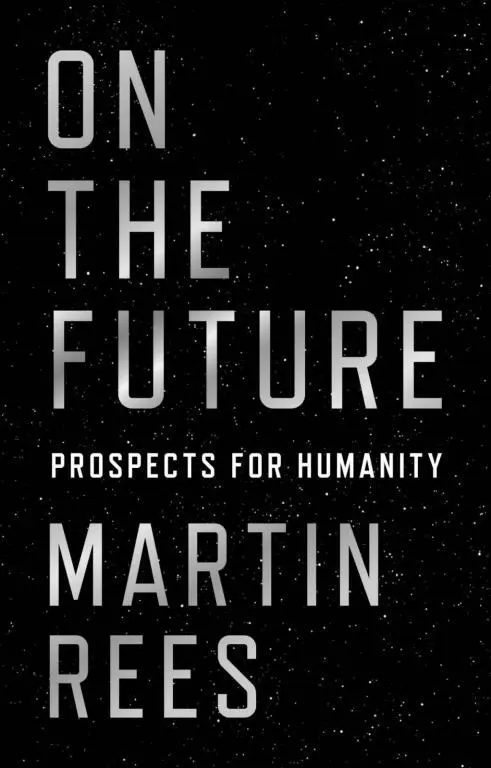
- Название:On the Future: Prospects for Humanity
- Автор:
- Издательство:Princeton University Press
- Жанр:
- Год:2018
- Город:Princeton
- ISBN:978-0-691-18044-1
- Рейтинг книги:5 / 5. Голосов: 1
-
Избранное:Добавить в избранное
- Отзывы:
-
Ваша оценка:
On the Future: Prospects for Humanity: краткое содержание, описание и аннотация
Предлагаем к чтению аннотацию, описание, краткое содержание или предисловие (зависит от того, что написал сам автор книги «On the Future: Prospects for Humanity»). Если вы не нашли необходимую информацию о книге — напишите в комментариях, мы постараемся отыскать её.
Humanity has reached a critical moment. Our world is unsettled and rapidly changing, and we face existential risks over the next century. Various outcomes―good and bad―are possible. Yet our approach to the future is characterized by short-term thinking, polarizing debates, alarmist rhetoric, and pessimism. In this short, exhilarating book, renowned scientist and bestselling author Martin Rees argues that humanity’s prospects depend on our taking a very different approach to planning for tomorrow.
The future of humanity is bound to the future of science and hinges on how successfully we harness technological advances to address our challenges. If we are to use science to solve our problems while avoiding its dystopian risks, we must think rationally, globally, collectively, and optimistically about the long term. Advances in biotechnology, cybertechnology, robotics, and artificial intelligence―if pursued and applied wisely―could empower us to boost the developing and developed world and overcome the threats humanity faces on Earth, from climate change to nuclear war. At the same time, further advances in space science will allow humans to explore the solar system and beyond with robots and AI. But there is no “Plan B” for Earth―no viable alternative within reach if we do not care for our home planet.
Rich with fascinating insights into cutting-edge science and technology, this accessible book will captivate anyone who wants to understand the critical issues that will define the future of humanity on Earth and beyond.
On the Future: Prospects for Humanity — читать онлайн бесплатно полную книгу (весь текст) целиком
Ниже представлен текст книги, разбитый по страницам. Система сохранения места последней прочитанной страницы, позволяет с удобством читать онлайн бесплатно книгу «On the Future: Prospects for Humanity», без необходимости каждый раз заново искать на чём Вы остановились. Поставьте закладку, и сможете в любой момент перейти на страницу, на которой закончили чтение.
Интервал:
Закладка:
During this century, the entire solar system—planets, moons, and asteroids—will be explored and mapped by fleets of tiny robotic space probes, interacting with each other like a flock of birds. Giant robotic fabricators will be able to construct, in space, solar energy collectors and other objects. The Hubble telescope’s successors, with oversize mirrors assembled in zero gravity, will further expand our vision of exoplanets, stars, galaxies, and the wider cosmos. The next step would be space mining and fabrication.
But will there be a role for humans? There’s no denying that NASA’s Curiosity , a vehicle the size of a small car that has since 2011 been trundling across a giant Martian crater, may miss startling discoveries that no human geologist could overlook. But machine learning is advancing fast, as is sensor technology. In contrast, the cost gap between manned and unmanned missions remains outsized. The practical case for manned spaceflight gets ever weaker with each advance in robots and miniaturisation.
If there were a revival of the ‘Apollo spirit’ and a renewed urge to build on its legacy, a permanently manned lunar base would be a credible next step. Its construction could be accomplished by robots—bringing supplies from Earth and mining some from the Moon. An especially propitious site is the Shackleton crater, at the lunar south pole, 21 kilometres across and with a rim 4 kilometres high. Because of the crater’s location, its rim is always in sunlight and so escapes the extreme monthly temperature contrasts experienced on almost all the Moon’s surface. Moreover, there may be a lot of ice in the crater’s perpetually dark interior—crucial, of course, for sustaining a ‘colony’.
It would make sense to build mainly on the half of the Moon that faces the Earth. But there is one exception: astronomers would like a giant telescope on the far side because it would then be shielded from the artificial emission from the Earth—offering a great advantage to radio astronomers seeking to detect very faint cosmic emissions.
NASA’s manned space programme, ever since Apollo, has been constrained by public and political pressure to be risk-averse. The space shuttle failed twice in 135 launches. Astronauts or test pilots would willingly accept this level of risk—less than 2 percent. But the shuttle had, unwisely, been promoted as a safe vehicle for civilians (and a female schoolteacher, Christa McAuliffe, in the NASA Teacher in Space Project, was one of the casualties of the Challenger disaster). Each failure caused a national trauma in the United States and was followed by a hiatus while costly efforts were made (with very limited effect) to reduce risks still further.
I hope some people now living will walk on Mars—as an adventure, and as a step towards the stars. But NASA will confront political obstacles in achieving this goal within a feasible budget. China has the resources, the dirigiste government, and maybe the willingness to undertake an Apollo-style programme. If it wanted to assert its superpower status by a ‘space spectacular’ and to proclaim parity, China would need to leapfrog, rather than just rerun, what the United States had achieved fifty years earlier. It already plans a ‘first’ by landing on the far side of the Moon. A clearer-cut ‘great leap forward’ would involve footprints on Mars, not just on the Moon.
Leaving aside the Chinese, I think the future of manned spaceflight lies with privately funded adventurers, prepared to participate in a cut-price programme far riskier than western nations could impose on publicly supported civilians. SpaceX, led by Elon Musk (who also builds Tesla electric cars), or the rival effort, Blue Origin, bankrolled by Jeff Bezos, founder of Amazon, have berthed craft at the space station and will soon offer orbital flights to paying customers. These ventures—bringing a Silicon Valley culture into a domain long dominated by NASA and a few aerospace conglomerates—have shown it’s possible to recover and reuse the launch rocket’s first stage—presaging real cost savings. They have innovated and improved rocketry far faster than NASA or ESA has done—a SpaceX Falcon rocket is able to put a fifty-ton payload into orbit. The future role of the national agencies will be attenuated—becoming more akin to an airport than to an airline.
If I were an American, I would not support NASA’s manned programme—I would argue that inspirationally led private companies should ‘front’ all manned missions as cut-price high-risk ventures. There would still be many volunteers—some perhaps even accepting ‘one-way tickets’—driven by the same motives as early explorers, mountaineers, and the like. Indeed, it is time to eschew the mind-set that space ventures should be national (even international) projects—along with pretentious rhetoric where the word ‘we’ is used to denote the whole of humanity. There are some endeavours—tackling climate change, for instance—that can’t be done without concerted international action. The exploitation of space need not be of this nature; it may need some public regulation, but the impetus can be private or corporate.
There are plans for week-long trips round the far side of the Moon—voyaging farther from Earth than anyone has gone before (but avoiding the greater challenge of a Moon landing and blast-off). A ticket has been sold (I’m told) for the second such flight but not the first. And Dennis Tito, an entrepreneur and former astronaut, has proposed, when a new heavy-lift launcher is available, to send people to Mars and back—without landing. This would require five hundred days in isolated confinement. The ideal crew would be a stable middle-aged couple—old enough to not be bothered about the high dose of radiation accumulated on the trip.
The phrase space tourism should be avoided. It lulls people into believing that such ventures are routine and low risk. And if that’s the perception, the inevitable accidents will be as traumatic as those of the space shuttle. These exploits must be ‘sold’ as dangerous sports, or intrepid exploration.
The most crucial impediment to space flight, in Earth’s orbit and for those venturing farther, stems from the intrinsic inefficiency of chemical fuel and the consequent requirement for launchers to carry a weight of fuel far exceeding that of the payload. So long as we are dependent on chemical fuels, interplanetary travel will remain a challenge. Nuclear power could be transformative. By allowing much higher in-course speeds, it would drastically cut the transit times to Mars or the asteroids (reducing not only astronauts’ boredom but also their exposure to damaging radiation).
Greater efficiency would be achieved if the fuel supply could be on the ground and not carried into space. For instance, it might be technically possible to propel spacecraft into orbit via a ‘space elevator’—a carbon-fibre rope 30,000 kilometres long anchored to the Earth (and powered from the ground), extending vertically up beyond the distance of a geostationary orbit so that it is held taut by centrifugal forces. An alternative scheme envisages a powerful laser beam generated on Earth that pushes on a ‘sail’ attached to the spacecraft; this might be feasible for lightweight space probes and could in principle accelerate them to 20 percent of the speed of light. [6]
Incidentally, more efficient on-board fuel could transform manned spaceflight from a high-precision to an almost unskilled operation. Driving a car would be a difficult enterprise if, as at present for space voyages, one had to programme the entire journey in detail beforehand, with minimal opportunities for steering along the way. If there were an abundance of fuel for midcourse corrections (and to brake and accelerate at will), then interplanetary navigation would be a low-skill task—simpler, even, than steering a car or ship, in that the destination is always in clear view.
Читать дальшеИнтервал:
Закладка:
Похожие книги на «On the Future: Prospects for Humanity»
Представляем Вашему вниманию похожие книги на «On the Future: Prospects for Humanity» списком для выбора. Мы отобрали схожую по названию и смыслу литературу в надежде предоставить читателям больше вариантов отыскать новые, интересные, ещё непрочитанные произведения.
![Мартин Рис - Всего шесть чисел. Главные силы, формирующие Вселенную [litres]](/books/414169/martin-ris-vsego-shest-chisel-glavnye-sily-formir-thumb.webp)








Обсуждение, отзывы о книге «On the Future: Prospects for Humanity» и просто собственные мнения читателей. Оставьте ваши комментарии, напишите, что Вы думаете о произведении, его смысле или главных героях. Укажите что конкретно понравилось, а что нет, и почему Вы так считаете.