Мартин Рис - On the Future - Prospects for Humanity
Здесь есть возможность читать онлайн «Мартин Рис - On the Future - Prospects for Humanity» весь текст электронной книги совершенно бесплатно (целиком полную версию без сокращений). В некоторых случаях можно слушать аудио, скачать через торрент в формате fb2 и присутствует краткое содержание. Город: Princeton, Год выпуска: 2018, ISBN: 2018, Издательство: Princeton University Press, Жанр: Публицистика, sci_popular, на английском языке. Описание произведения, (предисловие) а так же отзывы посетителей доступны на портале библиотеки ЛибКат.
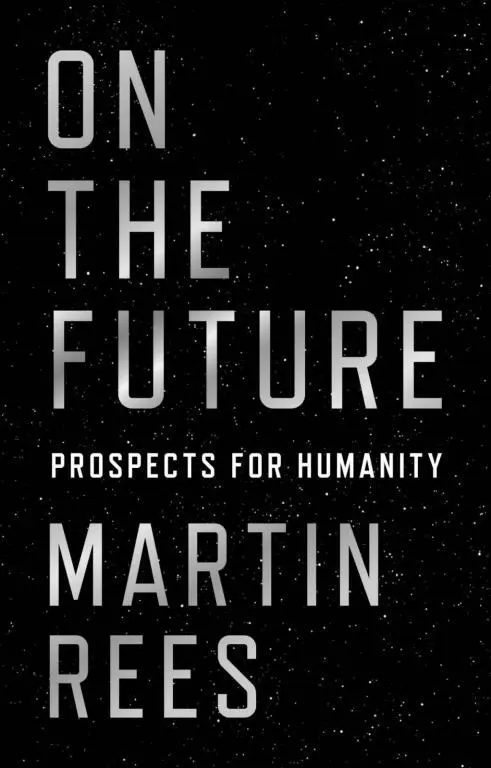
- Название:On the Future: Prospects for Humanity
- Автор:
- Издательство:Princeton University Press
- Жанр:
- Год:2018
- Город:Princeton
- ISBN:978-0-691-18044-1
- Рейтинг книги:5 / 5. Голосов: 1
-
Избранное:Добавить в избранное
- Отзывы:
-
Ваша оценка:
On the Future: Prospects for Humanity: краткое содержание, описание и аннотация
Предлагаем к чтению аннотацию, описание, краткое содержание или предисловие (зависит от того, что написал сам автор книги «On the Future: Prospects for Humanity»). Если вы не нашли необходимую информацию о книге — напишите в комментариях, мы постараемся отыскать её.
Humanity has reached a critical moment. Our world is unsettled and rapidly changing, and we face existential risks over the next century. Various outcomes―good and bad―are possible. Yet our approach to the future is characterized by short-term thinking, polarizing debates, alarmist rhetoric, and pessimism. In this short, exhilarating book, renowned scientist and bestselling author Martin Rees argues that humanity’s prospects depend on our taking a very different approach to planning for tomorrow.
The future of humanity is bound to the future of science and hinges on how successfully we harness technological advances to address our challenges. If we are to use science to solve our problems while avoiding its dystopian risks, we must think rationally, globally, collectively, and optimistically about the long term. Advances in biotechnology, cybertechnology, robotics, and artificial intelligence―if pursued and applied wisely―could empower us to boost the developing and developed world and overcome the threats humanity faces on Earth, from climate change to nuclear war. At the same time, further advances in space science will allow humans to explore the solar system and beyond with robots and AI. But there is no “Plan B” for Earth―no viable alternative within reach if we do not care for our home planet.
Rich with fascinating insights into cutting-edge science and technology, this accessible book will captivate anyone who wants to understand the critical issues that will define the future of humanity on Earth and beyond.
On the Future: Prospects for Humanity — читать онлайн бесплатно полную книгу (весь текст) целиком
Ниже представлен текст книги, разбитый по страницам. Система сохранения места последней прочитанной страницы, позволяет с удобством читать онлайн бесплатно книгу «On the Future: Prospects for Humanity», без необходимости каждый раз заново искать на чём Вы остановились. Поставьте закладку, и сможете в любой момент перейти на страницу, на которой закончили чтение.
Интервал:
Закладка:
SETI depends on private philanthropy. The failure to get public funds surprises me. If I were up before a government committee, I’d feel less vulnerable and more at ease defending a SETI project than seeking funds for a vast new particle accelerator. That’s because many thousands of those watching movies of the Star Wars genre would be happy if some of the tax revenues they generated were hypothecated for SETI.
Perhaps we’ll one day find evidence of alien intelligence—or even (though this is less likely) ‘plug in’ to some cosmic mind. On the other hand, our Earth may be unique and the searches may fail. This would disappoint the searchers. But it would have an upside for humanity’s long-term resonance. Our solar system is barely middle-aged, and if humans avoid self-destruction within the next century, the posthuman era beckons. Intelligence from Earth could spread through the entire galaxy, evolving into a teeming complexity far beyond what we can even conceive. If so, our tiny planet—this pale blue dot floating in space—could be the most important place in the entire cosmos.
Either way, our cosmic habitat—this immense firmament of stars and galaxies—seems ‘designed’ or ‘tuned’ to be an abode for life. From a simple big bang, amazing complexity has unfolded, leading to our emergence. Even if we are now alone in the universe, we may not be the culmination of this ‘drive’ towards complexity and consciousness. This tells us something very profound about nature’s laws—and motivates a brief excursion, in the following chapters, out to the broadest horizons in time and space that cosmologists conceive.
4
THE LIMITS AND FUTURE OF SCIENCE
4.1. FROM THE SIMPLE TO THE COMPLEX
A fictional speculation: suppose a ‘time machine’ allowed us to send one succinct ‘tweet’ to great scientists of the past—Newton or Archimedes, for instance. What message would most enlighten them and transform their vision of the world? I think it would be the marvellous realisation that we ourselves, and everything in the everyday world, are made from fewer than one hundred different kinds of atoms—lots of hydrogen, oxygen, and carbon; small but crucial admixtures of iron, phosphorous, and other elements. All materials—living and nonliving—owe their structures to the intricate patterns in which atoms stick together, and how they react. The whole of chemistry is determined by the interactions between the positively charged nuclei of atoms and the negatively charged swarm of electrons that they’re embedded in.
Atoms are simple; we can write down the equations of quantum mechanics (Schrödinger’s equation) that describe their properties. So, on the cosmic scale, are black holes, for which we can solve Einstein’s equations. These ‘basics’ are well enough understood to enable engineers to design all the objects of the modern world. (Einstein’s theory of general relativity has found practical use in GPS satellites; their clocks would lose accuracy if they weren’t properly corrected for the effects of gravity.)
The intricate structure of all living things testifies that layer on layer of complexity can emerge from the operation of underlying laws. Mathematical games can help to develop our awareness of how simple rules, reiterated over and over again, can indeed have surprisingly complex consequences.
John Conway, now at Princeton University, is one of the most charismatic figures in mathematics. [1]When he taught at Cambridge, students created a ‘Conway appreciation society’. His academic research deals with a branch of mathematics known as group theory. But he reached a wider audience and achieved a greater intellectual impact through developing the Game of Life.
In 1970 Conway was experimenting with patterns on a Go board; he wanted to devise a game that would start with a simple pattern and use basic rules to iterate again and again. He discovered that by adjusting the rules of his game and the starting patterns, some arrangements produce incredibly complicated results—seemingly from nowhere because the rules of the game are so basic. ‘Creatures’ emerged, moving around the board, that seemed to have a life of their own. The simple rules merely specify when a white square turns into a black square (and vice versa), but, applied over and over again, a fascinating variety of complicated patterns is created. Devotees of the game identified objects such as ‘glider’, ‘glider gun’, and other reproducing patterns.
Conway indulged in a lot of ‘trial and error’ before he came up with a simple ‘virtual world’ that allowed for interesting emergent variety. He used pencil and paper, before the days of personal computers, but the implications of the Game of Life only emerged when the greater speed of computers could be harnessed. Likewise, early PCs enabled Benoit Mandelbrot and others to plot out the marvellous patterns of fractals—showing how simple mathematical formulas can encode intricate apparent complexity.
Most scientists resonate with the perplexity expressed in a classic essay by the physicist Eugene Wigner, titled ‘The Unreasonable Effectiveness of Mathematics in the Natural Sciences’. [2]And also with Einstein’s dictum that ‘the most incomprehensible thing about the universe is that it is comprehensible’. We marvel that the physical world isn’t anarchic—that atoms obey the same laws in distant galaxies as in our laboratories. As I’ve already noted ( section 3.5), if we ever discover aliens and want to communicate with them, mathematics, physics, and astronomy would be perhaps the only shared culture. Mathematics is the language of science—and has been ever since the Babylonians devised their calendar and predicted eclipses. (Some of us would likewise regard music as the language of religion.)
Paul Dirac, one of the pioneers of quantum theory, showed how the internal logic of mathematics can point the way towards new discoveries. Dirac averred that ‘the most powerful method of advance is to employ all the resources of pure mathematics in attempts to perfect and generalise the mathematical formalism that forms the existing basis of theoretical physics and—after each success in this direction—to try to interpret the new mathematical features in terms of physical entities’. [3]It was this approach—following the mathematics where it leads—that led Dirac to the idea of antimatter: ‘antielectrons’, now known as positrons, were discovered just a few years after he formulated an equation that would have seemed ugly without them.
Present-day theorists, with the same motives as Dirac, are hoping to understand reality at a deeper level by exploring concepts such as string theory, involving scales far smaller than any we can directly probe. Likewise, at the other extreme, some are exploring cosmological theories that offer intimations that the universe is vastly more extensive than the ‘patch’ we can observe with our telescopes (see section 4.3).
Every structure in the universe is composed of basic ‘building blocks’ governed by mathematical laws. However, the structures are generally too complicated for even the most powerful computers to calculate. But perhaps in the far-distant future, posthuman intelligence (not in organic form, but in autonomously evolving objects) will develop hypercomputers with the processing power to simulate living things—even entire worlds. Perhaps advanced beings could use hypercomputers to simulate a ‘universe’ that is not merely patterns on a chequerboard (like Conway’s game) or even like the best ‘special effects’ in movies or computer games. Suppose they could simulate a universe fully as complex as the one we perceive ourselves to be in. A disconcerting thought (albeit a wild speculation) then arises: perhaps that’s what we really are!
Читать дальшеИнтервал:
Закладка:
Похожие книги на «On the Future: Prospects for Humanity»
Представляем Вашему вниманию похожие книги на «On the Future: Prospects for Humanity» списком для выбора. Мы отобрали схожую по названию и смыслу литературу в надежде предоставить читателям больше вариантов отыскать новые, интересные, ещё непрочитанные произведения.
![Мартин Рис - Всего шесть чисел. Главные силы, формирующие Вселенную [litres]](/books/414169/martin-ris-vsego-shest-chisel-glavnye-sily-formir-thumb.webp)






Обсуждение, отзывы о книге «On the Future: Prospects for Humanity» и просто собственные мнения читателей. Оставьте ваши комментарии, напишите, что Вы думаете о произведении, его смысле или главных героях. Укажите что конкретно понравилось, а что нет, и почему Вы так считаете.