Мартин Рис - On the Future - Prospects for Humanity
Здесь есть возможность читать онлайн «Мартин Рис - On the Future - Prospects for Humanity» весь текст электронной книги совершенно бесплатно (целиком полную версию без сокращений). В некоторых случаях можно слушать аудио, скачать через торрент в формате fb2 и присутствует краткое содержание. Город: Princeton, Год выпуска: 2018, ISBN: 2018, Издательство: Princeton University Press, Жанр: Публицистика, sci_popular, на английском языке. Описание произведения, (предисловие) а так же отзывы посетителей доступны на портале библиотеки ЛибКат.
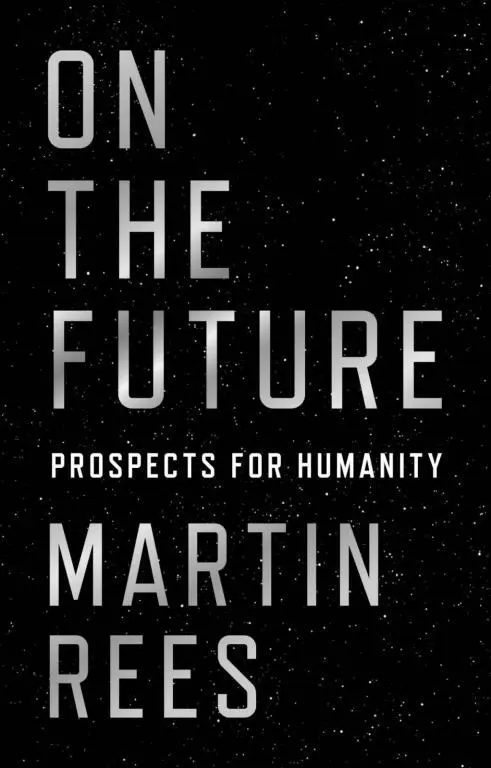
- Название:On the Future: Prospects for Humanity
- Автор:
- Издательство:Princeton University Press
- Жанр:
- Год:2018
- Город:Princeton
- ISBN:978-0-691-18044-1
- Рейтинг книги:5 / 5. Голосов: 1
-
Избранное:Добавить в избранное
- Отзывы:
-
Ваша оценка:
On the Future: Prospects for Humanity: краткое содержание, описание и аннотация
Предлагаем к чтению аннотацию, описание, краткое содержание или предисловие (зависит от того, что написал сам автор книги «On the Future: Prospects for Humanity»). Если вы не нашли необходимую информацию о книге — напишите в комментариях, мы постараемся отыскать её.
Humanity has reached a critical moment. Our world is unsettled and rapidly changing, and we face existential risks over the next century. Various outcomes―good and bad―are possible. Yet our approach to the future is characterized by short-term thinking, polarizing debates, alarmist rhetoric, and pessimism. In this short, exhilarating book, renowned scientist and bestselling author Martin Rees argues that humanity’s prospects depend on our taking a very different approach to planning for tomorrow.
The future of humanity is bound to the future of science and hinges on how successfully we harness technological advances to address our challenges. If we are to use science to solve our problems while avoiding its dystopian risks, we must think rationally, globally, collectively, and optimistically about the long term. Advances in biotechnology, cybertechnology, robotics, and artificial intelligence―if pursued and applied wisely―could empower us to boost the developing and developed world and overcome the threats humanity faces on Earth, from climate change to nuclear war. At the same time, further advances in space science will allow humans to explore the solar system and beyond with robots and AI. But there is no “Plan B” for Earth―no viable alternative within reach if we do not care for our home planet.
Rich with fascinating insights into cutting-edge science and technology, this accessible book will captivate anyone who wants to understand the critical issues that will define the future of humanity on Earth and beyond.
On the Future: Prospects for Humanity — читать онлайн бесплатно полную книгу (весь текст) целиком
Ниже представлен текст книги, разбитый по страницам. Система сохранения места последней прочитанной страницы, позволяет с удобством читать онлайн бесплатно книгу «On the Future: Prospects for Humanity», без необходимости каждый раз заново искать на чём Вы остановились. Поставьте закладку, и сможете в любой момент перейти на страницу, на которой закончили чтение.
Интервал:
Закладка:
4.2. MAKING SENSE OF OUR COMPLEX WORLD
Possibilities once in the realms of science fiction have shifted into serious scientific debate. From the very first moments of the big bang to the possibilities for alien life, scientists are led to worlds even weirder than most fiction writers envision. At first sight one might think it presumptuous to claim—or even seek—to understand the remote cosmos when there’s so much that baffles us closer at hand. But that’s not necessarily a fair assessment. There is nothing paradoxical about the whole being simpler than its parts. Imagine an ordinary brick—its shape can be described in a few numbers. But if you shatter it, the fragments can’t be described so succinctly.
Scientific progress seems patchy. Odd though it may seem, some of the best-understood phenomena are far away in the cosmos. Even in the seventeenth century, Newton could describe the ‘clockwork of the heavens’; eclipses could be both understood and predicted. But few other things are so predictable, even when we understand them. For instance, it’s hard to forecast, even a day before, whether those who travel to view an eclipse will encounter clouds or clear skies. Indeed, in most contexts, there’s a fundamental limit to how far ahead we can predict. That’s because tiny contingencies—like whether or not a butterfly flaps its wings—have consequences that grow exponentially. For reasons like this, even the most fine-grained computation cannot normally forecast British weather even a few days ahead. (But—and this is important—this doesn’t stymie predictions of long-term climate change, nor weaken our confidence that it will be colder next January than it is in July.)
Today, astronomers can convincingly attribute tiny vibrations in a gravitational-wave detector to a ‘crash’ between two black holes more than a billion light years from Earth. [4]In contrast, our grasp of some familiar matters that interest us all—diet and child care, for instance—is still so meagre that ‘expert’ advice changes from year to year. When I was young, milk and eggs were thought to be good; a decade later they were deemed dangerous because of their high cholesterol content; and now they seem again to be deemed harmless. So lovers of chocolate and cheese may not have to wait long before being told those foods are good for them. And there is still no cure for many of the commonest ailments.
But it actually isn’t paradoxical that we’ve achieved confident understanding of arcane and remote cosmic phenomena while being flummoxed by everyday things. It’s because astronomy deals with phenomena far less complex than the biological and human sciences (even than ‘local’ environmental sciences).
So how should we define or measure complexity? A formal definition was suggested by the Russian mathematician Andrey Kolmogorov: an object’s complexity depends on the length of the shortest computer programme that could generate a full description of it.
Something made of only a few atoms cannot be very complicated. Big things need not be complex either. Consider, for instance, a crystal—even if it were large it wouldn’t be called complex. The recipe for (for instance) a salt crystal is short: take sodium and chlorine atoms and pack them together, over and over again, to make a cubical lattice. Conversely, if you take a large crystal and chop it up, there is little change until it is broken down to the scale of single atoms. Despite its vastness, a star is fairly simple too. Its core is so hot that no chemicals can exist (complex molecules get torn apart); it is basically an amorphous gas of atomic nuclei and electrons. Indeed, black holes, exotic though they seem, are among the simplest entities in nature. They can be described precisely by equations no more complicated than those that describe a single atom.
Our high-tech objects are complex. For instance, a silicon chip with a billion transistors has structure on all levels down to a few atoms. But most complex of all are living things. An animal has interlinked internal structure on several different scales—from the proteins in single cells, right up to limbs and major organs. It doesn’t preserve its essence if it is chopped up. It dies. Humans are more complex than atoms or stars (and, incidentally, midway between them in mass; it takes about as many human bodies to make up the Sun as there are atoms in each of us). The genetic recipe for a human being is encoded in three billion links of DNA. But we are not fully determined by our genes; we are moulded by our environment and experiences. The most complex things we know about in the universe are our own brains. Thoughts and memories (coded by neurons in the brain) are far more varied than genes.
There’s an important difference, however, between ‘Kolmogorov complexity’ and whether something actually looks complicated. For instance, Conway’s Game of Life leads to complicated-looking structures. But these can all be described by a short programme: take a particular starting position, and then iterate, over and over again, according to the simple rules of the game. The intricate fractal pattern of Mandelbrot’s set is likewise the result of a simple algorithm. But these are exceptions. Most things in our everyday environment are too complicated to be predicted, or even fully described in detail. But much of their essence can nonetheless be captured by a few key insights. Our perspective has been transformed by great unifying ideas. The concept of continental drift (plate tectonics) helps us to fit together a whole raft of geological and ecological patterns across the globe. Darwin’s insight—evolution via natural selection—reveals the overarching unity of the entire web of life on this planet. And the double helix of DNA reveals the universal basis for heredity. There are patterns in nature. There are even patterns in how we humans behave—in how cities grow, how epidemics spread, and how technologies like computer chips develop. The more we understand the world, the less bewildering it becomes and the more we’re able to change it.
The sciences can be viewed as a hierarchy, ordered like the floors of a building, with those dealing with more complex systems higher up: particle physics in the basement, then the rest of physics, then chemistry, then cell biology, then botany and zoology, and then the behavioural and human sciences (with the economists claiming the penthouse).
The ‘ordering’ of the sciences in this hierarchy is not controversial. But what is more controversial is the sense in which the ‘ground floor sciences’—particle physics in particular—are deeper or more fundamental than the others. In one sense they truly are. As the physicist Steven Weinberg has pointed out: ‘The arrows all point downward’. Put another way, if you go on asking Why? Why? Why? you end up at the particle level. Scientists are nearly all reductionists in Weinberg’s sense; they feel confident that everything, however complex, is a solution of Schrödinger’s equation—unlike the ‘vitalists’ of earlier eras, who thought that living things were infused with some special ‘essence’. But this reductionism isn’t conceptually useful. As another great physicist, Philip Anderson, emphasised, ‘more is different’; macroscopic systems that contain large numbers of particles manifest ‘emergent’ properties and are best understood in terms of new concepts appropriate to the level of the system.
Even a phenomenon as un-mysterious as the flow of water in pipes or rivers is understood in terms of ‘emergent’ concepts like viscosity and turbulence. Specialists in fluid mechanics don’t care that water is actually made up of H2O molecules; they see water as a continuum. Even if they had a hypercomputer that could solve Schrödinger’s equation for the flow, atom by atom, the resultant simulation wouldn’t provide any insight into how waves break, or what makes a flow become turbulent. And new irreducible concepts are even more crucial to our understanding of really complicated phenomena—for instance, migrating birds or human brains. Phenomena on different levels of the hierarchy are understood in terms of different concepts—turbulence, survival, alertness, and so forth. The brain is an assemblage of cells; a painting is an assemblage of pigments. But what is important and interesting is the pattern and structure—the emergent complexity.
Читать дальшеИнтервал:
Закладка:
Похожие книги на «On the Future: Prospects for Humanity»
Представляем Вашему вниманию похожие книги на «On the Future: Prospects for Humanity» списком для выбора. Мы отобрали схожую по названию и смыслу литературу в надежде предоставить читателям больше вариантов отыскать новые, интересные, ещё непрочитанные произведения.
![Мартин Рис - Всего шесть чисел. Главные силы, формирующие Вселенную [litres]](/books/414169/martin-ris-vsego-shest-chisel-glavnye-sily-formir-thumb.webp)




Обсуждение, отзывы о книге «On the Future: Prospects for Humanity» и просто собственные мнения читателей. Оставьте ваши комментарии, напишите, что Вы думаете о произведении, его смысле или главных героях. Укажите что конкретно понравилось, а что нет, и почему Вы так считаете.