Мартин Рис - On the Future - Prospects for Humanity
Здесь есть возможность читать онлайн «Мартин Рис - On the Future - Prospects for Humanity» весь текст электронной книги совершенно бесплатно (целиком полную версию без сокращений). В некоторых случаях можно слушать аудио, скачать через торрент в формате fb2 и присутствует краткое содержание. Город: Princeton, Год выпуска: 2018, ISBN: 2018, Издательство: Princeton University Press, Жанр: Публицистика, sci_popular, на английском языке. Описание произведения, (предисловие) а так же отзывы посетителей доступны на портале библиотеки ЛибКат.
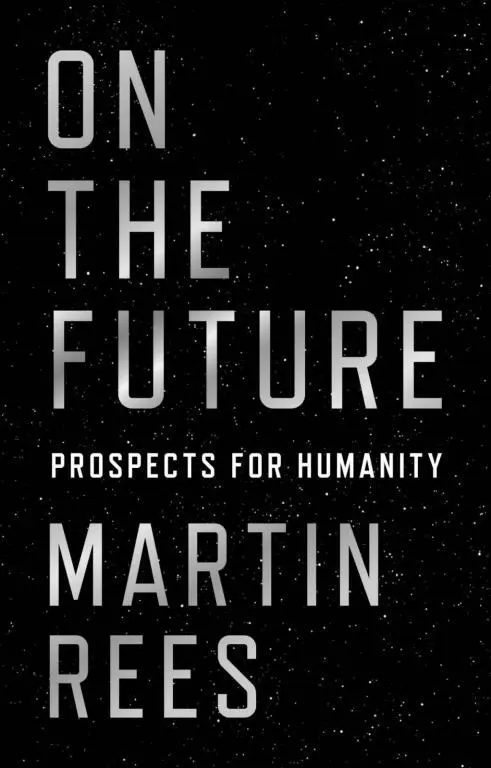
- Название:On the Future: Prospects for Humanity
- Автор:
- Издательство:Princeton University Press
- Жанр:
- Год:2018
- Город:Princeton
- ISBN:978-0-691-18044-1
- Рейтинг книги:5 / 5. Голосов: 1
-
Избранное:Добавить в избранное
- Отзывы:
-
Ваша оценка:
On the Future: Prospects for Humanity: краткое содержание, описание и аннотация
Предлагаем к чтению аннотацию, описание, краткое содержание или предисловие (зависит от того, что написал сам автор книги «On the Future: Prospects for Humanity»). Если вы не нашли необходимую информацию о книге — напишите в комментариях, мы постараемся отыскать её.
Humanity has reached a critical moment. Our world is unsettled and rapidly changing, and we face existential risks over the next century. Various outcomes―good and bad―are possible. Yet our approach to the future is characterized by short-term thinking, polarizing debates, alarmist rhetoric, and pessimism. In this short, exhilarating book, renowned scientist and bestselling author Martin Rees argues that humanity’s prospects depend on our taking a very different approach to planning for tomorrow.
The future of humanity is bound to the future of science and hinges on how successfully we harness technological advances to address our challenges. If we are to use science to solve our problems while avoiding its dystopian risks, we must think rationally, globally, collectively, and optimistically about the long term. Advances in biotechnology, cybertechnology, robotics, and artificial intelligence―if pursued and applied wisely―could empower us to boost the developing and developed world and overcome the threats humanity faces on Earth, from climate change to nuclear war. At the same time, further advances in space science will allow humans to explore the solar system and beyond with robots and AI. But there is no “Plan B” for Earth―no viable alternative within reach if we do not care for our home planet.
Rich with fascinating insights into cutting-edge science and technology, this accessible book will captivate anyone who wants to understand the critical issues that will define the future of humanity on Earth and beyond.
On the Future: Prospects for Humanity — читать онлайн бесплатно полную книгу (весь текст) целиком
Ниже представлен текст книги, разбитый по страницам. Система сохранения места последней прочитанной страницы, позволяет с удобством читать онлайн бесплатно книгу «On the Future: Prospects for Humanity», без необходимости каждый раз заново искать на чём Вы остановились. Поставьте закладку, и сможете в любой момент перейти на страницу, на которой закончили чтение.
Интервал:
Закладка:
That’s why the analogy with a building is a poor one. The entire structure of a building is imperilled by weak foundations. In contrast, the ‘higher level’ sciences dealing with complex systems aren’t vulnerable to an insecure base, as a building is. Each science has its own distinct concepts and modes of explanation. Reductionism is true in a sense. But it’s seldom true in a useful sense. Only about 1 percent of scientists are particle physicists or cosmologists. The other 99 percent work on ‘higher’ levels of the hierarchy. They’re challenged by the complexity of their subject—not by any deficiencies in our understanding of subnuclear physics.
4.3. HOW FAR DOES PHYSICAL REALITY EXTEND?
The Sun formed 4.5 billion years ago, but it’s got around 6 billion years more before its fuel runs out. It will then flare up, engulfing the inner planets. And the expanding universe will continue—perhaps forever—destined to become ever colder, ever emptier. To quote Woody Allen, eternity is very long, especially towards the end.
Any creatures witnessing the Sun’s demise won’t be human—they’ll be as different from us as we are from a bug. Posthuman evolution—here on Earth and far beyond—could be as prolonged as the Darwinian evolution that has led to us—and even more wonderful. And evolution is now accelerating; it can happen via ‘intelligent design’ on a technological time-scale, operating far faster than natural selection and driven by advances in genetics and in artificial intelligence (AI). The long-term future probably lies with electronic rather than organic ‘life’ (see section 3.3).
In cosmological terms (or indeed in a Darwinian time frame) a millennium is but an instant. So let us ‘fast forward’ not for a few centuries, or even for a few millennia, but for an ‘astronomical’ timescale millions of times longer than that. The ‘ecology’ of stellar births and deaths in our galaxy will proceed gradually more slowly, until jolted by the ‘environmental shock’ of an impact with the Andromeda Galaxy, maybe four billion years hence. The debris of our galaxy, Andromeda, and their smaller companions—which now make up what is called the Local Group—will thereafter aggregate into one amorphous swarm of stars.
On the cosmic scale, gravitational attraction is overwhelmed by a mysterious force latent in empty space that pushes galaxies apart from each other. Galaxies accelerate away and disappear over a horizon—rather like an inside-out version of what happens when something falls into a black hole. All that will be left in view, after a hundred billion years, will be the dead and dying stars of our Local Group. But these could continue for trillions of years—time enough, perhaps, for the long-term trend for living systems to gain complexity and ‘negative entropy’ to reach a culmination. All the atoms that were once in stars and gas could be transformed into structures as intricate as a living organism or a silicon chip—but on a cosmic scale. Against the darkening background, protons may decay, dark matter particles annihilate, occasional flashes when black holes evaporate—and then silence.
In 1979, Freeman Dyson (already mentioned in section 2.1) published a now-classic article whose aim was ‘to establish numerical bounds within which the universe’s destiny must lie’. [5]Even if all material were optimally converted into a computer or superintelligence, would there still be limits on how much information could be processed? Could an unbounded number of thoughts be thought? The answer depends on the cosmology. It takes less energy to carry out computations at low temperatures. For the universe we seem to be in, Dyson’s limit would be finite, but would be maximised if the ‘thinkers’ stayed cool and thought slowly.
Our knowledge of space and time is incomplete. Einstein’s relativity (describing gravity and the cosmos) and the quantum principle (crucial for understanding the atomic scale) are the two pillars of twentieth-century physics, but a theory that unifies them is unfinished business. Current ideas suggest that progress will depend on fully understanding what might seem the simplest entity of all—‘mere’ empty space (the vacuum) is the arena for everything that happens; it may have a rich texture, but on scales a trillion trillion times smaller than an atom. According to string theory, each ‘point’ in ordinary space might, if viewed with this magnification, be revealed as a tightly folded origami in several extra dimensions.
The same fundamental laws apply throughout the entire domain we can survey with telescopes. Were that not so—were atoms ‘anarchic’ in their behaviour—we’d have made no progress in understanding the observable universe. But this observable domain may not be all of physical reality; some cosmologists speculate that ‘our’ big bang wasn’t the only one—that physical reality is grand enough to encompass an entire ‘multiverse’.
We can only see a finite volume—a finite number of galaxies. That’s essentially because there’s a horizon, a shell around us, delineating the greatest distance from which light can reach us. But that shell has no more physical significance than the circle that delineates your horizon if you’re in the middle of the ocean. Even conservative astronomers are confident that the volume of space-time within range of our telescopes—what astronomers have traditionally called ‘the universe’—is only a tiny fraction of the aftermath of the big bang. We’d expect far more galaxies located beyond the horizon, unobservable, each of which (along with any intelligences it hosts) will evolve rather like our own.
It’s a familiar idea that if enough monkeys were given enough time, they would write the works of Shakespeare (and indeed all other books, along with every conceivable string of gobbledygook). This statement is mathematically correct. But the number of ‘failures’ that would precede eventual success is a number with about ten million digits. Even the number of atoms in the visible universe has only eighty digits. If all the planets in our galaxy were crawling with monkeys, who had been typing ever since the first planets formed, then the best they would have done is typed a single sonnet (their output would include short coherent stretches from all the world’s literatures, but no single complete work). To produce a specific set of letters as long as a book is so immensely improbable that it wouldn’t have happened even once within the observable universe. When we throw dice we eventually get a long succession of sixes, but (unless they are biased) we wouldn’t expect to get more than a hundred in a row even if we went on for a billion years.
However, if the universe stretches far enough, everything could happen—somewhere far beyond our horizon there could even be a replica of Earth. This requires space to be VERY big—described by a number not merely with a million digits but with 10 to the power of 100 digits: a one followed by one hundred zeroes. Ten to the power of 100 is called a googol, and a number with a googol of zeros is a googolplex.
Given enough space and time, all conceivable chains of events could be played out somewhere, though almost all of these would occur far out of range of any observations we could conceivably make. The combinatorial options could encompass replicas of ourselves, taking all possible choices. Whenever a choice has to be made, one of the replicas will take each option. You may feel that a choice you make is ‘determined’. But it may be a consolation that, somewhere far away (far beyond the horizon of our observations) you have an avatar who has made the opposite choice.
All this could be encompassed within the aftermath of ‘our’ big bang, which could extend over a stupendous volume. But that’s not all. What we’ve traditionally called ‘the universe’—the aftermath of ‘our’ big bang—may be just one island, just one patch of space and time, in a perhaps infinite archipelago. There may have been many big bangs, not just one. Each constituent of this ‘multiverse’ could have cooled down differently, maybe ending up governed by different laws. Just as Earth is a very special planet among zillions of others, so—on a far grander scale—could our big bang have been a rather special one. In this hugely expanded cosmic perspective, the laws of Einstein and the quantum could be mere parochial bylaws governing our cosmic patch. So, not only could space and time be intricately ‘grainy’ on a submicroscopic scale, but also, at the other extreme—on scales far larger than astronomers can probe—it may have a structure as intricate as the fauna of a rich ecosystem. Our current concept of physical reality could be as constricted, in relation to the whole, as the perspective of the Earth available to a plankton whose ‘universe’ is a spoonful of water.
Читать дальшеИнтервал:
Закладка:
Похожие книги на «On the Future: Prospects for Humanity»
Представляем Вашему вниманию похожие книги на «On the Future: Prospects for Humanity» списком для выбора. Мы отобрали схожую по названию и смыслу литературу в надежде предоставить читателям больше вариантов отыскать новые, интересные, ещё непрочитанные произведения.
![Мартин Рис - Всего шесть чисел. Главные силы, формирующие Вселенную [litres]](/books/414169/martin-ris-vsego-shest-chisel-glavnye-sily-formir-thumb.webp)






Обсуждение, отзывы о книге «On the Future: Prospects for Humanity» и просто собственные мнения читателей. Оставьте ваши комментарии, напишите, что Вы думаете о произведении, его смысле или главных героях. Укажите что конкретно понравилось, а что нет, и почему Вы так считаете.