Мартин Рис - On the Future - Prospects for Humanity
Здесь есть возможность читать онлайн «Мартин Рис - On the Future - Prospects for Humanity» весь текст электронной книги совершенно бесплатно (целиком полную версию без сокращений). В некоторых случаях можно слушать аудио, скачать через торрент в формате fb2 и присутствует краткое содержание. Город: Princeton, Год выпуска: 2018, ISBN: 2018, Издательство: Princeton University Press, Жанр: Публицистика, sci_popular, на английском языке. Описание произведения, (предисловие) а так же отзывы посетителей доступны на портале библиотеки ЛибКат.
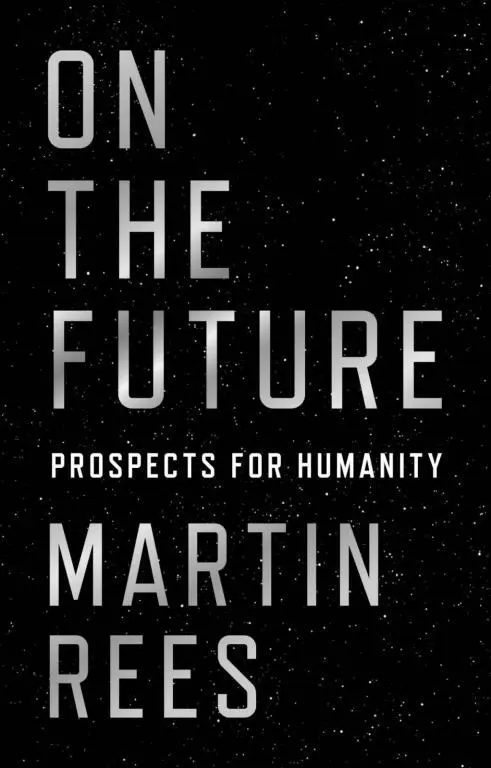
- Название:On the Future: Prospects for Humanity
- Автор:
- Издательство:Princeton University Press
- Жанр:
- Год:2018
- Город:Princeton
- ISBN:978-0-691-18044-1
- Рейтинг книги:5 / 5. Голосов: 1
-
Избранное:Добавить в избранное
- Отзывы:
-
Ваша оценка:
On the Future: Prospects for Humanity: краткое содержание, описание и аннотация
Предлагаем к чтению аннотацию, описание, краткое содержание или предисловие (зависит от того, что написал сам автор книги «On the Future: Prospects for Humanity»). Если вы не нашли необходимую информацию о книге — напишите в комментариях, мы постараемся отыскать её.
Humanity has reached a critical moment. Our world is unsettled and rapidly changing, and we face existential risks over the next century. Various outcomes―good and bad―are possible. Yet our approach to the future is characterized by short-term thinking, polarizing debates, alarmist rhetoric, and pessimism. In this short, exhilarating book, renowned scientist and bestselling author Martin Rees argues that humanity’s prospects depend on our taking a very different approach to planning for tomorrow.
The future of humanity is bound to the future of science and hinges on how successfully we harness technological advances to address our challenges. If we are to use science to solve our problems while avoiding its dystopian risks, we must think rationally, globally, collectively, and optimistically about the long term. Advances in biotechnology, cybertechnology, robotics, and artificial intelligence―if pursued and applied wisely―could empower us to boost the developing and developed world and overcome the threats humanity faces on Earth, from climate change to nuclear war. At the same time, further advances in space science will allow humans to explore the solar system and beyond with robots and AI. But there is no “Plan B” for Earth―no viable alternative within reach if we do not care for our home planet.
Rich with fascinating insights into cutting-edge science and technology, this accessible book will captivate anyone who wants to understand the critical issues that will define the future of humanity on Earth and beyond.
On the Future: Prospects for Humanity — читать онлайн бесплатно полную книгу (весь текст) целиком
Ниже представлен текст книги, разбитый по страницам. Система сохранения места последней прочитанной страницы, позволяет с удобством читать онлайн бесплатно книгу «On the Future: Prospects for Humanity», без необходимости каждый раз заново искать на чём Вы остановились. Поставьте закладку, и сможете в любой момент перейти на страницу, на которой закончили чтение.
Интервал:
Закладка:
By 2100 thrill seekers in the mould of (say) Felix Baumgartner (the Austrian skydiver who in 2012 broke the sound barrier in free fall from a high-altitude balloon) may have established ‘bases’ independent from the Earth—on Mars, or maybe on asteroids. Elon Musk (born in 1971) of SpaceX says he wants to die on Mars—but not on impact. But don’t ever expect mass emigration from Earth. And here I disagree strongly with Musk and with my late Cambridge colleague Stephen Hawking, who enthuse about rapid build-up of large-scale Martian communities. It’s a dangerous delusion to think that space offers an escape from Earth’s problems. We’ve got to solve these problems here. Coping with climate change may seem daunting, but it’s a doddle compared to terraforming Mars. No place in our solar system offers an environment even as clement as the Antarctic or the top of Everest. There’s no ‘Planet B’ for ordinary risk-averse people.
But we (and our progeny here on Earth) should cheer on the brave space adventurers, because they will have a pivotal role in spearheading the posthuman future and determining what happens in the twenty-second century and beyond.
3.4. TOWARDS A POST-HUMAN ERA?
Why will these space adventurers be so important? The space environment is inherently hostile for humans. So, because they will be ill-adapted to their new habitat, the pioneer explorers will have a more compelling incentive than those of us on Earth to redesign themselves. They’ll harness the super-powerful genetic and cyborg technologies that will be developed in coming decades. These techniques will be, one hopes, heavily regulated on Earth, on prudential and ethical grounds, but ‘settlers’ on Mars will be far beyond the clutches of the regulators. We should wish them good luck in modifying their progeny to adapt to alien environments. This might be the first step towards divergence into a new species. Genetic modification would be supplemented by cyborg technology—indeed there may be a transition to fully inorganic intelligences. So, it’s these space-faring adventurers, not those of us comfortably adapted to life on Earth, who will spearhead the posthuman era.
Before setting out from Earth, space voyagers, whatever their destination, would know what to expect at journey’s end; robotic probes would have preceded them. The European explorers in earlier centuries who ventured across the Pacific went into the unknown to a far greater extent than any future explorers would (and faced more terrifying dangers)—there were no precursor expeditions to make maps, as there would be for space ventures. Future space-farers will always be able to communicate with Earth (albeit with a time lag). If precursor probes have revealed that there are wonders to explore, there will be a compelling motive—just as Captain Cook was incentivised by the biodiversity and beauties of the Pacific islands. But if there is nothing but sterility out there, the voyages might be better left to robotic fabricators.
Organic creatures need a planetary surface environment, but if posthumans make the transition to fully inorganic intelligences, they won’t need an atmosphere. And they may prefer zero-g, especially for constructing extensive but lightweight habitats. So it’s in deep space—not on Earth, or even on Mars—that nonbiological ‘brains’ may develop powers that humans can’t even imagine. The timescales for technological advance are but an instant compared to the timescales of the Darwinian natural selection that led to humanity’s emergence—and (more relevantly) they are less than a millionth of the vast expanses of cosmic time lying ahead. The outcomes of future technological evolution could surpass humans by as much as we (intellectually) surpass slime mould.
It’s likely that ‘inorganics’—intelligent electronic robots—will eventually gain dominance. This is because there are chemical and metabolic limits to the size and processing power of ‘wet’ organic brains. Maybe we’re close to these already. But no such limits constrain electronic computers (still less, perhaps, quantum computers). So, by any definition of ‘thinking’, the amount and intensity that’s done by organic human-type brains will be utterly swamped by the cerebrations of AI. We are perhaps near the end of Darwinian evolution, but a faster process, artificially directed enhancement of intelligence, is only just beginning. It will happen fastest away from the Earth—I wouldn’t expect (and certainly wouldn’t wish for) such rapid changes in humanity here on Earth though our survival will depend on ensuring that the AI on Earth remains ‘benevolent’.
Philosophers debate whether ‘consciousness’ is special to the organic brains of humans, apes, and dogs. Might it be that robots, even if their intellects seem superhuman, will still lack self-awareness or inner life? The answer to this question crucially affects how we react to their ‘takeover’. If the machines are zombies, we would not accord their experiences the same value as ours, and the posthuman future would seem bleak. But if they are conscious, why should we not welcome the prospect of their future hegemony?
The scenarios I’ve just described would have the consequence—a boost to human self-esteem—that even if life had originated only on the Earth, it need not remain a trivial feature of the cosmos; humans may be closer to the beginning than to the end of a process whereby ever more complex intelligence spreads through the galaxy. The leap to neighbouring stars is just an early step in this process. Interstellar voyages—or even intergalactic voyages—would hold no terrors for near-immortals.
Even though we are not the terminal branch of an evolutionary tree, we humans could claim truly cosmic significance for jump-starting the transition to electronic (and potentially immortal) entities, spreading their influence far beyond the Earth, and far transcending our limitations.
But the motives and the ethical constraints will then depend on the answer to one great astronomical question: Is there life—intelligent life—out there already?
3.5. ALIEN INTELLIGENCE?
Firm evidence for vegetation, primitive bugs, or bacteria on an exoplanet would be significant. But the thing that really fuels popular imagination is the prospect of advanced life—the ‘aliens’ familiar from science fiction. [7]
Even if primitive life were common, ‘advanced’ life may not be—its emergence may depend on many contingencies. The course of evolution on Earth was influenced by phases of glaciation, our planet’s tectonic history, asteroid impacts, and so forth. Several authors have speculated about evolutionary ‘bottlenecks’—key stages that are hard to transit. Perhaps the transition to multicellular life (which took two billion years on Earth) is one of these. Or the ‘bottleneck’ could come later. If, for instance, the dinosaurs hadn’t been wiped out, the chain of mammalian evolution that led to humans may have been foreclosed; we can’t predict whether another species would have taken our role. Some evolutionists regard the emergence of intelligence as an unlikely contingency, even in a complex biosphere.
Perhaps, more ominously, there could be a ‘bottleneck’ at our own evolutionary stage—the stage we’re at during this century, when intelligent life develops powerful technology. The long-term prognosis for ‘Earth-sourced’ life depends on whether humans survive this phase—despite vulnerability to the kinds of hazards I’ve addressed in earlier chapters. This does not require that no terminal catastrophe ever befalls the Earth—only that, before that happens, some humans or artefacts have spread beyond their home planet.
As I’ve emphasised, we know too little about how life emerged to be able to say whether alien intelligence is likely or not. The cosmos could be teeming with varieties of complex life; if so, we could aspire to be minor members of a ‘galactic club’. On the other hand, the emergence of intelligence may require such a rare chain of events—like winning a lottery—that it has not occurred anywhere else. That will disappoint those searching for aliens but would imply that our Earth could be the most important place in the galaxy, and that its future is of cosmic consequence.
Читать дальшеИнтервал:
Закладка:
Похожие книги на «On the Future: Prospects for Humanity»
Представляем Вашему вниманию похожие книги на «On the Future: Prospects for Humanity» списком для выбора. Мы отобрали схожую по названию и смыслу литературу в надежде предоставить читателям больше вариантов отыскать новые, интересные, ещё непрочитанные произведения.
![Мартин Рис - Всего шесть чисел. Главные силы, формирующие Вселенную [litres]](/books/414169/martin-ris-vsego-shest-chisel-glavnye-sily-formir-thumb.webp)








Обсуждение, отзывы о книге «On the Future: Prospects for Humanity» и просто собственные мнения читателей. Оставьте ваши комментарии, напишите, что Вы думаете о произведении, его смысле или главных героях. Укажите что конкретно понравилось, а что нет, и почему Вы так считаете.