Мартин Рис - On the Future - Prospects for Humanity
Здесь есть возможность читать онлайн «Мартин Рис - On the Future - Prospects for Humanity» весь текст электронной книги совершенно бесплатно (целиком полную версию без сокращений). В некоторых случаях можно слушать аудио, скачать через торрент в формате fb2 и присутствует краткое содержание. Город: Princeton, Год выпуска: 2018, ISBN: 2018, Издательство: Princeton University Press, Жанр: Публицистика, sci_popular, на английском языке. Описание произведения, (предисловие) а так же отзывы посетителей доступны на портале библиотеки ЛибКат.
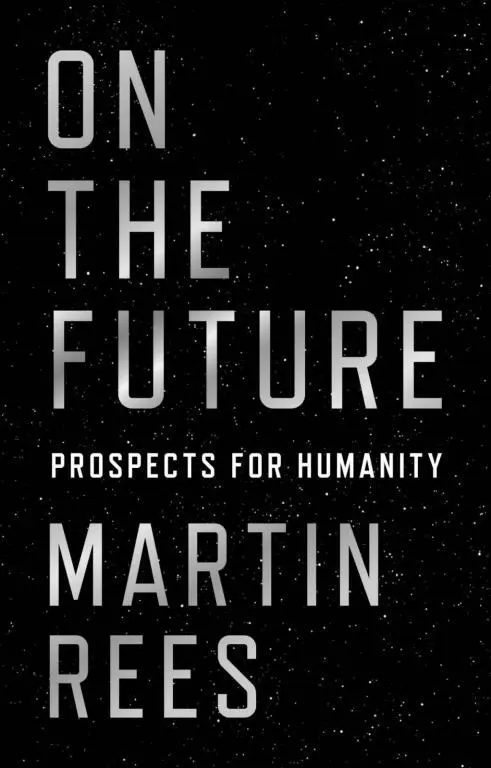
- Название:On the Future: Prospects for Humanity
- Автор:
- Издательство:Princeton University Press
- Жанр:
- Год:2018
- Город:Princeton
- ISBN:978-0-691-18044-1
- Рейтинг книги:5 / 5. Голосов: 1
-
Избранное:Добавить в избранное
- Отзывы:
-
Ваша оценка:
On the Future: Prospects for Humanity: краткое содержание, описание и аннотация
Предлагаем к чтению аннотацию, описание, краткое содержание или предисловие (зависит от того, что написал сам автор книги «On the Future: Prospects for Humanity»). Если вы не нашли необходимую информацию о книге — напишите в комментариях, мы постараемся отыскать её.
Humanity has reached a critical moment. Our world is unsettled and rapidly changing, and we face existential risks over the next century. Various outcomes―good and bad―are possible. Yet our approach to the future is characterized by short-term thinking, polarizing debates, alarmist rhetoric, and pessimism. In this short, exhilarating book, renowned scientist and bestselling author Martin Rees argues that humanity’s prospects depend on our taking a very different approach to planning for tomorrow.
The future of humanity is bound to the future of science and hinges on how successfully we harness technological advances to address our challenges. If we are to use science to solve our problems while avoiding its dystopian risks, we must think rationally, globally, collectively, and optimistically about the long term. Advances in biotechnology, cybertechnology, robotics, and artificial intelligence―if pursued and applied wisely―could empower us to boost the developing and developed world and overcome the threats humanity faces on Earth, from climate change to nuclear war. At the same time, further advances in space science will allow humans to explore the solar system and beyond with robots and AI. But there is no “Plan B” for Earth―no viable alternative within reach if we do not care for our home planet.
Rich with fascinating insights into cutting-edge science and technology, this accessible book will captivate anyone who wants to understand the critical issues that will define the future of humanity on Earth and beyond.
On the Future: Prospects for Humanity — читать онлайн бесплатно полную книгу (весь текст) целиком
Ниже представлен текст книги, разбитый по страницам. Система сохранения места последней прочитанной страницы, позволяет с удобством читать онлайн бесплатно книгу «On the Future: Prospects for Humanity», без необходимости каждый раз заново искать на чём Вы остановились. Поставьте закладку, и сможете в любой момент перейти на страницу, на которой закончили чтение.
Интервал:
Закладка:
A typical carbon atom, in one of the trillions of CO 2molecules that we inhale with each breath, has an eventful history stretching back more than five billion years. The atom was perhaps released into the atmosphere when a lump of coal was burned—a lump that was itself the remnant of a tree in a primeval forest two hundred million years ago—and before that had been cycled between the Earth’s crust, biosphere, and oceans ever since our planet’s formation. Tracing back further we would find that the atom was forged in an ancient star that exploded, ejecting carbon atoms that wandered in interstellar space, condensing into a proto–solar system and thence into the young Earth. We are literally the ashes of long-dead stars—or (less romantically) the nuclear waste from the fuel that made stars shine.
Astronomy is an ancient science—perhaps the oldest apart from medicine (and I’d argue the first to do more good than harm—by improving the calendar, timekeeping, and navigation). And for the last few decades cosmic exploration has been on a roll. There are human footprints on the Moon. Robotic probes to other planets have beamed back pictures of fascinating and varied worlds—and landed on some of them. Modern telescopes have enlarged our cosmic horizons. And these telescopes have revealed a ‘zoo’ of extraordinary objects—black holes, neutron stars, and colossal explosions. Our Sun is embedded within our galaxy, the Milky Way, which contains more than a hundred billion stars, all orbiting around a central hub where lurks a massive black hole. And this is just one of one hundred billion galaxies visible through the telescopes. We’ve even detected ‘echoes’ of the ‘big bang’ that triggered our entire expanding universe 13.8 billion years ago. This is how the universe was born—and with it, all the basic particles of nature.
Armchair theorists like myself can claim little credit for this progress; it is owed mainly to improvements in telescopes, spacecraft, and computers. Thanks to these advances we’re starting to understand the chain of events whereby, from a mysterious beginning when everything was squeezed to immense temperatures and densities, atoms, stars, galaxies, and planets emerged—and how on one planet, Earth, atoms assembled into the first living things, initiating the Darwinian evolution that’s led to creatures like us, able to ponder the mystery of it all.
Science is a truly global culture—spanning all boundaries of nationality and faith. That’s especially true of astronomy. The night sky is the most universal feature of our environment. Throughout human history, people all over the world have gazed at the stars—interpreting them in different ways. Just within the last decade the night sky has become vastly more interesting than it was to our ancestors. We’ve learned that most stars aren’t just twinkling points of light but are orbited by planets, just as the Sun is. Amazingly, our galaxy harbours many millions of planets like the Earth—planets that seem habitable. But are they actually inhabited—is there life, even intelligent life, out there? It’s hard to imagine a question of greater importance for understanding our place in the cosmic scheme of things.
It is clear from the extensive media coverage that these issues fascinate millions. It’s gratifying to astronomers (and to those in fields like ecology) that their fields attract such broad popular interest. I’d derive far less satisfaction from my research if I could only discuss it with a few fellow specialists. Moreover, the subject has a positive and nonthreatening image—in contrast to the public ambivalence about, for instance, nuclear science, robotics, or genetics.
If I’m on a plane and don’t want to chat with the person in the next seat, a sure conversation stopper is to say ‘I’m a mathematician’. In contrast, saying ‘I’m an astronomer’ often stimulates interest. And the number one inquiry is then usually ‘do you believe in aliens, or are we alone?’ The topic fascinates me too, so I’m always glad to discuss it. And it has another virtue as a conversation starter. Nobody yet knows the answer, so there is less of a barrier between the ‘expert’ and the general inquirer. There’s nothing new about this fascination; but now, for the first time, we have hope of an answer.
Speculations on ‘the plurality of inhabited worlds’ date back to antiquity. From the seventeenth to the nineteenth century, it was widely suspected that the other planets of the solar system were inhabited. The reasoning was more often theological than scientific. Eminent nineteenth-century thinkers argued that life must pervade the cosmos, because otherwise such vast domains of space would seem such a waste of the Creator’s efforts. An amusing critique of such ideas is given in the impressive book Man’s Place in the Universe by Alfred Russel Wallace, the codeveloper of the theory of natural selection. [2]Wallace is especially scathing about the physicist David Brewster (remembered by physicists for the ‘Brewster angle’ in optics), who conjectured on such grounds that even the Moon must be inhabited. Brewster argued in his book More Worlds Than One that had the Moon ‘been destined to be merely a lamp to our Earth, there was no occasion to variegate its surface with lofty mountains and extinct volcanoes and cover it with large patches of matter that reflect different quantities of light and give its surface the appearance of continents and seas. It would have been a better lamp had it been a smooth piece of lime or of chalk’.
By the end of the nineteenth century, many astronomers were so convinced that life existed on other planets in the solar system that a prize of one hundred thousand francs was offered to the first person to make contact. And the prize specifically excluded contact with Martians—that was considered far too easy! The erroneous claim that Mars was crisscrossed by canals had been taken as proof positive of intelligent life on the red planet.
The space age brought sobering news. Venus, a cloudy planet that promised a lush tropical swamp-world, turned out to be a crushing, caustic hellhole. Mercury was a pockmarked blistering rock. Even Mars, the most Earthlike planet, is now revealed as a frigid desert with a very thin atmosphere. NASA’s Curiosity probe may, however, have found water. And it detected methane gas burping from below the surface—perhaps from rotting organisms that lived long ago—though there seems no interesting life there now.
In the still-colder objects farther from the Sun, the smart money would be on Europa, one of Jupiter’s moons, and Enceladus, a moon of Saturn. These are covered in ice, and there could be creatures swimming in the oceans beneath; space probes are being planned that will search for them. And there could be exotic life in the methane lakes of Titan, another of Saturn’s moons. But nobody can be optimistic.
Within the solar system, Earth is the Goldilocks planet—not too hot and not too cold. Were it too hot, even the most tenacious life would fry. But if it were too cold, the processes that created and nourished life would have happened far too slowly. The discovery of even vestigial life-forms elsewhere in the solar system would be of epochal importance. That’s because it would tell us that life wasn’t a rare fluke but was widespread in the cosmos. At the moment we know of only one place—Earth—where life began. It is logically possible (indeed, some argue that it’s plausible) that life’s origin requires such special contingencies that it only happened once in our entire galaxy. But if it arose twice within a single planetary system, then it must be common.
(There is one important proviso: before drawing this inference about life’s ubiquity we must be sure that two life-forms emerged independently rather than being transported from one location to another. For that reason, life under Europa’s ice would clinch the case more than life on Mars, because it’s conceivable that we all have Martian ancestry—having evolved from primitive life carried on a rock shot off Mars by an asteroid impact and propelled towards Earth.)
Читать дальшеИнтервал:
Закладка:
Похожие книги на «On the Future: Prospects for Humanity»
Представляем Вашему вниманию похожие книги на «On the Future: Prospects for Humanity» списком для выбора. Мы отобрали схожую по названию и смыслу литературу в надежде предоставить читателям больше вариантов отыскать новые, интересные, ещё непрочитанные произведения.
![Мартин Рис - Всего шесть чисел. Главные силы, формирующие Вселенную [litres]](/books/414169/martin-ris-vsego-shest-chisel-glavnye-sily-formir-thumb.webp)







Обсуждение, отзывы о книге «On the Future: Prospects for Humanity» и просто собственные мнения читателей. Оставьте ваши комментарии, напишите, что Вы думаете о произведении, его смысле или главных героях. Укажите что конкретно понравилось, а что нет, и почему Вы так считаете.