Мартин Рис - On the Future - Prospects for Humanity
Здесь есть возможность читать онлайн «Мартин Рис - On the Future - Prospects for Humanity» весь текст электронной книги совершенно бесплатно (целиком полную версию без сокращений). В некоторых случаях можно слушать аудио, скачать через торрент в формате fb2 и присутствует краткое содержание. Город: Princeton, Год выпуска: 2018, ISBN: 2018, Издательство: Princeton University Press, Жанр: Публицистика, sci_popular, на английском языке. Описание произведения, (предисловие) а так же отзывы посетителей доступны на портале библиотеки ЛибКат.
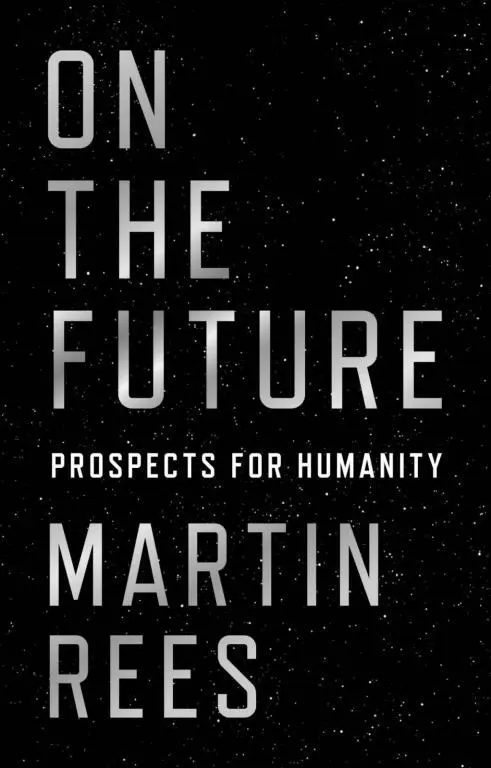
- Название:On the Future: Prospects for Humanity
- Автор:
- Издательство:Princeton University Press
- Жанр:
- Год:2018
- Город:Princeton
- ISBN:978-0-691-18044-1
- Рейтинг книги:5 / 5. Голосов: 1
-
Избранное:Добавить в избранное
- Отзывы:
-
Ваша оценка:
On the Future: Prospects for Humanity: краткое содержание, описание и аннотация
Предлагаем к чтению аннотацию, описание, краткое содержание или предисловие (зависит от того, что написал сам автор книги «On the Future: Prospects for Humanity»). Если вы не нашли необходимую информацию о книге — напишите в комментариях, мы постараемся отыскать её.
Humanity has reached a critical moment. Our world is unsettled and rapidly changing, and we face existential risks over the next century. Various outcomes―good and bad―are possible. Yet our approach to the future is characterized by short-term thinking, polarizing debates, alarmist rhetoric, and pessimism. In this short, exhilarating book, renowned scientist and bestselling author Martin Rees argues that humanity’s prospects depend on our taking a very different approach to planning for tomorrow.
The future of humanity is bound to the future of science and hinges on how successfully we harness technological advances to address our challenges. If we are to use science to solve our problems while avoiding its dystopian risks, we must think rationally, globally, collectively, and optimistically about the long term. Advances in biotechnology, cybertechnology, robotics, and artificial intelligence―if pursued and applied wisely―could empower us to boost the developing and developed world and overcome the threats humanity faces on Earth, from climate change to nuclear war. At the same time, further advances in space science will allow humans to explore the solar system and beyond with robots and AI. But there is no “Plan B” for Earth―no viable alternative within reach if we do not care for our home planet.
Rich with fascinating insights into cutting-edge science and technology, this accessible book will captivate anyone who wants to understand the critical issues that will define the future of humanity on Earth and beyond.
On the Future: Prospects for Humanity — читать онлайн бесплатно полную книгу (весь текст) целиком
Ниже представлен текст книги, разбитый по страницам. Система сохранения места последней прочитанной страницы, позволяет с удобством читать онлайн бесплатно книгу «On the Future: Prospects for Humanity», без необходимости каждый раз заново искать на чём Вы остановились. Поставьте закладку, и сможете в любой момент перейти на страницу, на которой закончили чтение.
Интервал:
Закладка:
Machine learning, enabled by the ever-increasing number-crunching power of computers, is a potentially stupendous breakthrough. It allows machines to gain expertise—not just in game playing, but in recognising faces, translating between languages, managing networks, and so forth—without being programmed in detail. But the implications for human society are ambivalent. There is no ‘operator’ who knows exactly how the machine reaches a decision. If there is a ‘bug’ in the software of an AI system, it is currently not always possible to track it down; this is likely to create public concern if the system’s ‘decisions’ have potentially grave consequences for individuals. If we are sentenced to a term in prison, recommended for surgery, or even given a poor credit rating, we would expect the reasons to be accessible to us—and contestable by us. If such decisions were entirely delegated to an algorithm, we would be entitled to feel uneasy, even if presented with compelling evidence that, on average, the machines make better decisions than the humans they have usurped.
Integration of these AI systems has an impact on everyday life—and will become more intrusive and pervasive. Records of all our movements, our interactions with others, our health, and our financial transactions, will be in the ‘cloud’, managed by a multinational quasi-monopoly. The data may be used for benign reasons (for instance, for medical research, or to warn us of incipient health risks), but its availability to internet companies is already shifting the balance of power from governments to the commercial world. Indeed, employers can now monitor individual workers far more intrusively than the most autocratic or ‘control freak’ traditional bosses. There will be other privacy concerns. Are you happy if a random stranger sitting near you in a restaurant or on public transportation can, via facial recognition, identify you, and invade your privacy? Or if ‘fake’ videos of you become so convincing that visual evidence can no longer be trusted?
2.3. WHAT ABOUT OUR JOBS?
The pattern of our lives—the way we access information and entertainment, and our social networks—has already changed to a degree that we would hardly have envisioned twenty years ago. Moreover, AI is just at the ‘baby stage’ compared to what its proponents expect in coming decades. There will plainly be drastic shifts in the nature of work, which not only provides our income but also helps give meaning to our lives and our communities. So, the prime social and economic question is this: Will this ‘new machine age’ be like earlier disruptive technologies—the railways, or electrification, for instance—and create as many jobs as it destroys? Or is it really different this time?
During the last decade the real wages of unskilled people in Europe and North America fell. So did the security of such people’s employment. Despite that, one countervailing factor has offered all of us greater subjective well-being: the consumer surplus offered by the ever more pervasive digital world. Smartphones and laptops have improved vastly. I value internet access far more than I value owning a car, and it’s far cheaper.
Clearly, machines will take over much of the work of manufacturing and retail distribution. They can replace many white-collar jobs: routine legal work (such as conveyancing), accountancy, computer coding, medical diagnostics, and even surgery. Many ‘professionals’ will find their hard-earned skills in less demand. In contrast, some skilled service-sector jobs—plumbing and gardening, for instance—require nonroutine interactions with the external world and so will be among the hardest jobs to automate. To take a much-cited example, how vulnerable are the jobs of three million truck drivers in the United States?
Self-driving vehicles may be quickly accepted in limited areas where they will have the roads to themselves—in designated parts of city centres, or maybe in special lanes on motorways. And there is a potential for using driverless machines in farming and harvesting, operating off road. But what is not so clear is whether automated vehicles will ever be able to operate safely when confronted with all the complexities of routine driving—navigating small, winding roads and sharing city streets with human-driven vehicles and cycles and pedestrians. I think there will be public resistance to this.
Would a fully autonomous car be safer than a car with a human driver? If an object obstructs the road ahead, could it distinguish between a paper bag, a dog, or a child? The claim is that it cannot infallibly do so but will do better than the average human driver. Is that true? Some would say yes. If the cars are wirelessly connected to one another, they would learn faster by sharing experiences.
On the other hand, we should not forget that every innovation is initially risky—think of the early days of railways, or the pioneering use of surgical operations that are now routine. Regarding road safety, here are some figures from the United Kingdom. In 1930, when there were only a million vehicles on the roads, there were more than 7,000 fatalities; in 2017 there were about 1,700 fatalities—a drop by a factor of four, even though there are about thirty times more vehicles on the roads than there were in 1930. [10]The trend is due partly to better roads, but largely to safer cars and, in recent years, to satellite-based navigation systems (satnavs) and other electronic gadgetry. This trend will continue, making driving safer and easier. But fully automatic vehicles sharing ordinary roads with mixed traffic would be a truly disjunctive change. We are justified in being sceptical about how feasible and acceptable this transition would be.
It may be a long time before truck and car drivers are redundant. As a parallel, consider what is happening in civil aviation. Although air travel was once dangerous, it is now amazingly safe. During 2017 there was not a single fatality, worldwide, on any scheduled airliner. Most flying is done on autopilot; a real pilot is needed only in emergencies. But the concern is that he or she may not be alert at the crucial time. The 2009 crash of an Air France plane, en route from Rio de Janeiro, Brazil, to Paris, in the South Atlantic demonstrates what can go wrong: the pilots took too long to resume control when there was an emergency and mistakenly aggravated the problem. On the other hand, suicidal pilots have actually caused devastating crashes that the autopilot couldn’t prevent. Will the public ever be relaxed about boarding a plane with no pilot? I doubt it. But pilotless planes may be acceptable for air freight. Small delivery drones have a promising future; indeed, in Singapore, there are plans to replace delivery vehicles at ground level with drones flying above the streets. But even for these, we are too complacent about the risk of collisions, especially if they proliferate. For ordinary cars, software errors and cyberattacks cannot be ruled out. We are already seeing the hackability of the ever more sophisticated software and security systems found in automobiles. Can we confidently protect brakes and steering against hacking?
An oft-quoted benefit of driverless cars is that they will be hired and shared rather than owned. This could reduce the amount of parking space needed in cities—blurring the line between public and private transport. But what is not clear is how far this will go—whether the wish to possess one’s own car will indeed disappear. If driverless cars catch on, they will boost road travel at the expense of traditional rail travel. Many people in Europe prefer taking the train for a 200-mile journey; it is less stressful than driving and opens up time to work or read. But if we had an ‘electronic chauffeur’ who could be trusted for the entire journey, many of us would prefer to travel by car and get door-to-door service. This would reduce demand for long-distance train routes—but at the same time provide an incentive for inventing novel forms of transport, such as intercity hyperloops. Best of all, of course, would be high-grade telecommunications that obviate the need for most nonleisure travel.
Читать дальшеИнтервал:
Закладка:
Похожие книги на «On the Future: Prospects for Humanity»
Представляем Вашему вниманию похожие книги на «On the Future: Prospects for Humanity» списком для выбора. Мы отобрали схожую по названию и смыслу литературу в надежде предоставить читателям больше вариантов отыскать новые, интересные, ещё непрочитанные произведения.
![Мартин Рис - Всего шесть чисел. Главные силы, формирующие Вселенную [litres]](/books/414169/martin-ris-vsego-shest-chisel-glavnye-sily-formir-thumb.webp)








Обсуждение, отзывы о книге «On the Future: Prospects for Humanity» и просто собственные мнения читателей. Оставьте ваши комментарии, напишите, что Вы думаете о произведении, его смысле или главных героях. Укажите что конкретно понравилось, а что нет, и почему Вы так считаете.